


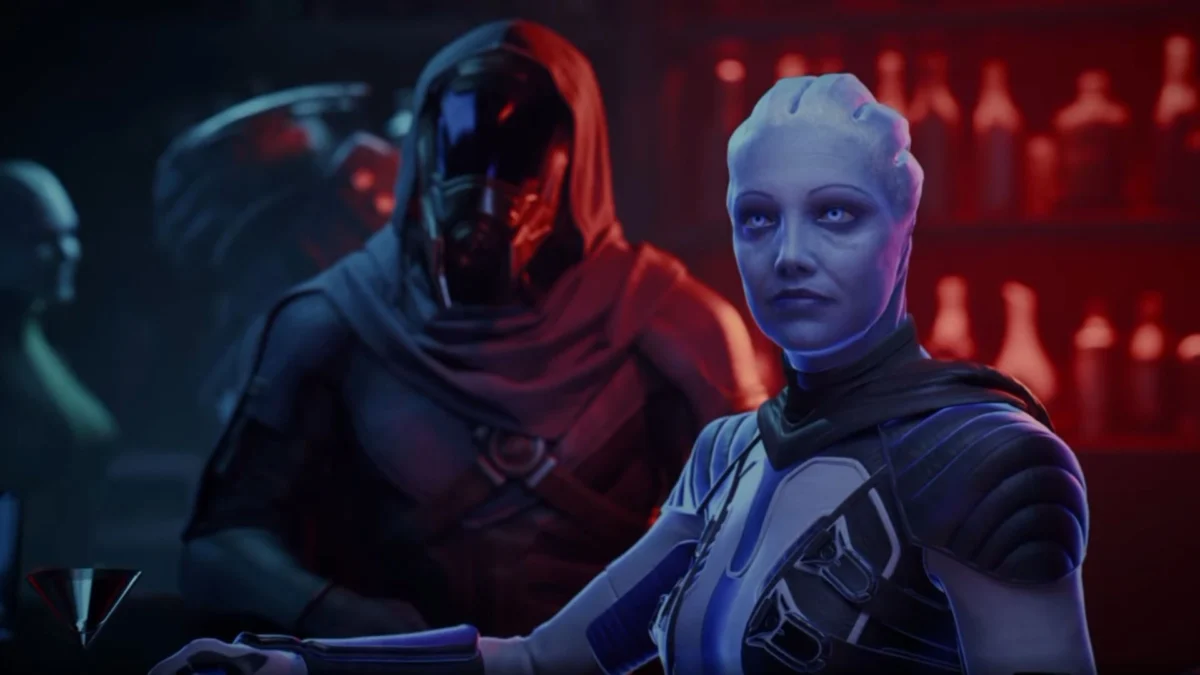
The continuous trickle of information surrounding BioWare’s cancelled Mass Effect project continues to evoke a profound sense of loss among fans of the iconic science-fiction role-playing franchise. Previous leaks and developer insights have already revealed that the shelved game—internally known during development as Mass Effect: Universe—was set against the backdrop of a tense "galactic Cold War." Furthermore, reports indicated that the title had ambitious plans to weave all three distinct endings of Mass Effect 3 into a single, cohesive narrative starting point, bringing back familiar faces like Liara T’Soni alongside an all-new protagonist. Now, fresh details have emerged outlining an even more remarkable feature: a sophisticated, highly technical system designed to track, interpret, and adapt to the myriad decisions players made throughout the original trilogy.
This deeper look into the mechanics of the cancelled game comes courtesy of Romain Toutain, the franchise technical director for Mass Effect at BioWare. Toutain recently hosted a Twitch stream where he provided detailed commentary on the previously leaked internal in-engine trailer, offering crucial context about the design philosophy and technological architecture behind the project. Although the broadcast was conducted in French, the gaming community quickly took notice when a translated clip complete with English subtitles was shared on Bluesky by user @loustica-lucia.
During the stream, Toutain elaborated on how BioWare was attempting to solve one of the most difficult challenges in modern role-playing game design: honoring a massive web of consequential player choices across multiple sequels. He explained that the development team was building a framework where "all of the choices made in the first Mass Effect games were taking into account."
This intricate approach to player legacy heavily influenced the working title of the project. Toutain noted that one of the reasons the game was referred to as Mass Effect Universe internally was because the system allowed players to connect their historical save data in ways that effectively generated parallel universes. While acknowledging that he was simplifying a highly complex backend process for his audience, Toutain drew a conceptual comparison to puzzle-adventure games that deal with branching realities. He explained that players could essentially generate and navigate different timelines, comparing the philosophical approach to titles like Zero Time Dilemma.
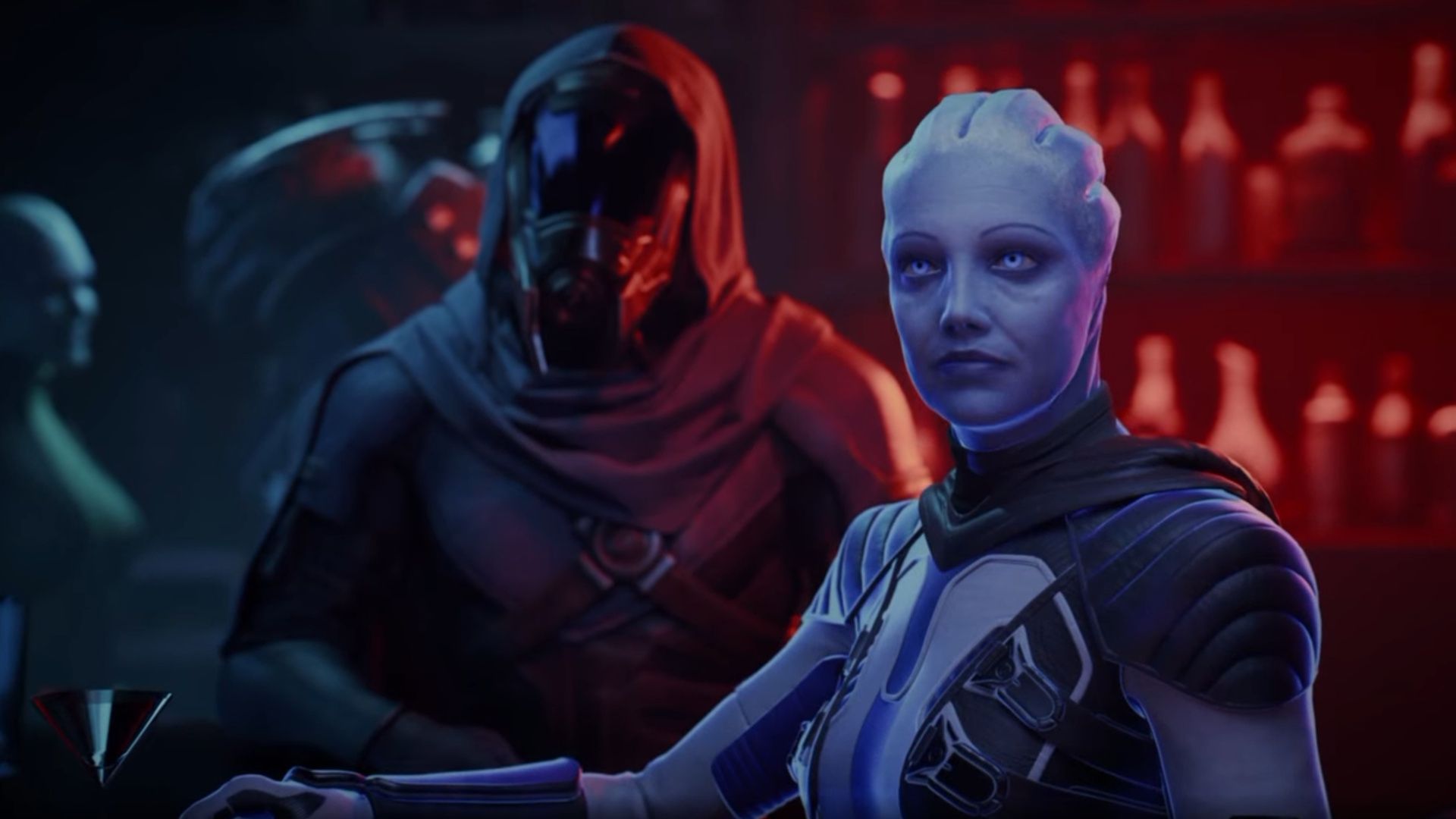
For longtime followers of BioWare’s development history, this ambition represents a significant evolution from previous import mechanics. It sounds like a vastly more complex, automated version of the choice-import systems seen in titles like Dragon Age: The Veilguard. Toutain expanded on the technical reality of Universe, revealing that the game’s architecture was entirely "stateful." BioWare engineers built a dedicated system that could actively pause the game engine and query a logical solver to evaluate the current game state against the potential ripple effects of player actions.
In practical terms, the system was designed to answer complex logistical questions on the fly. Toutain described how the logical equations would evaluate scenarios by asking whether a particular path was valid, and if not, what precise conditions needed to be satisfied to make it work within the narrative flow. If the necessary content did not exist, the game would recognize that gap, forcing developers to either branch the narrative in a new direction or intentionally create the missing content to bridge the logical divide.
To illustrate how this would function from a design perspective, Toutain offered a hypothetical scenario involving character survival and mission progression. If a player chose to kill a specific non-player character earlier in the story, but that same character was later required for a subsequent mission, the game engine would either dynamically adjust to ensure the mission could still be completed, or enforce the harsher consequence dictated by the designers—such as failing the mission outright due to the permanent absence of the character. Alternatively, the system could manipulate events so that a predictable outcome was averted, preserving an open pathway for the player and preventing frustrating narrative dead-ends.
According to Toutain, the ultimate guiding philosophy behind the next chapter of Mass Effect was to grant players "absolute autonomy" while navigating a galaxy shaped entirely by their historical decisions. Whether these deeply ambitious technical systems would have functioned smoothly in a fully realized, shipping game remains an open question, as theoretical design concepts often face severe hurdles during actual production. Nevertheless, the revelations underscore the immense scale of BioWare’s vision, proving that the team was attempting to push narrative role-playing mechanics far beyond the boundaries of the original trilogy. For a community that has spent years wondering how the franchise could ever reconcile disparate endings and branching fates, knowing how close BioWare came to achieving that technological feat makes the loss of the project all the more poignant.




Comments (0)