


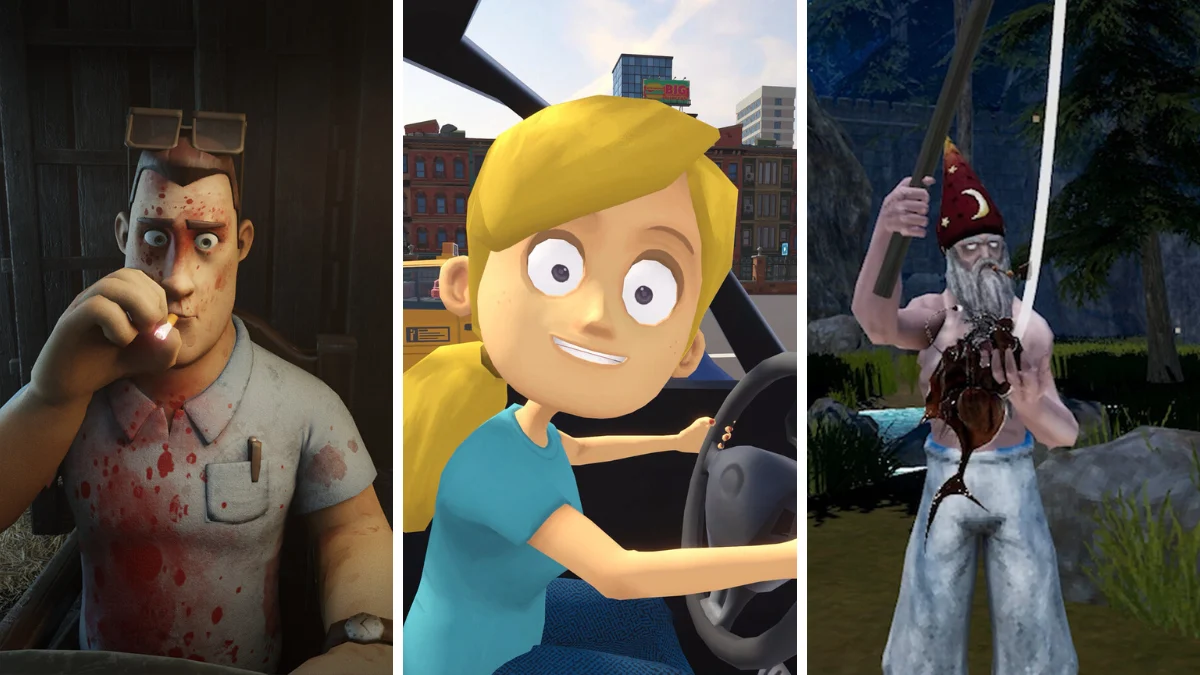
Among the thousands of unique projects showcased during the digital festival, the resulting list of the top 50 most-played demos reveals several prominent trends shaping the independent and mid-tier gaming landscape. Casual, chaotic, and friendly cooperative games dominated player engagement metrics, while incremental mechanics continued to capture hundreds of hours of collective playtime. At the same time, the community largely bypassed projects featuring heavy artificial intelligence integration. Out of the 50 most-played titles, only four explicitly declared the use of generative AI tools during their development cycles.
One notable title standing out among those AI-disclosed projects is Teach My Little Sister How To Drive, a simulation game that leans heavily on a large language model to power an interactive NPC. The game drew additional attention across the industry after its developer revealed that running the AI-driven driving instruction system costs roughly $1,000 per day just to keep the demo online and functional for prospective players. Despite the technological novelty, such titles remained the exception rather than the rule within the upper echelons of the chart.
The overall composition of the top 50 list also underscores the changing dynamics of game publishing on Steam. Among all 50 entries, the sole game published by a traditional blockbuster triple-A publisher was Tropico 7, a project associated with Ubisoft. The rest of the list is firmly dominated by independent studios, grassroots developers, and creative passion projects that found massive audiences entirely through word-of-mouth and digital storefront visibility.
At the very top of the rankings sits Worst Class Ever, an asymmetrical party game designed for one to six players that captured the imagination of the Steam Next Fest audience. While the absolute dominance of casual party games and freewheeling online co-op titles makes intuitive sense given the current cultural zeitgeist of the platform, the overall composition of the list becomes particularly striking when contrasted against historical editions of the event.
Comparing the current crop of viral hits to the games that commanded the spotlight during Steam Next Fest events just five years ago reveals a profound evolution in player tastes. Previous iterations of the festival frequently elevated narrative-driven indies, intricate atmospheric adventures, and deep tactical experiences. Highlights from an October Steam Next Fest from half a decade ago, for instance, included critically acclaimed projects like Norco, Death Trash, Sable, Unpacking, and The Inheritance of Crimson Manor. Many of those titles continue to maintain active player communities and ongoing discussions years later, representing a different era of independent game design.
Industry observers note that it is difficult to ignore the outsize influence of user-generated content platforms and mobile gaming ecosystems on today’s younger demographic of players. The surge in popularity for highly accessible online co-op games featuring streamlined, straightforward graphics points to a cultural shift that may be less appreciated by traditional purists who prefer deep, narrative-heavy single-player campaigns. The generation of players reared on accessible, community-driven software appears to be driving a massive surge in freewheeling multiplayer entertainment. Consequently, the gaming landscape of today feels radically different from the one that defined the digital storefront in the early years of the decade.



Comments (0)