


Midweek trading brought a clear demonstration of relative strength from leading digital assets, with Bitcoin outperforming traditional equities as broader market risk appetite favored specialized crypto sectors. Beyond the immediate price action, however, recent market developments highlight a deeper structural transformation in how digital assets are distributed, monetized, and integrated into mainstream financial architecture. Driven by massive enterprise consolidation, multi-billion-dollar corporate acquisitions, and the blurring lines between centralized platforms and decentralized liquidity rails, the crypto industry is undergoing a foundational evolution where backend infrastructure is rapidly replacing simple token listings as the primary driver of scale.
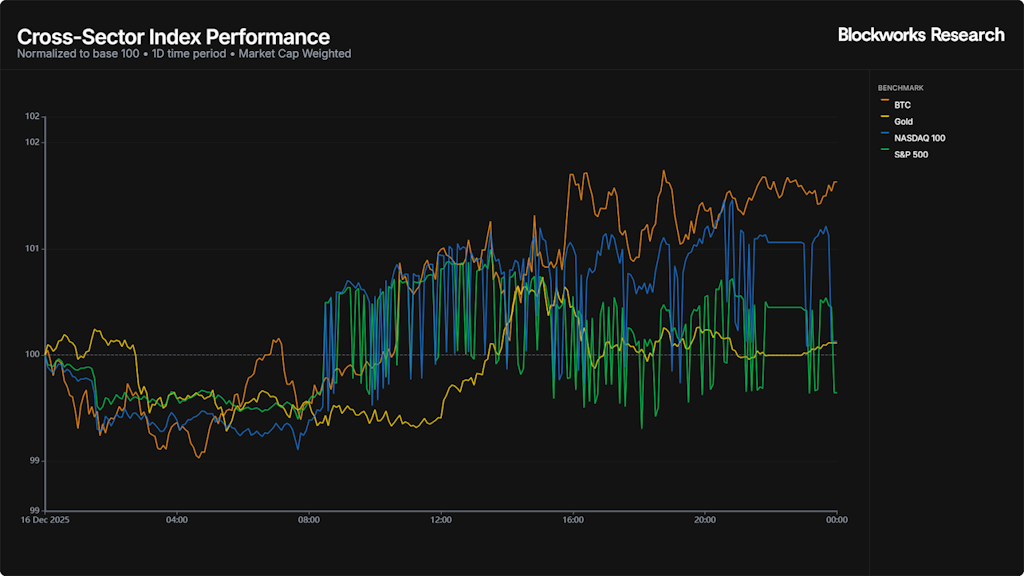
This evolving landscape was clearly reflected in the latest macro and crypto market sessions, which leaned modestly risk-on. Bitcoin managed a 1.6% gain, pulling ahead of traditional safe havens and growth equities. Meanwhile, the Nasdaq 100 and Gold remained effectively flat, each ticking up by a mere 0.1%, and the S&P 500 slipped 0.4%. This divergence reinforced the observation that incremental risk appetite was concentrated squarely within the digital asset ecosystem rather than distributed across broader macroeconomic indices. Although intraday volatility was noticeable across the board, market dips were consistently bought, particularly during the active US trading window, signaling resilient underlying demand.

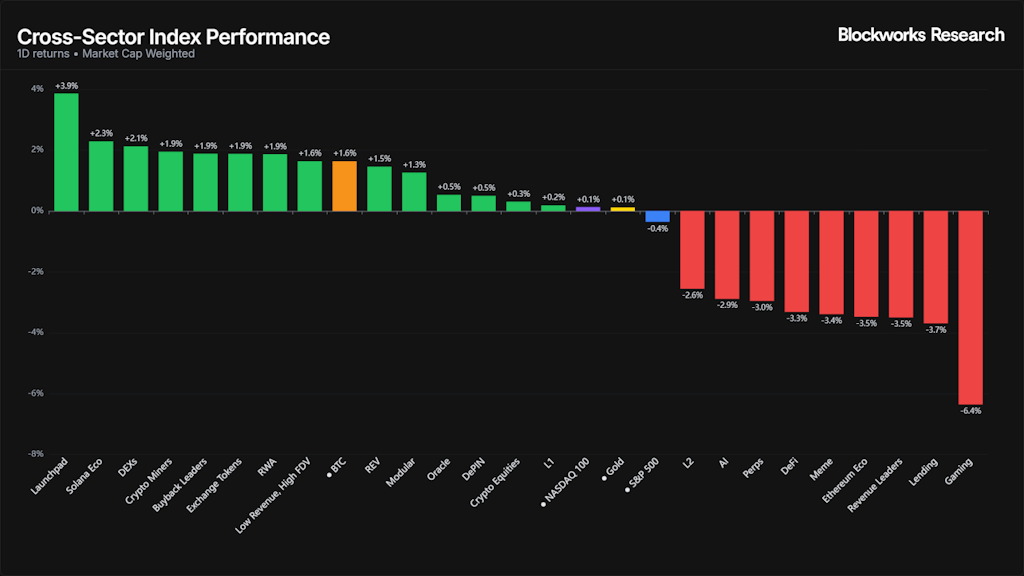
Within the crypto complex itself, the trading tape was characterized by aggressive, tactical sector rotations rather than a uniform market-wide rally. Launchpads led the market by a wide margin with a 3.9% increase, followed closely by the Solana ecosystem at 2.3% and decentralized exchanges at 2.1%. Other areas of the market also finished in the green, including crypto miners, tokens featuring buyback mechanisms, exchange tokens, and real-world asset plays, all hovering around a 1.9% gain. Conversely, several categories suffered sharp drawdowns. Gaming tokens served as the session’s clear laggard, plunging 6.4%, while lending protocols, revenue-leading tokens, the Ethereum ecosystem, and memecoins experienced steep declines ranging between 3.4% and 3.7%.
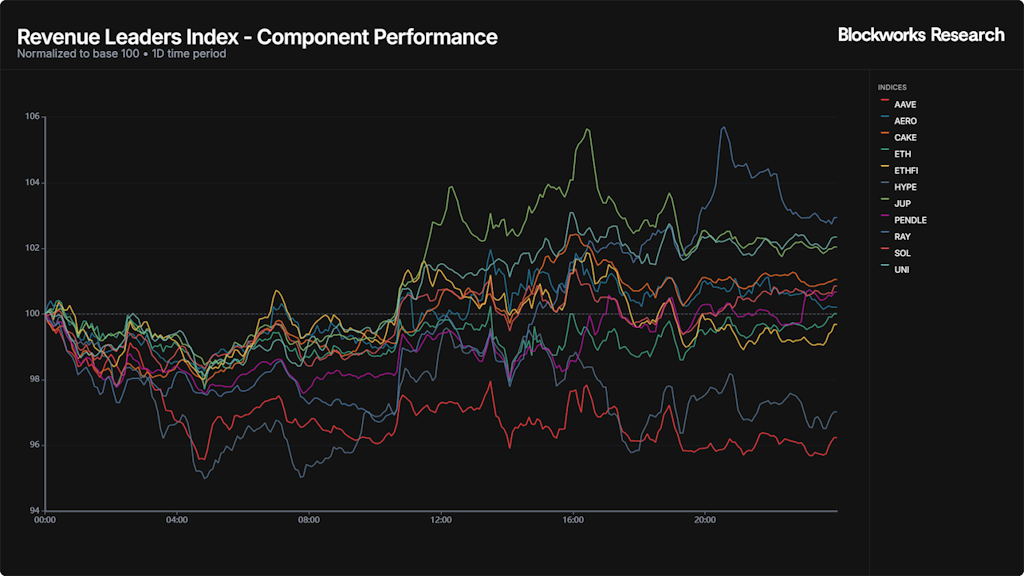
Particular weakness persisted among revenue-leading tokens, where HYPE dropped 3.0% amid ongoing investor scrutiny regarding revenue sustainability, protocol take fees, and intensifying market competition. Aave’s governance token, AAVE, emerged as the worst-performing asset in its respective index, falling 3.8% as lingering concerns surrounding the alignment of interests between Aave Labs and the decentralized autonomous organization weighed on sentiment. This downward pressure persisted despite proactive measures from leadership, including a notable move by Aave founder Stani Kulechov, who swapped nearly $10 million worth of wrapped ether into AAVE to signal personal and strategic alignment with the token’s long-term trajectory. Ultimately, these mixed flows and elevated volatility point to a highly selective market environment where sustained upward momentum remains contingent upon Bitcoin’s ability to hold recent gains and reassert broader market leadership.
Infrastructure Integration Redefines Market Access
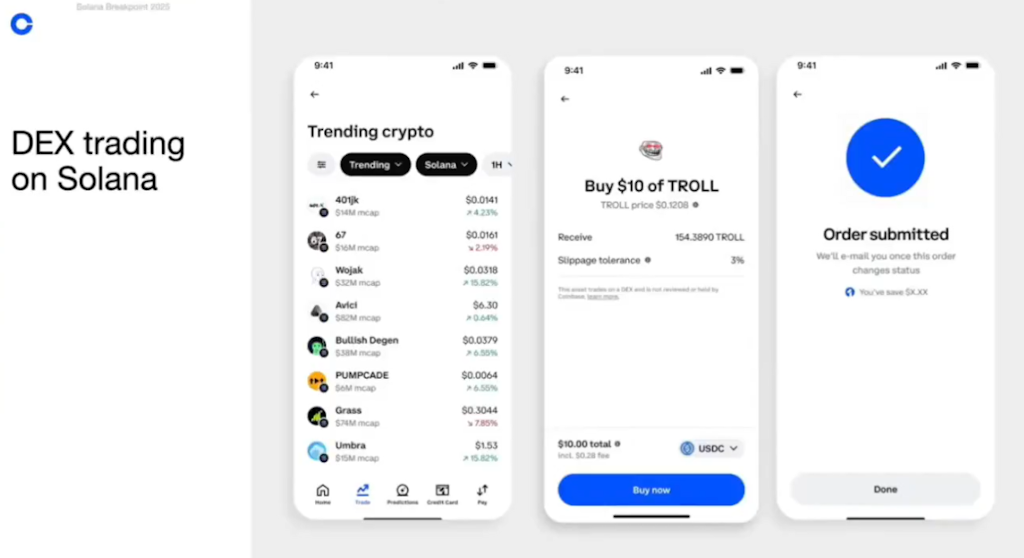
While short-term price fluctuations capture daily attention, a far more significant structural shift is underway regarding how crypto assets are brought to market. A prime example of this transition is Jupiter’s integration with Coinbase’s onchain trading stack, a development that brings one of Solana’s most critical liquidity layers directly into a mainstream retail crypto interface. Under this architecture, the integration enables users to trade Solana-native tokens natively via Coinbase’s onchain experience, while Jupiter operates in the background to handle intelligent routing and execution across the broader Solana decentralized finance ecosystem.
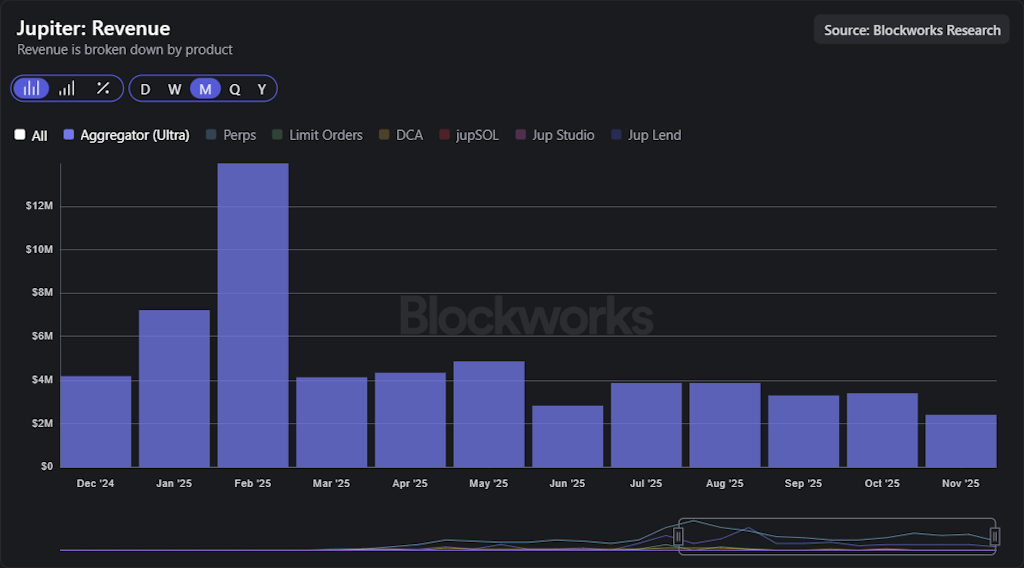
This collaboration carries substantial financial and operational implications for both protocols. Jupiter typically generates roughly $4 million in monthly revenue from its aggregator offerings, and this high-profile integration paves the way for significant monetization expansion. Mechanically, rather than forcing centralized exchanges to undergo the lengthy and cumbersome process of listing new Solana assets individually on a traditional order book, Coinbase is leaning directly into onchain rails. Jupiter acts as the underlying execution engine, aggregating liquidity across multiple decentralized exchanges, optimizing trade routes, and settling transactions onchain, while Coinbase supplies the consumer-facing distribution, user experience, and fiat on- and off-ramps.
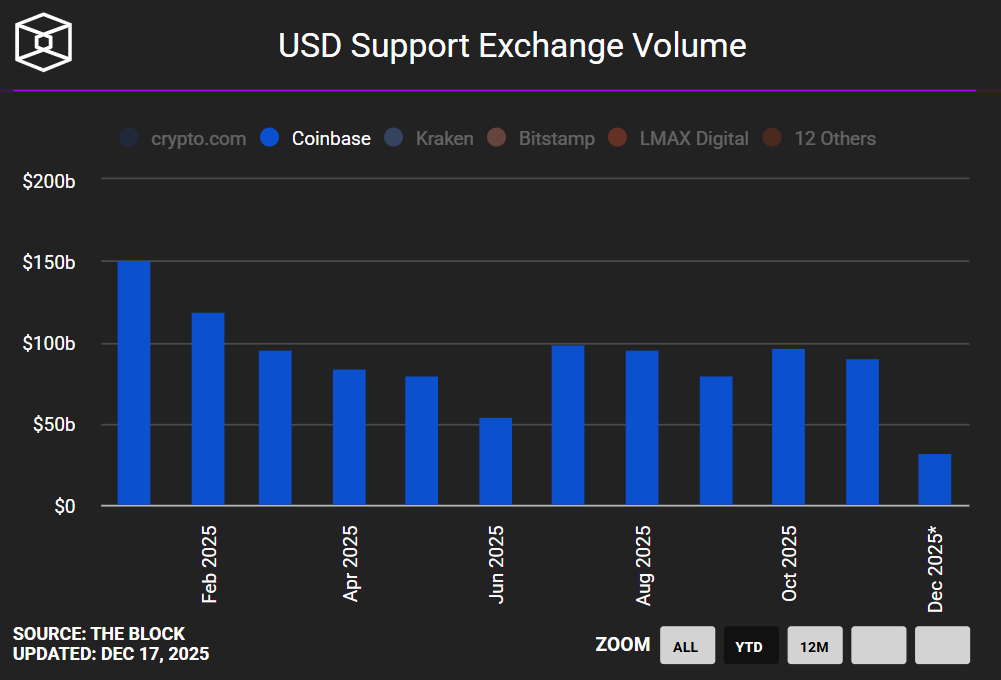
For everyday users, this model provides seamless access to a vastly broader universe of Solana tokens than would ever be feasible through traditional centralized exchange listings, all without requiring participants to leave the familiar Coinbase ecosystem. The commercial scale of both entities underscores the gravity of the partnership. Coinbase stands as one of the world’s premier digital asset exchanges, boasting a vast user base and handling between $80 billion and $100 billion in average monthly spot trading volume. Similarly, Jupiter sits firmly at the center of Solana spot trading activity, regularly processing approximately $50 billion in monthly spot volume.
By combining these footprints, the integration dramatically expands the avenues through which Solana-native assets reach retail audiences. Significantly, Coinbase is not attempting to compete with native Solana decentralized finance primitives; instead, it is embedding them. This development encapsulates a broader, industry-wide evolution where centralized platforms increasingly position themselves as intuitive frontends for decentralized liquidity. The underlying logic is clear: permissionless onchain trading removes the protracted lead times and administrative bottlenecks associated with centralized exchange listings, enabling efficient markets to form precisely where liquidity already resides. Amid broader market fluctuations, innovations of this caliber act as potential rerating catalysts for both enterprises by expanding transaction volumes and long-term revenue potential.
At the same time, the transition toward permissionless markets introduces distinct complexities. Unrestricted access to a wider array of tokens inherently exposes market participants to illiquid, volatile, or potentially malicious assets. Consequently, robust verification procedures, rigorous liquidity checks, and prudent trade sizing remain essential safeguards for users. Viewed in its entirety, the Jupiter-Coinbase integration transcends a standard corporate partnership, serving instead as evidence of a structural realignment where major centralized exchanges increasingly rely on decentralized infrastructure to deliver comprehensive market access, cementing Solana’s robust trading stack as an indispensable component of modern market architecture.
Explosive Growth in Fundraising and Mergers and Acquisitions
Parallel to the evolution of onchain trading infrastructure, the corporate and financial backbone of the crypto industry is experiencing unprecedented expansion, highlighted by historic levels of merger and acquisition activity and a powerful resurgence in venture fundraising. Crypto M&A has grown at an extraordinary pace over recent quarters, culminating in a landmark milestone in November 2025, when monthly M&A volume reached approximately $10.7 billion. This historic figure was heavily anchored by Naver’s massive acquisition of Dunamu, the operator of South Korea’s dominant Upbit exchange, for $10.3 billion.
This mega-deal followed on the heels of a record-shattering third quarter in 2025, during which crypto M&A crossed the $10 billion threshold for the first time in history, effectively doubling the previous quarterly record of $5 billion and representing a staggering thirty-fold increase compared to the same period in 2024. By November 2025, cumulative M&A deal value excluding the Dunamu transaction reached $8.6 billion spread across 133 distinct deals, surpassing the combined deal volume of the previous four calendar years. To put this expansion into perspective, quarterly M&A volume has surged from a modest $457,000 in the first quarter of 2021 to $4.2 billion by the second quarter of 2025, marking an approximate 9,000-fold structural increase.
This wave of consolidation has been aggressively spearheaded by major cryptocurrency exchanges executing strategic expansion plans to capture broader market share and diversify their revenue streams. Throughout 2025, Coinbase completed six strategic acquisitions, most notably the $2.9 billion purchase of Deribit, the industry’s leading crypto options platform. Similarly, Ripple completed four corporate acquisitions, highlighted by its $1.25 billion acquisition of institutional prime brokerage Hidden Road. Kraken maintained an equally aggressive M&A schedule with five completed acquisitions, including the purchase of NinjaTrader for $1.5 billion and Small Exchange for $100 million.
This consolidation momentum extended into December with a flurry of additional transactions, including Paribu acquiring CoinMENA for $240 million, Stripe expanding its product suite by acquiring wallet provider Valora, Kraken purchasing tokenization firm Backed, and Galaxy acquiring liquid staking protocol Alluvial. These transactions illustrate an industry where well-capitalized market leaders are rapidly consolidating key technological capabilities, institutional infrastructure, and regulatory licenses under single corporate umbrellas.
Venture capital and primary fundraising have exhibited a corresponding resurgence, growing roughly 41% from the previous cycle peak of $4.63 billion recorded in January 2021 to a new high of $6.52 billion in July 2025. While fundraising activity remained robust throughout 2025, it featured greater month-to-month variation, peaking mid-year before stabilizing to a steady pace of between $4 billion and $5 billion monthly through the third and fourth quarters.
Notable capital raises during this phase included Kraken securing $800 million across two separate financing rounds in November—which featured a $200 million injection from Citadel Securities valuing the exchange at $20 billion—and Kalshi raising $1 billion at an $11 billion valuation to expand its regulated prediction markets platform. Additional liquidity events included Monad completing a $188 million public token sale at a $2.5 billion valuation and RedotPay closing a $107 million Series B funding round to scale its crypto payments infrastructure. In total, year-to-date fundraising through November 2025 approached approximately $36 billion, marking a dramatic recovery from the prolonged capital drought of the 2023-2024 crypto winter, during which monthly fundraising rounds frequently struggled to clear the $1 billion mark.




Comments (0)