


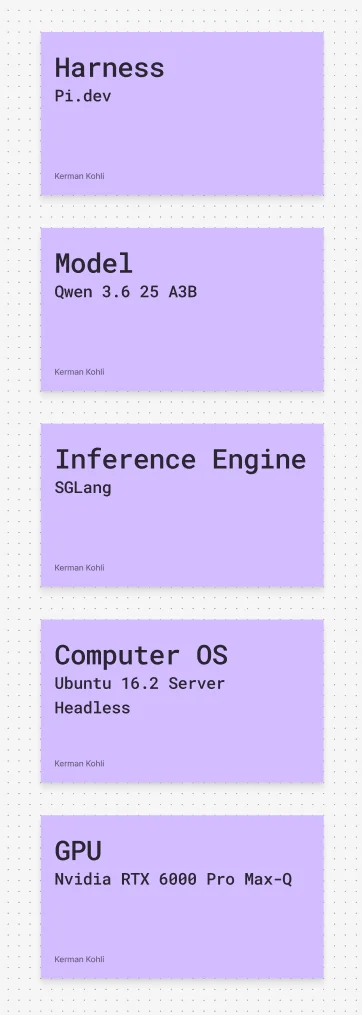
Following a previous examination of what it takes to construct a custom AI inference machine from scratch, the focus now turns to putting that machine to work and extracting tangible value from the hardware investment. Navigating the modern artificial intelligence landscape requires understanding that hardware and software are inextricably linked. Every architectural decision must cohere across the entire stack, from silicon to application layer, to avoid costly performance bottlenecks.
To understand this interdependence, one must look closely at specific hardware specifications and the software ecosystems designed to support them. The foundational choice of base hardware dictates every subsequent layer of the software stack, significantly narrowing the pool of compatible tools, operating systems, and inference engines. When evaluating local AI and Large Language Model setups, engineers and enthusiasts typically weigh several distinct hardware choices, ranging from consumer-grade graphics cards to unified memory architectures.
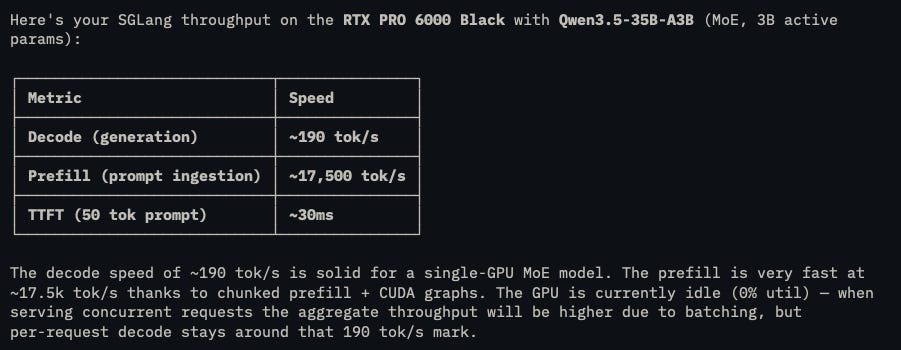
In the pursuit of a high-performance local AI infrastructure, speed remains the ultimate differentiator. Waiting ten to fifteen tokens per second is entirely impractical for demanding development workflows that require multiple parallel sessions handling several concurrent users. Consequently, memory bandwidth and memory capacity emerge as the top priorities for any serious local deployment.
While consumer systems utilizing unified memory architectures—such as Apple’s various silicon configurations—offer high memory capacity, they often fall short on raw processing speed and server-grade reliability. Although memory pooling can be advantageous on specifically optimized models, choosing an Apple-centric path locks the user into a restricted ecosystem. Furthermore, running server environments on desktop-oriented operating systems introduces significant operational friction. For a stable, production-grade local server infrastructure, Linux-based distributions remain the industry standard.
This realization leaves enterprise-grade graphics cards, specifically NVIDIA’s architecture, as the dominant force in high-speed local inference. When selecting a GPU, builders face critical choices regarding older generation hardware versus bleeding-edge components. Older consumer cards offer advantages such as lower entry costs and the ability to link multiple units together via interconnect bridges to expand available Video RAM. However, because all AI inference is fundamentally memory-bound, constrained VRAM quickly becomes a severe performance bottleneck, preventing the execution of top-tier models.
Power consumption and thermal efficiency also play major roles in hardware selection. Modern professional-grade cards offer massive computational throughput while capping power draw significantly lower than multi-GPU legacy configurations. Selecting top-tier consumer hardware also offers long-term value retention, as high-end components maintain their market value remarkably well compared to traditional computing hardware. Moreover, newer GPU generations incorporate specialized optimizations and native formats that older architectures lack, though these advanced capabilities come at a premium price point.
Operating system selection is another critical juncture in building a sovereign compute box. The primary goal of a dedicated local AI machine is to function as a reliable appliance: a system that powers on, runs autonomously, and requires zero physical intervention. Management must be executed entirely remotely. Attempting to use desktop-oriented operating systems for remote server administration frequently introduces frustrating hurdles, such as unstable remote shell connections and unreliable recovery protocols after reboots.
An optimized Ubuntu environment configured without a graphical user interface stands as the premier choice for local AI infrastructure. Eliminating the graphical desktop preserves valuable gigabytes of VRAM, ensuring that every available megabyte of memory is dedicated strictly to model execution and caching. Managing a headless compute node securely can be efficiently achieved through modern overlay networking tools like Tailscale, allowing administrators to establish private, encrypted tunnels from client machines to the local server without exposing vulnerable ports to the broader internet.
Once the hardware and operating system layers are secured, the next major hurdle involves selecting the appropriate inference engine. The open-source community offers several popular frameworks, though they vary wildly in efficiency and capability. Popular introductory tools can sometimes prove inefficient for demanding, high-concurrency workloads, while other lightweight engines are better suited for modest hardware configurations. Advanced hardware architectures often require specialized inference software capable of leveraging specific hardware accelerations and high-concurrency optimizations.
Advanced inference engines frequently employ memory optimization techniques such as paged attention, which caches past prompts and processed codebases. This caching mechanism significantly reduces the memory footprint of incremental prompts, delivering blazing-fast response times and enabling much higher concurrency when multiple users execute similar tasks simultaneously.
Selecting a model to run on this optimized stack involves navigating a complex web of parameters, quantization levels, context window sizes, and model architectures, ranging from dense full models to Mixture of Experts configurations. A strict three-way dependency exists between the underlying hardware, the chosen inference engine, and the specific language model. Certain inference engines lack native support for specific model types or hardware features, reinforcing the necessity of a meticulously planned architecture where every layer operates in perfect unison.

Deploying advanced open-source models like modern variants of Qwen on optimized engines yields performance metrics that far outpace consumer hardware alternatives like standard Mac configurations. However, proper configuration requires careful attention to detail, including the correct setup of reasoning parsers to ensure that developer tooling can fully utilize the model’s underlying capabilities.
The final piece of the architectural puzzle is the development harness or coding assistant interface. While developers can point various commercially available coding agents to a local model endpoint, true sovereignty requires a harness that adapts natively to the underlying hardware stack. Relying too heavily on third-party ecosystems defeats the purpose of building an independent infrastructure.
Exploring the landscape of open-source coding harnesses reveals specialized tools designed for modularity and incremental expansion. Rather than coming pre-packaged with rigid plugin ecosystems, these minimalist harnesses allow developers to build customized workflows and easily cycle between different local models through straightforward orchestration commands.
While a self-hosted local AI setup cannot fully match the raw capabilities of the largest cloud-based frontier models, it offers distinct, compounding advantages. Operating a sovereign intelligence infrastructure runs at the marginal cost of electricity, completely eliminating rate limits and subscription fees while guaranteeing absolute data privacy. When access to massive frontier intelligence is genuinely required, operators can selectively utilize cloud services and pay the associated premium before returning immediately to their private, localized digital environment.
As the global demand for computational power continues to surge, cloud rental indices and infrastructure costs are experiencing rapid inflation. Building and orchestrating a personal AI compute machine represents a strategic investment in technological self-reliance, ensuring that builders retain ownership of their tools and ideas as the broader industry faces escalating infrastructure costs.




Comments (0)