


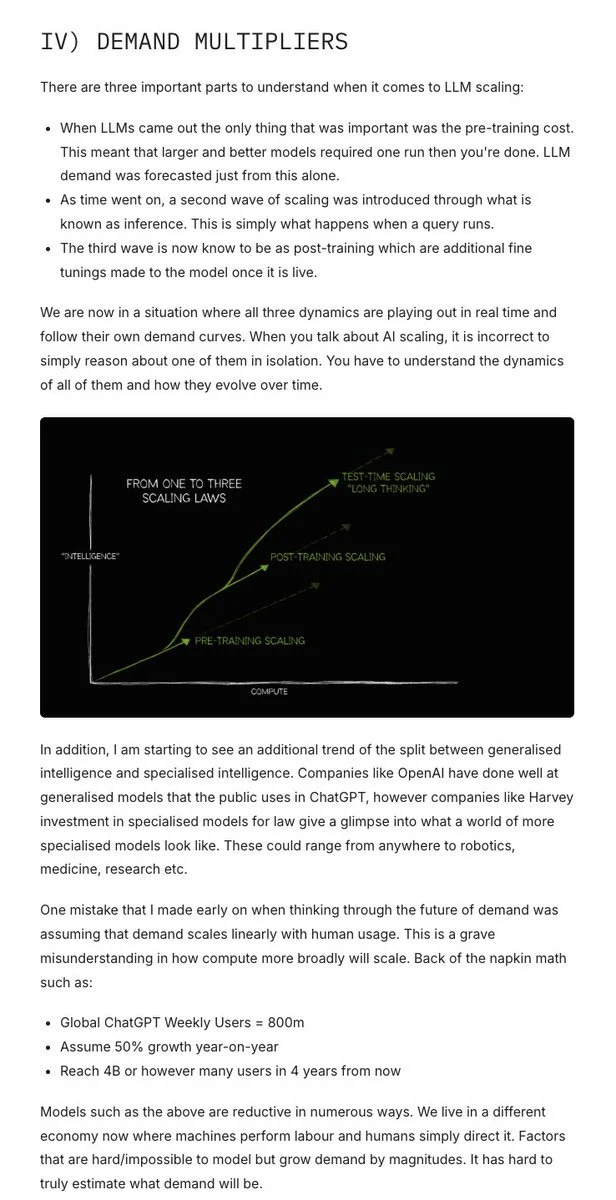
Amid widespread market skepticism and growing concerns that the artificial intelligence boom is rapidly inflating into an unsustainable bubble characterized by massive infrastructure overbuilding, analyst and writer Kerman Kohli has published a comprehensive new essay pushing back against the prevailing consensus. Titled "Silicon Control," the extensive, 8,000-word deep dive argues that current market perceptions are fundamentally flawed. Rather than hurtling toward a cliff of overcapacity, Kohli contends that the global technology sector is locked into a structural, decade-long trajectory of severe supply constraints that will redefine the economics of computing.
The publication of "Silicon Control" arrives at a critical juncture for financial markets and the technology industry at large. Over the past several quarters, Wall Street analysts, venture capitalists, and tech commentators have increasingly voiced alarms over the staggering capital expenditures being poured into artificial intelligence data centers, advanced networking gear, and specialized hardware. Critics of the current spending cycle frequently point to historical technology bubbles—such as the dot-com crash of the early 2000s, which was preceded by a massive overbuild of fiber-optic communication infrastructure—as a cautionary tale. In this pessimistic view, corporations are acquiring chips, constructing power-hungry facilities, and scaling cloud capacity at a pace that vastly outstrips near-term enterprise demand, setting the stage for a painful market correction.
Kohli’s essay directly challenges this thesis, offering a granular reexamination of the macroeconomic and technological fundamentals driving the artificial intelligence revolution. According to the author, the traditional metrics used by investors to gauge oversupply are ill-equipped to measure the unique demands of modern machine learning workloads. Instead of a temporary surge in hardware procurement, Kohli outlines a structural shift toward what he describes as a world of infinite compute demand, where efficiency gains and falling costs do not saturate the market but instead unlock entirely new categories of computational use cases. As businesses, governments, and scientific institutions integrate advanced AI agents and automated reasoning systems into their core operations, the appetite for raw processing power is projected to scale continuously rather than plateau.
A central pillar of the argument detailed in "Silicon Control" involves a critical evaluation of investor misconceptions surrounding the global semiconductor supply chain. Financial markets often analyze silicon manufacturing through the lens of traditional cyclical industries, anticipating that factory expansions, new fabrication plants, and improving foundry yields will quickly balance out demand spikes. However, Kohli’s research highlights the immense complexity, astronomical capital requirements, and lengthy lead times associated with cutting-edge semiconductor production. The transition to increasingly microscopic transistor nodes, combined with the extreme scarcity of advanced packaging capabilities and high-bandwidth memory, creates bottlenecks that cannot be easily resolved by simply injecting more capital into the ecosystem in the short term.
Furthermore, the essay examines the profound long-term implications of these supply bottlenecks for the structure of the global technology industry. Far from dispersing into a competitive free-for-all, the future landscape depicted in "Silicon Control" points toward a highly consolidated ecosystem. The author forecasts that the commanding heights of the digital economy will coalesce into a silicon monopoly controlled by fewer than twenty dominant companies. These entities, spanning specialized chip designers, advanced fabrication leaders, and critical infrastructure gatekeepers, will hold unprecedented sway over global technological development, dictating the terms upon which the next era of computing is built.
The release of the essay has already begun generating significant discussion across social media platforms and professional technology networks, capturing the attention of industry observers who are actively debating the sustainability of current capital allocation trends. As stakeholders weigh the opposing arguments between impending oversupply and enduring scarcity, "Silicon Control" provides a detailed framework for understanding the forces shaping the hardware backbone of the artificial intelligence era. Whether the market ultimately validates the bubble narrative or yields to Kohli’s projection of prolonged supply constraints, the conversation underscores the high-stakes environment surrounding the future of global compute capacity.



Comments (0)