


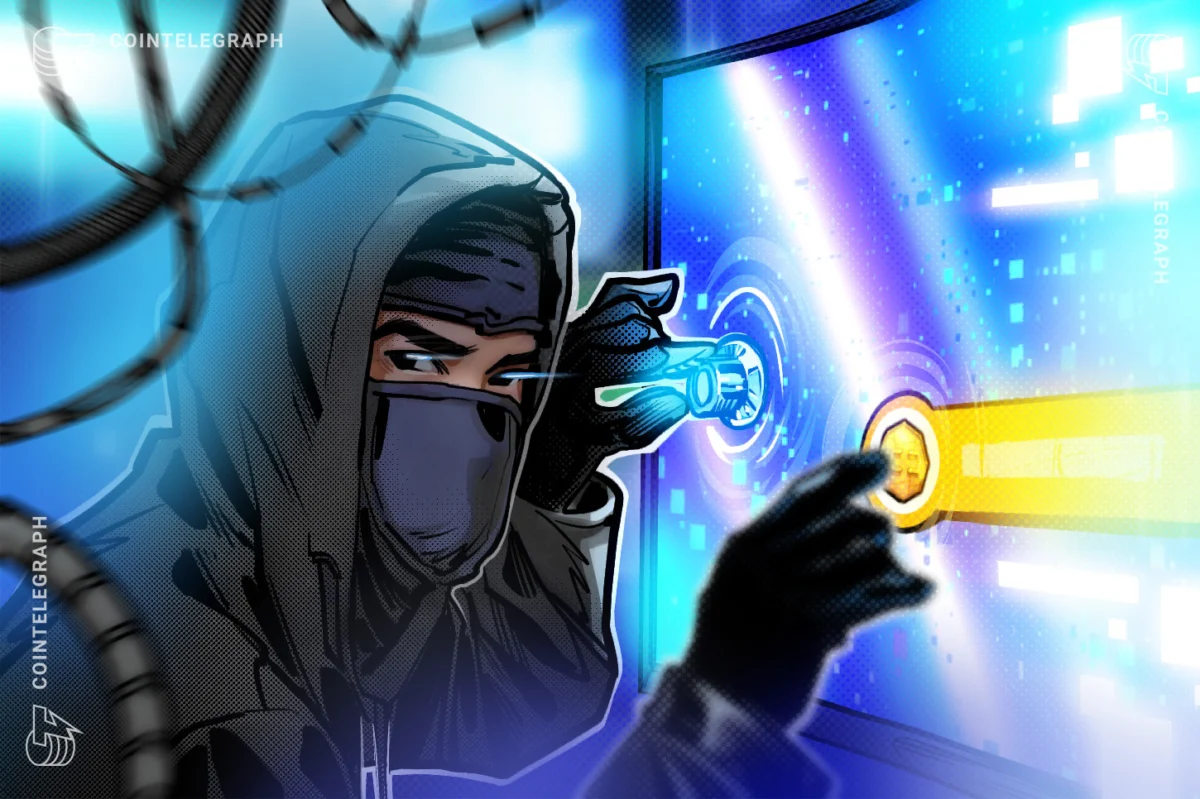
Cryptocurrency markets were thrown into severe turmoil following a massive security breach at Binance, the world’s largest digital asset exchange. The incident, which unfolded late in October, resulted in an estimated $6.3 billion in digital assets being drained from exchange-linked wallets. As the crypto community absorbed the shockwaves of what is being characterized as one of the largest hacks in financial history, major industry players, blockchain analytics firms, and law enforcement agencies rapidly mobilized to contain the fallout, track the illicit funds, and stabilize jittery global markets.
Initial reports of the breach emerged late on October 29, when blockchain researcher Spreek flagged suspicious activity involving the transfer of assets from a Binance-linked Ethereum wallet to a newly created address. The transaction was facilitated through a contract call allegedly funded by privacy protocol Tornado Cash. Shortly thereafter, wallets connected to the transfers began liquidating Tether USDt (USDT) holdings across various decentralized exchanges. Arkham Intelligence subsequently tracked a collection of wallets labeled "binance-hacker-1029," which held roughly $5.84 billion in digital assets. Binance co-founder Changpeng Zhao later confirmed the activity as a hack, noting that Tether and Circle had already moved to freeze significant portions of the stolen capital.
Coordinated Industry Response and Asset Freezing
In the immediate aftermath of the breach, a sweeping coordinated effort was launched across the decentralized finance (DeFi) ecosystem to stymie the hackers’ attempts to launder the stolen capital. Tether and Circle, the issuers of the market’s two largest stablecoins, acted swiftly to freeze billions of dollars in tokens. Circle CEO Jeremy Allaire confirmed that his firm had frozen more than $800 million in USDC in close coordination with law enforcement. Minutes later, Tether CEO Paolo Ardoino announced that the company had frozen more than $1.567 billion in USDT linked to the exploit, emphasizing that protecting the broader industry and its partners remained the primary objective.
The containment efforts extended far beyond the major stablecoin issuers. First Digital CEO Vincent Chok confirmed that his firm had frozen stolen FDUSD tokens, while Ripple senior vice president of stablecoins Jack McDonald announced that Ripple was actively freezing holdings of its dollar-pegged RLUSD stablecoin linked to the incident. World Liberty Financial also intervened, with co-founder and CEO Zach Witkoff confirming that the firm worked alongside BitGo to freeze $27 million in USD1 stablecoins and $2 million worth of WLFI tokens associated with the breach.
Layer-2 networks and decentralized applications also took defensive measures. The Arbitrum Security Council executed a transaction to freeze $30.5 million from the exploit, successfully transferring 74.6 million Arbitrum tokens and 8,425 Ether into an intermediary frozen wallet inaccessible to the original holders. Meanwhile, decentralized lending protocol Aave froze its V3 and V4 markets across multiple networks as a precautionary measure after discovering that the Binance exploiter had deposited 60 million USDT as collateral to borrow 19,762 Wrapped Ether, valued at roughly $44.6 million. Risk service provider LlamaRisk noted that while the position remained properly collateralized and subject to standard liquidation parameters, the widespread market freeze was implemented to protect platform liquidity until the situation stabilized.
Investigation Uncovers Sophisticated Attack Vectors
As the dust began to settle on the technical front, Binance leadership and cybersecurity experts provided deeper insights into how the unprecedented breach was executed. Initially pointing toward a compromised DevOps engineer’s laptop, Binance co-CEO Richard Teng clarified that the incident was far from a simple "one-click" action. In posts shared on social media, Teng explained that the breach involved a sophisticated attack process rather than a basic leak of wallet private keys. Instead, investigators found that the compromised laptop allowed unauthorized access to an internal service container, enabling the attacker to submit unauthorized withdrawal transactions.
Subsequent updates from Binance revealed that investigators had uncovered "additional points of breach" as the inquiry expanded in coordination with law enforcement agencies. Blockchain security firms corroborated the complexity of the operation. Blockaid CEO Ido Ben-Natan noted that the attack bore the hallmarks of key misuse, where signing infrastructure is manipulated to authorize malicious transactions without necessarily extracting the underlying private keys. Ben-Natan added that Ethereum’s EIP-7702 upgrade may have facilitated the attackers’ ability to execute the theft in a single sweep rather than requiring a multitude of individual transactions.
Prominent onchain investigators and analytics firms quickly began drawing parallels to previous state-sponsored cyberattacks. Chainalysis co-founder and CEO Jonathan Levin suggested that the Binance hack was likely orchestrated by the notorious North Korean hacking group TraderTraitor, pointing to overlaps with earlier exploits. Onchain investigator ZachXBT reinforced this assessment, noting that stolen funds from the Binance attack and an earlier Bitget exploit were commingled in the same THORChain address, indicating a shared threat actor. TRM Labs also attributed the incident to TraderTraitor with high confidence, citing robust on-chain and off-chain intelligence linking the group to past high-profile thefts, including the Bybit hack.
Market Impact and Operational Adjustments
The sheer scale of the breach had an immediate and palpable impact on broader cryptocurrency markets. Bitcoin retreated below $77,000, registering a 4.9% decline over a 24-hour period, while Binance’s native token, BNB, fell roughly 8% to trade around $693. Ether and major decentralized finance tokens also faced downward pressure, with AAVE and Uniswap experiencing double-digit percentage drops. Sentiment indicators turned sharply pessimistic, with the Bitcoin Fear and Greed Index dropping to a score of 30, signaling an environment of heightened fear not witnessed since August.
Institutional market makers operating within the ecosystem also disclosed their exposure to the exchange. Wintermute CEO Evgeny Gaevoy and GSR CEO Xin Song both reported having minor exposure to Binance—representing less than 20% and 5% of their respective net equities—though both executives stressed that they did not anticipate any major operational disruptions to their businesses or broader market-making capabilities.
Amid the market turbulence, Binance moved quickly to reassure its user base regarding the safety of customer funds. The exchange temporarily suspended both withdrawals and deposits while conducting comprehensive security audits and infrastructure revamps. Binance committed to covering all losses entirely through its Secure Asset Fund for Users (SAFU) and corporate reserves. The company disclosed that it had set aside more than $6.34 billion in company funds to absorb the shortfall, with $5 billion already held in the specific tokens impacted by the breach and the remainder being acquired through strategic market and over-the-counter purchases.
Yi He, co-CEO of Binance, stated that the exchange was actively buying altcoins through various channels to replace the stolen tokens ahead of an updated proof-of-reserves audit. Binance maintained that its core operations remained resilient, and while withdrawals were systematically paused for a targeted security overhaul, the exchange expressed confidence in resuming normal withdrawal services as verification protocols were finalized.
The reverberations of the hack also prompted strategic re-evaluations across the digital asset sector. Standard Chartered’s global head of digital assets research, Geoffrey Kendrick, suggested that the incident could accelerate a structural migration of crypto trading volume away from centralized exchanges and toward decentralized alternatives like Uniswap, reinforcing long-term forecasts for decentralized finance protocols as institutional and retail participants reassess custodial risk.


Comments (0)