


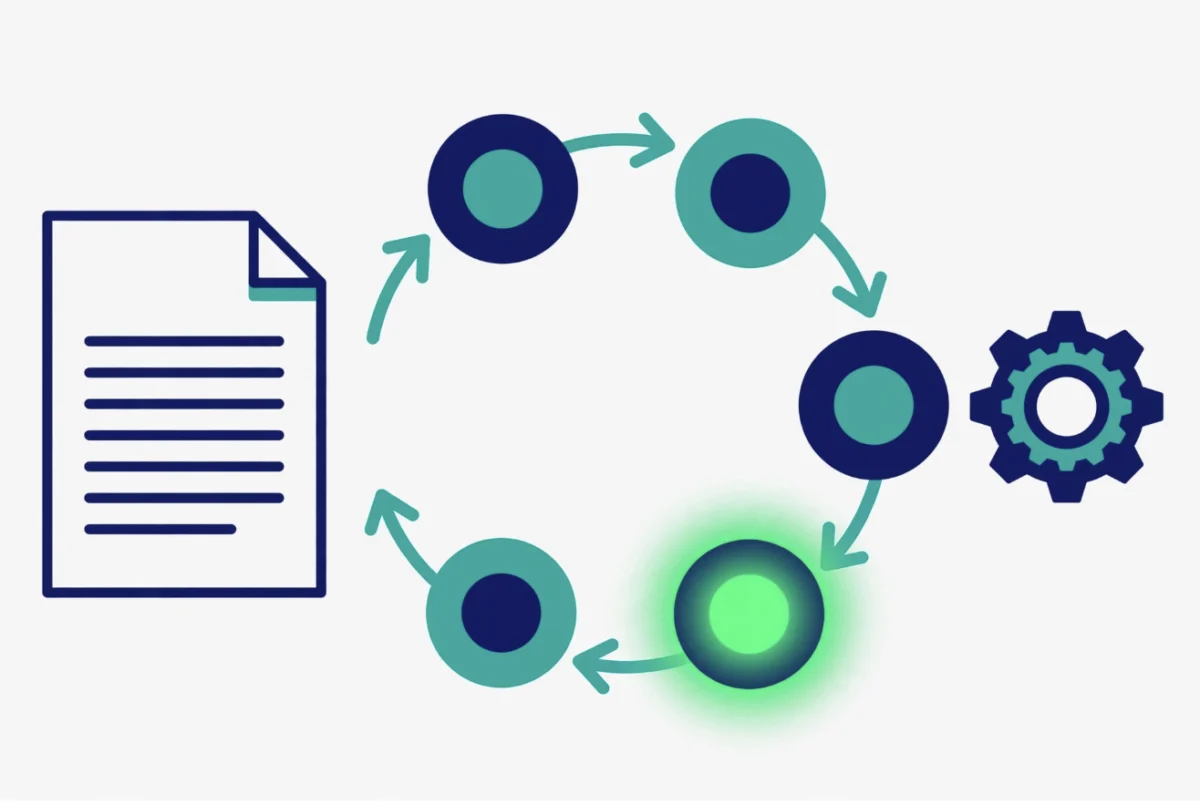
A customer opens their inbox to find two identical invoices for the same subscription, a confusing billing glitch that instantly erodes trust in the brand. Meanwhile, deep inside the enterprise analytics dashboard, another customer appears in the retention report as a lost churn. Yet, that customer never actually cancelled their service. Their payment simply failed, the subscription lapsed quietly in the core billing system, and that temporary financial hiccup was incorrectly recorded as permanent customer churn.
These are not hypothetical edge cases or minor software quirks; they are the high-stakes, operational fallout of enterprise software migrations gone wrong. Naresh Goyal, a veteran Salesforce and Go-To-Market (GTM) systems architect with more than twenty years of experience designing CPQ, billing, and revenue infrastructure, recently detailed the hidden architectural traps behind these failures. Drawing from a massive migration he led for a major file-sharing enterprise, Goyal explained how the company replaced its homegrown quoting and billing system with Salesforce CPQ and Salesforce Billing, deeply integrated with Oracle ERP, across hundreds of thousands of customer accounts.
According to Goyal, the actual data movement went smoothly. The records transferred from the legacy environment to the modern platform without a hitch. The real crisis was not the data itself; the real crisis was the state.
First, A Little About Me
Goyal, who holds the Revenue Cloud Advanced certification, has spent the better part of two decades mastering the intricate mechanics of CPQ, billing, and revenue systems. Alongside his extensive enterprise revenue systems work, he has increasingly focused on the intersection of artificial intelligence and go-to-market operations. He previously led AI deployment across a major GTM organization, built a sophisticated AI orchestration platform designed to streamline revenue workflows, and established a Salesforce Model Context Protocol (MCP) integration with Claude to empower AI agents to work directly with complex CRM data.
That pioneering AI work continually reinforces the exact same lesson learned during massive enterprise billing migrations: AI agents are only ever as reliable and accurate as the underlying state they read. Goyal shares these architectural insights because billing migrations have a notorious tendency to fail quietly, with most critical fixes only coming to light long after the fact during postmortem reviews.
Your Subscription Status Lives in Four Places at Once
To understand why subscription migrations are so fraught with peril, one must first understand that a modern subscription does not live neatly in a single database or application. Instead, its existence is fragmented across multiple distinct systems, each serving a different master. Quoting tools know what was originally sold to the customer. Billing platforms track what was actually invoiced and paid. Provisioning systems control what the customer can currently access. Finally, the Enterprise Resource Planning (ERP) system records what revenue has been officially recognized.
Each of these disparate systems holds only a partial copy of the truth, and crucially, each one updates on its own independent schedule. When these fragmented copies fall out of alignment, the resulting bug inevitably lands directly on the customer. In some cases, the billing system treats a subscription as active and continues issuing invoices long after provisioning has entirely shut off the user’s access. In other instances, the exact opposite occurs.
The recurring failures that plagued the file-sharing company’s migration included duplicate invoices generated for a single subscription, erroneous churn classifications triggered by a simple failed payment, and provisioning sequences that fired at completely the wrong moment. This either granted unauthorized access before payment was fully confirmed or wrongfully withheld access after payment had cleared.
None of these issues stemmed from basic data movement bugs. The records arrived safely at their destinations. Rather, they arrived carrying fragmented state information that each receiving system interpreted in a fundamentally different way.
Write the State Machine Down Before You Configure Anything
The architectural remedy for this systemic chaos began on a whiteboard rather than in a software configuration panel. Goyal and his team established that every subscription required an explicit, rigorously defined state machine featuring named states and strictly enforced allowed transitions between them. Under this model, a subscription could move through defined stages such as draft, quoted, ordered, activated, suspended, amended, expired, and cancelled.
A subscription was permitted to move from ordered to activated, but it was strictly blocked from jumping directly from quoted to invoiced. Any automated process that attempted an invalid transition was immediately rejected by the system instead of quietly writing a corrupted state into the database.
While this approach sounds foundational, most enterprise billing systems never actually implement it. Instead, subscription state is left implied by a scattered collection of status fields, random checkboxes, and dates that may or may not be populated correctly. When state is merely implied rather than explicitly governed, every downstream integration ends up inventing its own unique interpretation of what that state means, ultimately exporting those internal disagreements straight to the customer base.
In the transition framework established by Goyal’s team, key rules governed every lifecycle event. For instance, a payment failure explicitly moved a subscription into a suspended state rather than cancelling it outright. This simple distinction directly solved the false churn problem. Because standard churn reporting measures accounts that reach cancelled or expired states, a temporary failed credit card no longer made a customer look like a permanently lost account.
For any organization planning a similar data migration, the prescription is straightforward: map out the exact states, list every permitted transition, and assign ownership of each specific transition to one and only one system. If two different systems are allowed to push a subscription into the same state independently, the architecture is guaranteed to produce future operational incidents.
Provisioning Should Wait for the Financial Event
One of the sharpest architectural disagreements during the migration sat squarely between the billing platform and the provisioning engine. In the company’s legacy setup, provisioning was improperly triggered directly off the sales process. When a deal was marked closed, a webhook fired instantly, and user access followed immediately.
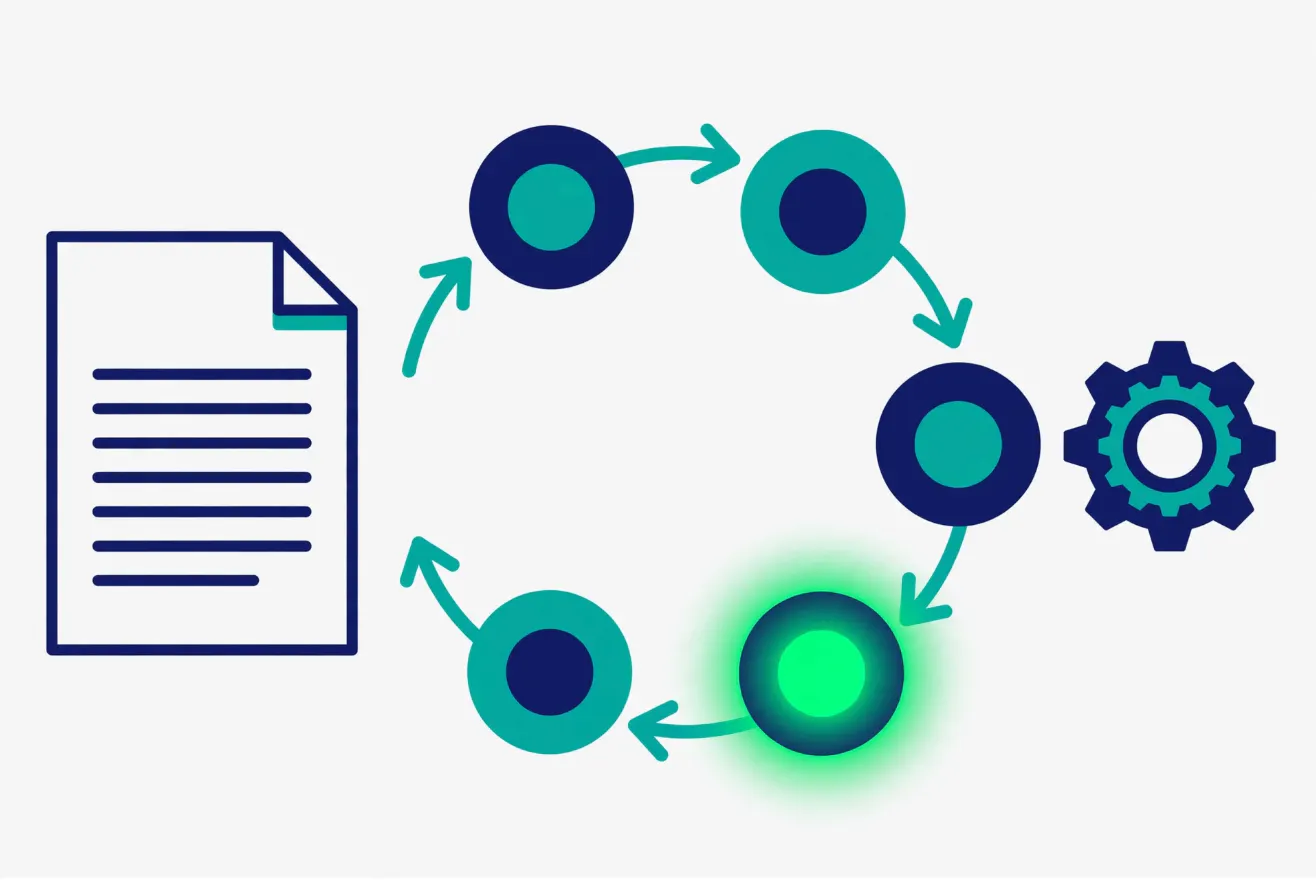
However, a closed deal represents a sales opinion, not an absolute financial reality. In many cases, the financial system had not yet recognized the order, and sometimes it never did due to downstream payment issues or administrative oversights.
To resolve this vulnerability, the project team rebuilt the system handshake around a strict financial event. Provisioning was reconfigured to fire only when the order product reached the activated state, which is the precise moment when the financial system officially recognizes the transaction. The trigger became the state change itself, eliminating arbitrary timers, scheduled guessing games, and premature sales stages.
Granting access before payment and denying access after payment often appear to be opposite operational bugs, but they share a single root cause: provisioning systems listening to the wrong operational signal. By binding access directly to the financial state of the subscription, both failure modes are effectively eliminated.
Profile the Source Data Before You Touch Configuration
Before a single line of configuration was touched in the new platform, the migration team conducted a comprehensive profile of the full source data—an exercise that proved remarkably humbling. Thousands of accounts within the legacy environment were essentially ghosts. Some contained zero historical opportunities. Others held closed deals with no associated products attached to them. In numerous cases, complex account hierarchies pointed toward parent accounts that had long since ceased to exist.
Migrating that legacy data in its current, unverified state would have carried every underlying flaw directly into the modern platform. Each issue would have inevitably surfaced as a severe migration defect, burning the implementation team’s credibility within the first week of deployment.
Recognizing this risk, the team paused the technical deployment, collaborated closely with the revenue operations team to thoroughly clean the accounts, and repaired the damaged hierarchies before loading any data into the target system. Source data is almost always far more degraded than leadership anticipates, and the optimal time to discover those discrepancies is before the new system is built, while data cleanup remains a manageable data exercise rather than an active production emergency.
Cut Over in Phases and Check Before Every Switch
Rather than attempting a high-risk, all-or-nothing system cutover over the course of a single weekend, the enterprise executed a phased transition. During the cutover window, the legacy system was placed into a strictly read-only mode while both the old and new platforms were maintained in parallel synchronization.
Downstream consumer systems were then switched over one at a time: finance systems first, followed by provisioning tools, and finally customer success applications. Before executing each individual switch, a rigorous validation checkpoint compared both platforms specifically against the records relevant to that particular consumer.
A phased cutover effectively transforms one massive enterprise risk into a series of smaller, easily verifiable checkpoints. If a validation checkpoint fails, engineers immediately know which consumer system and which specific record class broke, all while the legacy environment remains fully intact for side-by-side comparison.
Keep Migrated History Out of Your New Pricing Rules
Historical enterprise records invariably carry complex commercial terms and legacy discounts negotiated under contracts signed years in the past. Brand-new automated pricing rules, by contrast, possess no awareness of those bespoke historical agreements. Running a legacy migrated contract through a modern, automated pricing engine can easily result in a renewal being entirely repriced under rules and rate cards that did not exist when the customer originally signed.
To prevent this, the architecture utilized a dedicated bypass flag attached to every migrated quote, opportunity, and order. Advanced pricing and product rules were configured to check for this flag and automatically skip those historical records, ensuring they retained their original commercial terms through a separate legacy price book. Meanwhile, all genuinely new business continued to flow seamlessly through the live pricing engine, keeping historical commercial agreements intact.
Run Revenue Schedules in Parallel Until Finance Signs Off
Revenue schedules represented the final hurdle of the migration, primarily because they fall under the direct ownership of corporate finance—a department that relies on mathematical certainty rather than verbal assurances. The team migrated in-progress revenue schedules into rules-based recognition frameworks, then operated the old and new financial systems side by side.
The final production cutover only proceeded after the completion of consecutive clean financial cycles, backed by formal sign-offs from finance leadership at every stage. For any enterprise migration touching revenue recognition, building a parallel run directly into the project timeline from day one, complete with mandatory formal sign-offs, is essential for surviving rigorous compliance audits.
State First, Data Second
For organizations planning a major billing or subscription platform migration, investing the majority of design time into governance and state management is critical. Architecture teams must write out the formal state machine, explicitly assign system ownership for every transition, bind user provisioning to verified financial events, and thoroughly profile and clean source data long before touching configuration settings.
By cutting over in phased increments supported by automated checkpoints, walling off historical pricing agreements from modern rules, and empowering finance to formally approve the revenue transition, organizations can turn a notoriously chaotic project into a controlled engineering process. Once those foundational architectural decisions are firmly established, the actual data load becomes little more than a routine weekend exercise.


Comments (0)