


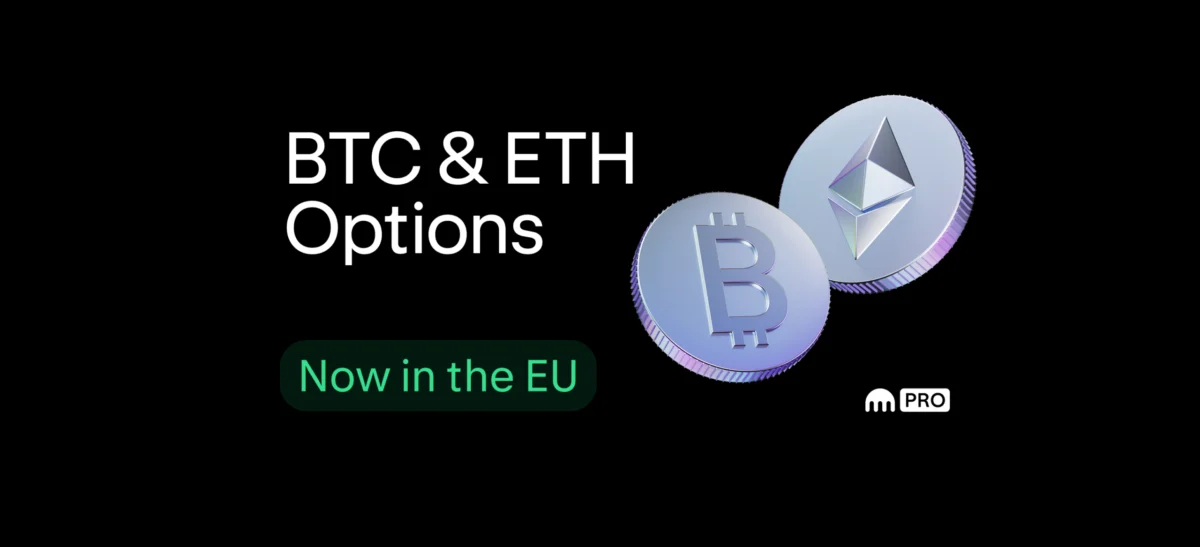
Major cryptocurrency exchange Kraken has significantly expanded its advanced trading capabilities for European clients, introducing a fully regulated options suite on Kraken Pro. Backed by the platform’s recently secured Markets in Financial Instruments Directive (MiFID) license, the new offering brings sophisticated multi-dimensional trading instruments to eligible clients across the European Economic Area (EEA).
The rollout introduces Bitcoin (BTC) and Ethereum (ETH) options directly onto Kraken Pro, integrated seamlessly into the existing derivatives account infrastructure that users already utilize for futures trading. By bridging the gap between traditional financial engineering and digital assets, the exchange aims to provide European professional and eligible retail traders with institutional-grade risk management tools within a fully compliant regulatory framework.
Why Options, and Why Now
The European market remains a cornerstone of Kraken’s global expansion strategy, and the acquisition of a MiFID license serves as the catalyst for this latest product launch. Operating under this regulatory umbrella allows the platform to offer structured options to EEA clients on a strictly regulated venue, ensuring transparency, investor protection, and adherence to European financial standards.
Beyond regulatory compliance, the architectural design of the launch focuses heavily on operational efficiency for active traders. Rather than forcing users to fragment their capital across multiple segregated accounts, Kraken Pro utilizes a unified account structure. Traders maintain a single collateral pool and wallet across Spot, Futures, and the newly introduced options markets. Furthermore, portfolio margining is enabled by default, while settlements are conducted in USD, streamlining capital allocation and reducing the administrative friction typically associated with multi-product trading strategies.
What You Can Trade
Eligible clients utilizing Kraken Pro can now access options contracts written on the two leading digital assets by market capitalization: Bitcoin and Ethereum. These instruments are designed to cater to a diverse range of market perspectives, allowing participants to move beyond simple directional bets.
While spot and futures markets primarily expose traders to single-variable price movements, options introduce a more nuanced environment where participants can position themselves based on market velocity, expected price ranges, or periods of relative stability. By making these contracts accessible from the same derivatives account used for futures, Kraken has eliminated the need for manual asset transfers, enabling traders to react swiftly to changing macroeconomic and crypto-specific market conditions.
Three Dimensions, Three Ways to Use Them
To understand the strategic value of the new offering, it helps to examine how derivatives markets traditionally utilize the three core dimensions of options: price, volatility, and time. While trading strategies vary widely depending on individual risk appetites and market outlooks, professional traders frequently employ options for specific portfolio management functions.
In conventional financial markets, options are widely used to hedge existing spot or futures exposure against unexpected downside volatility without requiring the trader to liquidate their underlying holdings. For instance, an investor holding a substantial long position in Bitcoin can purchase put options to establish a synthetic floor, protecting against severe market corrections while retaining upside participation.
Alternatively, traders can deploy options to capitalize on market moves without needing to predict the exact direction of the breakout. By utilizing volatility-based strategies, participants can position themselves to profit from sharp expansions in market movement—regardless of whether the underlying asset breaks upward or downward. Conversely, options allow advanced traders to generate yield or express neutral market views by selling volatility during periods of consolidation, banking on the natural decay of time value as expiration approaches. These use cases illustrate the functional versatility of options, serving as risk management instruments rather than mere directional wagers.
How Margin Works
Margin mechanics in options trading frequently present a steep learning curve for market participants accustomed exclusively to spot or linear futures markets. On Kraken Pro, the margining system is engineered to reflect sophisticated risk parameters while maintaining clarity for active users.
Because options can involve both buying and selling contracts, the risk profiles vary drastically depending on the position. Buyers face a capped downside risk, as the maximum loss is strictly limited to the premium paid to enter the trade. Conversely, option sellers take on substantial obligations, meaning their potential losses can significantly exceed the initial margin posted and, in certain structural scenarios, expand considerably.
To account for these dynamics, Kraken Pro applies dynamic margin requirements that adjust in real-time based on shifts in the underlying asset’s price, implied volatility, and time decay. Portfolio margining is active by default, allowing offsetting risk exposures across different positions within the same account to optimize capital efficiency. However, traders must actively monitor their account health; if market movements cause total equity to fall below the mandatory maintenance margin requirement, automated liquidations may occur to protect the platform and the integrity of the market.
How Trading Works
Trading options on Kraken Pro is executed through a Request for Quote (RFQ) mechanism designed to handle multi-leg strategies efficiently. Rather than interacting with a traditional central limit order book for every complex strategy, users can build customized trades comprising up to five distinct legs.
Once a multi-leg strategy is constructed and submitted through the platform, the system generates time-limited quotes reflecting current market liquidity and pricing. Traders are then presented with a brief window to evaluate the quote, choosing either to accept the terms or pass on the execution. It is important for participants to note that acceptance of a quote is legally and financially binding, immediately executing the trade and populating the position within their unified derivatives portfolio.
How to Get Started
Eligible participants in supported EEA jurisdictions can access the new options suite directly through Kraken Pro on both web and mobile interfaces. Because the infrastructure is integrated into the existing derivatives ecosystem, users do not need to undergo separate onboarding or fund a new wallet if they already maintain an active futures account on the platform.
Accessing these complex instruments does require preparation. In compliance with European regulatory mandates regarding investor protection, clients must successfully complete a mandatory appropriateness assessment before gaining trading privileges for options. This evaluation ensures that traders possess adequate knowledge and understanding of the risks associated with derivative instruments before deploying capital.
Digital assets on the platform are held in custody by Payward Europe Solutions Limited as the designated MiCa custodian, while the financial instruments themselves are provided by Payward Europe Digital Solutions (CY) Limited (PEDSL-CY) operating as the MiFID broker authorized and regulated by the Cyprus Securities and Exchange Commission under license number 342/17. Each entity operates strictly within its respective regulatory permissions, ensuring clear legal delineations as European crypto markets continue to mature under formal institutional oversight.

Comments (0)