



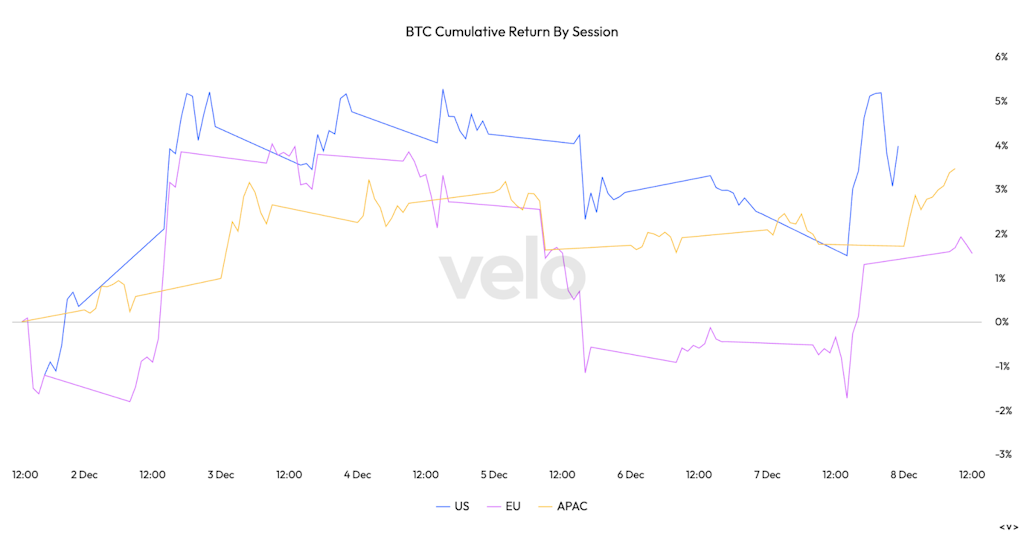
The cryptocurrency market has experienced a dynamic week of recovery, highlighted by Bitcoin rebounding from local lows around $85,000 to reclaim ground near $92,000. Over the past three weeks, the world’s largest cryptocurrency has posted a modest 5% gain, though this upward trajectory has been accompanied by notable volatility. Market participants have observed distinct regional trading patterns, with Bitcoin consistently underperforming during the European trading session while showing renewed strength and outperformance during the US and Asia-Pacific trading hours.
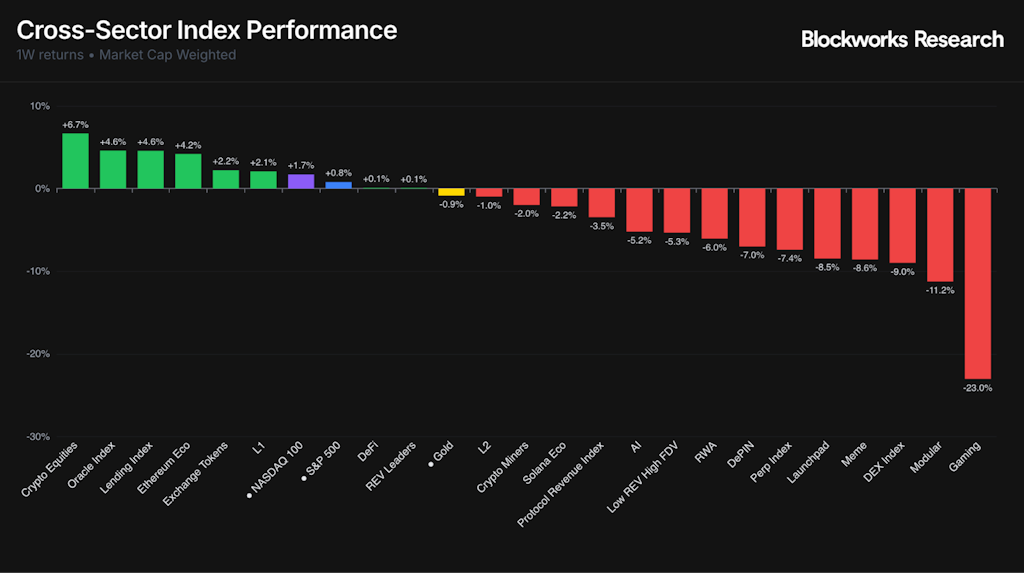
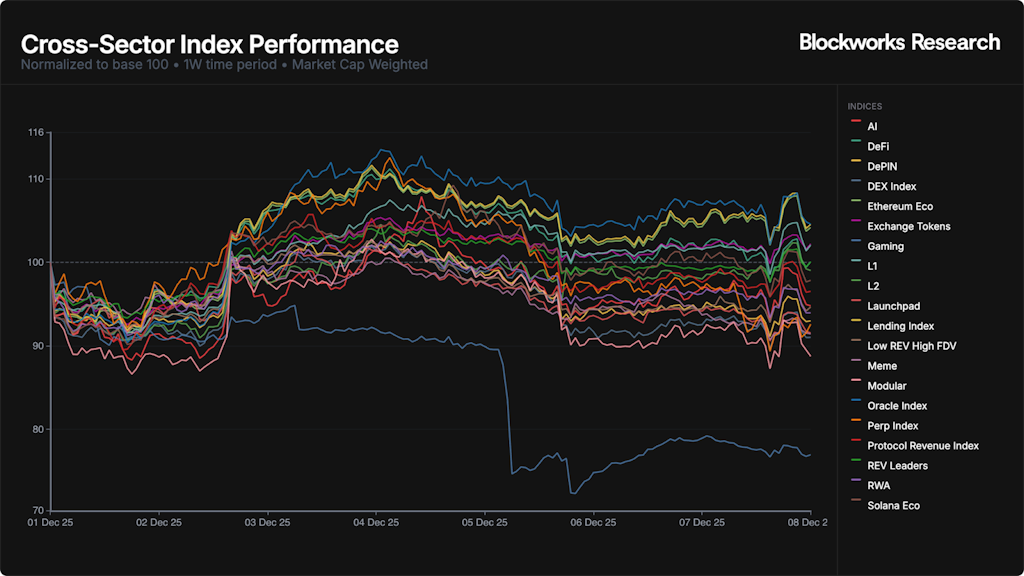
Beyond the headline asset, broader crypto market indices reflect a mixed performance landscape across different sectors and ecosystems over the past week. Oracles, lending protocols, and Ethereum ecosystem tokens have demonstrated relative strength, each recording gains of just over 4%. Meanwhile, crypto equities emerged as the standout performers of the week, surging 6.7% as a whole, largely driven by the outperformance of brokerage giant Robinhood.
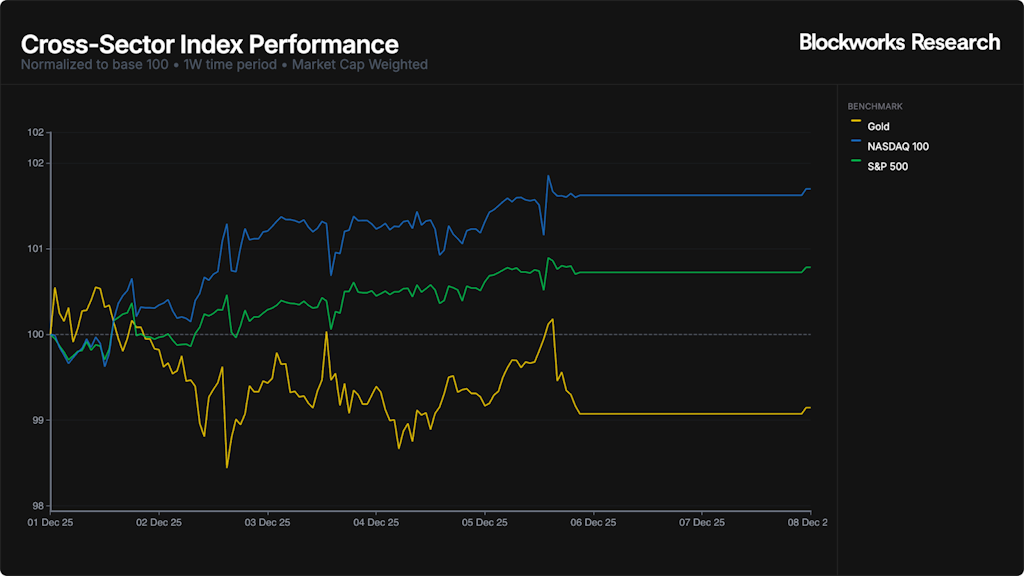
Traditional financial markets also displayed steady momentum during the same period. The Nasdaq 100 rose 1.70% and the S&P 500 climbed 0.78%, continuing their gradual upward grind, whereas gold experienced a slight pullback, dropping 0.85%. On the opposite end of the crypto spectrum, the gaming sector endured significant downside pressure, tumbling roughly 23% over the week. Among individual tokens, LGCT suffered the most dramatic decline, shedding 75% of its value over the past seven days.
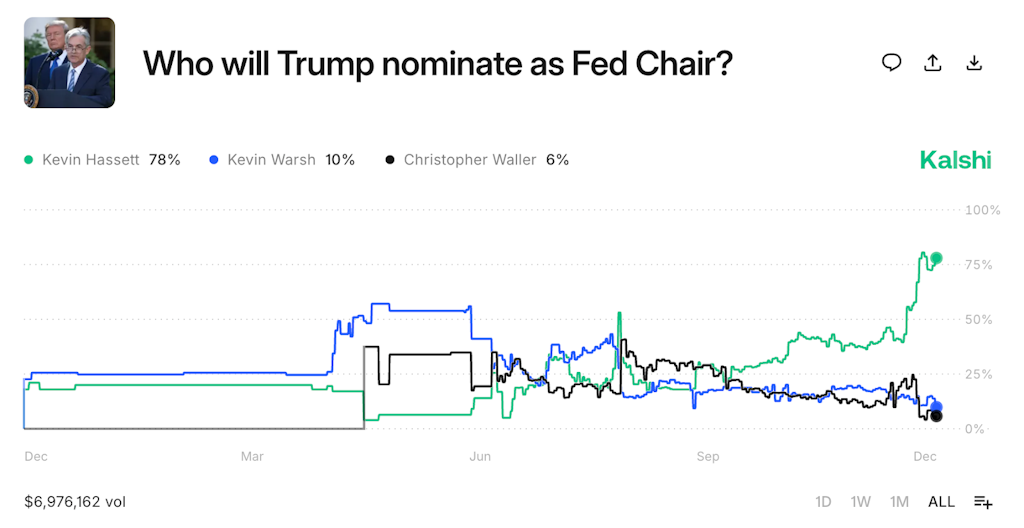
Political speculation surrounding macroeconomic leadership has also heavily influenced market sentiment. Prediction markets, including Kalshi, indicate that odds have surged to 78% favoring Kevin Hassett as President Donald Trump’s next nominee for Chair of the Federal Reserve, an appointment the president recently confirmed is imminent. Hassett, a trusted White House ally, has emerged as the leading candidate largely because his monetary policy views align with the administration’s persistent calls for lower interest rates. Proponents of his potential nomination point to the prospect of cheaper consumer loans and mortgages, a policy direction that could inject additional liquidity into both traditional and alternative asset classes.
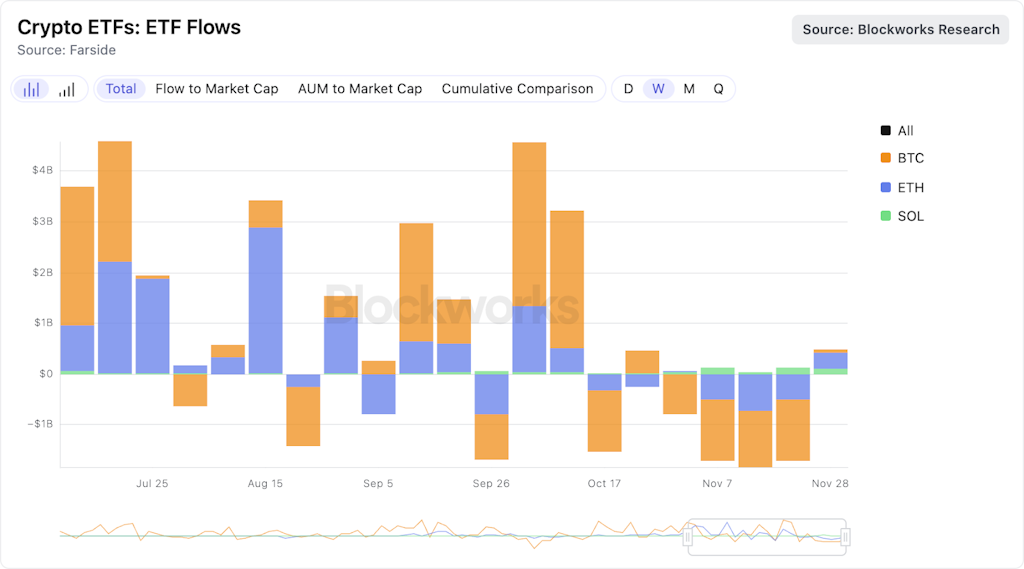
The shifting macroeconomic outlook coincides with a notable stabilization and reversal in institutional investment products. Bitcoin exchange-traded funds experienced a brutal November, reversing months of steady inflows that had characterized the market from May through October. The month of November saw approximately $3.46 billion in net redemptions, entirely wiping out the $3.42 billion of fresh capital that had entered the funds the previous month. This marked the worst month for outflows since February 2025, when funds bled $3.56 billion. The sharp reversal underscored how rapidly market sentiment can deteriorate even after prolonged periods of accumulation. Furthermore, the correlation between ETF flows and price action remained strikingly intact, with November’s heavy outflows closely mirroring Bitcoin’s double-digit monthly price decline.
However, the tide began to turn at the start of December. The first week of the month marked the first positive net inflow week for Bitcoin ETFs since late October, bringing in roughly $70.2 million in net new capital. Ethereum and Solana investment products experienced even stronger relative momentum during the same weekly window, attracting $312 million and $108 million in net inflows, respectively, signaling renewed institutional appetite for alternative layer-1 and smart contract assets.
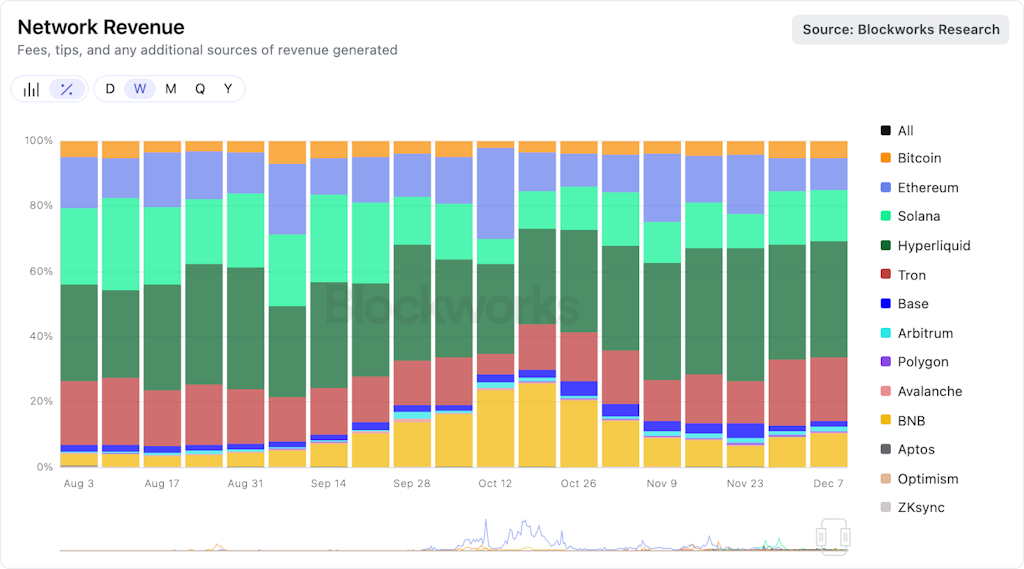
An analysis of network and application revenue reveals shifting dominance among competing blockchain ecosystems. Network revenue figures remained largely consistent with the previous week, with Hyperliquid leading the industry by capturing 35% of all network revenues. Tron followed in second place with a 20% share, while Solana secured 15%. Notably, revenue generated by the BNB chain remained near cyclical lows following the peak it achieved in October, with the majority of that lost market share having migrated to Hyperliquid and Solana.
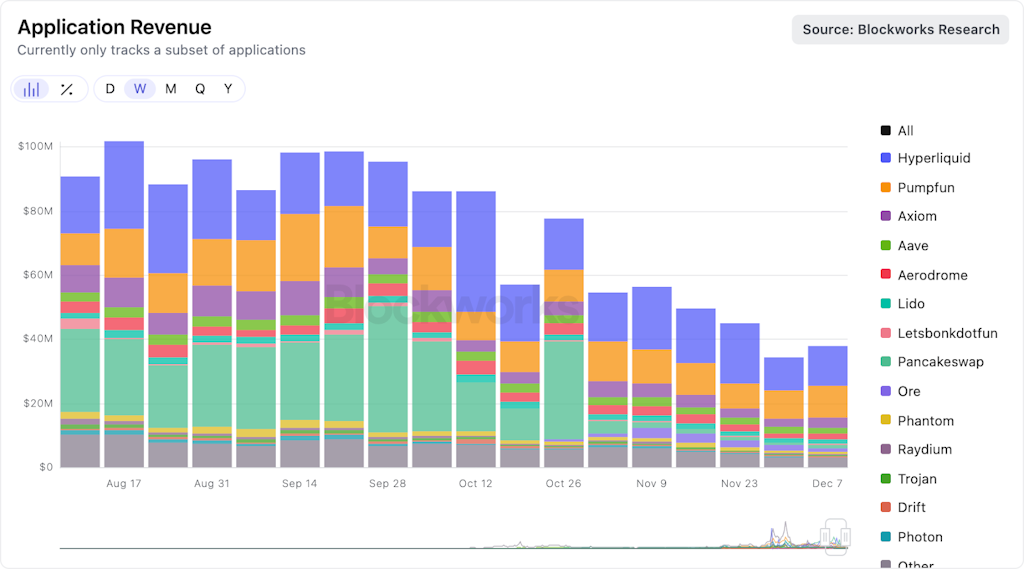
A similar trend appeared in application revenue, which rebounded to $38 million—marking a 10% increase week-over-week—after suffering four consecutive weeks of net declines across all tracked decentralized applications. Hyperliquid maintained its commanding lead in this category as well, accounting for 35% of application revenue. It was followed by the memecoin launchpad platform pump.fun with 25% and Axiom with 8%.
In structural network developments, Helius developers Lostin and Ichigo have formally introduced SIMD411, a proposal designed to accelerate Solana’s native emission schedule. The proposal seeks to double the disinflation rate from the current -15% to -30% while keeping the ultimate 1.5% terminal inflation rate unchanged. Supporters argue that this simple and predictable parameter adjustment would lower Solana’s current annualized inflation rate of approximately 4.14% down to the 1.5% target in roughly 3.1 years—by early 2029—rather than the roughly 6.2 years projected under the existing schedule, which would reach the target by early 2032. If adopted by the network validators, SIMD411 is projected to eliminate 22.3 million SOL, valued at approximately $2.9 billion, in cumulative emissions over a six-year horizon compared to the current trajectory, effectively reducing persistent sell pressure originating from network token inflation.





Comments (0)