


Published October 6, 2026
For decades, the cultural archetype of the IT professional has been inextricably linked to bureaucratic stagnation. Ever since the Dilbert comic strip first emerged in 1989, its bumbling title character and overbearing boss have served as enduring stand-ins for a workplace reality defined by endless ticket-taking, repetitive form-filling, and tedious access-granting. Despite technology’s increasing prominence in the global economy and radical shifts in the modern workplace, this stereotype has remained remarkably resilient. The reason is simple: the core nature of IT work has stayed largely unchanged since Dilbert first compared his office environment to a Mary Shelley novel. Forms still need filling, and tickets continue to pile up.
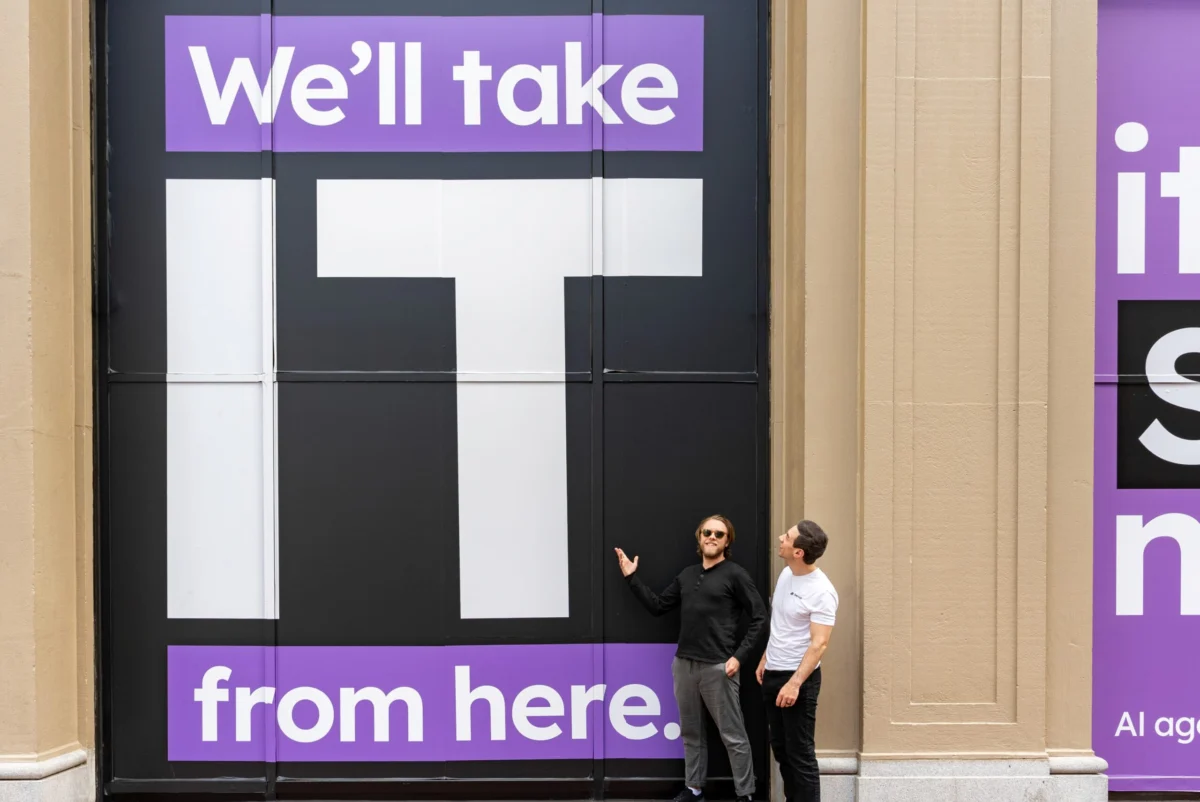
While Jake Stauch never set out specifically to reshape this cultural perception, his company, Serval, and its automated service management platform may end up doing precisely that. By leveraging the latest breakthroughs in artificial intelligence, Serval aims to transition IT professionals from weary responders trapped in backlogs into builders of tools and protectors of essential data. This vision stems from Stauch’s core personal motivation: helping others achieve their full potential. Yet that drive is rooted in an intimate understanding of its exact opposite. Before Stauch built a venture with industry-changing potential, he learned firsthand what it feels like not just to have unrealized potential, but to experience total failure.
The Weight of a Seven-Year Defeat
Midway through a grueling work week, Stauch lay splayed across his living room couch. Short on funding, he had opted to forgo traditional office space, working from home alongside his four remaining employees. The home office he shared with his wife was strictly reserved for critical calls, and the one he awaited that day certainly qualified.
For seven years, Stauch had poured his energy into getting a neuroscience startup off the ground. For a brief window, it appeared he had struck gold by designing video games aimed at improving focus in children with ADHD. Parents were buying, kids were playing, and monthly subscriptions were climbing. Then the ground shifted beneath him. Acquisition costs skyrocketed, marketing channels stalled, and the growth trajectory flattened abruptly. What once felt like a surefire victory quickly deteriorated into a dead end.
The underlying problem was a market far narrower than anticipated—specifically, affluent parents who also had children experiencing adverse reactions to traditional ADHD medications. Hoping to salvage the venture through an acquihire, Stauch targeted the very short list of sizable companies with interests in both hardware and neuroscience. Sitting on his couch that day, he was waiting for a definitive call from his final prospect: Bose.
When the rejection finally came, Stauch went upstairs, buried his head in his hands, and spent an hour absorbing the reality that a seven-year journey had reached its end, dragging a dedicated team down with him. Beyond the personal disappointment and a mountain of accumulated debt, the failure felt fundamental. Throughout his life, Stauch had internalized the belief that with enough practice and perseverance, anything was possible. For the first time, he encountered a wall he could not work, think, or pivot his way through. After allowing himself time to absorb the blow, he returned to work just weeks later.
An Upbringing Rooted in Grit and Drive
Stauch’s single-minded determination can be traced directly to his mother, Shari, a world-class billiards player who also founded and directed a popular billiards magazine. Accompanying her to tournaments as a child, he once asked her how she lost a match, to which she simply replied that her opponent had practiced more.

That philosophy—that one decides what they want and achieves it through sheer effort—governed much of Stauch’s childhood. When he was eight years old, his parents relocated their family from a Chicago suburb to a sprawling 70-acre property in Charleston, South Carolina, on short notice. Stauch quickly embraced the expansive freedom of his new surroundings. He also observed the same relentless hustle in his father’s career in sales, where income depended entirely on relationships and perseverance. Surrounded by top-tier pool players and entrepreneurs in his parents’ social circle, achieving greatness always felt entirely attainable to him.
That drive shifted across various pursuits growing up, including books, video games, standardized testing, and eventually biology at Duke University. During his junior year, Stauch joined the inaugural cohort of a campus house dedicated entirely to entrepreneurship. The rules were absolute: residents had to be actively building their own startups, with zero exceptions made for traditional internships or external jobs.
Out of 18 residents, a core group of five took charge. Among them, Stauch earned a distinct reputation for his intensity and directness. Classrooms and early ventures soon blurred together. The summer before his senior year, he secured a $5,000 grant to pursue an idea centered on using brain scans to measure advertising efficacy, naming the venture NeuroSpire. After landing his first client, he chose to take a semester off from Duke to run the startup full-time, realizing that the real-world education he was gaining far surpassed anything a classroom could offer.
When the rise of digital ads made A/B testing seamless, Stauch pivoted NeuroSpire into NeuroPlus, transitioning into a hardware company that sold headsets and custom video games to help children with ADHD. Backed by angel investors who believed in the mission, Stauch was convinced he had found his calling. What he failed to recognize yet was that no amount of sweat could overcome a fundamental lack of product-market fit. After seven years of relentless tweaking and pivoting, he finally confronted the limits of market demand.
Finding Fit and the Leap Back to Founding
Following the closure of NeuroPlus, Stauch faced a period of professional reinvention. Having spent his career entirely as an entrepreneur, he realized his resume lacked conventional corporate titles. Surveying the landscape, he concluded that non-technical founders often transition into product management. He spent months studying interview frameworks and brushing up on technical skills, ultimately setting his sights on Facebook’s virtual reality division.
During an onsite interview in the Bay Area, an interviewer challenged him to reconsider whether he truly wanted to be a middle manager at a tech giant rather than operating with a founder’s mindset. At the same time, a recommendation led him to explore Verkada, a physical security company. Walking into Verkada’s energetic, fast-paced office provided a stark contrast to sterile corporate environments, convincing him that the company valued the exact builder mentality he possessed.
At Verkada, Stauch experienced the relief of playing a winnable game backed by real buyer demand. Yet, after four years of growth, when word arrived that his product vertical was slated for closure, he felt the familiar pull to build again. This time, however, the timing coincided with major personal milestones, including impending fatherhood. Despite initial friction with his wife, Tatiana Birgisson, over the timing of quitting a stable job right before the birth of their first child, Stauch was determined to take the leap.
This time, he knew he did not want to be a solo founder. He had already found his ideal co-founder in Alex McLeod, an engineer he frequently paired with during their time building products at Verkada. Following a casual walk where they discovered mutual ambitions, the two decided to team up.

Building Serval and Transforming IT
By early 2024, shortly after the birth of his daughter, Stauch and McLeod turned their attention toward solving persistent workflow problems for IT teams—a domain where they felt they held an unfair advantage due to their years at Verkada. Across organizations of all sizes, they heard the same refrain from overworked IT professionals who wanted automated systems for handling tickets, device troubleshooting, and configurations, but lacked the time or simple tools to build them.
Recognizing the rapid maturation of AI agents, the co-founders set out to make building automated processes easier and faster than performing tasks manually. Their vision caught the attention of venture capital firms, leading to early term sheets from prominent investors who recognized their track record of bringing zero-to-one products to market. They named the new venture Serval, blending a nod to Stauch’s zoology background with his new professional focus on service management.
Building a comprehensive enterprise IT platform from scratch proved intensely challenging. Early on, the duo struggled to secure design partners because the product was still in its infancy. However, their ambition captured the interest of Sequoia partner Anas Biad, who noted that while most competitors were building minor point solutions, Serval was attempting to reinvent the entire enterprise IT system of record and automation.
After securing early feedback from design partners like Ramp and Perplexity, Serval navigated a critical pivot in April 2025 when Ramp ended its partnership over product maturity. Rather than retreating, Stauch engaged directly with Perplexity, asking what specific enterprise capabilities were missing. After rapidly building those features, Serval secured Perplexity as its first paying customer in May 2025.
By early 2026, the broader tech landscape experienced a massive surge in agentic AI adoption and natural language coding frameworks. This cultural shift increased enterprise familiarity with Serval’s natural language workflows, driving heightened demand for automated IT operations. Today, Serval’s platform enables frictionless request fulfillment, automatically routing and resolving common tasks like software access requests through intelligent agents rather than manual queues.
As Serval expands its footprint into Fortune 500 companies, Stauch reflects on the evolution of his career and the broader mission of his company. By automating the repetitive manual labor that bogs down IT, HR, and finance departments, Serval aims to liberate professionals to focus on meaningful work. For Stauch, the journey from paralyzing failure to high-growth leadership has reinforced a vital lesson: navigating profound uncertainty requires surrounding oneself with an exceptional team capable of adapting as technologies and markets shift.



Comments (0)