


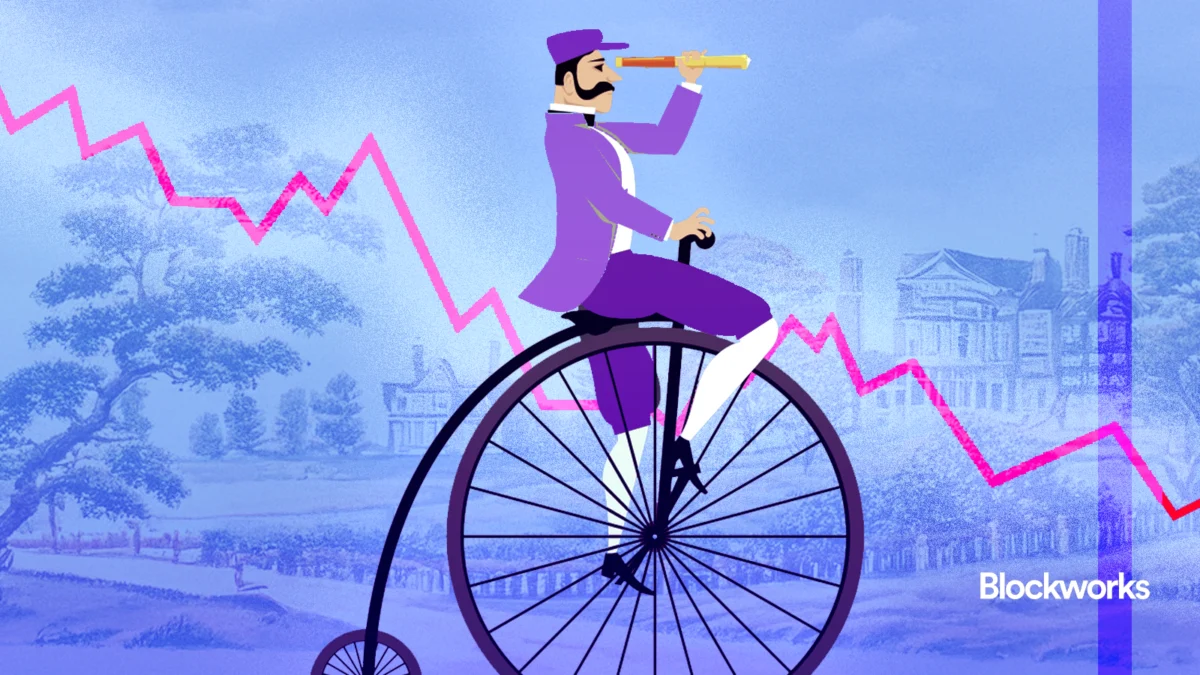
Long before the advent of the automobile, the airplane, or the internet, the world experienced a different kind of technological mania—one fueled by two wheels, a chain drive, and pneumatic rubber.
The 1880s marked a profound turning point in human transportation, characterized by a rapid shift away from the notoriously precarious Victorian "penny-farthing." These older machines required riders to sit directly and dangerously high above a comically oversized front wheel. They were soon replaced by the much safer, balanced design of the modern bicycle, positioning the rider comfortably between two similarly sized wheels.
This mechanical evolution was made possible by several key innovations. Chief among them was the roller chain, which efficiently transferred pedal power directly to the rear wheel while leaving the front wheel entirely dedicated to steering. Soon, complementary breakthroughs followed, including diamond-shaped metal frames, weldless steel tubing, and pneumatic tires. Together, these elements completed the bicycle’s swift metamorphosis from a dangerous novelty into a practical, mass-market mode of transport and physical exercise.
The resulting ride was smoother, safer, and remarkably more comfortable, capturing the public imagination almost overnight. Within a few short years, bicycle manufacturing ballooned into a massive, highly competitive industry. In the British manufacturing hub of Birmingham, for instance, the number of registered cycle manufacturers surged dramatically from just 72 in 1889 to 177 by 1895.
This sudden industrial boom ignited a speculative mania among investors. In their book Boom and Bust: A Global History of Financial Bubbles, the authors point to this period as a particularly striking and clear illustration of how financial bubbles can ultimately serve a broader economic purpose, even as they crash down on individuals.
Driven by intense investor enthusiasm, an index of cycle-related shares skyrocketed by an astonishing 258% in the first five months of 1896 alone. This meteoric rise naturally attracted a wave of speculative new stock market listings. During the two-year span leading up to 1897, no fewer than 670 cycle, tube, and tire firms floated shares on regional stock markets across England.
Many of these newly listed companies were of profoundly low quality, driven more by market hype than underlying business fundamentals. A prominent example was Accles Ltd., a firm that managed to sell £135,000 worth of shares to eager investors, only to report a meager £71 in actual revenue before filing for bankruptcy less than two years later.
Predictably, the inevitable correction was severe. Cycle shares shed approximately 73% of their total market value from the peak of the "Bicycle Mania" in the early months of 1896 down to the end of 1898, inflicting heavy losses on the speculators who had chased the rally.
Yet, despite the financial pain suffered by investors, the resulting market bust arguably proved to be worth the societal cost. The intense capital injection and subsequent overproduction accelerated critical manufacturing advancements—most notably in tire quality, which later laid the technical foundation for the burgeoning automobile industry. Furthermore, it spurred rapid advances in machine tooling and ball bearings that permanently elevated standards throughout English manufacturing and beyond.
Even more importantly, the massive flood of affordable bicycles produced during the bubble era exerted a profound, modernizing influence on society that contemporary analysts could scarcely have predicted.
During the Victorian era, strict social expectations dictated that women should always be chaperoned when traveling outside the home. The widespread availability of bicycles effectively shattered this norm. Chaperoning a woman on a bicycle was logistically impractical, and there were simply too many cyclists on the roads for traditional Victorian enforcers to police.
This newfound mobility also sparked the broader "rational clothing" movement. The sheer impossibility of cycling while constrained by heavy corsets and long, restrictive skirts drove the rapid development and popularization of more practical dresses and garments.
It is difficult to overstate how radical a cultural shift this represented at the time.
"Let me tell you what I think of bicycling," Susan B. Anthony told the New York World in 1896, capturing the sentiment of an era. "I think it has done more to emancipate women than anything else in the world."
So deep was the cultural connection between feminism and cycling that the bicycle quickly emerged as a defining symbol of the women’s suffrage movement. Women were riding quite literally free from rigid Victorian social norms, all built on the back of a speculative, oversupplied manufacturing market. For that historic cultural leap, society has the overenthusiastic, and ultimately burned, investors of the 1890s to thank.
Invest like it’s 1999?
History shows that this pattern—where brilliant, world-shaping technologies turn out to be financial disasters for the people who finance them—is a recurring theme in economic history.
In 1999, legendary investor Warren Buffett famously warned an audience of VIPs at an annual gathering in Sun Valley, Idaho, that world-changing innovations are frequently ruinous for the very investors who correctly predict their ascendance.
The automotive industry served as one of his primary historical examples. "If you had seen at the time of the first cars how this country would develop in connection with autos," Buffett told the audience, "you would have said, ‘This is the place I must be.’ But [out of] two thousand [auto] companies, as of a few years ago, only three survived… so autos had an enormous impact on America, but in the opposite direction for investors."
Airlines offered yet another cautionary tale of technological triumph paired with financial failure. "Imagine if you could have seen the future of the airline industry back there at Kitty Hawk," Buffett noted. "You [would] have decided, this is the place to be."
However, as he pointed out, "as of a couple of years ago, there had been zero money made from the aggregate of all stock market investments in the airline industry in history."
That was Buffett’s way of delivering a stark warning to his audience: they could be entirely correct in predicting that the internet would change everything about human society, while still being completely wrong about whether investors would capture any profit from it. The dotcom bubble burst just eight months later, validating his thesis in spectacular fashion.
Today, artificial intelligence stands out as the most obvious candidate for the next world-changing technology that will fundamentally transform daily life while ultimately disappointing financial backers. AI will almost certainly revolutionize nearly every aspect of the modern economy; however, which specific companies, if any, will manage to capture and retain the immense value it creates remains an open question.
Cryptocurrency faces a strikingly similar paradox.
The news cycle surrounding the sector has frequently delivered positive developments. Major regulatory shifts have seen institutions alter their posture, stablecoins have gained formal legislative frameworks, prediction markets have successfully broken into the mainstream, and traditional financial institutions have steadily scrambled to establish their own footholds. Yet, despite these structural milestones, token prices have often languished.
This disconnect may simply be a byproduct of market expectations running far ahead of near-term economic reality. But it may also signal a deeper structural truth: regardless of how much long-term value crypto ultimately creates, very little of that value may accrue directly to the investors who funded its foundational infrastructure.
Consider the widespread enthusiasm surrounding the tokenization of real-world assets. While the concept has attracted significant capital and interest, if the vast majority of those traditional assets are ultimately tokenized by massive corporate entities like Robinhood, BlackRock, and the DTCC, the independent crypto investors who financed the underlying public infrastructure may capture very little of the economic upside.
Similarly, the broader crypto industry has poured billions of dollars into researching and developing zero-knowledge proofs. It is easy to see how this cryptographic technology could provide immense public utility—potentially serving as humanity’s most reliable defense against a digital landscape flooded with AI-generated misinformation and synthetic media.
At the same time, zero-knowledge proving relies on complex mathematical protocols that do not inherently require a tradeable, speculative token to function. Consequently, what is brilliant for society at large may prove remarkably underwhelming for token investors.
These examples point to a broader reality within the decentralized technology space: much of the value crypto originally set out to create was never intended to be captured as corporate profit in the traditional sense.
Quite the opposite is true. Composable, open-source, and decentralized systems were explicitly designed to disintermediate traditional technology rent-seekers and tear down the high toll booths historically erected by legacy finance.
At the close of yet another volatile period for token valuations, it is easy to succumb to the temptation of concluding that the crypto industry is progressing too slowly toward its grand decentralizing goals. But if crypto ultimately turns out to be as profoundly beneficial for human society as the invention of the safety bicycle, no one should reasonably complain if it turns out to be equally challenging for speculators.





Comments (0)