



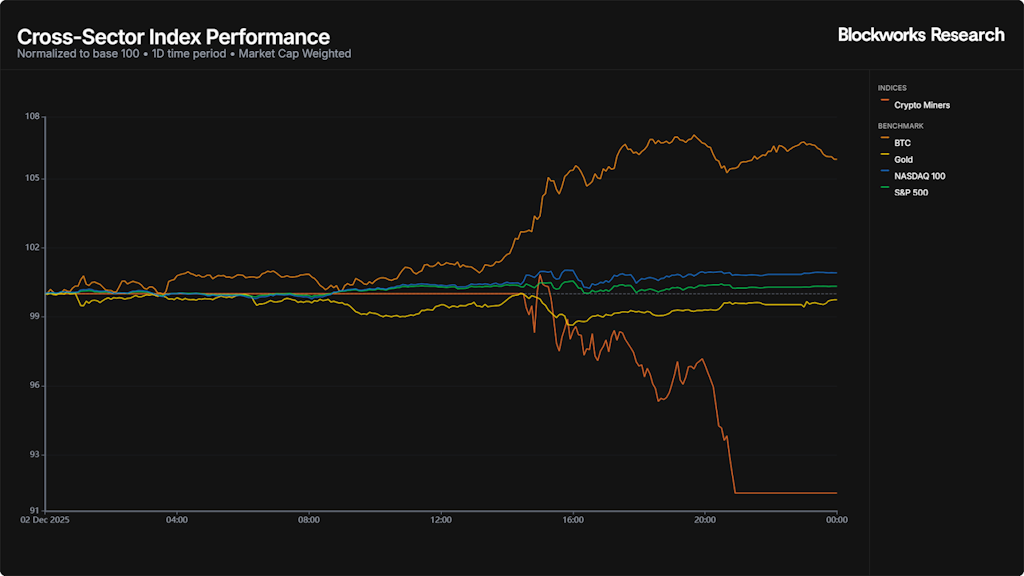
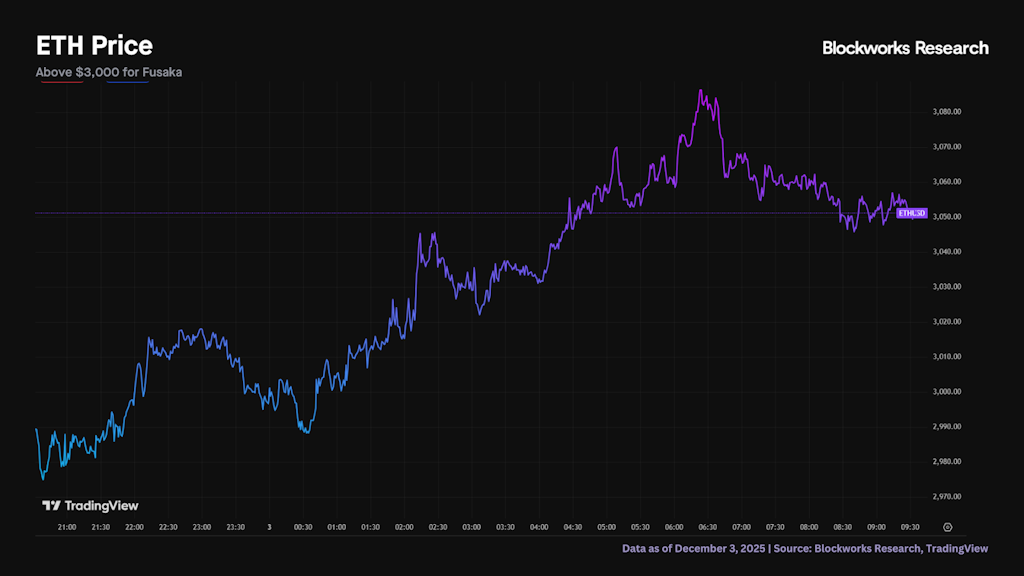
Financial markets leaned decisively into a risk-on posture, with the cryptocurrency sector outperforming traditional asset classes while major equities and safe-haven assets remained largely muted. Bitcoin held a steady mid-pack performance while traditional equity markets barely budged, reflecting a macro environment where investors are increasingly willing to add risk after a prolonged period of consolidation. Amid this broader market optimism, the Ethereum ecosystem captured the spotlight with the official deployment of the Fusaka upgrade. This milestone introduces PeerDAS, Blob Parameter Only hard forks, and the critical mechanics of EIP-7918, a suite of changes designed to overhaul data availability and potentially restore deflationary pressures to ether.

Across the broader financial landscape, traditional indices showed limited movement. The S&P 500 posted a modest gain, while the Nasdaq 100 ticked slightly higher, indicating a cautious yet stable macroeconomic backdrop. Safe-haven assets like gold slipped slightly, continuing a trend of capital migration
toward growth-oriented assets. Meanwhile, crypto-linked equities and mining stocks stood out as notable underperformers, registering steep pullbacks that pointed toward routine profit-taking and heightened sensitivity to Bitcoin’s ongoing price consolidation phases.
Despite the pullback in mining equities, internal crypto market breadth was exceptionally robust. Capital rotation quickly flowed back into core infrastructure and high-utilization protocols, with oracles and lending platforms leading the charge. The broader Ethereum ecosystem, decentralized finance protocols, modular frameworks, the Solana ecosystem, and perpetual swap platforms all recorded strong gains. This widespread participation signaled a healthy appetite for liquid altcoin beta across the board.
Further down the market stack, layer-2 networks, artificial intelligence tokens, launchpads, and gaming assets all trended upward. More speculative sectors, such as memecoins, lagged behind the broader market rally, suggesting that institutional and sophisticated retail capital favored utility-driven infrastructure over pure speculation. This shift aligns with an improving macroeconomic backdrop characterized by stabilizing bond yields, firmer global liquidity indicators, and positioning metrics that point to renewed risk tolerance.
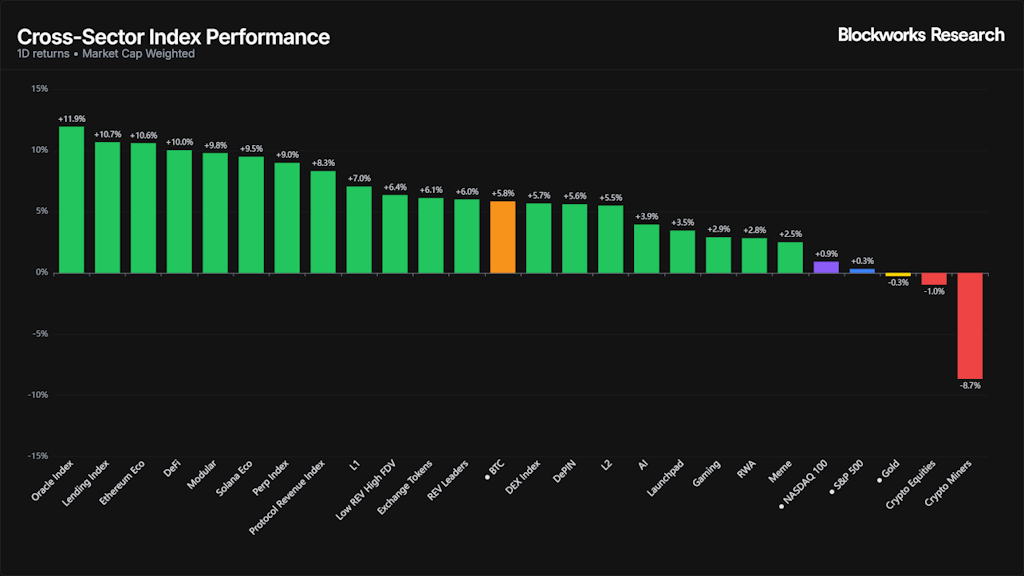
The resilience and strength in infrastructure sectors underscore expectations for rising onchain activity, driven largely by impending protocol upgrades and network scaling milestones. As traders look ahead to upcoming macroeconomic data releases that could test the durability of this risk-on sentiment, market volatility remains compressed. However, with sector dispersion widening across the digital asset landscape, market participants are bracing for sharper rotations as individual narratives continue to evolve.
At the center of today’s technical developments is the activation of the Fusaka upgrade on the Ethereum network. Fusaka marks the second major network upgrade for Ethereum this year, following the Pectra hard fork deployed in May. It is unusual for the Ethereum network to undergo two upgrades within a single calendar year, a scheduling anomaly driven by the fact that Fusaka functions more like a half-upgrade. Development teams were forced to scale back the upgrade’s scope earlier in the year after the Ethereum Object Format, commonly known as EOF, was mothballed in April, resulting in over a dozen Ethereum Improvement Proposals being removed from the final release.
Even with a reduced scope featuring only 12 remaining EIPs, the upgrade introduces structural improvements to network capacity. According to Gabriel Trintinalia, a protocol engineer at Consensys, the development team deliberately streamlined the upgrade to avoid deployment delays. During the initial formulation of Fusaka, any feature that carried a risk of postponing the fork—such as initiatives requiring prolonged academic research or introducing excessive protocol complexity—was systematically deprioritized and removed from the active scope.
Among the surviving proposals, PeerDAS stands out as the most significant technical contribution of the Fusaka upgrade. PeerDAS introduces data availability sampling, an innovative cryptographic mechanism that allows individual validators to share the heavy burden of processing and verifying data blobs. By distributing this workload efficiently across the validator set, the network can safely accommodate an increase in the number of blobs processed per block without compromising decentralization or node hardware requirements.
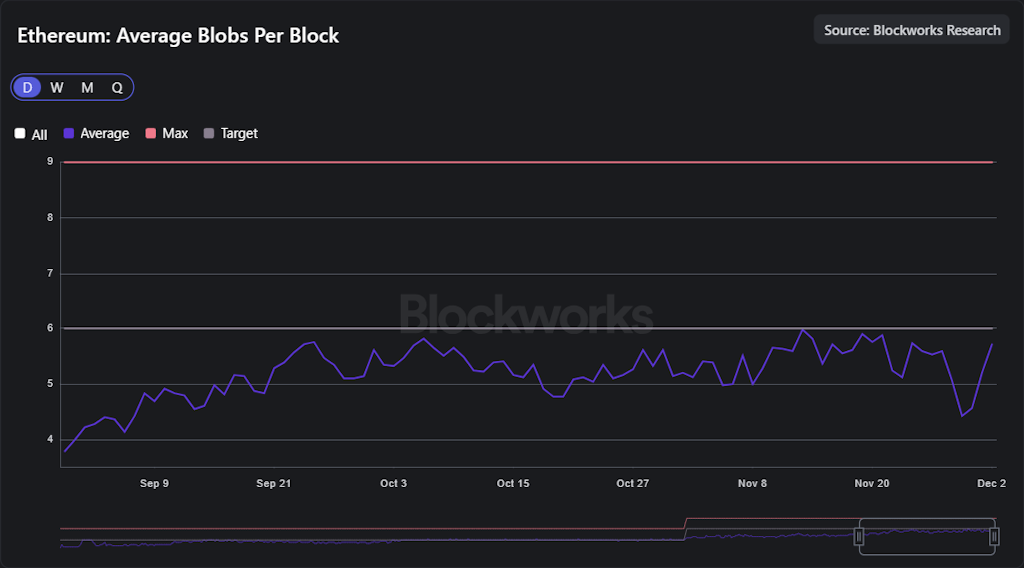
The introduction of PeerDAS arrives at a critical juncture for Ethereum’s scaling roadmap, particularly given the historical utilization rates of data blobs. Since their introduction, blobs have frequently failed to consistently hit their target volume of six per block. Ironically, just as network metrics began showing signs of approaching this target threshold, Ethereum core developers initiated plans to raise the target capacity further.
Technically, the Fusaka upgrade does not immediately raise the global blob target. Instead, it introduces Blob Parameter Only hard forks, often referred to as BPO hard forks. This innovation establishes a separate, streamlined, and far more agile process for adjusting blob storage parameters going forward. Rather than bundling capacity modifications into major, multi-year network upgrades, the BPO framework enables Ethereum developers to execute smaller, more frequent adjustments to blob storage capacity in response to real-time demand.
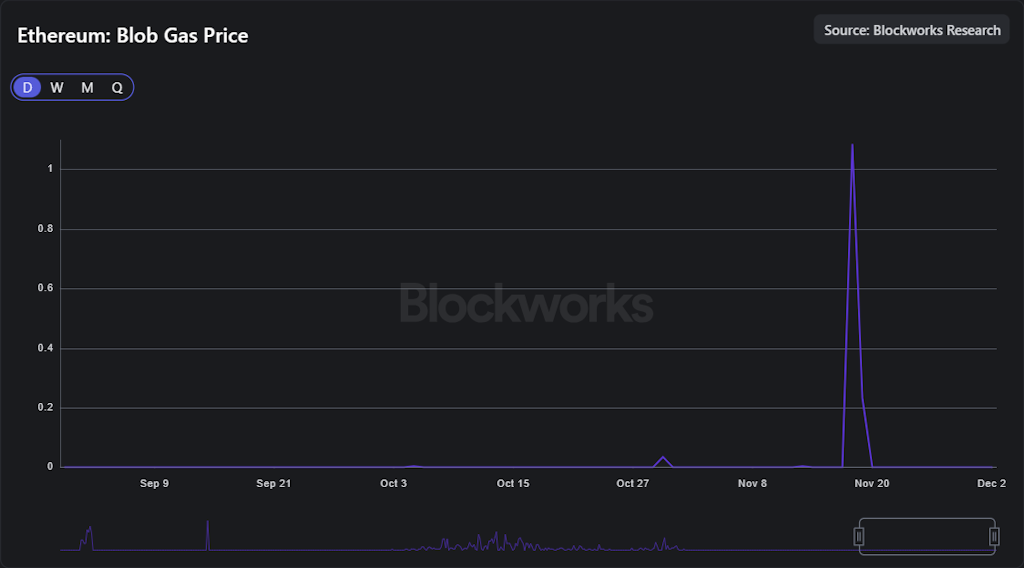
Despite these structural enhancements, a fundamental economic challenge has persisted within the network’s data availability layer. With available supply consistently exceeding current demand, blob gas prices have remained largely immaterial, lingering near nominal levels apart from occasional brief spikes where prices touched a modest one gwei. Historical data illustrates this disconnect clearly. In the months following the Pectra hard fork, specifically between June and October, the Ethereum network generated a meager total of approximately $900 in cumulative blob fees. Although a brief spike in November pushed that figure closer to $23,000, the revenue remained statistically immaterial relative to the network’s overall economic throughput. However, the temporary surge served to highlight the vast order-of-magnitude difference in revenue generation when blobs actually operate within a functioning, competitive market.
This economic reality is precisely why industry analysts argue that EIP-7918 deserves significantly more attention from the broader community. EIP-7918 directly addresses the persistent structural flaws of the blob fee market by implementing a dynamic reserve price tied directly to underlying execution costs, effectively functioning as a protocol-level floor price. When layer-2 execution costs outpace blob costs, this mechanism successfully prevents the blob fee market from collapsing into irrelevance at a single gwei.
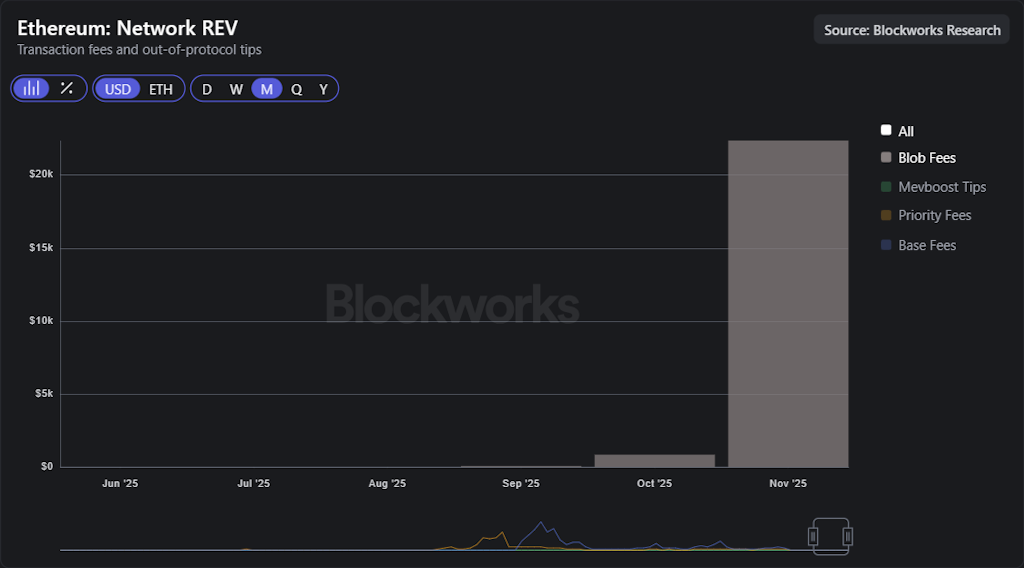
Model simulations indicate that if EIP-7918 had been operational earlier in the year, the amount of burnt blob fees would have been substantially higher, preserving the tokenomics intended by fee-burning mechanisms. Beyond acting as a robust reserve pricing model, the upgrade introduces greater price stability and predictability into the ecosystem, helping to avert the dramatic fee volatility that typically occurs whenever the data blob market transitions into states of inelastic demand.
When combined with the implementation of PeerDAS and the flexibility provided by BPO hard forks, EIP-7918 suggests a transformative outlook for the network. As Ethereum successfully scales the capacity of its layer-2 ecosystem, underlying blob fees should naturally rise alongside increased network usage, reversing a historical relationship that has traditionally been strictly inverse. For long-term ether holders, this convergence of optimized layer-1 scaling and reformed fee dynamics offers a viable pathway to return the circulating supply of ETH back into a sustained deflationary phase.





Comments (0)