


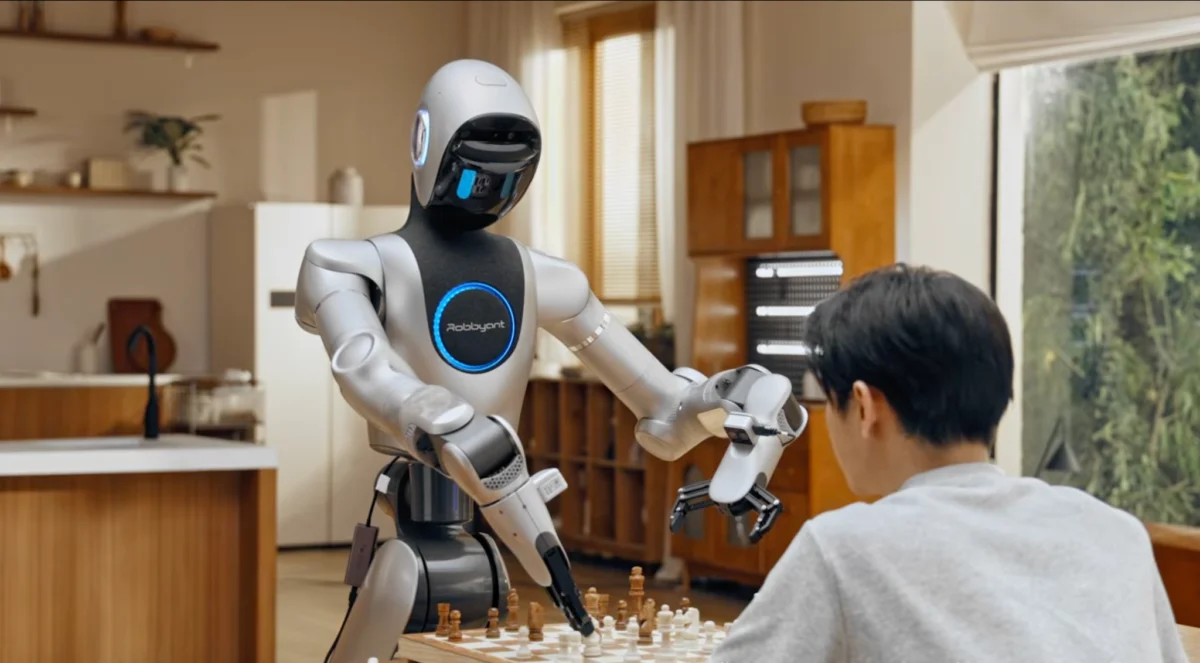
The fundamental gap between digital artificial intelligence and physical robotics lies in a simple, unyielding constraint: time and space. While a traditional chatbot can afford to wait patiently for another prompt, process information asynchronously, or rephrase a flawed response with zero real-world consequences, a robot operating in a dynamic environment does not enjoy that luxury. By the time a physical agent processes a change in its surroundings, it may already be colliding with an obstacle, dropping an object, or failing to navigate a changing workspace.
This core divergence transforms embodied AI into an entirely distinct and formidable engineering problem. Intelligence can no longer exist as a purely abstract exercise in pattern matching or language generation; it must actively account for physical space, interpret multi-dimensional sensor streams, and continuously predict how an immediate action will alter the unfolding reality around it.
Tackling this complex challenge head-on, Robbyant—an advanced embodied AI company operating under the umbrella of Ant Group—has officially introduced LingBot 2.0. Built from the ground up to address the rigorous demands of physical interaction, LingBot 2.0 represents a comprehensive architectural shift in how artificial intelligence systems perceive, reason, and execute tasks across diverse hardware configurations. Rather than merely adapting existing large language models or computer vision tools designed for virtual environments, Robbyant engineered LingBot 2.0 as an embodied-native system where perception, environmental modeling, and physical execution function as interconnected parts of a unified intelligence.
Physical Intelligence Begins With Perception
When a robot is deployed into a real-world scenario, whether it is a bustling corporate office, a manufacturing facility, or a residential home, it is immediately inundated with a continuous, chaotic stream of spatial data. Objects possess depth, mass, and precise three-dimensional coordinates; human beings move unpredictably through the vicinity; and the physical layout itself can shift mid-task. In this operational context, comprehending a verbal instruction or recognizing an object in a static photograph covers only a tiny fraction of the cognitive pipeline required for competent operation.
To conquer this initial hurdle, Robbyant developed LingBot-Vision and LingBot-Depth 2.0, which form the robust perception foundation of the LingBot 2.0 ecosystem. Together, these advanced systems supply robots with exhaustive information regarding objects, surfaces, and intricate three-dimensional space, feeding clean, structured data into downstream reasoning and action modules. Internally, Robbyant categorizes this critical foundational layer under the guiding principle of "See Clearer."
This nomenclature underscores an essential truth of robotics: physical agents must achieve absolute clarity regarding where objects reside in the physical universe before they can even begin to formulate a strategy for how to interact with them. Furthermore, this spatial data cannot remain static. As a robot initiates a movement—such as extending an arm to grasp a container—the surrounding environment changes dynamically. The intelligence governing the machine must remain fully capable of processing and adapting to the exact physical reality it encounters at every single millisecond of the operation.
World Models Give Actions Consequences
Once a robot has successfully perceived its immediate surroundings, the next monumental challenge involves anticipation and reasoning. This is where the architecture transitions into its prediction phase, handled expertly by LingBot-Video and LingBot-World 2.0. Together, these sophisticated models simulate physical environments and forecast how those environments will evolve over time, establishing what Robbyant defines as its "Think Deeper" operational layer.
The ability to model the future is of paramount importance in robotics because every single movement inherently alters the physical world. Picking up an object immediately changes its position and removes it from a surface. Navigating through a cramped room instantly reconfigures the spatial relationship between the robot and every piece of furniture nearby. Therefore, effective machine reasoning cannot simply be reactive; it must actively anticipate what a prospective action is likely to produce before the physical command is even fully executed.
These advanced world models provide software and hardware developers with a powerful mechanism to study complex environmental interactions alongside the foundational perception data that informs them. This symbiotic relationship sits at the very heart of Robbyant’s full-stack approach. By ensuring that seeing and predicting consistently supply accurate, reliable information that execution modules can immediately utilize, the entire system operates with a cohesive understanding of cause and effect in the physical realm.
Execution Has to Keep Pace
Perception and prediction are crucial cognitive exercises, but an intelligent agent ultimately exists to act. At the final stage of the operational pipeline, the robot must physically move, manipulate objects, and navigate its workspace. To handle this demanding phase, Robbyant integrated LingBot-VLA 2.0 and LingBot-VA 2.0, forming the "Act Faster" component of the architecture. These systems are responsible for translating the complex data streams generated by the earlier perception and reasoning stages into precise, fluid physical behaviors.
Standing as the technological capstone of the entire framework, LingBot-VA 2.0 was deliberately constructed from scratch around the unique demands of embodied AI, rather than relying on retrofitted models originally trained for text generation, chatbot interactions, or entertainment purposes. Dynamic modeling and causal prediction are deeply embedded directly into an architecture intended specifically for real-time environmental interaction and physical execution.
Within this execution layer, latency transitions from a minor inconvenience into a critical bottleneck. While a software program generating written text can afford to spend an extra second or two computing an answer with virtually zero physical consequences, a robot reacting to sudden movements in a shared human workspace operates on a vastly different and unforgiving timeline. Its perception, reasoning, and motor-control loops must execute with extreme efficiency, reaching the actuation systems quickly enough to ensure that the physical response remains relevant, safe, and effective.
One Brain Faces Many Bodies
Beyond the hurdles of perception, prediction, and latency, the robotics industry faces a persistent hardware fragmentation problem: physical bodies differ wildly. A sophisticated AI model that successfully controls one specific robotic configuration may ultimately need to command machines with entirely different dimensions, degrees of freedom, limb lengths, or locomotion methods.
Robbyant tackles this daunting challenge with an ambitious overarching goal: building a single, generalized brain capable of operating all robots. To achieve this cross-embodiment capability, LingBot-VLA 2.0 integrates extensive training data harvested from 20 distinct robotic hardware configurations sourced from 17 different manufacturing brands during its pre-training phase.
LingBot 2.0 approaches this grand ambition at a comprehensive system level, seamlessly linking specialized capabilities so that true embodied intelligence can evolve uniformly across vastly different robot forms. The six-model architecture ensures that perception, prediction, and action each hold clearly defined roles within a single, unified technical framework. Moreover, in a move designed to foster broader industry collaboration and academic research, selected models and core technologies have been released as open-source assets, accompanied by detailed technical reports and research papers. This transparency gives developers, engineers, and researchers the necessary materials to inspect, test, and build upon state-of-the-art embodied AI architectures.
A Robot Brain Starts With Reality
The fundamental technical challenge of embodied AI inevitably begins the moment artificial intelligence is forced to exist and operate within physical space. Every single computational decision occurs amid constantly shifting surroundings, and every physical action immediately creates the exact conditions that will dictate the next step of the task.
LingBot 2.0 treats this continuous loop as the absolute bedrock of modern robot intelligence. By dividing the heavy workload across six specialized models dedicated to seeing, understanding physical change, and executing precise movement—while maintaining seamless integration as a unified, full-stack system—Robbyant is charting a new course for the industry. For the company and the broader robotics community, building a truly generalized robot brain starts with fully understanding and respecting what happens when software is finally required to act directly within the real world.



Comments (0)