


BEIJING — Prolonged U.S. Congressional scrutiny of former Nvidia CEO Jensen Huang’s romantic involvement with an alleged Chinese spy has significantly raised the stakes for already tense economic and geopolitical relations between the world’s two largest superpowers.
The fallout from the scandal has moved swiftly. Nvidia’s long-serving chief executive resigned on Thursday and has officially agreed to testify before the U.S. Congress sometime before Thanksgiving, with the hearing scheduled for Nov. 26. The development has sent shockwaves through the global technology sector and Washington alike, threatening to unravel years of delicate lobbying and trade maneuvers centered around the future of artificial intelligence hardware.
House Foreign Affairs Chair Brian Mast, R-Fla., told reporters following the announcement that the investigation is unlikely to end with Huang’s appearance, noting there could potentially be "public hearings for other people or other things down the road" as lawmakers dig deeper into the national security implications of the affair.
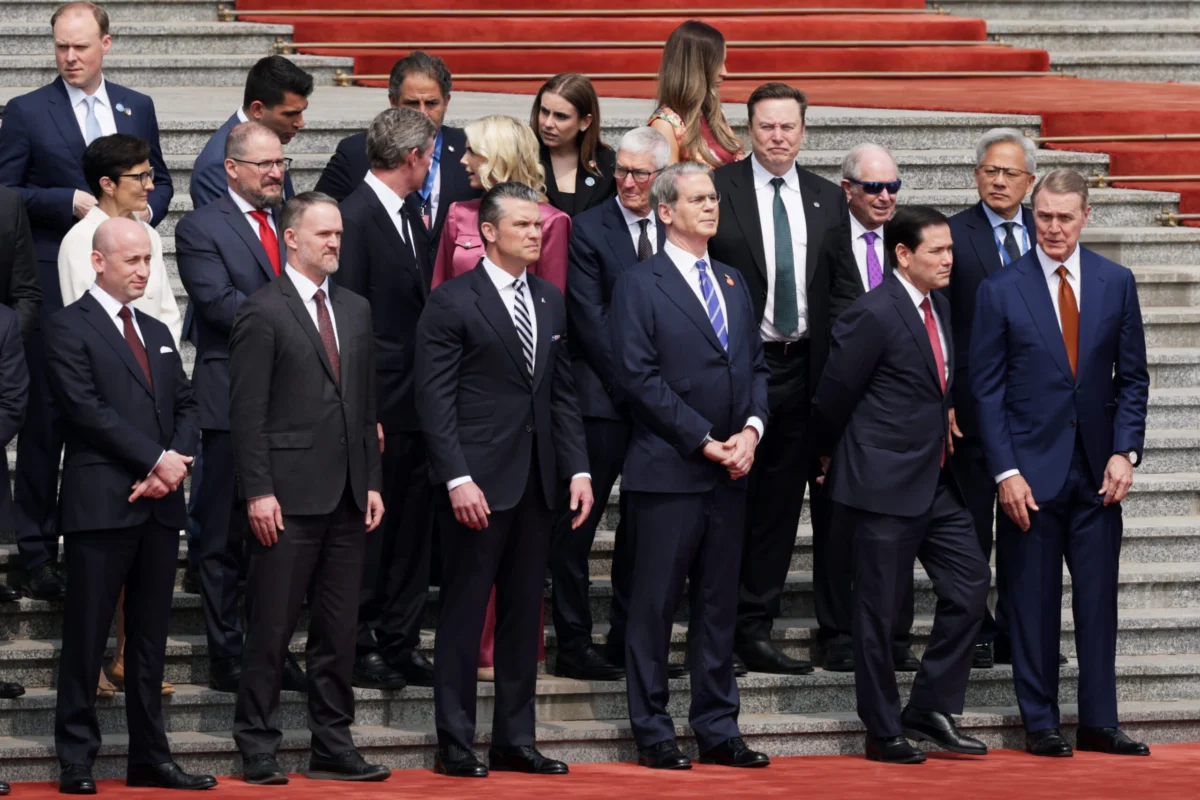
The controversy erupts at a particularly sensitive time for bilateral relations. Jensen Huang, a towering figure in the artificial intelligence boom and a last-minute addition to U.S. President Donald Trump’s business delegation to Beijing during a high-profile visit in May 2026, has suddenly transitioned from a primary advocate for technological cooperation to the epicenter of a major geopolitical storm.
"I worry this incident will deteriorate the atmosphere dramatically in Washington against China, and also export control matters, and also the Trump administration in its way of dealing with China," said a Beijing-based foreign policy researcher. The academic spoke on the condition of anonymity, noting that researchers in China risk severe disciplinary action or even professional removal for speaking to international media outlets without authorization.
The researcher drew historical parallels, warning of a potential return to a hostile climate reminiscent of the 1990s. During that era, a Chinese-American nuclear physicist was heavily suspected of sharing sensitive nuclear secrets with the Chinese government, triggering a high-profile federal prosecution that ultimately saw the court dismiss all but one of 59 original counts after extensive legal fallout.
Now, the broader bilateral relationship—which has been supported by a fragile trade truce negotiated between Washington and Beijing—faces yet another severe espionage allegation. This time, however, the controversy swirls around the central tech executive at the very heart of the fierce global competition over artificial intelligence hardware and semiconductor supremacy.
"This isn’t really about Jensen," said Mitch Presnick, a non-resident honorary fellow focusing on the Chinese economy at the Center for China Analysis within the Asia Society.
Presnick noted that certain factions within Washington have long preferred aggressive measures to completely decouple from or exclude China from critical supply chains. These policymakers, he explained, fundamentally disagreed with the semiconductor executive’s consistent message that American technology needed to remain active and utilized within the Chinese market in order for U.S. firms to stay relevant to global technological development.
Washington originally moved to restrict Nvidia’s ability to sell its advanced artificial intelligence chips to China in 2022 amid mounting national security concerns. However, the political landscape shifted somewhat when the Trump administration, returning to office, eased many of the stricter Biden-era export controls in 2025.
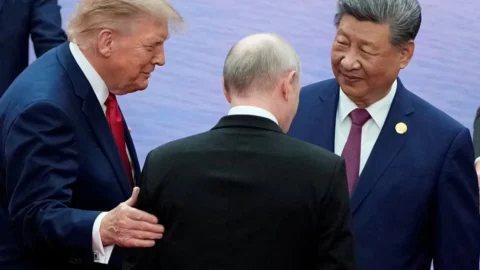
Throughout this shifting regulatory environment, Nvidia’s Huang actively advocated his views across a wide spectrum of international markets, ranging from the United States and China to Taiwan and Germany. At the absolute peak of his political and corporate influence, Huang even shared a banquet table in September with U.S. President Donald Trump and Chinese President Xi Jinping during a high-level state summit in Washington, D.C. The two world leaders are next expected to meet face-to-face alongside the upcoming APEC Economic Leaders’ Meeting scheduled for Nov. 18 to 19 in Shenzhen, China.
Yet, the domestic and international political landscape has changed overnight. Democrats swept the U.S. midterm elections on Nov. 3, and subsequent investigative reports surfaced detailing Huang’s alleged connection to a Beijing-based intelligence asset. Jensen Huang formally admitted to the affair over the weekend, though it remains entirely unclear whether any classified or sensitive corporate or national
security information was ever shared during the relationship.
Meanwhile, the Chinese government has forcefully pushed back against the narrative. China’s Foreign Ministry dismissed the "Chinese spy" allegations as entirely unfounded smears intended to damage Beijing’s international standing.
"The U.S. should stop fabricating the ‘Chinese spy’ narratives as a pretext for imposing technology restrictions," Foreign Ministry spokeswoman Mao Ning said Thursday, according to an official English translation provided by Beijing.
More Controls, More Unease
Despite Beijing’s denials, international policy and economic analysts predict that the immediate and tangible outcome of the scandal will be a surge in the very U.S. export restrictions that China has spent years trying to avoid.
"The Nvidia scandal has destroyed the credibility of the biggest corporate lobbyist against U.S. export controls on China," said Arthur Kroeber, a partner at Gavekal Dragonomics. "There is now a good chance that Congress will tighten up those rules before the end of this year."
Looking ahead at the legislative landscape, Kroeber warned that Beijing could retaliate by restricting supplies of critical rare earth minerals or essential chipmaking materials if the U.S. attempts to push further restrictions through measures like the MATCH Act or the Affiliates Rule. If enacted, those legislative measures could severely limit Beijing’s access to key technology suppliers located in the Netherlands and Japan, while dramatically expanding U.S. export controls to encompass a wide array of foreign subsidiaries.
"So when Trump and Xi meet next week in Shenzhen they will probably agree to keep the uneasy U.S.-China truce going," Kroeber said. "It will just keep getting more and more uneasy."
A ‘Spy Balloon’ Redux
Pressuring China has long stood out as a rare area of genuine bipartisan agreement in an otherwise deeply divided Washington. In response to years of tightening American restrictions—dating back to the initial 2022 curbs on Nvidia’s advanced chips—Beijing has systematically ramped up investments in homegrown technological alternatives. Even after President Trump approved the resumption of certain Nvidia chip sales, those policy changes had yet to translate into meaningful, large-scale commercial orders from Chinese firms.
"We are going to see the two countries start to decouple again in terms of technology," George Chen, a partner and chair of digital practice at The Asia Group, said on Thursday, emphasizing that "China will double-down on self-reliance."
Drawing comparisons to past diplomatic crises, Chen added, "I begin to feel the Jensen Huang case feels more like another ‘spy balloon’ case."
In early 2023, during the Biden administration, the U.S. military shot down what American officials described as a Chinese surveillance balloon off the East Coast. Beijing maintained that the object was merely a civilian weather research airship that had accidentally blown far off course. Nevertheless, the high-altitude incident severely derailed diplomatic channels, forcing then-U.S. Secretary of State Antony Blinken to postpone a planned high-stakes trip to China by more than four months amid an already chilly diplomatic freeze.
Fast-forwarding to the unfolding Huang affair, analysts point to the suspicious timing and nature of the leaks.
"The timing is no accident here," Presnick said, pointing to "a very curious set of coincidences, and also the fact that the information came through unnamed sources, and there were other things that were strange about it."
Days after the conclusion of the U.S. midterm elections, both The Financial Times and The New York Times published reports citing anonymous intelligence sources indicating that U.S. government intelligence agencies believe China’s Ministry of State Security recruited a businesswoman named Alice Huang to gather intelligence on the Nvidia chief executive.
"Obviously somebody was looking to do this, and they wanted to… make the discussion about espionage, and not about American competitiveness," Presnick said.
He added that Washington’s hyper-fixation on a bilateral U.S.-China framework often misses the broader global picture. "The U.S. is thinking in terms of U.S. and China, but that’s not what China is thinking," he noted, highlighting Beijing’s expanding trade partnerships with fast-growing, non-Western economies across Africa and Southeast Asia as part of its long-term economic hedging strategy.


Comments (0)