



Bitcoin (BTC) tumbled to fresh multi-week lows following Friday’s Wall Street opening bell, as digital asset markets decoupled sharply from traditional equities. While major U.S. stock indices rebounded on the back of discounted tech shares, the leading cryptocurrency faced renewed downward pressure triggered by a stronger-than-expected labor market report that raised expectations of continued macroeconomic tightening.
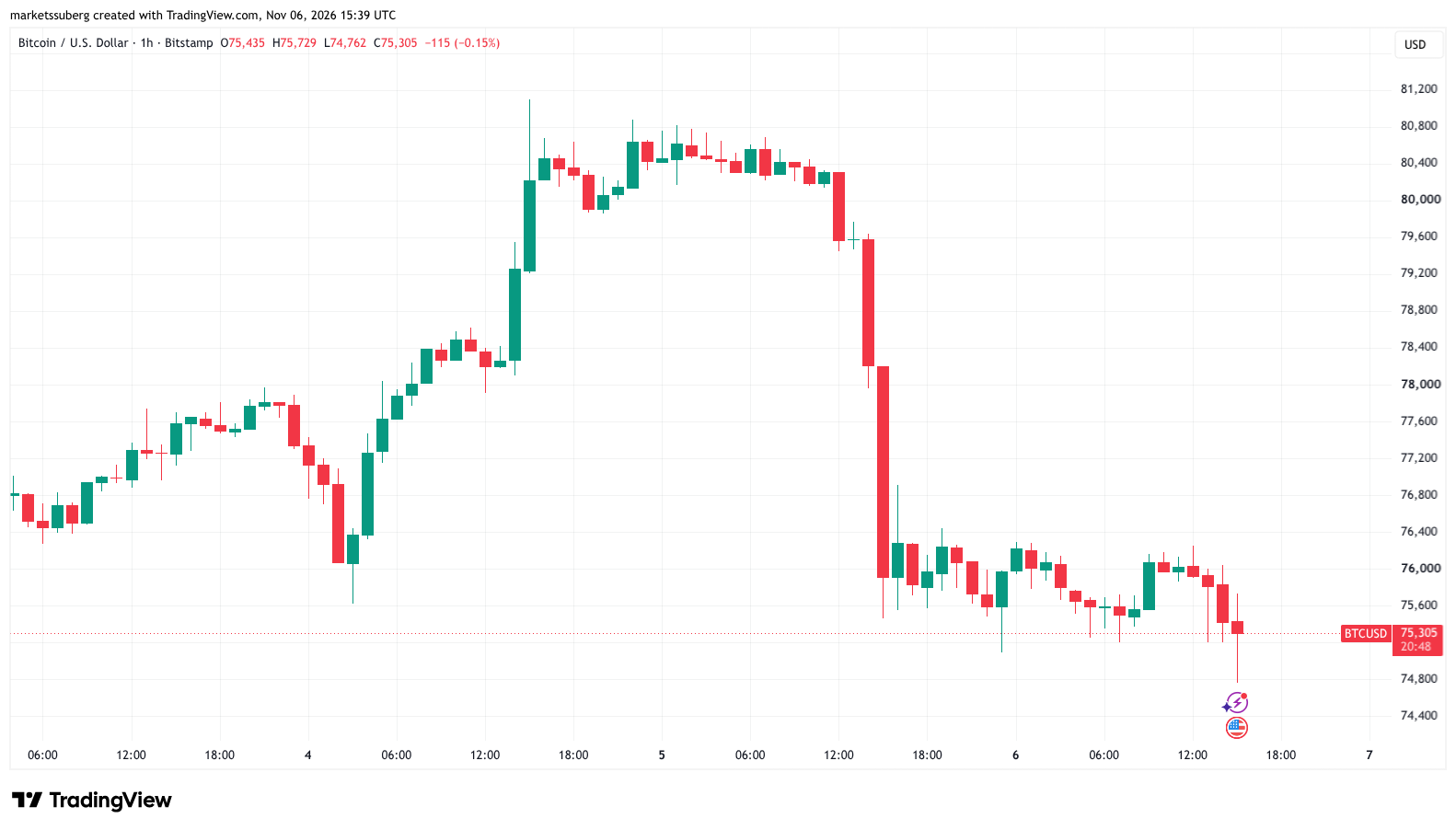
Data from TradingView captured BTC/USD slipping below the $75,000 threshold, reaching valuation levels not witnessed since mid-August. The broader cryptocurrency market felt the immediate ripple effects of the correction, with the total crypto market capitalization shedding 0.5% over a single 24-hour trading window. This retreat contrasted starkly with the performance of traditional risk-on assets in the United States.

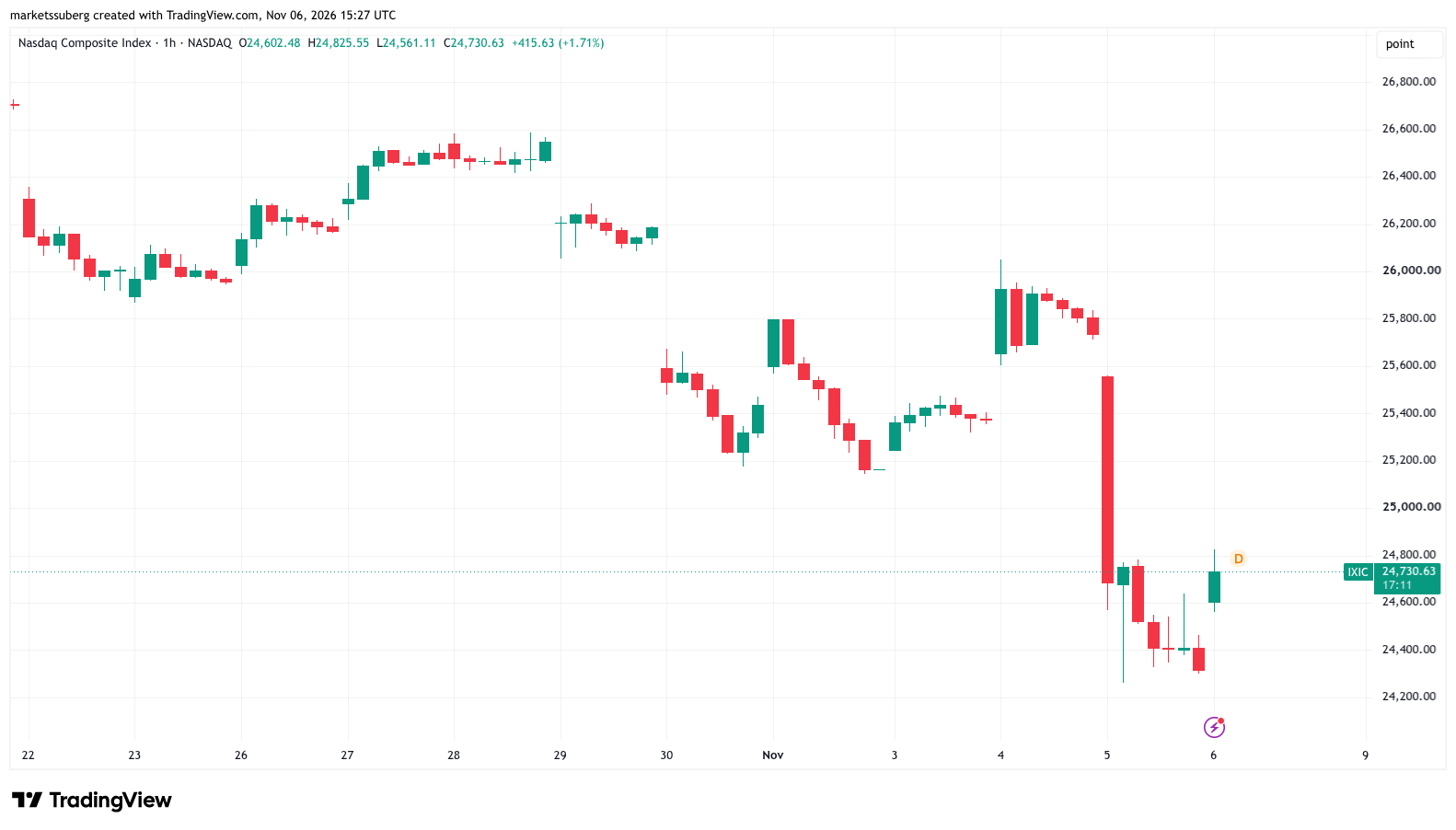
As the Wall Street trading session got underway, U.S. stock markets rebounded vigorously as astute traders moved quickly to capitalize on heavily discounted technology shares. At the time of writing, the benchmark S&P 500 index had climbed 0.6%, while the technology-heavy Nasdaq Composite Index posted a more robust gain of 1.2%. Individual mega-cap and semiconductor equities experienced even sharper upward momentum, with prominent industry names like SanDisk and Micron Technologies recording identical surges of 6.3% each.
The divergence between traditional equities and digital assets was primarily catalyzed by the release of the U.S. nonfarm payrolls report for October. According to official data published by the U.S. Bureau of Statistics (BLS), the American economy added 165,000 jobs during the month, vastly outstripping consensus market forecasts, which had pinned expectations much closer to a modest 65,000 jobs. Furthermore, the BLS revised September’s initially reported figure of 29,000 upward to a healthier 60,000.
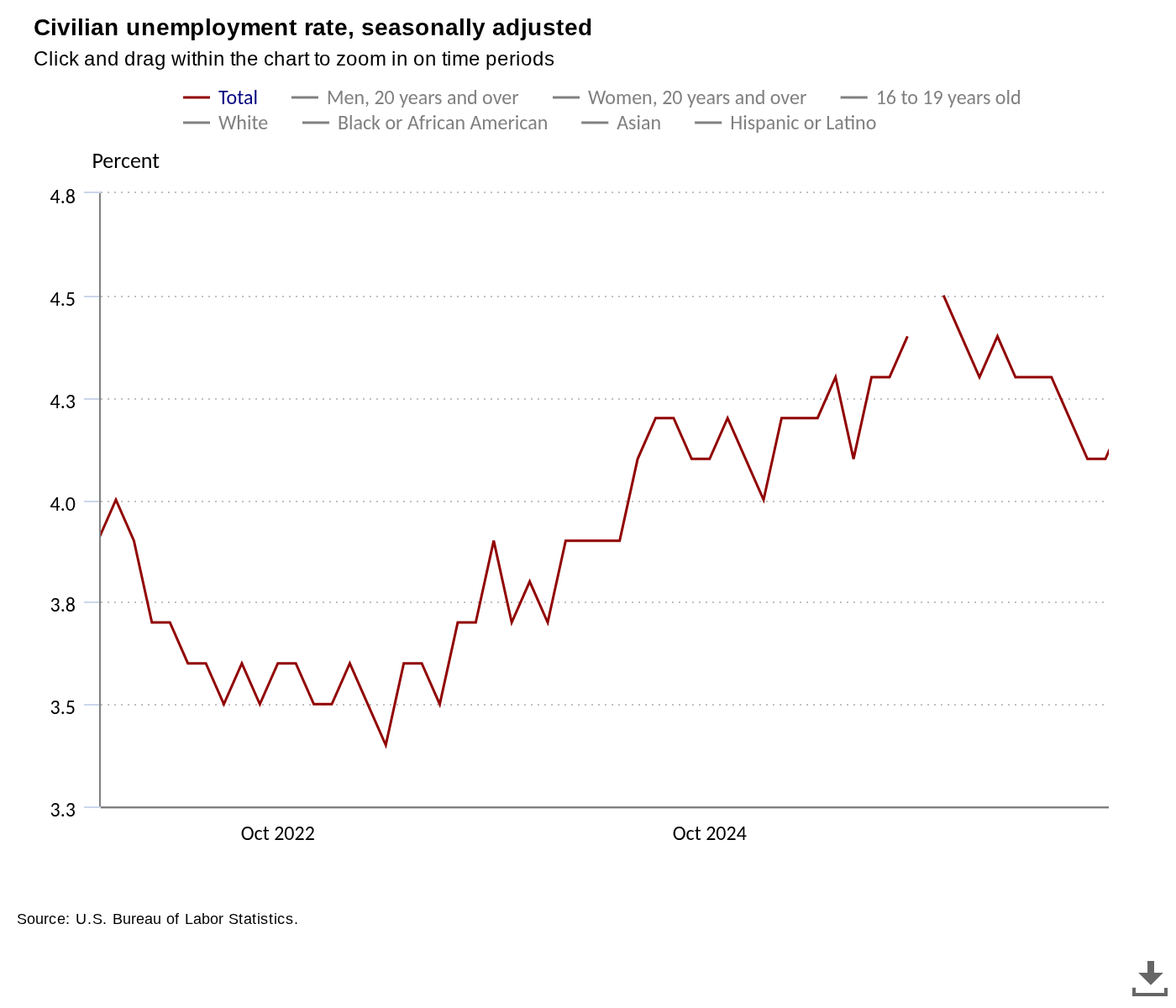
Elaborating on the sector-specific growth, the official BLS release noted that employment increased notably across professional and business services, healthcare, and transportation and warehousing sectors. Concurrently, the national unemployment rate ticked down to 4.1%, beating out economist projections that had anticipated a reading of 4.2%.
Macroeconomic Headwinds and Federal Reserve Policy Expectations
Stronger-than-anticipated labor market performance frequently acts as a formidable headwind for cryptocurrencies and other speculative risk assets. Robust employment figures signal to policymakers and investors alike that the broader economy possesses sufficient underlying strength to absorb further financial policy tightening without tipping into a severe recession. However, this economic resilience often translates into a reduction of speculative liquidity inflows into decentralized markets as capital shifts toward safer yields.
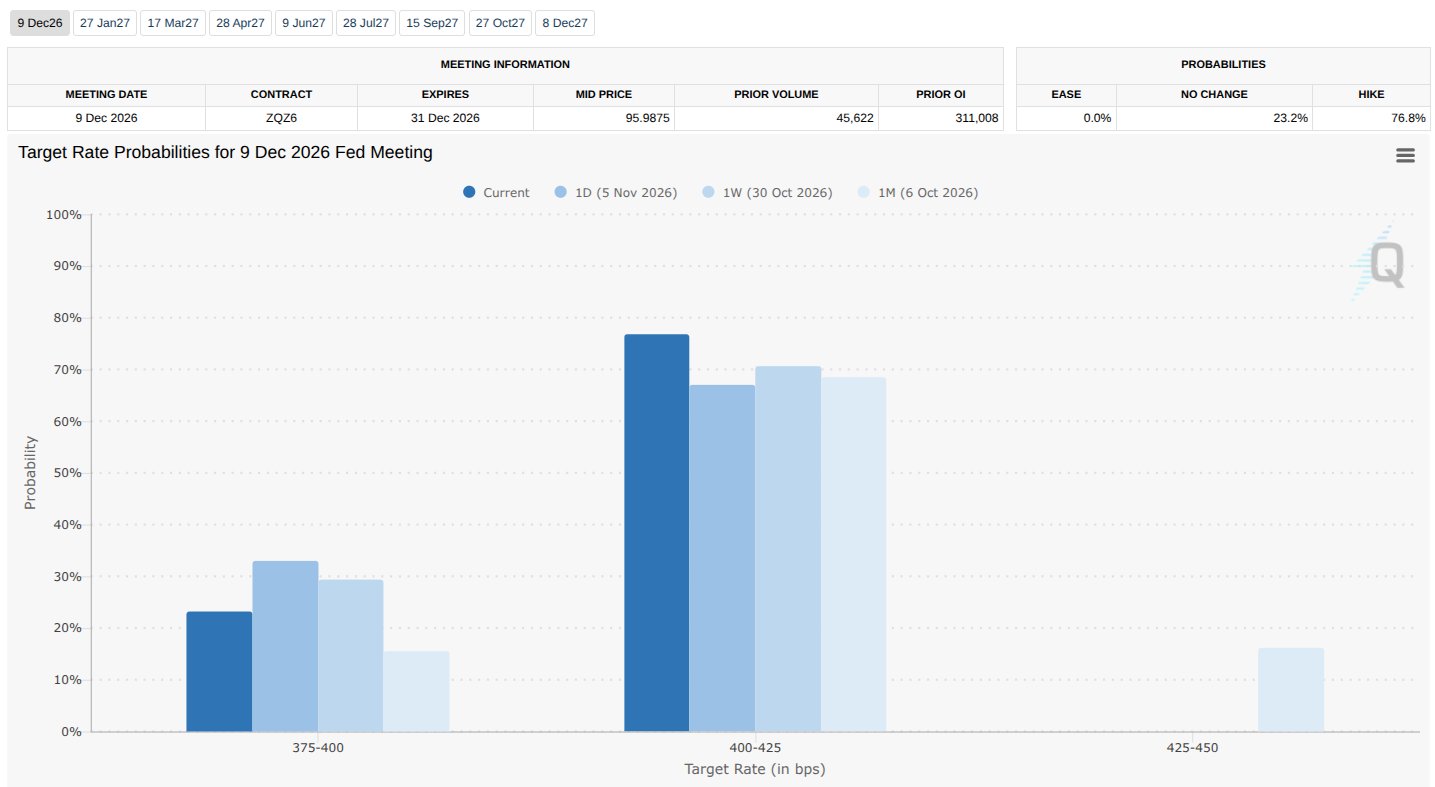
The immediate casualty of the upbeat October payrolls data was shifting sentiment regarding monetary policy. Following the release, market pricing tools captured a dramatic shift in trader expectations for the upcoming Federal Open Market Committee (FOMC) meeting. Data sourced from CME Group’s FedWatch Tool revealed that the probability of the Federal Reserve implementing a 25-basis-point interest rate hike at its December meeting jumped significantly from 66.9% to 76.8%.
This heightened probability of tighter monetary conditions cast a long shadow over digital assets, prompting leveraged traders to pare back exposure and driving Bitcoin down through critical psychological levels. The cryptocurrency’s failure to join the stock market’s recovery highlighted a temporary decoupling, as macro traders focused heavily on the implications of stubborn inflation risks and high interest rates rather than standard equity correlations.
Technical Analysis Points to Downside Risks and Critical Support Levels
Amid the broader market sell-off, Bitcoin found itself testing crucial technical support around its 50-week simple moving average (SMA), situated near $77,533. Market participants and professional chart analysts quickly turned their attention to whether this historical trend line would hold firm against mounting selling pressure.
In his latest market commentary shared with followers, Keith Alan, co-founder of crypto trading analytics platform Material Indicators, issued a cautionary warning regarding the potential consequences of a decisive breakdown below this vital technical boundary. The 50-week SMA has reliably served as a foundational support structure for Bitcoin price action since mid-September.
As strong as this support level looks from both a technical and structural perspective, analysts emphasized that its true durability cannot be reliably confirmed until the weekly candle officially closes. Alan noted that should the immediate support area around $75,500 fail to hold the line, BTC/USD runs a legitimate risk of correcting further down toward the $69,000 region.
Looking ahead toward a potential market stabilization, analysts stressed that any meaningful recovery for the leading cryptocurrency will require market structure to shift on lower time frames. Specifically, Bitcoin needs to print a definitive series of higher highs and higher lows to rebuild bullish momentum and reassure traders ahead of the closing weeks of the quarter.





Comments (0)