



As the global financial markets wind down for the year amidst holiday closures and quiet year-end trading sessions, investors are taking a moment to step back, reflect on the macroeconomic landscape of 2025, and contemplate positioning strategies for 2026. Traditional financial markets closed their doors following the Christmas holiday, leaving crypto markets to experience a subdued period characterized by muted trading volumes across the board. Bitcoin, the flagship digital asset, slipped slightly by approximately 0.4% in thin holiday trading, mirroring the broader lull seen across various asset classes. However, while short-term price action remains muted, a wider lens reveals a striking divergence in asset performance over the past twelve months—most notably, the dramatic resurgence of traditional safe-haven precious metals contrasted against the persistent stagnation of decentralized finance (DeFi) tokens.

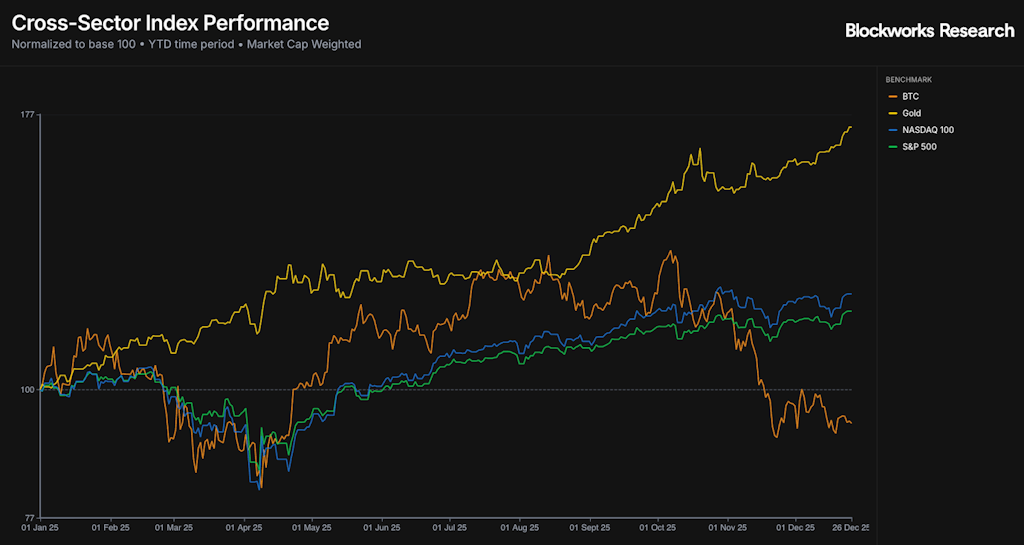
Bitcoin has notably underperformed broader stock market benchmarks throughout 2025. Yet, its performance relative to precious metals like
gold and silver is even more pronounced and serves as one of the defining financial narratives of the year. In hindsight, the extraordinary run of gold and silver will likely be remembered as the standout market phenomenon of 2025—an unexpected outcome for many market participants who entered the year focused primarily on digital alternatives.
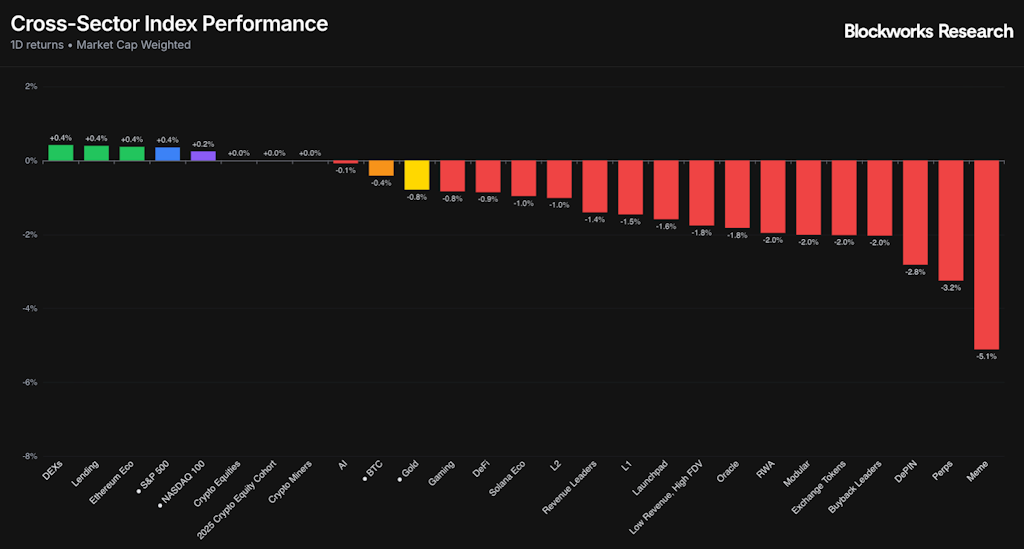
Gold is currently experiencing its best performing year since 1979, surging roughly 72% year-to-date. The precious metal recently breached historic milestones, breaking out to new all-time highs above $4,500 an ounce. Driven by persistent macroeconomic uncertainties, central bank accumulation, and shifting global liquidity dynamics, gold has reasserted its traditional role as the ultimate store of value during turbulent times. Silver has posted an even more aggressive trajectory, rallying nearly 160% year-to-date and climbing about 45% in the span of just a single month. This explosive momentum pushed silver to a record high of approximately $75 an ounce just before the Christmas holiday.
In stark contrast to the historic rallies seen in precious metals, the digital asset ecosystem tells a very different story, particularly within the decentralized finance sector. Many well-established DeFi tokens are currently trading near multi-year lows, creating a fascinating divergence between depressed asset valuations and the underlying fundamental health of these protocols. Despite trading at heavily discounted levels, the fundamental metrics, active usage, and forward-looking growth trajectories of numerous DeFi projects remain strong.
A deeper examination of on-chain data reveals a fundamental shift in how value is captured within modern blockchain architectures. Historically, value accumulation was heavily concentrated at the base-layer infrastructure level. However, the paradigm has visibly flipped toward applications. Taking Solana as a prime example, decentralized applications built on top of the network now generate roughly three times the revenue produced by the underlying network infrastructure itself. This structural evolution highlights a maturing ecosystem where end-user engagement and fee-generating protocols capture the economic upside.
As market participants look ahead to 2026, these dynamics present compelling opportunities within liquid tokens. The central question facing investors and institutional allocators as the new year approaches is whether, and precisely when, market valuations will begin to reflect this new reality where application-layer revenues outpace infrastructure earnings. Until that re-rating occurs, the disconnect between depressed token prices and robust protocol fundamentals remains one of the most intriguing setups heading into the new year.




Comments (0)