



While making digital payments has long since become second nature for consumers around the globe, getting paid and receiving funds can still present a complex maze of obstacles. Whether it is a street food vendor operating in a bustling market in Asia, a crafter selling handmade goods at a local weekend market in Latin America, an educator earning extra income through private tutoring in Africa, or an individual selling a second-hand bicycle via an online marketplace in the Middle East, the core question remains the same: how do you collect your money smoothly and securely?
To address this widespread challenge, Mastercard has introduced Mastercard Accept, a newly unveiled solution designed to simplify everyday payment experiences. Through collaboration with major issuing and acquiring partners across the globe, the innovative offering allows eligible debit and prepaid cardholders to receive payments directly into their existing accounts. Users can complete these transactions using the trusted mobile banking or payments apps already installed on the smartphones they carry every day, bridging a critical gap in the modern digital economy.
Worldwide, this question of how to receive funds matters deeply to the millions of people who earn their livings through informal work, independent services, and micro-enterprises. Many of these workers still rely heavily on cash simply because navigating unfamiliar payment services, sharing sensitive personal details, or setting up complex merchant platforms can be daunting and overly complicated. As modern lifestyles continue to evolve and individuals fluidly move between shopping, selling, earning, and sending money on a daily basis, the financial mechanisms supporting how people get paid must evolve in tandem.
Expanding Mastercard’s Vision for Acceptance
Mastercard has long championed a world in which every connected device can function seamlessly as a commerce tool. Mastercard Accept extends that overarching vision even further, helping to transform the smartphone already residing in a user’s pocket from a device exclusively used to make payments into a fully functional terminal that can now receive them.
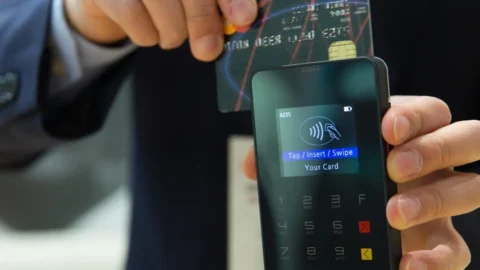
The mechanism behind the solution is designed for everyday convenience. Mastercard Accept allows people to receive payments across a broad spectrum of regular activities, whether those earnings are occasional side-hustles or ongoing business transactions. Cardholders simply log into their existing banking application, select the dedicated option to accept a payment, enter the required amount, and then present their smartphone to the payer. The payer can then either tap their contactless card against the device or scan a displayed QR code to finalize the transfer.
By extending existing banking relationships and foundational capabilities, Mastercard Accept helps issuing partners expand into highly relevant use cases. It enables seamless payment acceptance experiences for debit and prepaid cardholders that are firmly built upon the trusted security and compliance standards Mastercard already has in place worldwide.
Jorn Lambert, chief product officer at Mastercard, emphasized the shifting realities of modern commerce during the announcement. "Today people move seamlessly between buying, selling and earning, but the way they get paid has not kept pace," Lambert noted. "They need payment solutions that support all these activities without pushing them to unfamiliar providers and platforms. Mastercard Accept is designed for this reality, making it possible for debit and prepaid cardholders to get paid as easily as they pay."
Creating a Pathway from Everyday Payments to Merchant Growth
For many individuals, the ability to accept digital payments more conveniently will simply enhance everyday activities and casual sales. However, for others, occasional transactions may naturally evolve over time into regular, structured income streams that eventually require more formal merchant infrastructure and supplementary financial offerings.
Mastercard’s new acceptance solution is deliberately engineered to evolve alongside changing cardholder needs. As an individual seller’s transaction volumes increase, the accumulated transaction history and the valuable insights derived from it can support broader banking relationships. This data enables card issuers to create a clear, organic pathway toward additional merchant services, advanced financial tools, and expanded business infrastructure.
The initiative further expands the intrinsic value of Mastercard’s debit and prepaid propositions by successfully embedding bidirectional payment functionality directly into everyday banking infrastructure. The rollout is taking place in close collaboration with Mastercard’s extensive network of global issuing and acquiring partners, with an initial strategic focus centered on key growth markets across Asia Pacific, Latin America, the Middle East, and Africa, followed by a broader global rollout in the future.
This strategic deployment reflects Mastercard’s continued, long-standing commitment to fostering financial inclusion and expanding active participation in digital commerce. By making payment acceptance significantly more accessible and intuitive, the company aims to bring millions more individuals into the formal digital economy. Issuers and acquirers interested in enhancing their debit and prepaid offerings while unlocking new avenues for growth are being directed to coordinate through their designated Mastercard representatives.

Global Partners Rally Behind Financial Inclusion
A broad coalition of financial institutions and payment service providers from around the world has voiced strong support for the initiative, highlighting its potential to transform local economies and empower small-scale entrepreneurs.
Maher Mikati, CEO of areeba, underscored the practical impact of the technology on everyday commerce, stating that anyone should be able to pay and get paid without needing to register formally as a traditional merchant. "With Mastercard Accept, the freelancer, the home baker, the tutor and the small trader can all get paid digitally, simply and securely. That’s what financial inclusion looks like in practice," Mikati said.
In Central America, financial leaders see the rollout as a vital tool for community prosperity and small business empowerment. Jaime Compte, vice president of Corporativo Sr Servicios Banca de Personas, Pymes y Medios de Pago at BAC Latam, explained that the initiative brings the institution’s core strategy to life by advancing financial inclusion and strengthening the regional payments ecosystem.
Similarly, Luis Diego Zamora, general manager of the product area at Banco de Costa Rica (BCR), noted that the collaboration marks a significant milestone in the bank’s digital evolution. Zamora emphasized that the model simplifies payment acceptance from the very first sale, offering customers secure and growth-oriented technologies.
Laura Gómez, vice president of Acceptance at Banco Davivienda, pointed out that the partnership reinforces the institution’s commitment to building a barrier-free digital ecosystem. Gómez stated that the solution strengthens savings account offerings while providing immediate, cost-effective tools for small merchants who need reliable ways to expand their enterprises.
In Guatemala, banking executives highlighted the broader macroeconomic benefits of the technology. Juan Bernardo Rivera, general manager of Banco Industrial, and Francisco Sosa, senior vice president of Consumer and Commercial Banking at G&T Continental, both noted that the solution will accelerate merchant digitalization and provide fresh opportunities for business growth across the nation.
Grettel Chinchilla Tenorio, head of Acquiring at Banco Nacional De Costa Rica, echoed these sentiments, stressing that the platform allows trusted clients to start accepting cards without purchasing additional hardware, thereby cultivating deeper and more lasting banking relationships.
In South Asia, Bank of Ceylon is positioning the rollout as a major milestone for national economic participation. Y. A. Jayathilaka, chief executive officer and general manager of the bank, noted that combining the institution’s extensive digital customer base with Mastercard’s global expertise will create new opportunities for SMEs and micro-entrepreneurs.
This perspective was reinforced in East Africa, where Moses Nyabanda, managing director of Equity Bank, and Jane Isiaho, director of retail banking at KCB Bank Kenya, emphasized that smartphone-based payment acceptance eliminates the financial barrier of investing in traditional point-of-sale terminals, making digital commerce far more accessible for small business owners.
In Mexico, Fernando Benito, CEO of Getnet México, highlighted the role of the collaboration in fostering consumer trust and accelerating digitalization among small enterprises. Meanwhile, in Cambodia, institutional leaders pointed to the alignment between Mastercard Accept and national monetary objectives. Jean-Pierre Gagnon, CEO of Kardal PLC, and Datuk Phan Ying Tong, managing director and CEO of Oriental Bank, observed that enabling micro-merchants to accept digital payments—including transactions in Cambodian riel—supports the National Bank of Cambodia’s agenda to promote the local currency and build a more connected, inclusive economy.
Concluding the chorus of regional backing, Joseph Njogu, head of Digital Innovation and Payments at Premier Bank Kenya, emphasized the profound human impact of streamlined financial transactions for everyday entrepreneurs. "For the small traders and everyday entrepreneurs across our communities, getting paid quickly and securely isn’t just a transaction. It’s about securing their family’s future and unlocking their dreams," Njogu said, noting that turning mobile phones into payment terminals removes complex paperwork and provides rapid access to funds.



Comments (0)