



Nvidia’s massive financial imprint on the artificial intelligence ecosystem continues to expand at a staggering pace, even as internal leadership shifts threaten to alter the chipmaking giant’s aggressive investment strategy. During its financial results announcement for the third quarter of fiscal 2027 on Tuesday, the company revealed that its equity holdings in private and public companies have surged to a remarkable $65.5 billion. This valuation marks a dramatic leap from the $22 billion reported by the company just months prior in January, driven by a combination of aggressive new capital deployment and significant upward markups across its extensive portfolio of existing companies.
The sheer scale of Nvidia’s recent financial commitments underscores how aggressively the semiconductor titan has poured resources into shaping the modern technology landscape over the past year. According to the company’s financial disclosures, Nvidia invested $16 billion into equities during the past quarter alone. Looking across the broader fiscal year, the total amount injected into public and private corporate shares reaches $58 billion over the past nine months.
This level of expenditure represents a fundamental shift in corporate velocity when compared to historical figures. In November of the previous fiscal year, Nvidia reported spending a comparatively modest $5 billion on equity acquisitions during the first nine months of that fiscal term. The massive escalation in capital deployment highlights the chipmaker’s strategy to cement its dominant market position by tightly integrating with the broader infrastructure of the artificial intelligence boom.
However, this era of unrestrained corporate dealmaking may be facing an imminent inflection point. As Nvidia navigates a transitional period under an interim chief executive officer and the eventual successor to long-serving leader Jensen Huang, questions loom large over whether this unprecedented pace of startup funding and ecosystem backing can be sustained.
Since late 2023, Nvidia has openly stated that the primary objective behind its corporate venturing initiatives is to actively expand and fortify the artificial intelligence ecosystem. By backing early-stage and growth-stage startups that the company categorizes as "game changers and market makers," Nvidia has woven a complex web of financial and technological interdependencies across the tech sector.
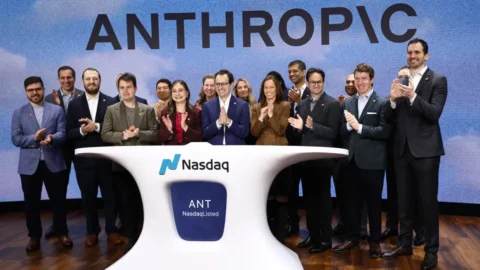
Data compiled by venture capital database PitchBook indicates that over the span of nearly three years, the chipmaker has backed approximately 350 startups. This sprawling portfolio reads like a directory of the most influential entities in modern artificial intelligence. Nvidia’s financial footprint extends to foundational large-language model developers such as Anthropic and OpenAI, specialized next-generation AI labs like Thinking Machines and Reflection, and neocloud providers including Lambda, Nscale, and Crusoe. Furthermore, the corporate venture portfolio encompasses a wide array of enterprises specializing in critical AI infrastructure development, robotics, and applied software solutions.
Beyond direct equity investments, Nvidia has evolved into a monumental financier of the massive data center buildout required to train and run advanced artificial intelligence models. The company reported a staggering $118 billion in total financial guarantees. The vast majority of this figure—specifically $105 billion—serves as a financial backstop supplied by Nvidia to support OpenAI’s ambitious $500 billion data center project located in Ohio.
These high-stakes commitments have been funded by allocating a meaningful portion of Nvidia’s substantial excess cash flows. During Tuesday’s earnings call, Chief Financial Officer Colette Kress addressed the future trajectory of the company’s capital allocation strategy. Kress indicated that Nvidia would maintain its supportive stance by providing financing assistance to strategically important customers. At the same time, she noted that "as the market matures and additional sources of capital become available," the corporation intends to rigorously evaluate all future investments, commitments, and guarantees.
For the broader venture capital ecosystem, the central dilemma is whether startups can expect continued support at anywhere near historical levels without Jensen Huang steering the ship.
Industry sources and venture capitalists have reported to TechCrunch that Huang’s rampant, visionary dealmaking has occasionally been a source of internal concern for Kress and other financial minders at the company. Consequently, investors are anticipating that Kress and the interim leadership team will adopt a more conservative posture toward startup funding. Market observers expect the chipmaker to become considerably more selective when evaluating new investment opportunities while simultaneously writing smaller-sized checks to support its existing portfolio companies.
During the earnings call on Tuesday, Kress provided additional insight into the firm’s evolving financial philosophy regarding shareholder returns. "We intend to return all excess free cash flow net of strategic uses to shareholders during this last quarter and going forward," Kress stated.
Whether early-stage startups will continue to be classified as sufficiently strategic under her leadership—and under the eventual permanent chief executive officer—remains one of the most pressing questions in the technology sector. For the time being, venture capitalists and startup founders alike are bracing themselves for a meaningful pullback in capital from one of the most prolific backers in the history of the artificial intelligence boom.


Comments (0)