


Software development has officially entered a new era, but with this transition comes a fundamental bottleneck. For decades, the primary challenge of building software was writing code. Today, however, the hard part is no longer writing it—it is trusting it. With the rise of advanced artificial intelligence tools, coding agents now produce vastly more code than any human engineering team can reasonably read or any legacy system can efficiently verify.
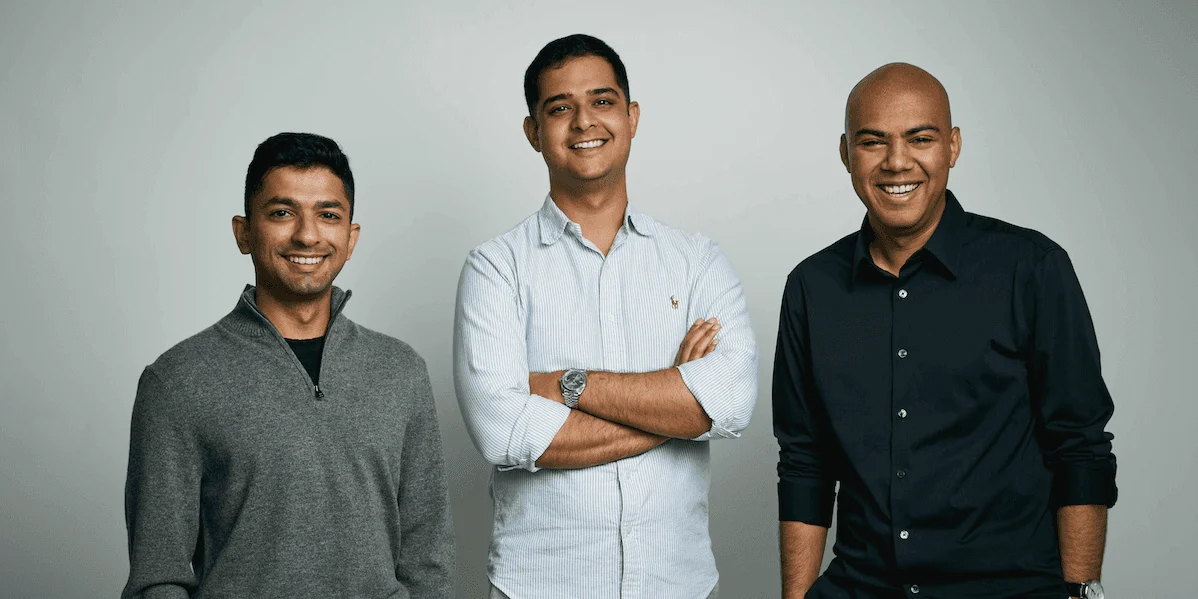
To address this mounting crisis, infrastructure startup Blacksmith is building the foundational systems required to validate AI-generated code at scale. Led by co-founders Aditya Jayaprakash, known as JP, along with Aayush Shah and Aditya Maru, the company has experienced explosive growth. This momentum has culminated in a new Series C funding round, highlighting a massive industry-wide shift in how software is tested, validated, and deployed into production.
The scale of the problem became dramatically apparent last year as engineering organizations began deeply integrating autonomous coding agents into their daily workflows. Last month, the engineering team at Anthropic published a detailed account of what happened as their own usage of coding agents scaled across the enterprise. Engineers at the company began shipping roughly eight times as much code per quarter compared to previous periods. Predictably, their test suite grew tenfold to keep pace with the influx of modifications.
Even more staggering was the trajectory of continuous integration jobs—the automated builds and comprehensive tests that inspect every single code change before it is allowed to reach production. Anthropic’s CI job volume surged an incredible 25 times over the span of just six months. While Anthropic is admittedly further along the adoption curve than most of the tech industry, they find themselves on the exact same trajectory as virtually every modern software enterprise. Their primary advice to the rest of the industry has been straightforward and sobering: engineering teams must actively plan for a 25-fold increase to their CI load within the span of just two quarters.
For generations, the scaling of software development was bound directly to human engineering capacity. Developers were universally recognized as the scarcest resource in the technology sector, meaning that shipping more software fundamentally meant hiring more engineers. That paradigm has now entirely dissolved. Developers no longer write every line of code by hand; instead, they direct fleets of intelligent coding agents that operate in parallel, around the clock, and with increasing autonomy.
Crucially, these modern AI agents do not produce finished, polished software products. Rather, they produce continuous streams of attempts—a patch here, a localized test there, a complex database migration, or an entire throwaway branch—with each iteration running repeatedly against a test suite until it is deemed ready to merge. Meanwhile, the quiet, foundational backbone of software development responsible for validating and testing that code has remained largely stagnant for years, buckling under the sudden weight of automated productivity.
Validating code has also never been more critical to enterprise security and stability. AI coding tasks inherently generate large volumes of complex security flaws, and the very same advanced model capabilities that write the code now make those vulnerabilities more sophisticated and dangerous. The infrastructure systems that were originally designed to catch these issues are straining precisely when developers need them to be most reliable. Given the unprecedented scale and velocity of this industry-wide shift, the primary constraint in software engineering has definitively moved away from writing code and toward proving that it actually works and is safe for production.
This is the exact operational problem that Blacksmith set out to solve from its inception. The team initially focused heavily on accelerating continuous integration performance. By implementing a remarkably simple one-line change in a standard workflow file, developers utilizing Blacksmith see their CI jobs complete twice as fast while achieving an average cost reduction of 60 percent. Underneath this frictionless product experience lies a robust technology stack purpose-built from the bare metal up, engineered specifically to absorb sudden demand spikes from enterprise customers while growing increasingly fast and efficient as it scales.
Enterprise developers have certainly taken notice of these performance gains, translating into explosive business growth over the past year. More than 10,000 companies now rely on Blacksmith for their infrastructure needs, a massive leap from just 700 companies a year prior. Weekly CI jobs have skyrocketed 18 times, surging from 5 million to 90 million in 2026 alone. Concurrently, the company’s annual recurring revenue has multiplied 17 times over the same timeframe, with their largest enterprise customers now investing more than $1 million per year into the platform.
Much of the conviction behind Blacksmith’s rapid rise stems from the exceptional caliber of the team driving it forward. Co-founders JP, Aayush, and Maru have maintained a close professional and personal relationship since their undergraduate years at the University of Waterloo. They subsequently cultivated a relentless focus on hyper-performant systems during their respective tenures at Cockroach Labs and Faire. They ultimately founded Blacksmith in 2024, right as basic code autocomplete tools were rapidly evolving into sophisticated coding assistants. They shared a foundational conviction that the total volume of code requiring rigorous testing would soon increase by orders of magnitude.
While the rest of the technology world truly recognized this reality in 2026 with the arrival of fully autonomous coding agents, Blacksmith had already spent years building for that exact future. The company’s team remains talent-dense and is expanding rapidly to meet global demand, supported by an ambitious product roadmap featuring several major launches planned for the coming months.
The leadership behind the Series C funding round expressed deep enthusiasm for supporting the company’s next phase of growth. The world is on the brink of running far more code than humanity has ever written in history, and dedicated infrastructure must exist to guarantee that it functions reliably. The ongoing partnership with JP, Aayush, and Maru centers on building the high-speed infrastructure required to operate securely at agent speed, transforming code validation and pushing the boundaries of what is possible in modern software development.




Comments (0)