


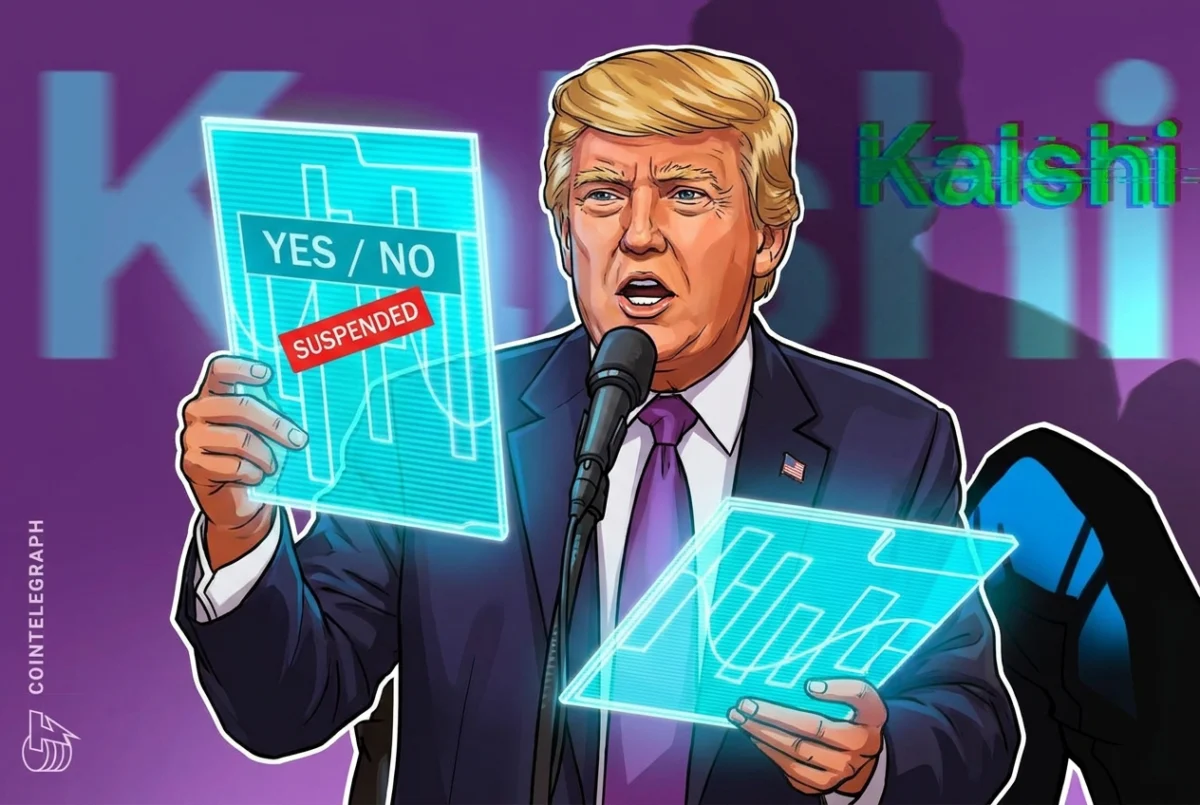
The United States Commodity Futures Trading Commission (CFTC) has stepped up its oversight of the burgeoning prediction markets sector, ordering a temporary halt to specific Kalshi contracts that allow traders to wager on words or phrases US President Donald Trump might utter in public addresses. The regulatory action, driven by heightened concerns over market manipulation and insider exploitation, targets one of the platform’s most eccentric speculative offerings.
In an official order issued on November 13, the federal regulator trained its sights specifically on Kalshi’s “What nicknames will Trump say before 2027?” market alongside its broader TRUMPSAY contract series. According to the regulatory agency, Kalshi listed the politically charged nickname market shortly after a staff advisory published on September 22. That advisory explicitly warned of the inherent manipulation risks associated with speech-based derivatives, yet the regulator noted that Kalshi proceeded with the listing without updating its self-certification to adequately address those voiced concerns.
The CFTC confirmed to Cointelegraph that it has stayed the listing of certain Kalshi mention markets pending further administrative and legal proceedings. Kalshi has been given a deadline of December 11 to submit its formal response to the regulatory challenge. As it stands, the federal watchdog has not yet made a definitive, permanent determination regarding whether these specific contracts ultimately comply with existing federal commodities and derivatives laws.
Kalshi has pushed back against the regulatory freeze, defending the economic rationale behind the controversial offerings. “We disagree with this decision,” Kalshi CEO Tarek Mansour told Axios. Mansour argued that prediction markets forecasting President Trump’s vocabulary and rhetorical choices possess genuine economic value because the President’s public remarks carry the weight to rapidly move broader financial markets. In the view of the platform’s leadership, traders use these contracts as a barometer for political sentiment and impending policy shifts signaled through rhetoric.
However, the CFTC maintains that the structure of these markets leaves them uniquely vulnerable to abuse. In its September advisory, regulatory staff warned that individuals whose direct actions determine the outcome of a given contract—or people operating in close proximity to them—could easily influence the final result or improperly exploit advance, nonpublic knowledge of what the President intends to say.
This regulatory intervention is not occurring in a vacuum. According to a person familiar with the matter who spoke with Reuters, Kalshi has already quietly suspended or stopped listing numerous other mention markets at the direct request of the federal regulator. Among the casualties of this quiet compliance effort are all sports-related mention contracts that previously populated the platform.
This tightening regulatory climate surrounding political and novelty derivatives has also coincided with other structural shifts for the platform, including Kalshi reportedly ending a formal advisory role with Donald Trump Jr. following a related investment involving rival platform Polymarket, as reported by Reuters.
Teleprompter case highlights insider risks
The current regulatory crackdown on speech-based prediction contracts underscores a growing anxiety within federal agencies regarding the intersection of insider information and modern digital prediction markets. This heightened scrutiny directly follows a high-profile insider-trading enforcement action involving Gabriel Perez, a former White House teleprompter operator who allegedly leveraged his access to confidential presidential speech drafts to systematically profit from Kalshi prediction contracts, according to findings detailed by the CFTC.
Back in July, Cointelegraph reported that Kalshi’s internal surveillance and compliance systems had successfully flagged suspicious trading patterns connected to Perez’s account. Recognizing the potential regulatory violation, the platform referred the suspicious activity directly to the CFTC for investigation.
The regulator’s subsequent enforcement order, handed down on August 28, laid out the mechanics of the scheme. Investigators found that Perez routinely had physical and digital access to President Trump’s prepared speech transcripts approximately one hour before the commander-in-chief delivered them to the public. Armed with this nonpublic, advance knowledge, Perez allegedly placed targeted bets on whether specific words or phrases would be spoken during the addresses.
The enforcement findings revealed that Perez managed to turn a profit on 39 out of 43 contracts spread across 14 distinct mention markets. In one notable instance of real-time trading on insider knowledge, Perez reportedly altered his financial position mid-speech after noticing that President Trump had skipped or deviated from a specific portion of his prepared remarks.
As a consequence of these illicit trades, the CFTC ordered Perez in August to disgorge $107,539 in ill-gotten profits and slapped him with an additional $65,000 civil monetary penalty for trading on confidential information. Perez ultimately agreed to settle the matter with the federal agency without formally admitting or denying the findings detailed in the regulatory order.





Comments (0)