


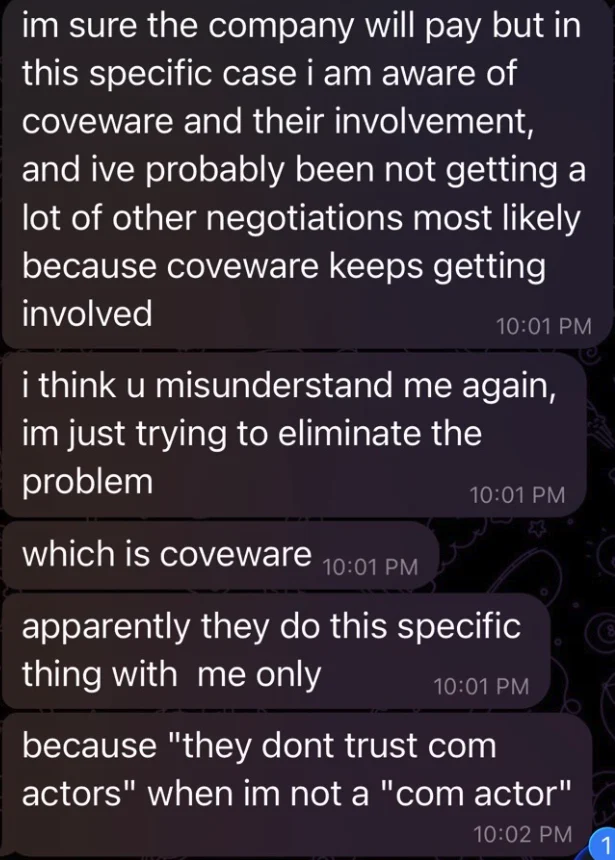
U.S. federal investigators pursuing the prolific ShinyHunters hacking group—which recently compromised and stole highly sensitive data from the FBI—have identified executives at two distinct ransomware negotiation firms who maintained unusually close and illicit relations with the extortion syndicate. Sources close to the active federal investigation reveal that one of these U.S.-based executives even assisted ShinyHunters in operating a dedicated website designed to pressure corporate and governmental victims into meeting exorbitant ransom demands.
Hackers aligned with the ShinyHunters banner have claimed credit for dozens of high-profile data breaches since 2019, an era when the cybercriminal collective was primarily operated by individuals residing in France. As those founding members were systematically arrested, prosecuted, and jailed, operational control over the ShinyHunters brand eventually transitioned to a young cybercriminal known online as “Rey.” Authorities formally identified Rey last year as a teenage hacker operating out of Amman, Jordan. According to recent FBI estimates, the ShinyHunters organization has successfully extorted more than $70 million from corporate and institutional victims over the course of the year.
The group’s brazen campaign escalated dramatically in late September, when hackers tied to ShinyHunters infiltrated the FBI recruitment portal fbijobs.gov. To compound the disruption, the cybercriminals publicly taunted federal law enforcement by threatening to publish the purloined files online. Reports indicate the stolen repository contained highly sensitive internal documentation, including employee medical and psychological records, Social Security numbers, home addresses, and specific details regarding personnel units and professional specializations.
This unprecedented breach of a federal law enforcement recruitment system prompted the agency to act with extraordinary speed, detaining and questioning individuals who maintained any digital communications with Rey or other suspected ShinyHunters associates. Notably, Reuters reported that Rey was detained by Jordanian authorities and has been actively cooperating with the FBI.
Rey’s ability to seize operational control of the hacking group stemmed directly from a sudden law enforcement disruption higher up the chain. On the evening of September 15, police forces in the Netherlands executed a tactical raid and arrested convicted hacker and primary ShinyHunters suspect Pepijn van der Stap. Dutch authorities reportedly deployed flash-bang grenades to stun and subdue Van der Stap while he remained actively logged into multiple online accounts.
According to sources close to the unfolding investigation, police apprehended Van der Stap while he was actively using his Signal instant messaging application. This tactical seizure allowed investigators to preserve and review recent communications with frequent contacts, including ransomware negotiators stationed in Canada and the United States.

Multiple knowledgeable sources confirmed that the contents of Van der Stap’s Signal message logs provided the breakthrough needed to unravel an alarming murder-for-hire plot that surfaced immediately following his capture. The Dutch news outlet RTL reported that two targeted murders were allegedly scheduled to be carried out abroad, with investigative indications pointing to Van der Stap as the individual who issued the orders, though law enforcement emphasizes there is no evidence those planned attacks were ever executed.
The widening dragnet soon ensnared prominent figures within the cyber defense industry. On October 9, KrebsOnSecurity broke the news that the FBI had arrested a 54-year-old Canadian cybersecurity executive named Edward Dubrovsky in connection with the broader ShinyHunters probe. Dubrovsky, who recently published a book on navigating cyber extortion that explicitly recommended always engaging with malicious actors, was formally charged with threatening to disclose stolen data and interfering with interstate commerce through extortion, according to federal court records. Politico reported that federal prosecutors requested Dubrovsky be held in custody pending trial, while case-related documents remain sealed under judicial order.
Investigative sources revealed that Van der Stap’s recovered Signal communications demonstrated frequent dialogues between the Dutch hacker, Dubrovsky, and at least one executive at a large U.S.-based consulting firm. Strikingly, these discussions showed that the executives frequently possessed detailed knowledge regarding fresh ShinyHunters victims before the targeted organizations themselves even realized they had been breached.
Even more explosive was the discovery that Dubrovsky’s chat logs proved he was fully aware that ShinyHunters had exfiltrated deeply sensitive personnel data directly from official FBI servers. Despite possessing this intelligence, Dubrovsky never alerted the bureau to the security breach prior to ShinyHunters publicly threatening on social media to leak the confidential agency records.
SHINYWIRE
As the probe deepened, investigators uncovered further infrastructure tied to the conspiratorial network. Sources close to the ShinyHunters investigation revealed that federal agents believe at least one executive at a prominent U.S. consulting firm played an active, operational role in managing the now-defunct ShinyHunters victim extortion portal, known as shinywire[.]com. While investigators have identified the firm—a prestigious organization with more than 1,000 associates—news outlets are withholding the names of the company and the suspected executive pending formal criminal charges.
The Shinywire platform remained active from approximately May 3 until October 16, hosting profile entries for nearly 100 corporate entities compromised by ShinyHunters. Each listing functioned as an aggressive pressure point, urging victimized organizations to initiate contact with the cybercrime syndicate to negotiate payment terms. The web pages also displayed samples of stolen proprietary files, accompanied by the explicit warning that the complete data troves would be disseminated publicly if ransom demands were ignored.

Archived records from scanning services illustrate how the portal targeted major enterprises. For instance, cached listings targeted companies like Intuitive Surgical, an American medical technology firm that suffered a network breach after an employee fell victim to a targeted phishing email attack that compromised corporate credentials.
Victim organizations that refused to engage or negotiate within a strict seven-day window quickly found their stolen files published on the primary ShinyHunters shaming blog, a dark web site accessible exclusively through the Tor anonymity network.
Legal and professional friction surrounding these events has also manifested in civil litigation. In mid-October, The Globe and Mail reported that months prior to his arrest, Edward Dubrovsky had filed civil court documents in Ontario alleging he had become collateral damage in an aggressive campaign by a former business partner seeking to destroy a rival industry executive.
The lawsuit targeted Daniel Tobok, the former chief executive of Cypfer, a Toronto-founded cybersecurity enterprise maintaining offices across the U.S., Britain, the Netherlands, the United Arab Emirates, and Mexico. Dubrovsky and Tobok initially partnered in 2017 to build Cypfer, where Dubrovsky served as managing partner and chief operating officer. However, by 2024, the professional relationship deteriorated, with Dubrovsky alleging that Tobok systematically pushed him out of corporate decision-making and executed increasingly erratic business maneuvers. Tobok denied the allegations, filing a counter-suit accusing Dubrovsky of accessing confidential information and operating a competing venture, CyberSteward Inc., while misrepresenting his equity status within Cypfer.
GHOSTBYTE
Interviews with former associates of Daniel Tobok indicate that his ties to the criminal ransomware ecosystem stretch back nearly a decade, during which he was reportedly known to threat actors by the alias Ghostbyte. In 2018, a Canadian enterprise fell victim to an intrusion by Dharma, a prolific Russian-language ransomware affiliate program operational since 2016. When the victim informed the Dharma representative that they were willing to pay to recover permanently locked files but required guarantees of trustworthiness, the cybercriminals explicitly redirected them toward an external IT professional.
A redacted copy of the Dharma representative’s reply directed the victim to write to an email address associated with the moniker: [email protected]. The threat actor advised the company that this specific Canadian IT entity frequently resolved similar extortion scenarios locally and could provide the requested payment guarantees under a formal service contract.

While it remains unproven whether Tobok actively utilized the Ghostbyte inbox supplied by the Dharma affiliate, digital intelligence firm Constella Intelligence identified a persistent personal email address used by Tobok—[email protected]—linked to online profiles utilizing the exact handle "ghostbyte," including a registered Snapchat account. Furthermore, blockchain analysis of the Dharma representative’s wallet revealed substantial transaction volumes running into millions of dollars.
In official statements issued in mid-October, Cypfer distanced itself from the ongoing legal proceedings, maintaining that the firm’s standard business model does not encompass facilitating or making ransomware payments. Cypfer representatives stated they had no advance knowledge of Dubrovsky’s federal arrest and have received no inquiries or targets from law enforcement investigators.
The statement emphasized that Cypfer and CyberSteward operate as completely distinct corporate entities sharing no officers or directors. Cypfer was recently acquired by the Apros Group, a holding company led by Jason Hogg, a former FBI special agent and former CEO of Aon Cyber Solutions Group. Aon had previously acquired Cytelligence, a security consultancy where Tobok served as founder and CEO and Dubrovsky acted as managing partner.
CONFLICTING INTERESTS
Under U.S. law, paying a ransom to obtain decryption keys or secure promises of data deletion is not inherently illegal, provided the targeted threat group is not formally sanctioned by the U.S. Department of Treasury. Because ShinyHunters currently lacks formal state-level sanctions, victim organizations navigate these decisions under the guidance of cyber insurance providers and incident response firms. However, industry practices regarding extortion payments have drawn intense scrutiny from regulators and security experts alike.
While some forensics firms assist clients without processing payments, others specialize in negotiating and transferring cryptocurrency to cybercriminals. This dual role has raised severe concerns regarding conflicts of interest. Industry leaders point out that negotiation firms charging a percentage-based fee tied to the total ransom amount possess an inherent financial incentive to maximize payout volumes rather than aggressively lower costs for their clients.
Mark Camillo, chief executive of the cyber insurance industry group CyberAcuView, noted that compensation models linked directly to the size of a ransom transaction introduce misaligned incentives into the ecosystem. While remediation firms argue that handling volatile cryptocurrency floats and high-risk exchange fees justifies higher retainers, experts argue for absolute transparency to ensure intermediaries do not profit directly from criminal extortion amounts.

Federal authorities have increasingly targeted deceptive practices within the negotiation sector. The U.S. Department of Justice recently charged MonsterCloud CEO Zohar Pinhasi with wire fraud and conspiracy, alleging he charged corporate clients millions for remediation while secretly paying hackers behind the victims’ backs. Similarly, Florida-based ransomware negotiator Angelo Martino was sentenced to prison after conspiring with the BlackCat/ALPHV syndicate to leak confidential client negotiating positions, enabling threat actors to maximize extortion demands.
As federal investigations into groups like ShinyHunters continue, the intersection of cybersecurity consulting, cyber insurance, and ransomware negotiation remains under an unprecedented regulatory and criminal microscope.




Comments (0)