


As the U.S. economy grapples with a stubbornly persistent inflation bug, Federal Reserve officials have flooded the public airwaves with opinions, assessments, and sometimes sharply conflicting visions for how the central bank should handle interest rates. While a broad consensus has emerged that rates will likely need to rise and soon, the path forward has sparked an intense internal debate over pacing and aggressiveness.
Some policymakers advocate for a measured, cautious approach that allows conditions to play out organically. Others, including Federal Reserve Governor Christopher Waller and St. Louis Fed President Alberto Musalem, have openly entertained the possibility of more aggressive rate hikes delivered in a shorter timeframe to clamp down on rising prices.
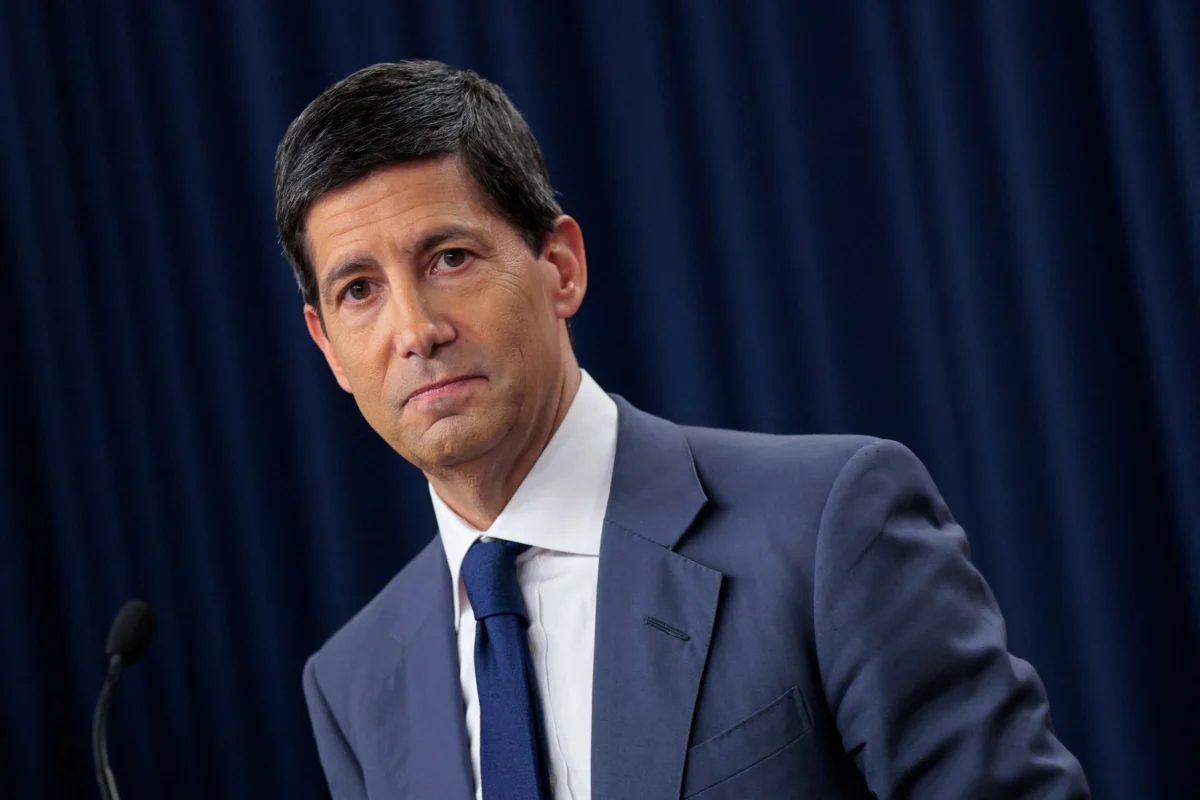
Largely remaining on the sidelines of this public debate is Warsh himself. The Fed chairman has openly expressed disdain for traditional forward guidance, arguing that locking the central bank into rigid future commitments handcuffs policymakers long before they have the actual data and context required to make a well-informed decision. Yet, Warsh’s aversion to forward guidance has not stopped the other 18 officials who participate in Federal Open Market Committee (FOMC) meetings from voicing their personal perspectives.
In fact, according to a recent analysis by Bank of America, the volume of public commentary—colloquially known as "Fedspeak"—has surged dramatically. The past two weeks have witnessed more public remarks from Fed officials than in any comparable period since the beginning of 2025.
Financial analysts note that this wave of commentary is directly tied to the chairman’s communication philosophy. Rather than calming markets with a unified message, the lack of top-down signal-setting appears to be driving more officials to take to the microphone.

"Warsh’s refusal to guide markets might be encouraging the rest of the FOMC to speak more, not less," Bank of America economist Aditya Bhave wrote in a research note.
Bhave added that while there is always a natural range of views across the 19 participants in FOMC discussions, the traditional role of the Fed Chair is to weigh in and signal to financial markets whether the hawkish or dovish faction is currently in ascendancy. Absent this clear centralized leadership, both sides feel heavily incentivized to speak more often and with greater force to ensure their positions are heard by Wall Street and the public.
This increasingly vocal and fractured debate arrives at a critical juncture for the U.S. monetary authority, carrying significant implications for borrowing costs, asset prices, and broader economic stability.
Threading a Needle
The growing cacophony of voices highlights what Bhave and other market observers describe as a deepening divide within the FOMC. The central bank’s decision to leave its benchmark interest rate unchanged during its October meeting increasingly looks like a policy misstep to the more hawkish members of the committee, prompting them to ramp up their public rhetoric. Leading that charge is Governor Waller, who has publicly raised the possibility of hiking the benchmark rate by half a percentage point when the committee convenes for its next policy meeting in December.
The underlying tension was already visible in the official minutes from the October FOMC meeting, which offered a glimpse into internal disagreements and underscored the complications stemming from Warsh’s refusal to provide forward guidance.
According to the summary of the meeting, several officials who favored an immediate rate hike in October indicated they could have supported leaving the federal funds rate unchanged under one condition: that it was clearly understood by market participants that further monetary tightening was virtually certain. That conditional understanding sits squarely within the realm of forward guidance, a tool that Warsh has steadfastly insisted the Fed should avoid.

Market veteran Ed Yardeni pointed out that the release of the October minutes revealed a distinct strategic friction. He noted that some officials who favored tightening would have accepted a temporary hold if the Fed had transparently communicated that future rate increases were on the horizon. By eschewing forward guidance, Warsh’s communication philosophy may be inadvertently limiting the Fed’s tactical flexibility precisely at a time when the economy demands clarity.
Other policymakers have attempted to navigate this communication tightrope carefully. Cleveland Fed President Beth Hammack, who notably voted against the October rate pause in favor of a quarter-point increase, attempted to walk the fine line during a recent public appearance.
Before sharing her personal perspective on the future trajectory of monetary policy, Hammack offered a disclaimer. She noted that her observations were not promises or firm commitments, explicitly distancing them from forward guidance—which she acknowledged as a sensitive and hot-button topic. Instead, she framed her outlook as a conditional set of expectations derived directly from her ongoing evaluation of economic conditions.
Hammack’s remarks underscore the delicate needle Fed officials are trying to thread: maintaining transparency about their analytical frameworks without binding themselves to a rigid policy path that shifting economic realities could quickly render obsolete.
Chicago Fed President Austan Goolsbee addressed the philosophical debate from the angle of institutional credibility during a public appearance. While expressing sympathy for Warsh’s skepticism toward forward-looking rate predictions, Goolsbee drew a sharp line between prescribing future rates and offering genuine transparency.
"I am sympathetic to the view that [Warsh] has expressed that let’s not be so, in our language, forward guidance-oriented, saying here is what I think rates are going to be at the next meeting," Goolsbee said, characterizing such specific pronouncements as falsely precise.

At the same time, Goolsbee emphasized that central banks must protect their long-term credibility. He argued that it remains vital for each policymaker sitting around the table to explain how they interpret the world and business conditions, warning that abrupt surprises are rarely welcomed by the broader economy.
Philadelphia Fed President Anna Paulson took a slightly different analytical approach during a speech dedicated to monetary policy communication. She asserted that financial markets are fully capable of deciphering where policymakers are heading without explicit guidance, provided they understand how incoming economic data will influence future decisions. Paulson also defended the diverse chorus of voices currently emanating from the central bank.
"Volume is not the same as clarity," Paulson said, emphasizing that the metric of success is not how much officials say, but whether their core messages are properly understood. She added that a diverse mixture of viewpoints acts as a safeguard against any single communication channel dominating the narrative.
Markets Take Their Own View
Financial markets, meanwhile, have absorbed the constant stream of commentary and interpreted it through a decidedly hawkish lens.
According to data from the CME Group’s FedWatch tool, interest rate traders are currently pricing in a 100% probability of at least a quarter-percentage-point rate hike at the December meeting, alongside a small probability that the committee could opt for a more aggressive half-point move. Looking further ahead, market pricing suggests a strong likelihood of a follow-up rate increase in January, with the possibility of an additional hike before the end of 2027.
This aggressive market pricing persists even as core economic indicators send mixed signals. Current inflation reports continue to run above 3%, comfortably clear of the Federal Reserve’s official 2% target. However, market-based measures of longer-term inflation expectations have actually trended downward. Five-year forward inflation expectations, tracked via the Treasury market, recently dipped to their lowest levels since April. This divergence suggests that investors may remain relatively confident about long-term price stability, even as central bank officials warn that near-term price pressures remain uncomfortably elevated.

Nevertheless, a fractured and sometimes sclerotic communication strategy against a backdrop of volatile economic conditions and geopolitical currents carries clear risks. BofA’s Bhave warned that the constant back-and-forth among officials threatens to induce unnecessary rate volatility during an already turbulent period for the financial system.
For his part, Chairman Warsh has actively encouraged robust internal debate, reportedly viewing the friction as a healthy "family fight" that allows all competing viewpoints to be thoroughly aired before the committee reaches a final consensus.
Tom Graff, chief investment officer at advisory firm Facet, noted that while shaping future market expectations has traditional benefits, the ongoing public sparring appears to be the manifestation of the family fight the chairman frequently references in his press briefings. That family fight, however, is now playing out entirely in the open.


Comments (0)