


The decentralized finance landscape has long wrestled with one of its most persistent and structural design challenges: impermanent loss. Automated market makers have served as the foundational pillars of decentralized exchange liquidity for years, yet liquidity providers routinely face the harsh reality of seeing the value of their deposited assets diverge unfavorably compared to simply holding them in a wallet. Over the years, countless developers, researchers, and protocol architects have proposed various mathematical adjustments, hedging mechanisms, and dynamic fee structures to mitigate or eliminate impermanent loss, yet nearly all have fallen short of widespread, practical adoption.
However, a novel protocol known as Yield Basis is challenging this historical precedent by introducing a sophisticated leverage-based mechanism designed to eradicate impermanent loss entirely from automated market makers. Intriguingly, the architect behind Yield Basis shares the same pedigree as Curve DAO, the legendary decentralized exchange protocol, creating natural synergistic opportunities between the two ecosystems. The intricate mathematical proofs and mechanics governing how Yield Basis utilizes leverage to neutralize impermanent loss have been detailed extensively in the protocol’s foundational research literature, signaling a rigorous academic and technical approach to a notoriously complex problem.

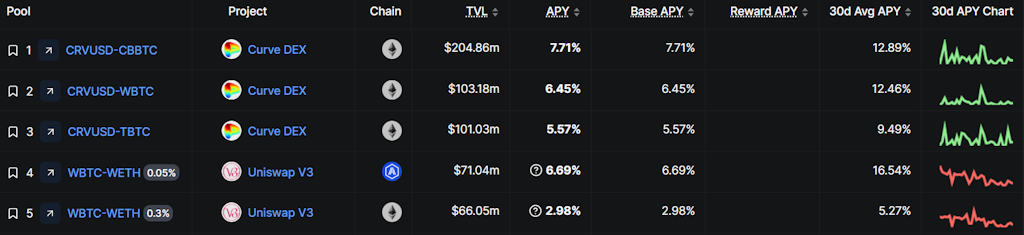
After years of witnessing a graveyard of failed attempts across the decentralized finance sector, Yield Basis has emerged as the first viable, functioning solution with genuine market traction. Observers do not need to rely purely on theoretical optimism, as the protocol has already captured the market in a definitive manner. Yield Basis currently underpins the three-largest bitcoin liquidity pools across the entire decentralized finance ecosystem, commanding a staggering asset base exceeding $400 million. This rapid accumulation of capital underscores a profound market appetite for liquidity infrastructure that can protect principal asset values while simultaneously generating robust economic returns.
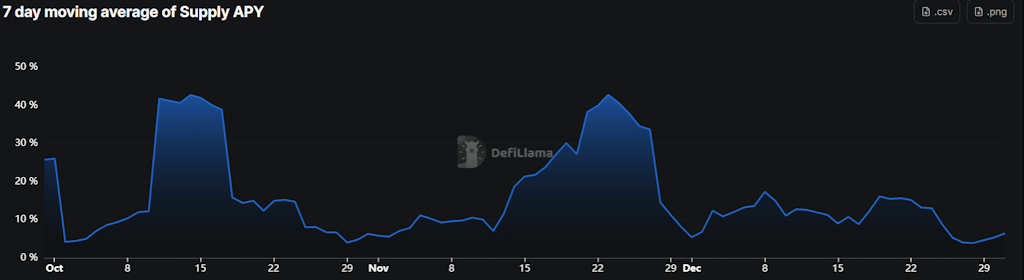
For holders of wrapped bitcoin tokens, this architectural breakthrough represents a fundamental paradigm shift. Historically, these asset holders faced a difficult compromise between keeping their capital idle or exposing themselves to the asymmetric downside risks of traditional liquidity provision. With Yield Basis, (wrapped) bitcoin token holders can finally earn sustainable yield while actively supplying liquidity to automated market pools. Historical data tracking the protocol demonstrates that the seven-day moving average for this supply yield has consistently hovered within an impressive range of 4% to 40%.
Because a significant segment of decentralized finance participants typically avoids providing liquidity to automated market makers unless incentivized by aggressive, temporary token farming campaigns, many observers may have overlooked a crucial structural feature of the Yield Basis model. Yields within these pools are earned directly in the underlying pool tokens. For bitcoin liquidity providers, this means capturing genuine, native bitcoin yields rather than being forced to accumulate speculative, highly volatile reward tokens that often suffer from severe long-term depreciation.
Beyond its innovative approach to liquidity and impermanent loss, the economic design of the native governance and utility token reflects a departure from the purely speculative meme token models that have occasionally plagued the broader cryptocurrency sector. The economic mechanics of the token incorporate genuine utility and value capture mechanisms, highlighted by the official activation of the protocol fee switch earlier this month. Under the current operational framework, Yield Basis liquidity providers are presented with two distinct pathways for generating and capturing economic yield from their provided liquidity. Participants can choose to hold the ybBTC liquidity provider token directly, which entitles them to a direct share of bitcoin-denominated trading fees generated by the protocol’s high-volume pools. Alternatively, liquidity providers can elect to stake their ybBTC tokens, intentionally foregoing the bitcoin-denominated trading fees in order to participate directly in Yield Basis emission schedules and governance incentives.
This dual-choice structure embodies sound corporate finance principles, aligning with the philosophy that investors often prefer direct earnings distribution over ambiguous token buyback programs. When a protocol distributes direct earnings, participants retain the financial optionality to decide for themselves if, when, and how they wish to allocate capital toward purchasing the native token. The scale of these distributions is already substantial. For the week ending December 25, the protocol distributed approximately $450,000 to participants. Notably, this impressive distribution figure was achieved even while strict operational caps remained enforced on the underlying liquidity pools, pointing toward significant room for future expansion as capacity constraints are gradually adjusted or lifted.
The implications of the Yield Basis model extend far beyond solving impermanent loss for bitcoin liquidity providers. The protocol is strategically positioned not merely as a specialized automated market maker, but as comprehensive yield and liquidity infrastructure designed to transform historically non-productive assets into yield-bearing financial instruments while simultaneously establishing robust secondary markets. By targeting wrapped native assets and tokenized real-world assets, Yield Basis possesses the theoretical capacity to make any sufficiently liquid and volatile asset productive. This capability allows asset issuers to generate sustainable revenue from their existing liquidity rather than continuously subsidizing market-making operations, while simultaneously enabling token holders to access organic yield and downstream decentralized finance use cases, such as utilizing their productive assets as collateral for lending and borrowing protocols.
This expansive model holds profound potential for assets stretching far beyond major cryptocurrencies like bitcoin and ether. Tokenized commodities and equities—such as gold, silver, and traditional technology stocks like NVIDIA—frequently struggle with onchain adoption precisely because their growth is severely constrained by impermanent loss, shallow secondary market liquidity, and a complete absence of organic yield generation or reliable liquidation pathways. Yield Basis could fundamentally unlock and revitalize these dormant markets by offering a uniquely superior yield option characterized by an attractive risk-reward profile, deep liquidity pools, and powerful network effects that draw in institutional and retail participants alike.
Despite the promising technical architecture and impressive early liquidity figures, Yield Basis is not entirely without risk, as is common with advanced financial engineering in decentralized environments. Market participants are encouraged to examine the underlying research papers and technical documentation carefully, utilizing available analytical tools or expert explanations to fully comprehend the potential financial and smart contract downsides alongside the vast structural unlocks the protocol aims to provide.





Comments (0)