


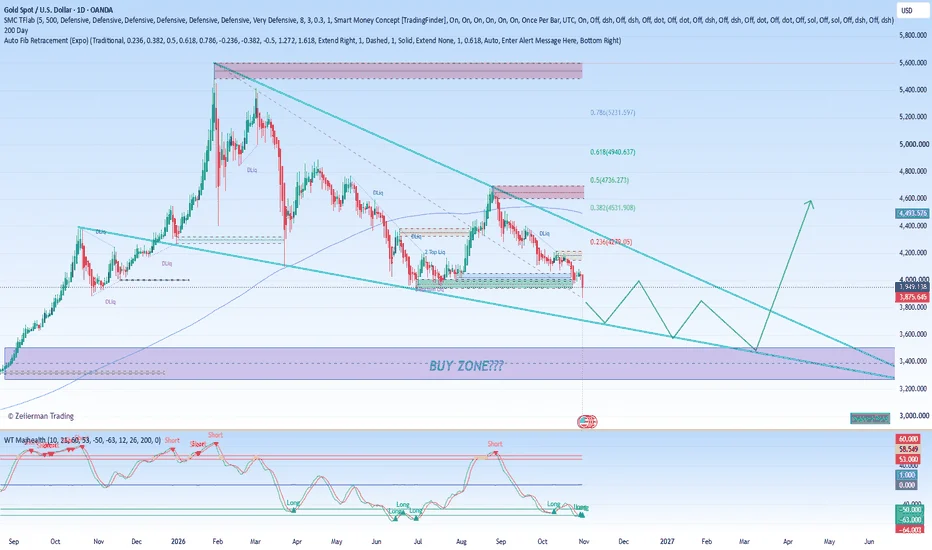
Gold prices are facing intense downward pressure in late October 2026, marking a dramatic departure from the record highs achieved earlier in the year. The precious metal has broken decisively below the psychologically significant $4,000 per ounce threshold, touching its weakest level in roughly a year. This sharp market correction is being propelled by a convergence of macroeconomic headwinds, led by oil-driven inflation fears, increasingly hawkish interest rate expectations, and a broader risk-off sentiment spreading across global financial markets. As traders and analysts assess the damage, attention is turning to key technical support levels and the shifting calculus of global central banks.
What Happened: Gold Breaks $4,000
The downward momentum accelerated sharply on Friday, October 30, 2026, when spot gold plummeted as much as 3.1% to trade around $3,897 per ounce. This represented the metal’s lowest valuation since October 2025. Earlier in the same trading session, spot prices had already breached lower levels, dipping to $3,956 per ounce, which marked a 1.6% loss from the previous close. Simultaneously, COMEX December gold futures mirrored the physical market’s retreat, slipping below the $4,000 milestone to hover near $3,965 per ounce.
This aggressive sell-off represents a severe correction from the historic highs recorded in January 2026, when gold touched an unprecedented peak near $5,600 per ounce. Following months of gradual cooling and sudden spikes in volatility, the market is now firmly on track to record its steepest annual decline in eleven years. The velocity of the reversal has caught many market participants off guard, transforming a year that began with euphoric optimism into a challenging testing ground for long-term bullion holders.
The Core Drivers of the Market Shift
Market strategists emphasize that the ongoing liquidation is not driven by localized supply constraints or a sudden collapse in physical demand for gold itself. Instead, the pressure is emanating almost entirely from the broader macroeconomic landscape, where shifting monetary policy expectations and energy shocks have altered the investment equation.
Oil Prices, Inflation, and Rate Expectations
The primary catalyst behind the renewed selling pressure stems from the energy sector. Rising crude oil prices, fueled in significant part by ongoing geopolitical tensions and the conflict involving Iran, have fed directly into renewed inflation anxieties. When crude oil surges, energy costs ripple through the global economy, rendering inflation stickier and more difficult for central banks to control.
This stickiness forces policymakers to reconsider the timeline for monetary easing, with markets now pricing in the distinct possibility that central banks will keep interest rates higher for longer to combat persistent price pressures. UBS analyst Giovanni Staunovo noted that these oil-driven inflation risks are reinforcing expectations of further policy tightening by the United States Federal Reserve, creating an inherently hostile environment for non-yielding assets like gold.
Higher Real Yields and a Strong Dollar
Because gold does not generate a periodic yield or dividend, its attractiveness is deeply intertwined with the opportunity cost of holding cash or fixed-income instruments. As real yields rise and the US dollar strengthens in response to higher interest rate projections, investors find more lucrative alternatives in government bonds and cash equivalents.
A recent Reuters poll of thirty precious metals analysts highlighted elevated US Treasury yields, the robust posture of the dollar, and the entrenched market expectation of a prolonged high-rate regime as the primary headwinds currently battering the bullion market. When holding cash yields a guaranteed, attractive return, the psychological incentive to pay premium prices for non-yielding precious metals diminishes significantly.
A Metals-Wide Correction, Not a Gold-Specific Event
The current financial stress is not isolated to the gold market; rather, it reflects a synchronized repricing across the entire precious metals complex. Silver experienced an even more dramatic contraction, tumbling 6% to trade around $49 per ounce. This move marked the first time in eleven months that silver slipped below the critical $50 threshold.
At the same time, platinum and palladium faced renewed selling pressure, retreating alongside their more prominent peers. This coordinated, cross-asset weakness confirms that the market dynamic is driven by overarching macroeconomic recalibrations rather than isolated fundamental shifts within the gold market itself.
Risk-Off Sentiment in Technology Amplifies the Move
The decline in precious metals has also coincided with heightened volatility and a sharp downward correction in global technology shares. Investors have grown increasingly cautious, questioning whether the massive, ongoing capital expenditures directed toward artificial intelligence infrastructure will generate sufficient near-term corporate earnings returns. This uncertainty triggered a broader risk-off sentiment across equities, which inadvertently added further momentum to the liquidation of liquid assets, including commodities, as institutions moved to cover margin calls or rebalance portfolios.
Market Outlook and the Path Ahead
Despite the severity of the recent downturn, mainstream market consensus views the current predicament as a macro-driven corrective phase rather than a structural breakdown of the bull market. The breach of the $4,000 level carries profound technical significance, and near-term risks remain tilted to the downside as long as crude oil prices remain elevated and the Federal Reserve maintains a hawkish posture.
Looking further ahead, however, the medium-term outlook retains underlying pillars of support. Analysts point to sustained, robust central bank gold purchases, ongoing global de-dollarization trends, and consistent physical consumer demand emerging from major markets like India and China as foundational elements that could fuel a recovery into 2027.
For the immediate future, market participants are closely monitoring the price band between $3,850 and $3,886 per ounce to see if these technical support levels can hold firm. If this zone successfully absorbs the current selling pressure, the structural foundation for a subsequent market rebound in the coming year remains intact.

Comments (0)