



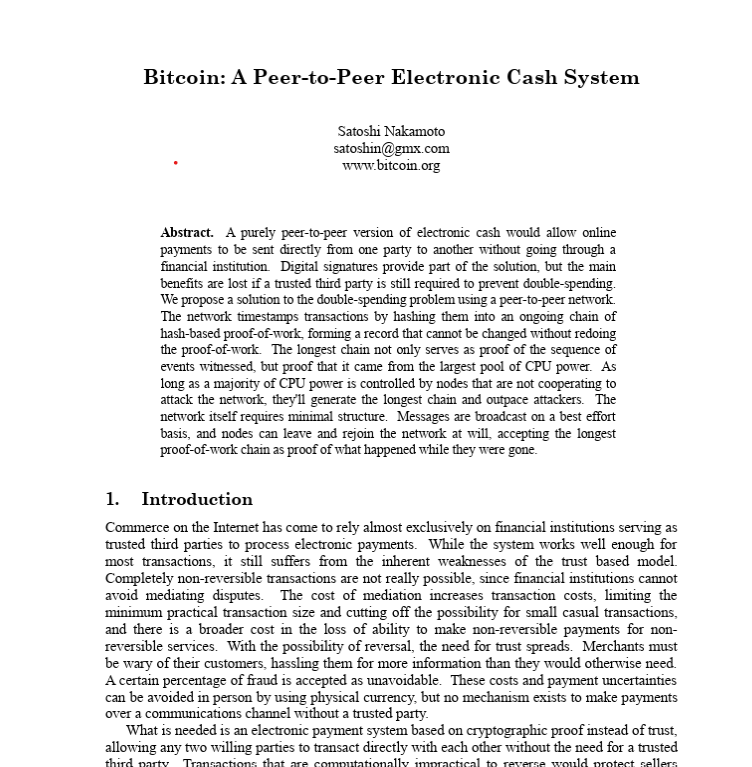
Eighteen years ago today, a pseudonymous figure operating under the name Satoshi Nakamoto published a revolutionary nine-page document to a small cryptography mailing list. Titled Bitcoin: A Peer-to-Peer Electronic Cash System, the whitepaper outlined a digital currency designed entirely to bypass opaque financial institutions and remove the heavy burden of trust traditionally required in monetary transactions. Since its genesis block was successfully mined on January 3, 2009, Bitcoin has relentlessly challenged the foundations of the traditional financial system.
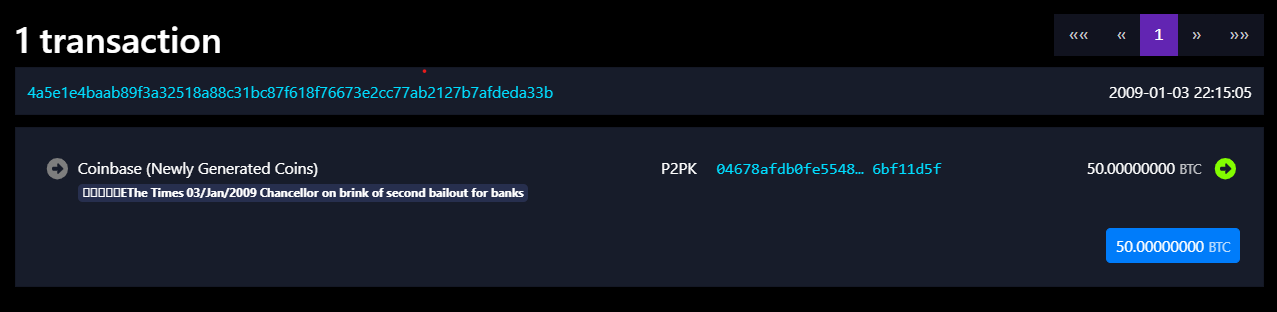
Embedded permanently within that very first block of transactions was a telling message from Nakamoto—a direct quotation of a headline from British newspaper The Times: "Chancellor on brink of second bailout for banks." It served as a stark historical marker, capturing the severe global financial crisis backdrop against which Bitcoin was conceived as an alternative monetary paradigm.
From its obscure early years to the complexities of digital adulthood, Bitcoin has experienced a profoundly tumultuous journey. The path has been continually fraught with high-stakes controversy, deep ideological intrigue, and occasional bouts of outright skulduggery. Yet, even as the asset marks a significant milestone—the age of majority in many jurisdictions—its future remains grounded on surprisingly fragile terrain. Looming over the network are complex modern threats, including the fallout from a massive $6.3 billion Binance-linked exploit, the long-term technological specter of quantum computing, the rapid acceleration of artificial intelligence-related cyber threats, and persistent, unresolved questions regarding long-term network security.
Bitcoin’s Early Years and the Genesis of Folklore
Undoubtedly, one of the most memorable milestones in the asset’s history occurred on May 22, 2010, when software developer Laszlo Hanyecz transferred 10,000 Bitcoins to pay for two commercial pizzas. This transaction went down in crypto folklore as one of the earliest documented uses of the cryptocurrency for a real-world good, as well as the most expensive pizza purchase on record. At the time of the trade, the coins were valued at roughly $41, dramatically illustrating the concept of opportunity cost. Those same coins carry a staggering multi-million-dollar value in today’s mature markets.
In its earliest days, Bitcoin traded for mere fractions of a penny. However, Satoshi Nakamoto anticipated the potential trajectory of the asset, writing in an online forum post in 2009, "It might make sense just to get some in case it catches on."
By late 2013, driven by a growing wave of public awareness and the proliferation of the Silk Road darknet marketplace, Bitcoin smashed through the $1,000 milestone for the very first time. Yet, true to the economic laws that govern physical markets, a sharp correction was inevitable. In February 2014, this explosive growth phase came to an abrupt halt when Mt. Gox, which was then the world’s largest Bitcoin exchange, abruptly suspended trading and went offline. The platform had lost approximately 850,000 BTC, including extensive customer funds, in a catastrophic collapse that sent immediate shockwaves across the nascent industry and firmly established the foundational crypto security maxim: "not your keys, not your coins."

Craig Wright, Jamie Dimon, and China’s First Regulatory Wave
The subsequent major bull market cycle culminated in a breathtaking price surge, driving Bitcoin from under $1,000 at the start of 2017 to nearly $20,000 by December of that same year. This massive retail and speculative rally coincided with an unprecedented boom in initial coin offerings (ICOs). Countless new projects flooded the market, promising to apply blockchain technology to virtually every conceivable sector—from traditional banking and global supply chains to niche enterprises like Long Island iced tea rebranding efforts.
Suddenly, public enthusiasm reached a fever pitch, with widespread interest from participants who often understood little about Bitcoin’s underlying mechanics or origins. Prominent skeptics did emerge, most notably JPMorgan Chase CEO Jamie Dimon, who famously labeled Bitcoin "a fraud" in September 2017 and threatened to fire any employee caught trading it.
At the exact same time, the network was embroiled in an intense internal civil war regarding how the blockchain should scale. The intense ideological conflict, frequently referred to as the "block size war," reached a boiling point in August 2017. It ultimately culminated in a hard fork that created Bitcoin Cash, serving as a stark reminder of the immense operational complications inherent in attempting to govern a decentralized monetary system.
Concurrently, external regulatory pressures began to mount. China initiated major actions against the domestic crypto sector by banning ICOs in September 2017, cracking down on domestic cryptocurrency exchanges, and introducing heavy market uncertainty that preceded a prolonged market downturn throughout 2018. Additionally, public speculation regarding the true identity of Bitcoin’s creator became a recurring distraction, fueled largely by Australian computer scientist Craig Wright, who repeatedly asserted that he was Satoshi Nakamoto. Those claims were definitively dismantled years later when the UK High Court formally rejected his assertions in a landmark 2024 judgment.
China’s Second Ban and the Collapse of FTX
Bitcoin’s next monumental bull cycle materialized during the global COVID-19 pandemic. In an unprecedented fiscal response, governments and central banks around the world unleashed massive monetary expansions and money printing initiatives to cushion national economies from severe lockdown disruptions. As interest rates plummeted and systemic liquidity flooded global financial markets, Bitcoin staged a remarkable recovery from its dramatic March 2020 crash, surging to an all-time high of nearly $69,000 by November 2021.
However, regulatory friction soon intensified once again. Following up on its earlier interventions, Beijing instituted a sweeping, comprehensive ban on virtually all cryptocurrency transactions and mining operations in September 2021, sending a sharp shockwave through the global market.
Worse was yet to come for the broader digital asset ecosystem. In November 2022, the sudden, chaotic collapse of FTX—another major global cryptocurrency exchange—deepened the ongoing "crypto winter" and inflicted catastrophic losses on countless retail and institutional customers. The cascading failures severely damaged trust between the digital asset sector and traditional finance (TradFi), prompting a wave of aggressive regulatory hostility and banking restrictions that industry participants dubbed "Operation Chokepoint 2.0." Unsurprisingly, Bitcoin’s valuation entered a steep and painful downward spiral.
The First Spot ETF and the Milestone of $100,000
Just as sentiment within the digital asset community reached a profound low point, a major turning point arrived in January 2024 from an unexpected regulatory quarter. After years of sustained rejections, the United States Securities and Exchange Commission (SEC) officially approved the nation’s first spot Bitcoin exchange-traded products.
This long-awaited regulatory green light provided institutional and retail investors with a fully regulated, compliant mechanism to gain direct price exposure to BTC without the technical hurdles of managing personal wallets or private keys. Propelled by this institutional bridge, Bitcoin’s price blasted through the historic $100,000 threshold for the very first time before the end of the year.
In the wake of this milestone, traditional finance moved increasingly closer to the asset class. Major commercial banks expanded into dedicated custody and trading services, while Wall Street heavyweights like BlackRock CEO Larry Fink publicly discussed the potential of tokenizing traditional financial instruments, ranging from equities to government bonds. Even historic critics like Jamie Dimon softened their public stances, with JPMorgan eventually permitting select clients to access the asset class. Building on this renewed institutional momentum, Bitcoin subsequently surged to a new all-time high, surpassing $126,000 in October 2025.
Reaching Adulthood: Institutionalization and Future Threats
Today, Bitcoin finds itself firmly integrated within the architecture of traditional finance, aided by notable regulatory developments in Washington and international jurisdictions. The establishment of federal frameworks for stablecoins via legislative efforts like the GENIUS Act, alongside the SEC’s increased clarity regarding securities laws and Europe’s comprehensive Markets in Crypto-Assets Regulation (MiCA), has provided the industry with a more harmonized legal environment.
Yet, this rapid institutionalization has triggered a deep philosophical debate within the community. Many early participants and purists question whether the heavy concentration of BTC supply held by Wall Street institutions compromises the decentralized ethos of the network, and whether the original cypherpunk movement has effectively been co-opted by the very financial systems it was built to oppose.
More pressing technological concerns also loom over the network’s long-term security architecture. Chief among these is the theoretical threat posed by quantum computing, which many security analysts fear could eventually break the underlying cryptography securing Bitcoin’s ledger. Proposed code upgrades, such as BIP-360, aim to introduce new output types designed to mitigate specific quantum vulnerabilities. However, as the community experienced during the bitter block size debates of the past, achieving global consensus on protocol changes before technological threats materialize remains a formidable challenge.
Beyond quantum concerns, recent events have highlighted ongoing vulnerabilities within the broader crypto infrastructure. A massive $6.3 billion Binance-linked exploit stands as the largest exchange security breach on record, renewing profound industry-wide fears regarding centralized exchange security and the potential for systemic market contagion.
Additional structural questions remain regarding the long-term economic security of the network. As programmed block subsidies steadily trend toward zero through successive halvings, researchers and developers continue to debate whether transaction fees alone will generate sufficient economic incentive to adequately compensate the miners securing the blockchain. Historical data underscores this challenge: transaction fees accounted for a mere fraction of total miner revenue for the vast majority of Bitcoin’s operational history, leaving a substantial gap to be filled as block rewards continue to diminish over time.
Despite surviving exchange bankruptcies, aggressive regulatory crackdowns, internal ideological civil wars, and repeated boom-and-bust market cycles, Bitcoin has matured significantly over the past eighteen years. It has evolved into a global macro asset held by major financial institutions and traded through mainstream financial products—a reality that its anonymous creator may never have fully anticipated as the network began its journey from a simple mailing list post.





Comments (0)