


In the rapidly evolving landscape of Web3, successful go-to-market strategies invariably begin with community. As new blockchains, layer-1 networks, layer-2 scaling solutions, and consumer applications vie for attention in an increasingly crowded market, founders are constantly searching for efficient ways to cut through the noise. Increasingly, protocols and brands are turning to Profile Picture (PFP) collections not merely as digital art experiments, but as foundational infrastructure to activate their communities from day one.
For emerging networks and protocols, a strategic PFP drop can act as an effective wedge into a broader ecosystem strategy. It serves as a lightweight yet powerful mechanism to incentivize initial user acquisition, drive early transaction activity, build vital reputation and cultural capital, and simultaneously prove that the underlying technical infrastructure is robust enough to handle high-demand events. Rather than operating in a vacuum, these digital asset drops are increasingly recognized as sophisticated brand activation tools with measurable commercial outcomes.
To understand the broader shift, one can look at how pioneer projects transformed their initial digital art drops into powerful commercial engines. Pudgy Penguins famously turned their collection into a comprehensive retail strategy, utilizing their non-fungible tokens to unlock physical merchandise, plush toys, and a widespread commercial presence in major retailers like Walmart. Similarly, World of Women constructed an intellectual property-centric platform on top of their initial drop, forging strategic partnerships with mainstream consumer brands and prominent entertainment platforms to drastically expand their distribution channels and utility. Meanwhile, Doodles transitioned rapidly from a standard 10,000-piece PFP collection into a full-scale global entertainment brand, orchestrating animations, original music projects, and high-profile collaborations with cultural icons like Pharrell and major sportswear brands like Adidas.
These historical milestones demonstrate that modern digital collectibles are much more than simple NFT projects; they function as dynamic brand activation tools capable of driving real-world economic value and long-term user retention.
The PFP Playbook: Real-World Deployments Across Emerging Networks
The trend toward using digital assets as go-to-market infrastructure has gained significant momentum across newly launched networks. Major industry participants have supported high-profile PFP launches across various emerging networks, each adopting a distinct approach tailored to their specific community structure, desired utility, and on-chain integration requirements. Through strategic partnerships, platforms like Rarible have facilitated pivotal PFP drops for projects such as Scope, Camp Network, and Espresso Network. While each of these initiatives followed a unique path dictated by their individual technological frameworks, they all shared a common objective: leveraging NFTs as a primary tool for user acquisition, ecosystem signaling, and long-term engagement.
A well-designed PFP drop fundamentally supports a project’s go-to-market goals by unlocking several critical growth levers. During the initial phases of a network rollout, PFP drops naturally attract the first vital cohort of users—individuals who are genuinely willing to show up early, take a calculated risk, and invest their time and capital into an unproven vision. Furthermore, these digital assets serve to kickstart crucial on-chain activity. By introducing collectibles tied to specific networks, projects successfully encourage users to actively mint, trade, and engage directly with decentralized applications and underlying ecosystem infrastructure.

Beyond immediate user interactions, a strong and successful drop acts as a powerful signal of market momentum. It visually and quantitatively demonstrates to prospective users, independent developers, and strategic partners alike that real attention and capital are flowing into the ecosystem. Over time, these profile pictures transition into a functional utility and access layer, unlocking gated digital features, exclusive token rewards, developer access, and other ecosystem-specific perks. Ultimately, the combination of financial upside and social capital helps secure long-term retention, keeping users actively engaged with the network long after the initial minting excitement has faded.
Building Brand Narrative and Community Trust
Establishing a compelling narrative is often the deciding factor between a stagnant protocol and a thriving ecosystem. This principle was clearly demonstrated during the launch of the After School Club collection on Scope, which was designed with the core objective of launching a creator-focused NFT marketplace while simultaneously signaling Scope’s positioning as a premier application on the newly introduced Eclipse chain.
Building anticipation for the collection required months of sustained effort and communication. According to Alucard, co-founder of After School Club and community lead at the Eclipse Foundation, the team spent over seven months building momentum and trust directly with their community. This was achieved through daily engagement, consistent community calls, active listening sessions, and carefully gathering user feedback to ensure the final collection genuinely reflected what the community wanted to see. The meticulous approach allowed the project to establish a deep cultural narrative before a single token was minted, embedding the collection firmly within the broader identity of the Eclipse ecosystem.
Growing Hype During the Testnet Phase
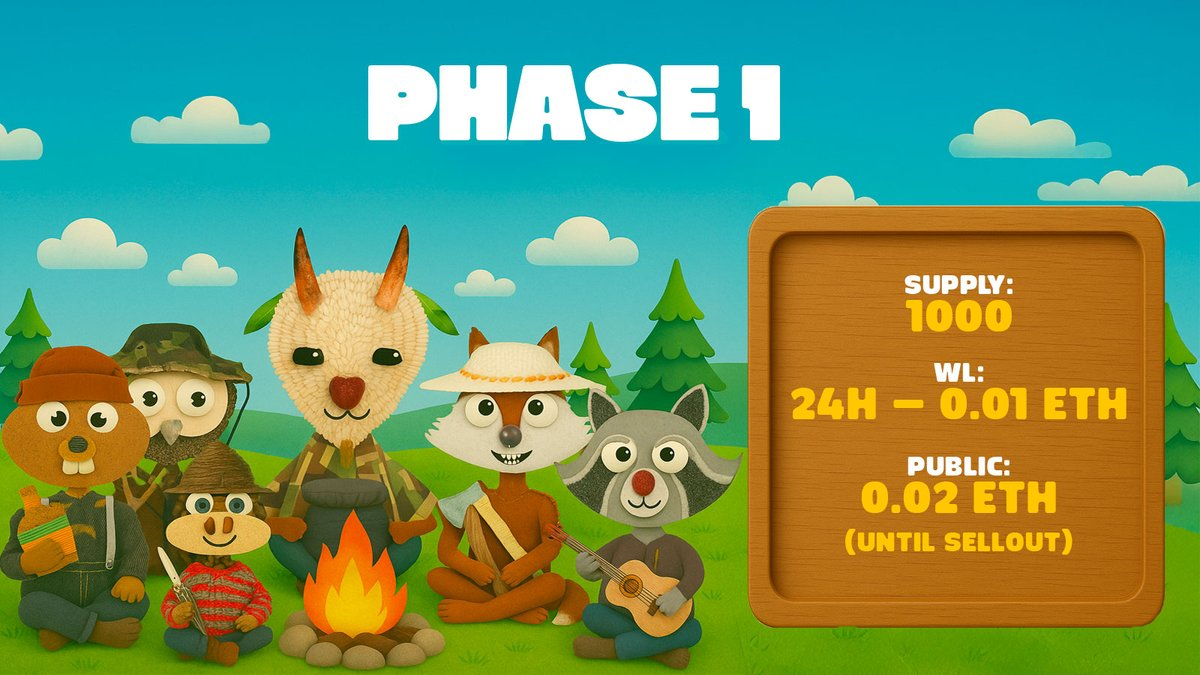
For networks still operating in their nascent stages, maintaining engagement before the mainnet launch can be a formidable challenge. Camp Network addressed this hurdle by utilizing a narrative-driven PFP drop known as TrailHeads to successfully onboard values-aligned users directly into their developing ecosystem during the testnet phase.
The TrailHeads collection played an instrumental role in elevating both the overarching brand profile and the community engagement metrics for Camp Network. By introducing the narrative early, the project successfully attracted new users to the ecosystem, inspired a vast volume of creative community-generated content, and brought early supporters into closer alignment with the core team’s vision. These digital collectibles quickly established themselves as a central focal point on the road to mainnet, anchoring a series of targeted campaigns designed to test network readiness while simultaneously rewarding early participants. Usman, Head of Community at Camp, noted that the initiative proved vital in maintaining enthusiasm and active participation throughout the critical testnet development phase.
Showcasing Underlying Network Technology
While many PFP collections focus strictly on art and community branding, some projects utilize their digital asset drops to directly demonstrate the technical capabilities of their underlying infrastructure. The Composables collection, launched by Espresso Network, serves as a prime example of this technical approach. The primary objective behind the drop was to activate an early adopter community while simultaneously showcasing Espresso’s advanced cross-chain infrastructure in action through a modular, narrative-driven PFP release.
Unlike traditional NFT collections where digital assets are often siloed and difficult to migrate safely from one blockchain network to another, the overarching goal with The Composables was to leverage Espresso’s technology to enable seamless movement throughout the entire ecosystem. Jill Gunter, Chief Strategy Officer at Espresso Network, emphasized that the team was particularly excited about developing the specialized products and features necessary to support this cross-chain functionality. The successful minting event, which ultimately resulted in a complete sell-out, provided a high-profile demonstration of the network’s technical readiness while giving early supporters a tangible stake in the ecosystem’s cross-chain future.
Key Takeaways for Future Go-to-Market Campaigns
Organizations planning a PFP-led go-to-market campaign can draw several valuable lessons from these successful deployments. First, aligning the digital collection directly with the broader product or chain narrative is essential. Just as After School Club told a story about creators, TrailHeads spoke directly to active contributors, and The Composables showcased underlying infrastructure, every successful drop remains tightly integrated with the core value proposition of the network it represents.
Second, projects must actively incentivize meaningful on-chain behavior rather than viewing the initial mint event as the final destination. Utilizing the digital asset as a functional trigger for broader participation—such as granting early access, unlocking exclusive channels, participating in interactive quests, or establishing reward eligibility—ensures continuous network engagement. Furthermore, designing with utility in mind from day one is critical. Considering what the asset actually does rather than merely focusing on its visual appearance helps establish long-term value, whether that involves gating features, evolving dynamically over time, or interacting seamlessly with decentralized applications. Finally, planning a comprehensive post-mint roadmap that maintains holder engagement through ongoing airdrops, strategic activations, and partner perks ensures that the community remains vibrant as the project matures.
Ultimately, profile picture collections have proven to be much more than a transient Web3 novelty. When deployed with strategic intent, they function as programmable digital assets capable of unlocking substantial growth, user retention, and market traction for new protocols, chains, and brands entering the ecosystem.

Comments (0)