


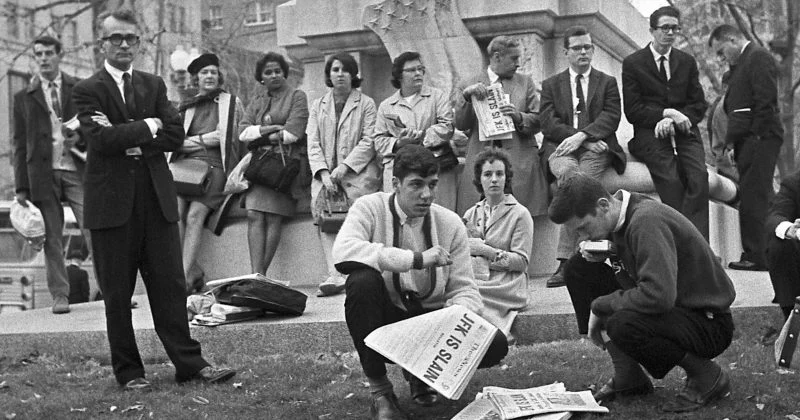
Decades after the tragic events of November 22, 1963, the official narrative surrounding the assassination of President John F. Kennedy continues to face scrutiny. The Trump administration has released more than 1,100 declassified PDF files related to the historic assassination on the National Archives website, offering historians, researchers, and the public an unprecedented look into the inner workings of Cold War intelligence agencies. These newly available documents paint a picture far more complex than the familiar "lone gunman" narrative that has defined mainstream historical accounts for over half a century.
What Is the Lone Gunman Theory?
For generations, the "lone gunman" theory has stood as the foundational explanation for the assassination of President Kennedy. This official conclusion posits that Lee Harvey Oswald acted entirely alone in planning and executing the shooting in Dallas, Texas, with no involvement from domestic conspirators, foreign governments, or external intelligence agencies.
However, the newly released cache of government files introduces a web of international contacts, glaring intelligence failures, and intense internal debates that challenge this simplistic view. By highlighting unverified identities, overlapping surveillance operations, and strange pre-assassination behaviors, the documents suggest that the assassination may have been part of a much more tangled and opaque web of Cold War intrigue than previously acknowledged.
Before the Assassination
Long before the fateful motorcade rolled through Dealey Plaza, Lee Harvey Oswald was far from a completely anonymous or unmonitored figure. US intelligence agencies closely tracked various aspects of his international activities, though the tracking itself was frequently plagued by confusion and contradictory data.
In Mexico City, for instance, the CIA closely monitored a man at the Soviet embassy who claimed to be Oswald. Yet, the physical and audio evidence collected at the time simply did not add up. According to JFK File 198-10005-10018, photos of a man visiting the Soviet embassy claiming to be Oswald did not match his known physical appearance. Furthermore, intercepted telephone calls conducted in "broken Russian" only served to deepen the confusion among intelligence officers. This glaring discrepancy strongly suggests that what US intelligence believed—or failed to understand—about Oswald’s actual whereabouts and impostors during this critical period may have been deeply flawed.
Meanwhile, Oswald’s behavior in the Soviet Union defied standard patterns. Unlike the vast majority of comparative cases from that era, which typically involved transient foreign visitors or students, a rare and unusual sequence unfolded when Oswald, the alleged lone gunman, successfully departed the USSR alongside his Soviet-born wife, Marina. Documented in JFK File 1704-104.70213, a meeting between a CIA official and a Warren Commission staffer noted that most comparative cases involved transient persons rather than committed defectors like Oswald, with only four out of 26 cases featuring Soviet wives leaving the country with foreign husbands.
Adding an unsettling layer of mystery to the timeline, federal records indicate that in the days leading up to November 22, Oswald reportedly dropped cryptic hints about "something big" about to happen. An FBI report preserved in JFK File 180-10143-10227 chillingly notes that Oswald was described by a source as visibly "nervous" and "agitated" weeks before JFK was killed. During this frantic period, he even attempted to contact Pavel Yatskov, a Soviet intelligence official, further laying the groundwork for a historical narrative that would later become consumed by doubt and persistent questioning.
The pre-assassination timeline features yet another provocative twist involving Jack Ruby, the Dallas nightclub operator who would later shoot Oswald on live television. A CIA memo cataloged under JFK File 194-10012-10030 indicates that an investigative source told authorities Ruby and Oswald had actually met at a local nightclub just weeks before the president was killed. Concurrently, separate FBI records show that federal agents had been carefully monitoring Oswald’s interactions with various Soviet defectors and anti-communist expatriates residing in Texas, as detailed in JFK File 198-10007-10013. Taken together, these pre-assassination details hint that Oswald was potentially connected to a broader, more intricate network of individuals rather than operating as an isolated actor.
During and Immediately After the Assassination
On November 22, 1963, as President Kennedy was struck down by gunfire in Dallas, the United States was instantly plunged into profound national shock and chaos. Oswald was swiftly identified, captured, and accused of the shooting, seemingly cementing the definitive narrative of a lone gunman. However, the trajectory of historical events took another dramatic and violent turn just days later when Jack Ruby—a man with well-documented, deep-seated connections to organized crime—fatally shot Oswald while he was in police custody, broadcast live on national television.
Federal Bureau of Investigation records subsequently revealed deep anxiety and suspicion regarding Ruby’s background and his true motivations. JFK File 198-10007-10021 bluntly states that Ruby’s extensive ties to the mob naturally fueled widespread public and internal suspicion that the assassination of the president was part of a much larger, coordinated plot.
Moreover, an informant’s account added an even more haunting layer of mystery to the shooting of the alleged assassin. According to JFK File 197-10002-10190, an informant recorded Ruby as stating that "he had to kill Oswald." Such remarks strongly imply that Ruby’s dramatic actions inside the Dallas police basement may not have been nearly as spontaneous as authorities initially claimed, raising enduring questions about the external pressures, influences, and underworld dynamics behind his deed.
After the Assassination
In the immediate aftermath of the assassination, US intelligence and law enforcement agencies scrambled frantically to piece together a coherent account of the conspiracy, yet significant institutional blind spots and informational gaps persisted. The prior inability of agencies to definitively confirm Oswald’s true identity in Mexico City—highlighted by mismatched photographic surveillance and confusing audio intercepts—left lingering institutional doubts regarding the reliability of foreign intelligence data. This intelligence gap remains a stark reminder of potential oversights and communication breakdowns within the national security apparatus of the era.
Internal debates and deep divisions also surfaced within the government and intelligence community. A striking internal memorandum, stamped July 19, 1967, concerning John Garrett Underhill Jr., a former intelligence agent, and Samuel George Cummings, a military adviser with deep defense ties, contained highly provocative allegations regarding the inner workings of the government.
According to the Underhill memo, the day after the assassination, Gary Underhill abruptly left Washington and arrived late at night at the home of friends in New Jersey in a state of high agitation. He confided to them that a small, radical clique within the CIA was directly responsible for the assassination, expressing deep fear for his life and believing he would likely have to flee the country. While the memo draws partially on contemporary reporting from Ramparts magazine, it vividly illustrates that even individuals inside the intelligence establishment whispered about dark conspiracies and rogue factions.
The newly released files also shed light on the intensely complex and high-stakes world of covert operations during the height of the Cold War. One detailed document outlines the clandestine work of AMFAUNA-1, a Cuban national turned intelligence asset who successfully built an expansive network of over 20 sub-agents and transmitted more than 140 secret messages back to handlers, while simultaneously being cautioned by superiors that he risked falling into a hostile foreign trap, as noted in JFK File 1104-10070-10079. This operation underscores the dangerous and unpredictable nature of clandestine warfare that consumed American intelligence during the era surrounding the Kennedy administration.
Disclosure: This article was edited by Diego Almada Lopez. For more information on how content is created and reviewed, see the Cryptobriefing Editorial Policy.





Comments (0)