


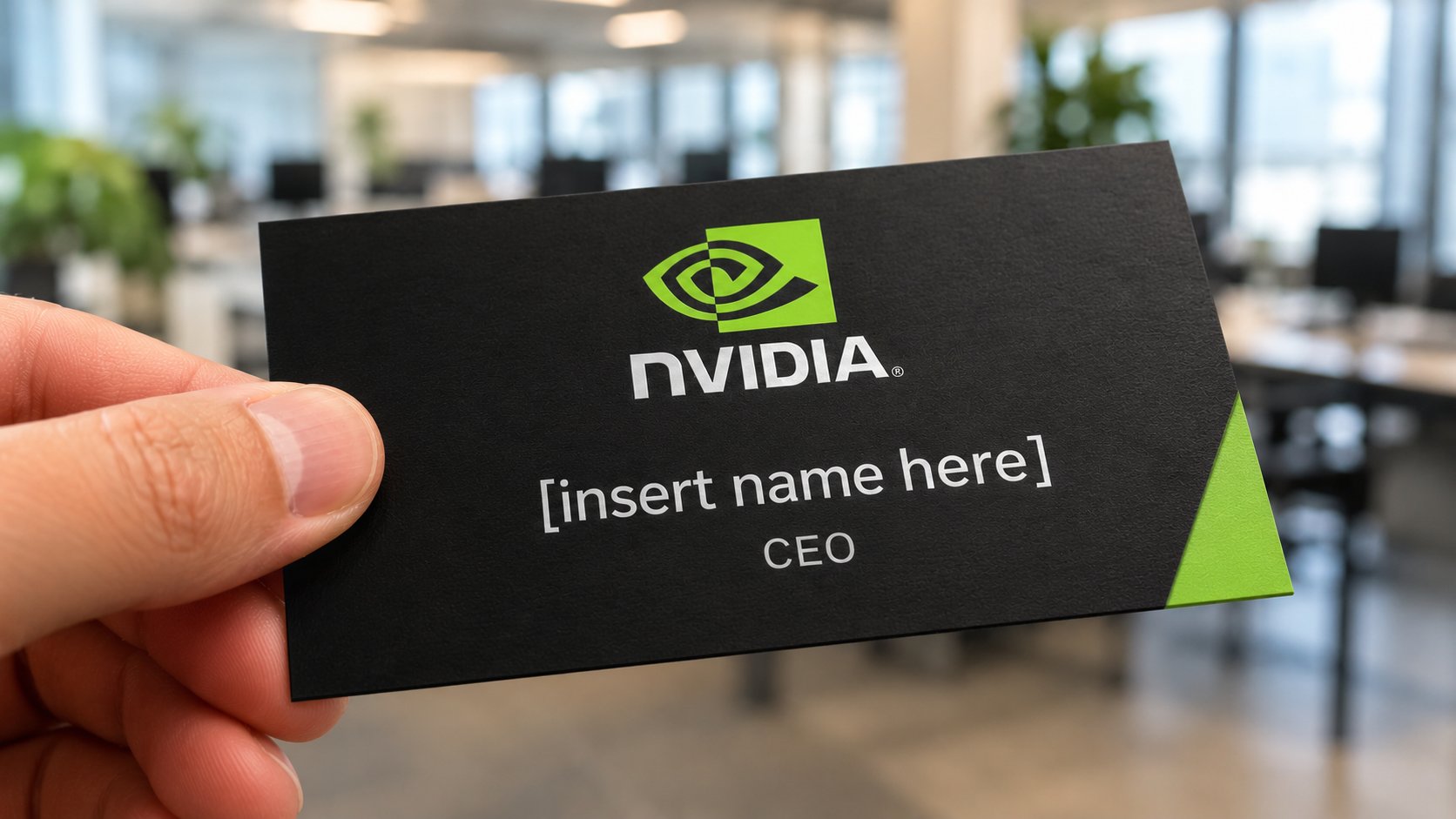
It is almost inconceivable that Nvidia would fire its rock star CEO. Yet here we are, standing on the precipice of this happening. Over at prediction markets like Kalshi, Jensen Huang’s odds of surviving the week as the head of the world-shaping semiconductor giant are sitting at a lowly 30%. Even though he built one of the world’s most valuable—and, as many market observers and regulators would argue, dangerously powerful—companies, the tides have completely turned against him in a remarkably short span of time.
The crisis centers around recent admissions regarding an extramarital affair, though the exact details have only added to the corporate chaos. As of Wednesday afternoon, public reporting and internal whispers have clouded the exact nature of the situation. Reports have entangled names such as Alice Huang, a Chinese executive suspected by U.S. intelligence of spying for her home country, as well as Kimberly Powell, an Nvidia executive who reports directly to Huang. According to an explosive new report published by The New York Times, citing five distinct sources, Powell was also involved in a paramour relationship with the chief executive.
The compounding geopolitical and corporate governance implications have sent shockwaves through Silicon Valley and Wall Street. Even if Huang is ultimately pushed out of the chief executive seat, the board members whom he has made extraordinarily rich over decades of meteoric growth are unlikely to cut him loose entirely. Barring another catastrophic shoe dropping from ongoing investigations or media disclosures, the board could theoretically keep him on in a newly elevated role as chairman, a corporate governance position Nvidia does not currently occupy in its traditional structure.
However, someone still has to run the day-to-day operations of the most critical hardware and artificial intelligence infrastructure provider on the planet. Compounding the anxiety is the glaring absence of a clear, pre-arranged succession plan. This vacuum leaves industry analysts, market participants, and insiders alike to speculate wildly while waiting to see what unfolds next. While Huang’s approximately 60 direct reports are undoubtedly facing intense scrutiny and closer evaluation by the board and outside consultants, the broader tech ecosystem has already begun playing a high-stakes parlor game, evaluating both obvious and unconventional candidates to step into the hot seat.
Among the external names floated by industry observers is Lisa Su, the chief executive of Advanced Micro Devices. As the head of Nvidia’s most credible and aggressive rival, Su also happens to be a distant cousin of Huang. While a report from The Information floated her name this week as a potential successor, industry analysts quickly question the strategic logic of such a move. Why would Su leave her own triumphant post at AMD for a beleaguered competitor? Her company stands to benefit tangibly from every single day that Nvidia spends distracted by internal investigations, potential congressional briefings, and the cascading mini-dramas sure to follow. From a competitive standpoint, Su’s best move might simply be to send a polite note of acknowledgment and keep her current corner office.
Another prominent name entering the conversation is Eric Schmidt, the former Google CEO. Schmidt was the preferred choice of Jeffrey Sonnenfeld, senior associate dean for leadership studies at the Yale School of Management, during discussions earlier this week. Sonnenfeld suggested that Schmidt could practically "parachute in tomorrow and do a very good job." Proponents point to his extensive resume: he successfully ran Google from 2001 to 2011, chaired the National Security Commission on AI from 2018 to 2021, and currently runs the aerospace firm Relativity Space. Spanning enterprise chips, software, government advisory boards, and rockets, his operational range is undeniably impressive. Yet, critics note that Schmidt would bring significant baggage regarding his own historical extramarital dalliances, making it difficult to envision him easily clearing the governance hurdles of a modern board facing intense public scrutiny over similar behavior.
Lip-Bu Tan, the chief executive of Intel, represents another intriguing yet complicated possibility. Tan possesses deep, generational knowledge of the semiconductor industry, and under different circumstances, a move to Nvidia might represent a soft landing from Intel’s current operational turbulence. Last month, Intel reported third-quarter revenue up 21% to $16.5 billion, only to issue a sobering warning that its fourth-quarter results would fall painfully short of Wall Street forecasts. The ongoing artificial intelligence boom has precipitated a severe memory-chip shortage, driving up personal computer prices and subsequently depressing PC sales. Because traditional PC chips form a massive pillar of Intel’s business, the warning sent its stock plunging 20% in after-hours trading, deepening a broader slide of more than 30% since September. Taking the helm at a company currently consuming the broader market’s lunch would serve as an extraordinary escape hatch, though feasibility remains an open question.
For corporate boards seeking a steady, unflappable hand, Bret Taylor has frequently emerged as the go-to executive across Silicon Valley. The former Salesforce co-CEO and OpenAI board chair currently runs the artificial intelligence startup Sierra, boasting a resume decorated with some of the most influential brands in tech. Taylor co-created Google Maps, served as the chief technology officer of Facebook, and chaired Twitter’s board through its tumultuous sale to Elon Musk. He subsequently stepped in as OpenAI’s board chair in the chaotic aftermath of the "Blip"—the sudden firing and rapid reinstatement of CEO Sam Altman. When major technology institutions require an unflappable, universally respected adult in the room, they routinely call upon Taylor. Furthermore, he likely maintains professional relationships with nearly every major enterprise customer currently driving Nvidia’s staggering revenues.
If the Nvidia board feels strongly about preserving an engineering-first culture and placing a dedicated "builder" at the helm, internal candidates present compelling viability. Ian Buck, an Nvidia vice president who played a foundational role in developing CUDA—the proprietary chip software that ultimately catalyzed Nvidia’s absolute dominance in artificial intelligence—frequently appears on analytical shortlists. While not a household name outside of deep engineering circles, the Stanford PhD represents a credible internal option if Huang manages to retain a chairman title and advocate for a technical successor with whom he can collaborate smoothly.
Other long-standing internal leaders are also being weighed by market watchers. Andrew Bell, Nvidia’s senior vice president of hardware engineering, arrived at the firm a quarter-century ago as a fresh Cornell graduate and has enjoyed a steady, upward trajectory ever since. Like Buck and dozens of other high-level executives operating under direct supervision from Huang, Bell is facing heightened internal scrutiny. While Nvidia Chief Financial Officer Colette Kress remains the most frequently cited insider in media speculation, industry analysts note that a financial background does not automatically translate into the visionary, innovation-first pedigree traditionally expected of Nvidia’s chief executive. Bell, by contrast, carries deep chip-design heritage.
Perhaps the ultimate wild card in the unfolding succession narrative is Lori Huang. While formal reports have yet to float her name in executive searches, industry insiders note her foundational role in the company’s genesis. Jensen Huang met his wife while they were working as lab partners at Oregon State University, meaning she has been intertwined with his professional trajectory since before Nvidia officially incorporated. Following graduation, she worked at Silicon Graphics as a microchip engineer—earning a higher salary than her husband in the early days, as Huang has frequently recounted—before eventually scaling back her corporate duties to raise the couple’s family. Today, she co-leads the family trusts. If the board prioritizes institutional continuity, cultural preservation, and a deep, foundational understanding of the company’s core DNA, turning to a brilliant, albeit historically lower-profile, co-founder of the broader Huang household is a theoretical path, reflecting the old adage about the formidable partnerships behind generational enterprises.
Whatever transpires in the coming days, the resolution of Nvidia’s leadership crisis is expected to arrive swiftly, reshaping the landscape of the global technology sector.



Comments (0)