



The detention of 39-year-old Pavel Durov, the Russian-born billionaire founder and driving force behind the global messaging application Telegram, has sent profound shockwaves across the international technology sector. Arrested by French authorities at Le Bourget airport near Paris, Durov finds himself at the epicenter of a high-stakes legal battle that underscores the escalating friction between government control, law enforcement mandates, and digital privacy rights. For years, Durov has carved out a towering presence in the modern tech ecosystem, championing privacy-centric platforms that serve not only the fast-growing cryptocurrency industry but also hundreds of millions of everyday consumers seeking secure communication.
According to statements from French authorities, Durov was taken into custody as part of a sweeping preliminary investigation into alleged illicit activities facilitated by the Telegram platform. Investigators claim that the messaging application has systematically failed to implement adequate moderation operations, thereby allowing malicious entities, criminal syndicates, and fringe groups to exploit its infrastructure. The arrest has immediately galvanized privacy advocates, civil liberties groups, and the global blockchain community, all of whom recognize the profound implications this case holds for the future of decentralized technologies, encryption standards, and the operational boundaries of digital communication platforms worldwide.
The Man Behind Telegram
Pavel Durov’s tumultuous trajectory in the global technology arena spans well over a decade, marked by an unwavering ideological commitment to free expression and resistance to state surveillance. His career began in earnest in 2006 with the creation of VKontakte, widely recognized as Russia’s equivalent to Facebook. Under Durov’s leadership, VK grew into a dominant social media force. However, his tenure was abruptly cut short in 2014 when he steadfastly refused to comply with escalating demands from Russian authorities to censor political dissent. Specifically, Durov rejected government orders to block the page of prominent Russian opposition leader Alexei Navalny and to surrender the personal data of Ukrainian protesters. Choosing exile over compromise, Durov left Russia and set his sights on building a truly independent communication tool.
That vision materialized in 2013 with the launch of Telegram, a messaging platform marketed heavily on the principles of being uncensored, neutral, and globally accessible. This founding ethos deeply resonated with internet users seeking refuge from pervasive state and corporate surveillance. Over the subsequent decade, Telegram evolved far beyond a simple messaging app, developing a massive global footprint with an estimated 800 million active users. Its robust privacy architecture, anchored by end-to-end encryption features and a hands-off approach to content governance, naturally drew a dedicated following within the cryptocurrency and blockchain sectors, where operational security and censorship resistance are viewed as fundamental rights.
The Charges and Their Implications
The immediate legal catalyst for Durov’s detention stems from an arrest warrant issued by the Office for the Protection of Minors on the Internet (OFMIN), a specialized French law enforcement agency. The accusations leveled against Durov are severe, encompassing allegations related to organized crime, large-scale drug trafficking, fraud, systemic cyberbullying, and the promotion or facilitation of terrorism on the Telegram platform. These sweeping charges bring to the surface the difficult and ongoing struggle between privacy-focused digital services and the expanding efforts of sovereign governments to police online spaces and combat transnational digital crime.
Telegram’s massive scale and architectural commitment to user confidentiality have long made it a lightning rod for criticism from international regulators and law enforcement agencies. Critics have consistently argued that the platform’s reluctance to proactively moderate its channels creates a safe haven for bad actors. At the same time, millions of ordinary citizens, journalists, political dissidents, and privacy advocates rely on those exact same security mechanisms to protect themselves from authoritarian surveillance and data harvesting. The French investigation forces a stark reckoning over where liability lies when a neutral communication utility is utilized by individuals engaged in unlawful conduct.
Privacy, Blockchain, and Regulation
The detention of Telegram’s founder brings the complex, often adversarial relationship between privacy-preserving technologies, blockchain ecosystems, and regulatory compliance into sharp relief. Telegram has long served as the digital town square for the cryptocurrency industry, functioning as the primary infrastructure for project announcements, developer coordination, community building, and real-time market discussions, including critical channels utilized by industry participants. Consequently, any forced structural changes to Telegram, or any degradation of its operational independence, could trigger significant ripple effects across the entire blockchain landscape.
The broader crypto sector relies intrinsically on privacy-preserving technologies and resilient communication channels to operate effectively. If regulatory pressure forces Telegram to compromise its core architectural principles, it could accelerate a migration within the crypto community toward fully decentralized, blockchain-native messaging solutions. These alternative platforms are inherently designed to be more resilient against traditional forms of censorship and legal coercion. Furthermore, the unfolding situation starkly highlights the inherent vulnerabilities of centralized services—even those fiercely dedicated to user privacy—when confronted by coordinated, determined government action. This realization is widely expected to catalyze renewed interest and investment in genuinely decentralized alternatives capable of withstanding aggressive legal and regulatory challenges.
Privacy vs. Law Enforcement: A Balancing Act?
Durov’s arrest lays bare the delicate balancing act that privacy-focused platforms must constantly navigate. Executives and developers must reconcile the ethical and technical imperatives of protecting user privacy with the practical necessity of complying with local laws across dozens of disparate jurisdictions. This challenge is acutely felt in regions like the European Union, where rigorous regulatory frameworks such as the Digital Services Act (DSA) impose strict content moderation and accountability mandates on digital platforms operating within member states.
The ultimate outcome of Durov’s legal battle is poised to establish critical precedents regarding how aggressively law enforcement agencies can and will pursue tech executives over platform-wide content moderation issues. Moreover, it will test the outer limits of corporate liability under expansive regulatory frameworks like the DSA. The case is also expected to heavily influence future global debates surrounding the sanctity of encryption, the creation of mandated backdoors, and the rightful scope of technology companies in policing the speech and actions of their users.
What’s Ahead: Impact and Outlook for Privacy Tech and Crypto
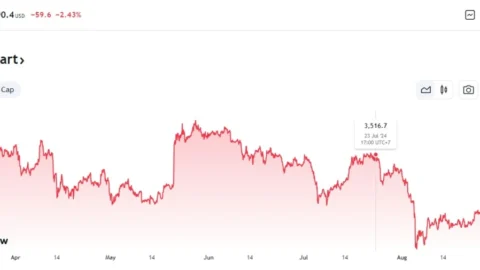
The broader financial markets reacted swiftly to the news of Durov’s detention, with Toncoin—the cryptocurrency closely integrated with the Telegram ecosystem via The Open Network—experiencing an immediate and sharp decline in valuation. This rapid market response vividly demonstrates the deep interconnectedness linking modern privacy technologies, communication utilities, and the digital asset economy.
Looking forward, heightened regulatory scrutiny regarding how cryptocurrencies and decentralized projects are discussed, marketed, and organized on major messaging platforms could introduce substantial new compliance hurdles for developers, projects, and exchanges alike. At the same time, it is likely to spur a new wave of technological innovation focused on decentralized communication architectures built directly on blockchain networks, as the community actively seeks out infrastructure that cannot be easily compelled by state authorities.
As this landmark case continues to unfold, it will undoubtedly fuel intense global debates concerning the appropriate equilibrium between law enforcement requirements, civil liberties, user privacy, and the social responsibilities of technology corporations. The legal resolution of Durov’s situation will shape how encrypted communication and digital platforms are understood, utilized, and regulated for years to come.
Within the broader tech and crypto spheres, many observers note that blockchain technology itself functions as a fundamental form of communication—a sentiment echoed earlier in the year by prominent figures facing similar regulatory crackdowns, such as Bitcoin pioneer Amir Taaki, who remarked during discussions surrounding the prosecution of decentralized wallet developers that state actions increasingly target anyone who challenges the established financial and technological status quo.
Ultimately, Pavel Durov’s arrest serves as a stark reminder that the inherent tensions among privacy, security, technological innovation, and government regulation continue to intensify. As society becomes increasingly digitized and interconnected, finding a sustainable and equitable balance among these competing interests remains one of the most formidable challenges facing the future of both privacy technology and the broader digital economy.



Comments (0)