



There is something undeniably transformative about watching a modern software developer operate in a state of absolute flow. With their fingers moving rapidly across the keyboard, typing commands into advanced development environments like Codex, Claude, or Cursor, a powerful digital creation interface unfolds in real-time response to every keystroke. This level of fluid interaction powers a workflow that would appear completely unrecognizable, and perhaps even science-fiction or alien-like, to any professional software engineer who was active in the industry just two years ago. In a remarkably short span of time, the entire Integrated Development Environment (IDE) has been completely torn down and rebuilt from the ground up to serve the unique demands of the age of artificial intelligence. As a direct result of these paradigm-shifting advancements, software developers are working faster and flying higher than ever before.
Over that exact same two-year window, video generation models have experienced their own blistering pace of technological advancement, racing ahead with astonishing capabilities. Yet, in stark contrast to the revolutionary state of modern software engineering, professional video creation remains stubbornly stuck in what many describe as the stone age. The foundational toolchain of the video industry is still fundamentally built around the cumbersome physical and digital realities of capturing, uploading, storing, and manipulating enormous, heavy files.
Generative video technology has undeniably arrived at a major threshold moment. The underlying artificial intelligence models have finally become expressive and sophisticated enough to effectively function as the new digital camera. Consequently, the primary operational bottleneck is no longer found in the technical mastery of traditional animation or the massive, prohibitive one-hundred-million-dollar budgets historically required for specialized film crews and elaborate visual effects. Instead, the true limiting factors of modern video production have shifted to human creativity and token inference. Despite these powerful new technological horizons, professional video creators are not yet flying through their workloads the way software developers are.
Without the benefit of a proper, AI-native tool suite—a long-sought-after "Cursor for video"—the dedicated professionals who make their living producing films, television series, and high-end commercials remain stuck in an awkward transitional phase. They are forced to painfully bolt advanced artificial intelligence model outputs onto legacy editing pipelines that were never designed to handle them. In this fragmented current state, generation processes, review cycles, and production tracking each live isolated inside a completely separate, disconnected application. Workflows buckle daily under the sheer volume of generated material, and a finished, polished take often cannot be reliably traced back to its original source data for crucial legal clearance and compliance. This represents a glaring, gaping problem for the industry, and it currently stands as the single biggest roadblock on the path toward truly embracing the full potential of artificial intelligence.
A new platform named Preview aims to clear that critical roadblock entirely. Designed specifically as an AI-native video creation and production platform built from scratch for professional creators, Preview brilliantly combines a traditional video timeline with an expansive, infinite canvas designed for ideation, all housed within a single, collaborative multiplayer workspace. Operating within this unified environment, creative teams can seamlessly generate content using any underlying artificial intelligence model while simultaneously tracking every single character, location, and prop. Furthermore, the platform maintains complete, verifiable records of how every individual asset was produced. This unique capability enables both halves of a hybrid production pipeline—traditional media methods and cutting-edge generative techniques—to work together smoothly and cohesively. For industry professionals navigating this transitional era, there is simply nothing else quite like it currently available on the market.
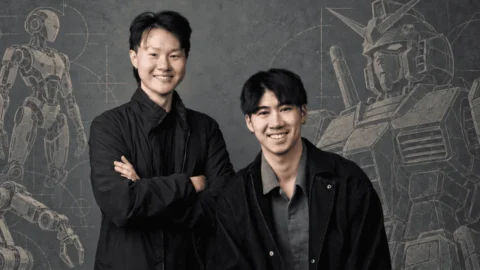
The minds behind this ambitious platform are co-founders Stefan Fejes and Veljko Tornjanski, who have been best friends since their high school days growing up in Serbia. Professionally and personally, they appear to have been custom-built for this exact mission. Previously, both were valued founding team members at Veed, an early pioneer in the online video creation space. Later, at Vizcom, Veljko served as the company’s very first hire and went on to become its Head of Artificial Intelligence, while Stefan successfully led the product division. Through these combined experiences, they have developed an intimate, granular understanding of the notoriously tricky nuances inherent to digital video. They possess a deep, authentic empathy for their customers’ daily pain points, and they have repeatedly demonstrated an impressive ability to deliver sophisticated, highly polished work on exceptionally short timelines.
The market response to their vision has been swift and enthusiastic. More than one hundred professional studios are already actively utilizing Preview in their day-to-day operations. This active user base spans a diverse spectrum of the industry, ranging from traditional advertising agencies crafting commercials for Fortune 500 corporate brands to cutting-edge artificial intelligence-native studios and veteran Hollywood feature filmmakers. Put simply, these professional users love the platform. Early customers have reported that Preview has quickly evolved into the most significant and indispensable tool in their entire professional toolkit. Furthermore, it has successfully established itself as the single source of truth from which all downstream model inference flows.
The broader media landscape is currently standing at the precipice of a massive video token tsunami. In the near future, many billions of dollars worth of computing inference will run directly through this emerging category, driving the next wave of iconic films and valuable intellectual property. In this shifting economic landscape, ultimate value will inevitably accrue to the specific environment where the actual work takes place—the primary platform that a creative team opens first thing in the morning and finally closes at night, the central hub where critical creative decisions are made and the definitive operational record is kept. Industry backers believe strongly that Preview is precisely that platform, and that Fejes and Tornjanski represent the right team, equipped with the right product, at the absolute right moment in technological history.



Comments (0)