



“There’s a belief that the world’s GDP is somehow limited at $100 trillion. AI is going to cause that $100 trillion to become $500 trillion.”
That ambitious projection, articulated by Nvidia CEO Jensen Huang, captures the staggering scale of modern market ambition. To understand just how far financial markets have evolved, one must look back more than a century to 1901, when US Steel achieved the historic milestone of becoming the world’s first $1 billion company. At the time, contemporaries viewed the figure as an almost unthinkable sum. A history of the company written two decades later marveled that while hundreds of millions commanded respect, a billion—defined then as a thousand million—seemed merely a row of figures that could hardly be computed.

Today, the number investors must reckon with is the trillion. There are now eleven publicly traded companies globally worth more than $1 trillion. To put this immense scale into perspective, consider a simple mental exercise: if an individual were to earn $1 every single second of the day without ever spending a single cent, it would take until the year 33,168 to accumulate a trillion dollars. Because ordinary investors are unlikely to live quite that long, they must instead hope that the trillion-dollar corporate giants in their portfolios manage to generate revenue at a far more accelerated pace.
Financial analysts use quantitative models to gauge the realism of these figures. NYU Stern finance professor Aswath Damodaran employs a reverse discounted cash flow (DCF) methodology to calculate the precise annual revenue the world’s most valuable companies must pull in to justify their current market capitalizations. According to his models, an investment in Tesla at its current valuation requires the belief that the electric vehicle and clean energy pioneer will generate at least $2.2 trillion in annual revenue by the year 2030—an assumption that Damodaran notes is pushing the absolute limits of possibility.
Nvidia shareholders face a somewhat less daunting, though still colossal, hurdle. They require the chipmaker to bring in roughly $590 billion in annual revenue by 2030. While Damodaran characterizes that target as a significant reach, he notes that it remains both possible and plausible. Even so, $590 billion is an astronomical sum. For historical context, US Steel in 1901 was worth only about $46 billion when adjusted for inflation.
The private markets are currently playing by an entirely new set of rules. Reports indicate that OpenAI is seeking to raise a staggering $100 billion in a single cash call from investors at an $830 billion valuation—more than double the inflation-adjusted peak of early American industrial giants. Meanwhile, SpaceX has been engaged in talks for a share sale that would elevate its valuation to $800 billion, with prospective plans for an initial public offering targeting $1.5 trillion. Anthropic, structured as a public benefit corporation that does not strictly adhere to a profit-maximization mandate, could potentially debut on the public markets with a $300 billion valuation.
This exponential growth in startup valuation represents a dramatic shift from just over a decade ago. It was only 12 years ago that the term "unicorn" was coined to describe the rare phenomenon of a private startup achieving a $1 billion valuation. Today, the market has birthed "centicorns"—privately held enterprises worth one hundred times that amount. Perhaps most emblematic of this financial inflation is the AI startup Thinking Machines, which secured a remarkable $2 billion from investors in a seed round earlier this year. Securing a seed-funding round equal to the historical worth of early industrial empires underscores how profoundly global financial markets have expanded over the past century.
The central question facing economists and market participants is whether these enterprises can realistically capture the trillions of dollars in revenue required to support such lofty valuations. When broken down into dollars per second, the required output stretches the imagination. Yet, industry leaders argue that traditional economic limits no longer apply. As the head of ChatGPT recently observed, there is near-infinite demand for intelligence. If human demand for artificial intelligence and computational power proves boundless, market optimists argue, demand for the equities fueling this revolution may follow a similar trajectory.
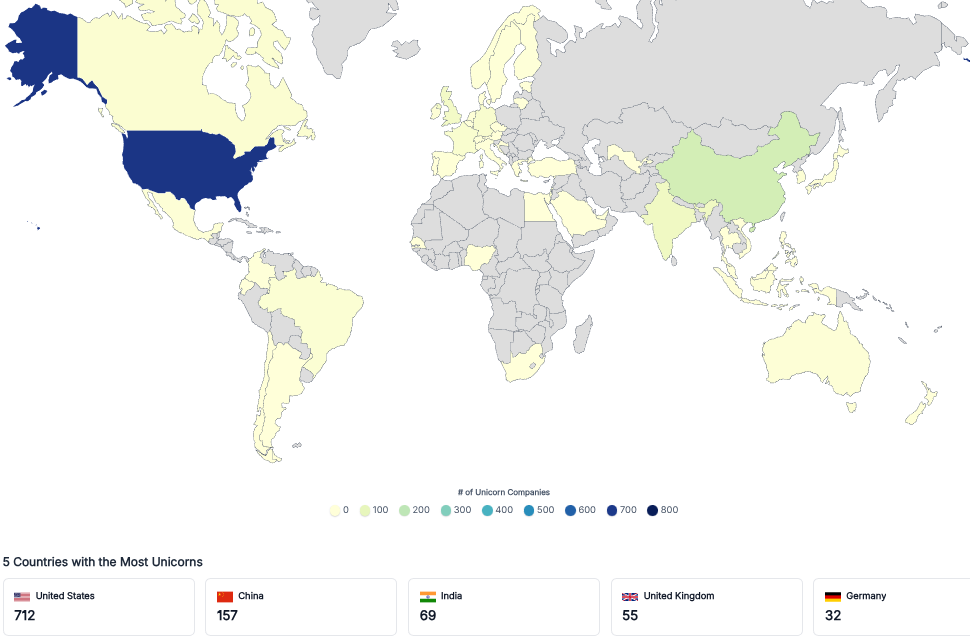
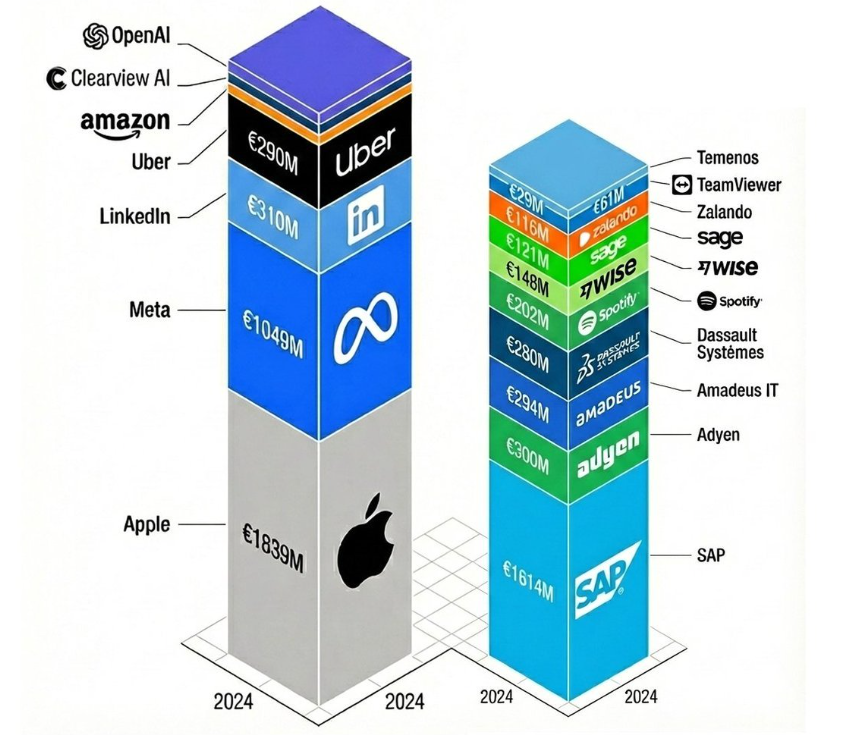
This broader economic transformation is mirrored in regional market disparities. The United States remains the undisputed epicentre of venture capital and high-growth technology, boasting 712 unicorns with a collective valuation of $2.9 trillion, compared to just 157 in second-place China. Eighty of those American unicorns were minted in 2025 alone. By contrast, European markets continue to lag significantly in cultivating homegrown tech giants. An unofficial tally indicates that in 2024, the European Union collected more revenue from regulatory fines levied against US technology companies than it generated from all public European internet companies combined. Furthermore, data attributed to Goldman Sachs reveals that over the past 50 years, only 14 companies with a market capitalization exceeding $10 billion were founded in Europe, compared to 241 in the United States.
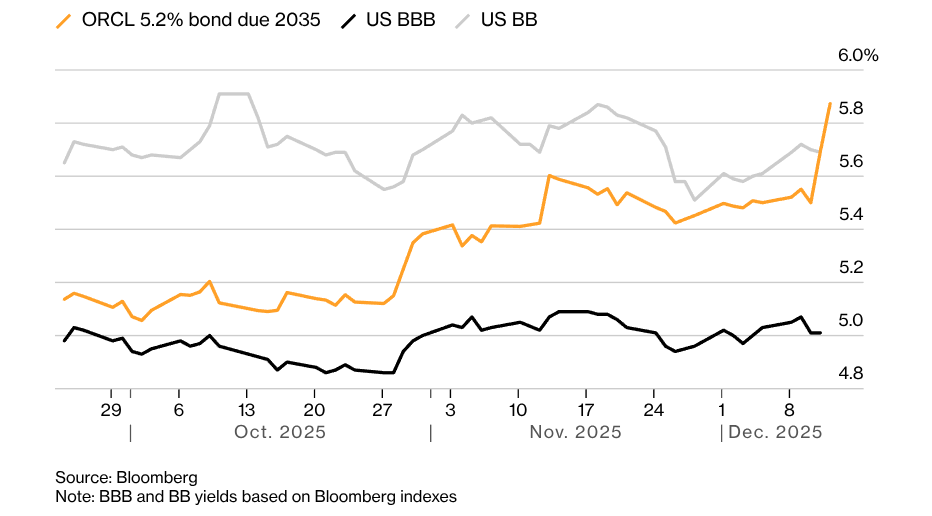
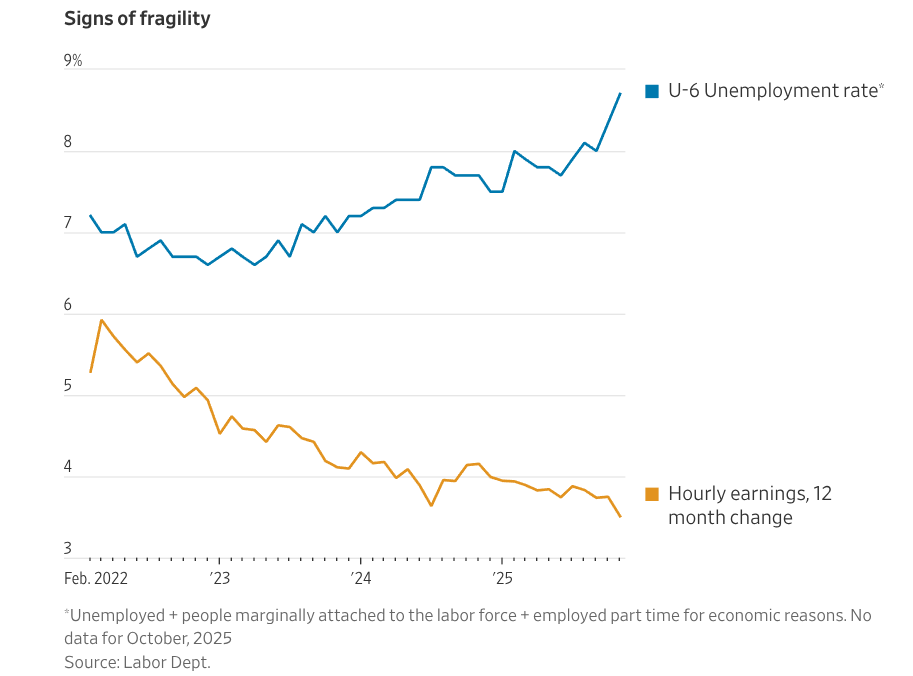
Beneath the surface of soaring equity valuations, structural anxieties persist across the broader macroeconomic landscape. In the corporate debt markets, Bloomberg recently reported that bonds issued by Oracle are trading at junk-bond levels as credit spreads widen and debt risk flares up. Concurrently, labor economists note that the focal point of economic anxiety is shifting. As US unemployment ticks upward and wage growth slows, jobs are poised to replace consumer prices as the primary source of public and political anxiety.
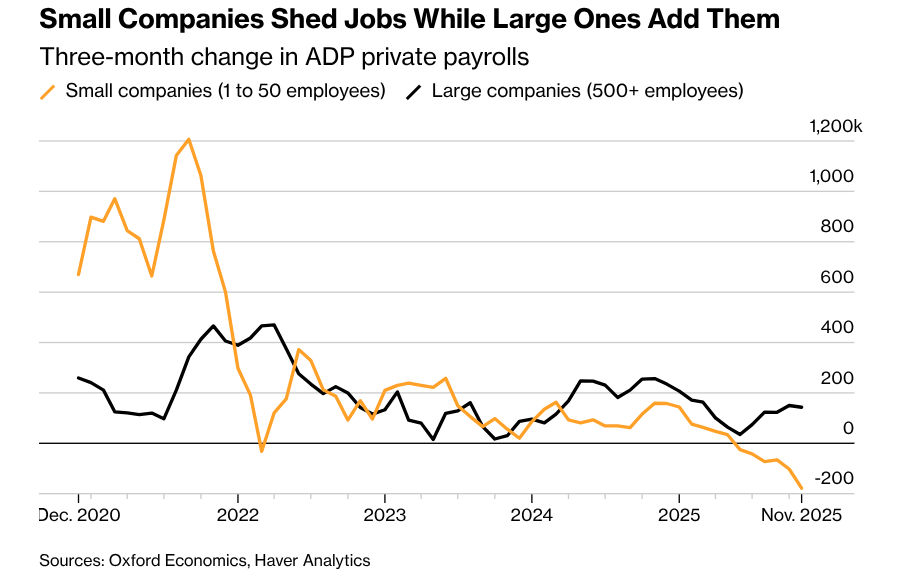
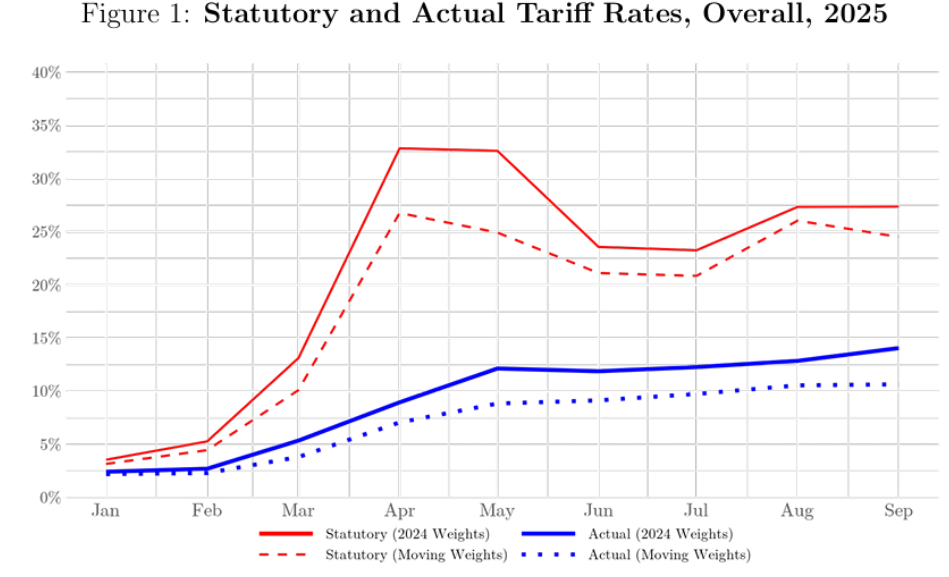
The pressure is being felt acutely in specific sectors. Small businesses have borne the brunt of recent trade policies and tariff adjustments, leading many smaller enterprises to shed jobs. While a recent comprehensive study led by Gita Gopinath highlights that effective US tariff rates have thus far remained about half of their headline figures due to time lags, exemptions, and enforcement gaps, the study also delivers troubling news: nearly 100 percent of those tariffs are being passed directly downstream to everyday consumers through higher prices.
This dynamic feeds into a wider structural trend identified by economist Joe Brusuelas, who notes that the productivity-pay gap in the United States continues to widen. The gap between overall economic productivity and the hourly wages paid to non-supervisory employees is accelerating as supply chains and technological advances reshape the American economy.
At the same time, cultural and demographic shifts are quietly altering society. Studies highlighted by the Financial Times point to a long-term decline in reading habits among Americans, with the percentage of adults reading for personal interest dropping significantly over the past two decades. This trend is even more pronounced among younger demographics; nearly 50 percent of US teens report that they hardly ever read in their spare time, a substantial increase from previous decades. Simultaneously, demographic data from Torsten Slok shows a steady decline in the percentage of US families with children, pointing to shifting generational structures.
International capital flows are also reacting to global macroeconomic shifts. In Japan, the yield on 10-year government bonds has climbed to approximately 2 percent for the first time since 1999. Historically, higher domestic yields encourage Japanese savers to repatriate capital by selling foreign investments. However, current trends suggest that the gravitational pull of US artificial intelligence stocks remains strong enough to defy conventional capital flight patterns.
Ultimately, trying to make sense of modern financial markets often requires stepping back to view industrial production through an unconventional lens. Observing the economy in terms of price per weight, market commentators have pointed out that advanced manufactured goods—such as a Tesla Model 3—can cost less per pound than premium artisanal cheese. Humanity pulls sand, oil, and mineral ores from the earth and transmutes them into complex computing machines that are cheaper by weight than aged dairy products. Perhaps that is precisely the kind of radical perspective required to navigate an economy where centicorns, trillions in corporate value, and near-infinite demands for intelligence define the new baseline of modern capitalism.





Comments (0)