


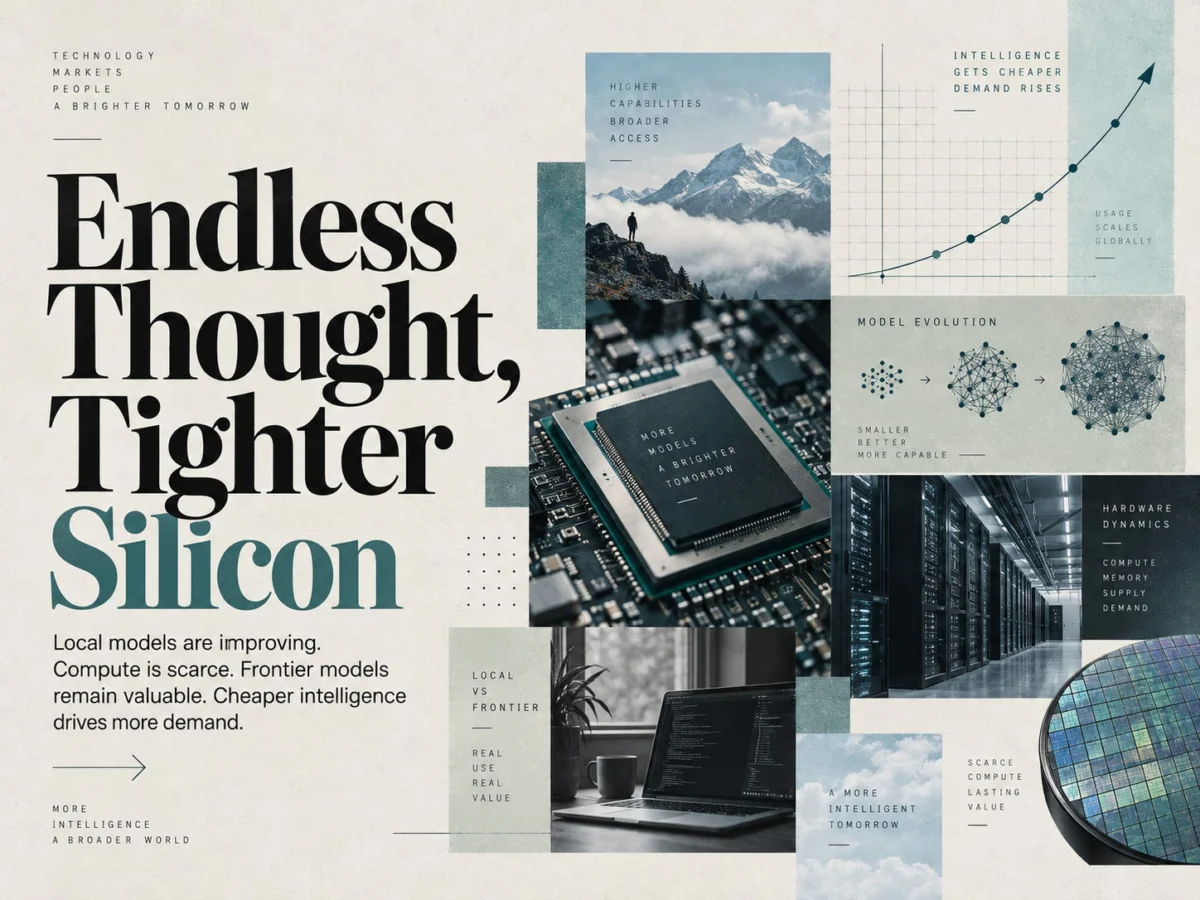
After a month-long hiatus from publishing, tech entrepreneur and investor Kerman Kohli has returned with a sweeping assessment of the artificial intelligence landscape, shifting hardware dynamics, and the evolving relationship between local and frontier models. Drawing on firsthand experience scaling physical AI infrastructure—including expanding a personal inference rig from $15,000 to $35,000 and investing heavily in cluster architecture at RouteMesh—Kohli’s latest insights challenge prevailing market narratives regarding hardware depreciation, token pricing, and the long-term viability of local intelligence versus centralized tech giants.
For months, skeptics have pointed to falling token prices and cyclical corrections as warning signs of an impending market crash, interpreting cheaper inference costs as a signal of waning demand. However, Kohli’s observations from the front lines of hardware procurement paint an entirely different picture, suggesting that traditional economic models fail to capture the reality of a market driven by structural memory shortages and fundamentally unconstrained demand for intelligence.
Rethinking Hardware Dynamics: The Supremacy of Memory and Backwards Compatibility
To understand the current state of AI infrastructure, Kohli argues that observers must radically update their mental models regarding hardware depreciation. Traditional technology hardware follows a predictable curve of rapid devaluation as newer, faster generations hit the market. Yet, the AI hardware sector is defying these historical patterns.
Kohli’s own hardware journey illustrates this anomaly. Earlier this year, he built a $15,000 inference machine, which he subsequently upgraded into a $35,000 rig by adding another GPU. However, due to severe supply pressures, the individual GPU that previously cost $10,000 appreciated to $14,000, while RAM costs climbed by an additional $1,000. Remarkably, this effectively brought the cost basis of his upgraded system down to $30,000—an appreciation curve entirely abnormal for modern computing hardware. Even more strikingly, older generation components like the 2020-era RTX 3090 continue to command steady market prices, remaining economically viable for routine inference tasks.
The driving force behind this phenomenon is twofold: memory and NVIDIA’s unmatched ecosystem compatibility. When evaluating modern hardware, analysts frequently conflate compute capacity with memory availability. While raw compute power—driven by CPUs, GPUs, and XPUs—accelerates generation speeds, inference operations are fundamentally bottlenecked by memory. With structural memory shortages projected to persist for at least another decade, any technological depreciation in raw compute is continually offset by the absolute scarcity of high-bandwidth memory.
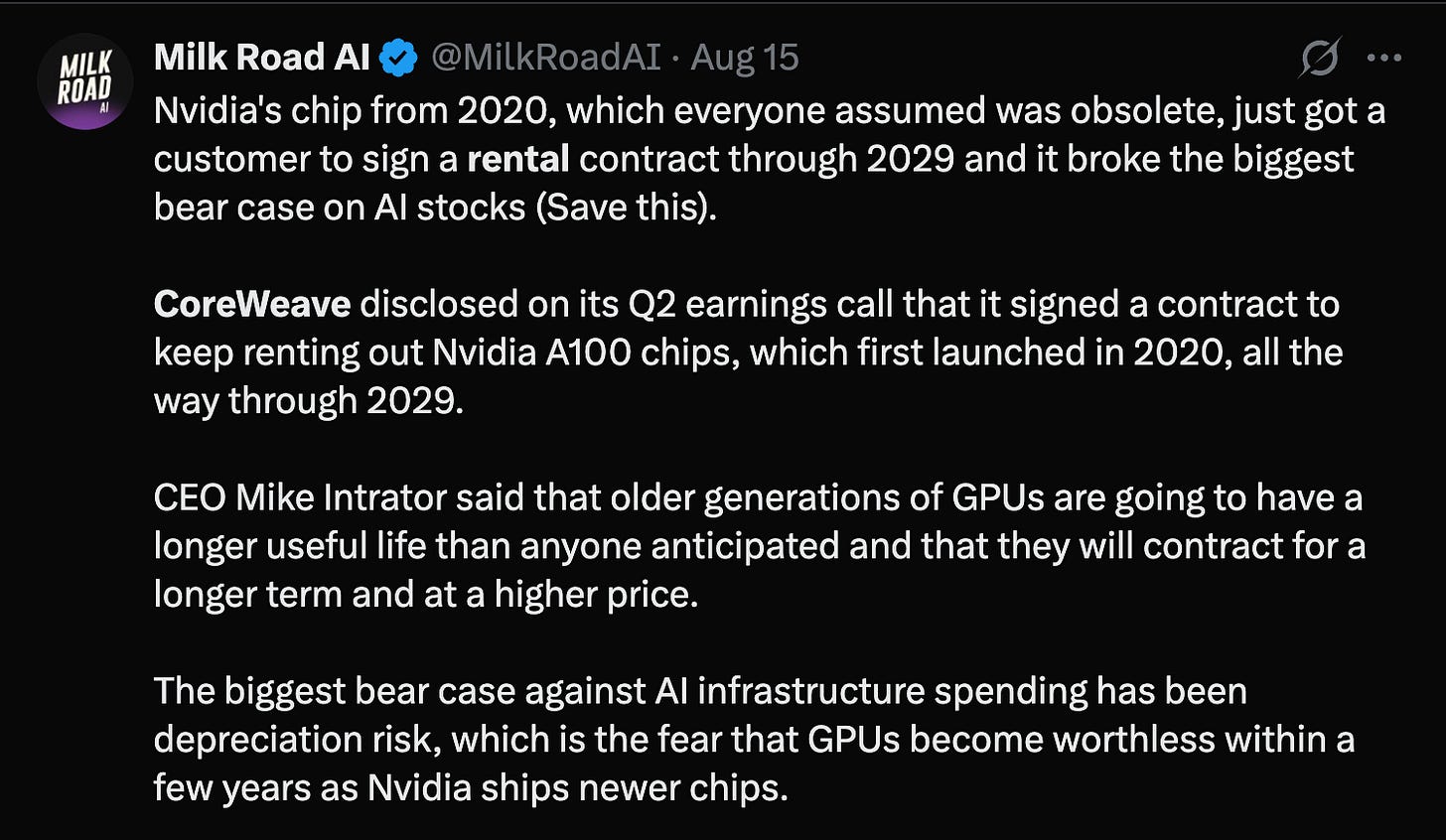
Furthermore, older silicon retains immense value because of its deep software integration. Silicon from 2020, such as the A100 or RTX series, continues to run complex production workloads efficiently. This has tied specific workloads directly to legacy hardware—a phenomenon rarely seen in recent tech history—driving secondary market values higher for units like the RTX 6000 Pro Max-Q, which Kohli notes has appreciated significantly since purchase rather than depreciating.
Unraveling the Token Price Fallacy and the Myth of Finite Demand
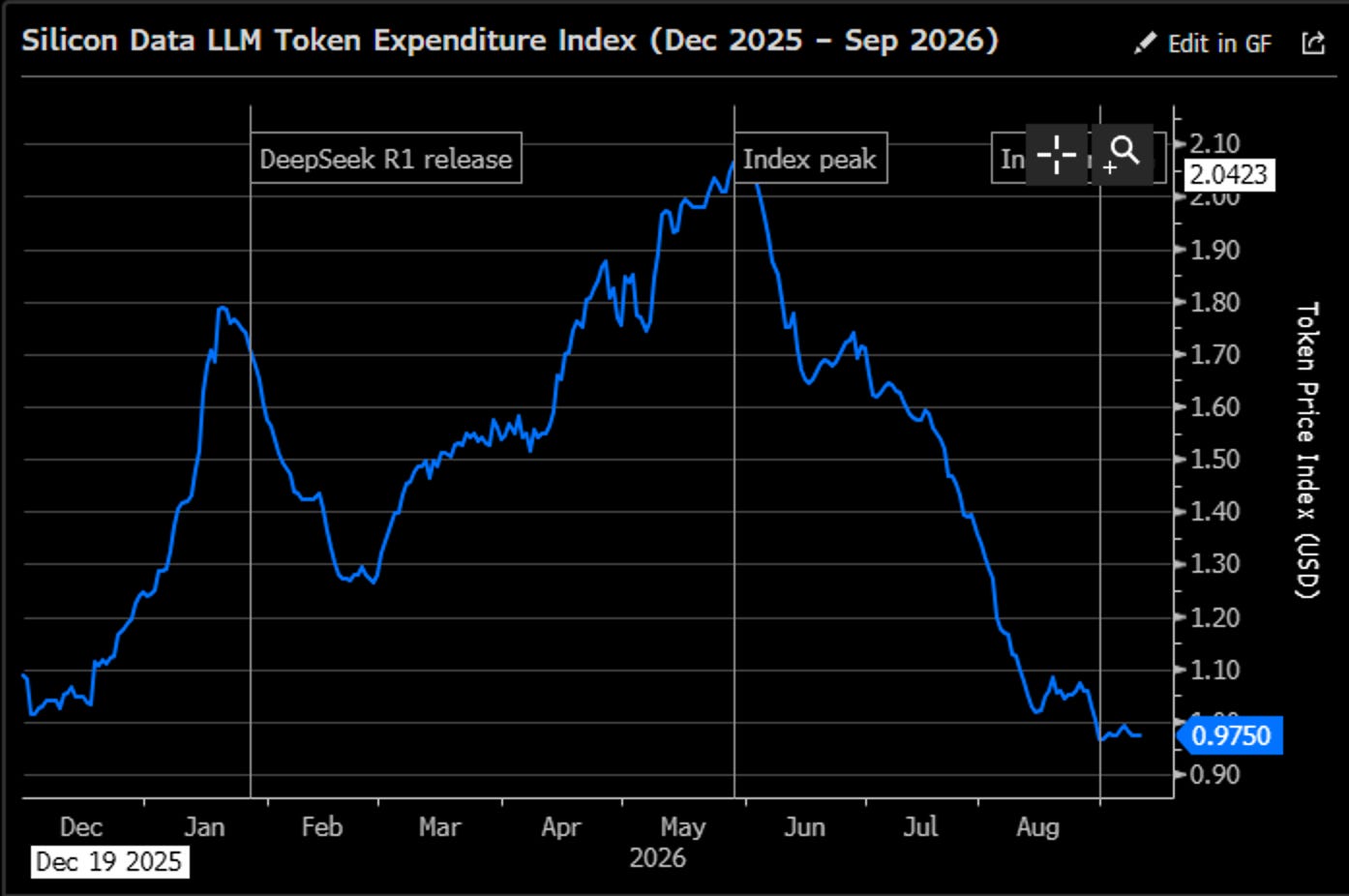
Market critics frequently point to declining token prices as evidence of a cooling AI economy. Charts tracking token cost per million units across various providers show a downward trajectory, leading some commentators to declare that the infrastructure buildout is a speculative bubble waiting to burst.
Yet, when examining broader economic indicators, such metrics fail to reconcile with NVIDIA’s soaring data center revenue and persistent delivery backlogs. If falling token prices were dampening corporate enthusiasm by satisfying market needs with fewer resources, enterprise chip procurement would plateau. Instead, hardware demand continues to push upward, constrained strictly by physical manufacturing limits rather than a ceiling on customer interest.
Kohli emphasizes that the core misunderstanding stems from a failure to recognize the nature of intelligence demand. Standard economic theory dictates that supply eventually scales to meet demand, leading to stable market equilibrium. However, the demand for intelligence is effectively infinite, and real-world use cases remain entirely unbounded. As the marginal cost of a token drops, developers and enterprises do not simply stop buying; instead, they integrate intelligence more deeply into every conceivable workflow.
This creates a recursive, explosive feedback loop of agentic demand. Personal software stacks, automation tools, and multi-agent systems require escalating layers of orchestration intelligence. Consequently, falling token prices do not signal the collapse of the AI market; rather, they democratize intelligence access, driving total consumption to unprecedented heights. In this environment, owning underlying compute assets transforms from an operational expense into a critical strategic safeguard—preventing proprietary ideas and sensitive workflows from being compromised on shared public infrastructure.
Local Versus Frontier: The Maturation of Self-Sufficient Compute
Parallel to these hardware shifts, the past month has witnessed remarkable breakthroughs in local intelligence capabilities. Releases such as Qwen 3.8 DFlash2 and GLM 5.3 Flash Next DFlash2 represent step-changes in the speed and reasoning competency achievable on consumer and workstation-grade hardware.
Equipped with upgraded multi-GPU setups and networked node clusters, developers are increasingly achieving a degree of compute self-sufficiency. While high-end proprietary subscriptions—such as premium tier ChatGPT access—retain utility for specialized computer-use tasks, complex cross-application orchestration, and advanced reasoning, local models are rapidly capturing a significant share of daily developer workflows.
Despite the rise of powerful open-weights and local alternatives, the major frontier labs are not facing obsolescence. Their enduring dominance rests on two unassailable pillars: massive proprietary compute monopolies and trusted, enterprise-grade American branding. OpenAI, Anthropic, and other tier-one labs command colossal clusters that independent operators cannot easily replicate, allowing them to extract substantial premiums from risk-averse corporate clients.
Nevertheless, as commercial coding subscriptions face restructuring and hardware scarcity drives up acquisition costs, the financial calculus for individual developers and small enterprises is shifting. The friction of high capital expenditures is increasingly weighed against the long-term utility of owning physical infrastructure rather than renting it indefinitely.
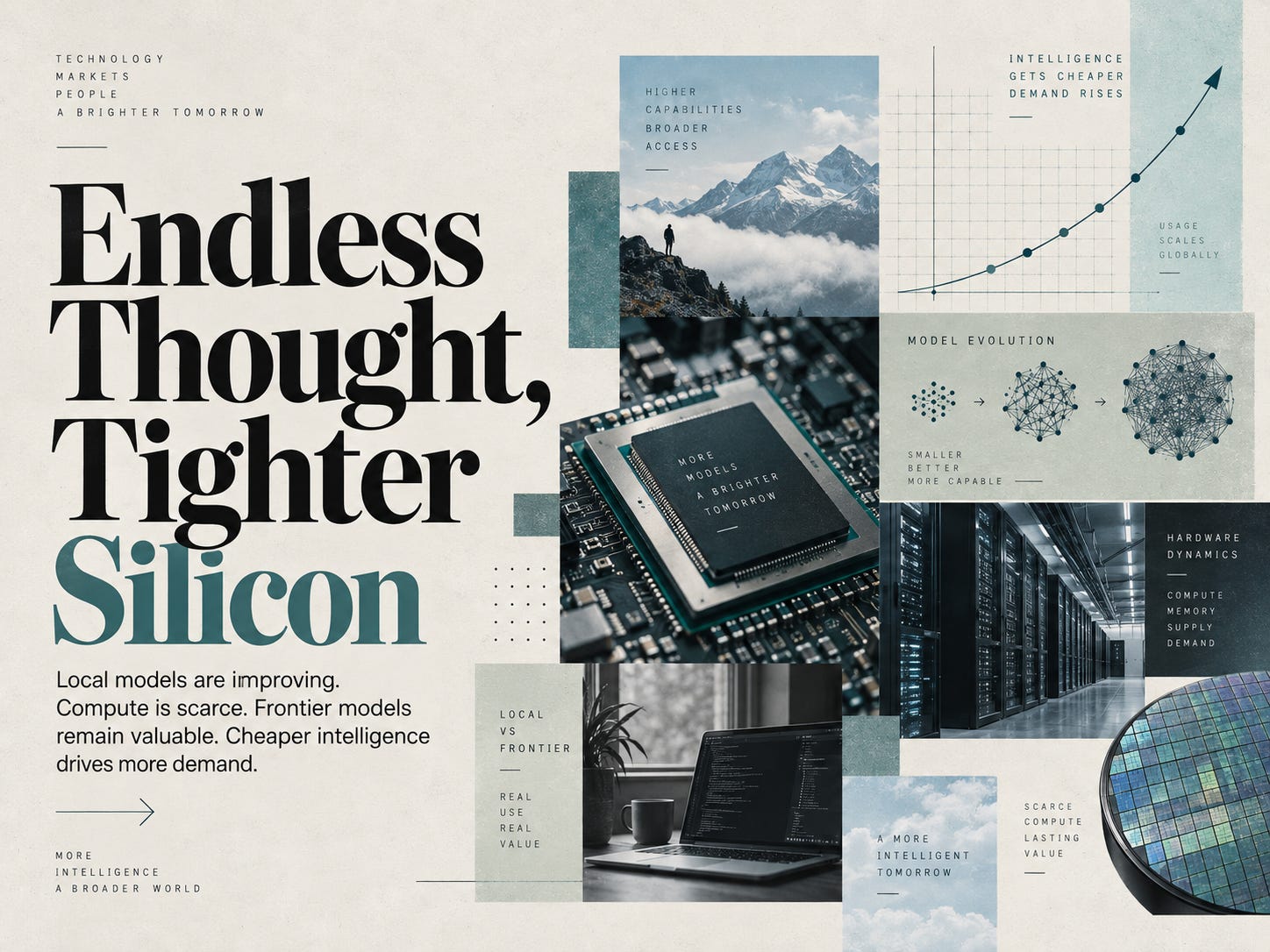
Ultimately, Kohli’s emerging framework rests on two foundational anchors: first, that the demand for intelligence is infinite; and second, that physical compute is transforming into the definitive strategic commodity of the modern economy. For market participants, enterprise strategists, and technologists alike, failing to internalize the reality of unconstrained demand and hardware scarcity risks leaving them structurally unprepared for the economic reality taking shape.



Comments (0)