


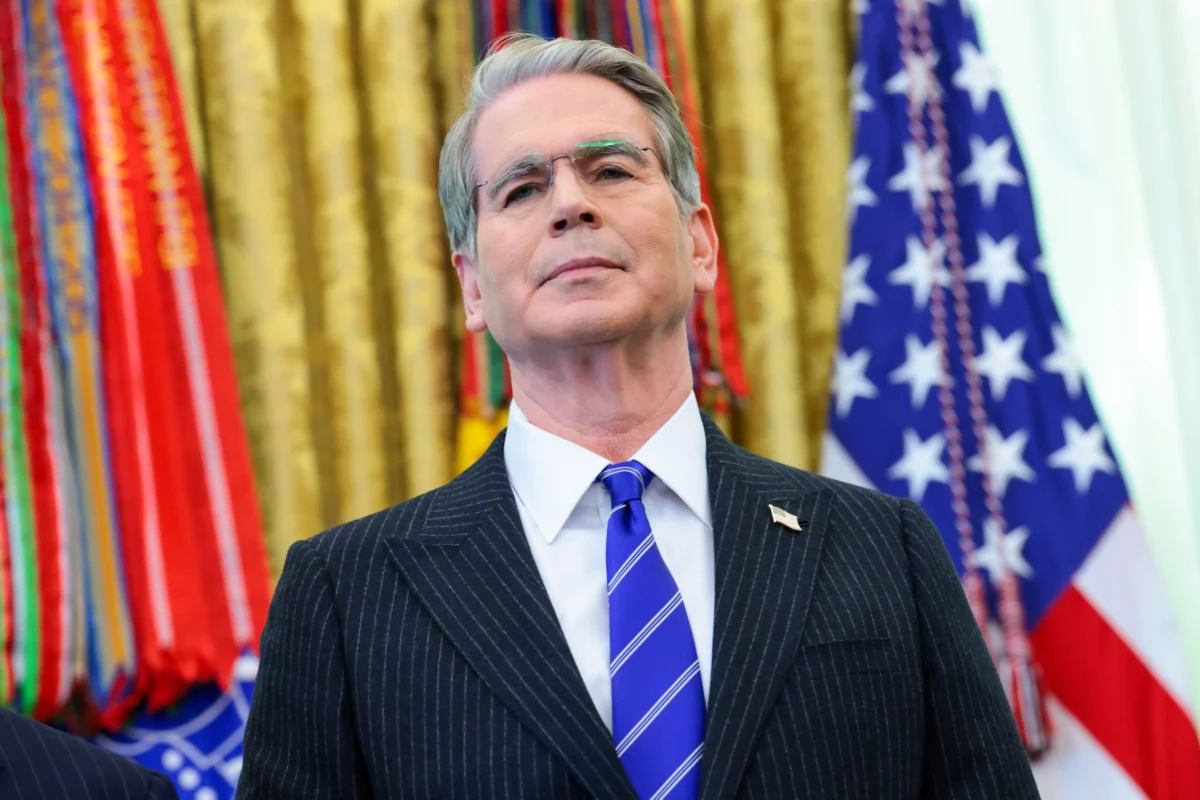
U.S. Treasury Secretary Scott Bessent stated that digital assets could play a pivotal role in cementing and extending the global dominance of the U.S. dollar, arguing that technological leadership is fast becoming the primary pillar of American economic and geopolitical influence worldwide.
Speaking at Ripple’s Swell conference alongside CEO Brad Garlinghouse, Bessent outlined a shifting paradigm in global superpower competition. Historically, he noted, the dominance of the world’s reserve currencies was anchored primarily in military might. However, as the global economy undergoes a profound digital transformation, that power is increasingly migrating toward technological superiority.
"We will keep our military umbrella, but I think more and more it’s becoming a technology umbrella," Bessent told the audience.
He drew a direct comparison to the widening strategic divide between the United States and Chinese technology ecosystems. In this modern arena, foreign governments and multinational corporations are continually forced to choose whose artificial intelligence systems and semiconductor supply chains they will adopt. Bessent emphasized that digital assets are intrinsically tied to this broader competitive landscape, suggesting that the underlying financial infrastructure nations choose to rely on will ultimately dictate the global reach and staying power of the U.S. dollar.
"I think that digital assets are going to be no different, and we are going to win in the digital asset stack, and that’s gonna continue to fortify the U.S. dollar," he said.
These remarks provide a broader strategic framework for the domestic and international policies pursued by President Donald Trump’s administration regarding the cryptocurrency sector. The administration has aggressively pushed to bring digital asset businesses onshore, viewing the industry not merely as an alternative asset class or speculative market, but as critical foundational infrastructure capable of preserving U.S. financial hegemony. As part of this legislative and policy push, the administration previously secured the passage of the GENIUS Act, which successfully established a federal regulatory framework specifically tailored for stablecoins—cryptocurrencies engineered to maintain a stable, fixed value pegged directly to fiat currencies like the U.S. dollar.
According to Bessent, stablecoins represent a vital mechanism for reinforcing the dollar’s premier position by extending access to U.S. currency into foreign jurisdictions where local economies suffer from high inflation or severe exchange rate volatility.
Statistics and market realities underscore this dynamic, as more than 90% of all stablecoins in circulation are backed by U.S. dollars. Furthermore, the private issuers of these digital tokens typically hold substantial amounts of U.S. government debt securities as reserves to back their circulating supply. As the global adoption of stablecoins continues to scale upward, the resulting demand for these underlying Treasury assets could expand significantly, supplying a robust, organic source of ongoing financing for the federal government.
"I think it’s gonna be an important source of funding for the Treasury," Bessent noted.
Opening New Markets
Addressing potential criticisms that stablecoins might simply cannibalize existing demand for physical or traditional electronic dollars, Bessent pushed back firmly. He argued that the technology is not merely substituting current forms of money, but rather unlocking entirely new demographics and economic regions. By providing a secure, dollar-denominated medium of exchange, stablecoins can reach previously untapped users in emerging markets who are desperately seeking reliable tools to protect their hard-earned savings from domestic currency devaluation and systemic economic instability.
"I think we are opening up new markets all around the world," he emphasized.
Despite the administration’s overarching ambitions for the sector, the broader legislative push to comprehensively regulate domestic crypto markets recently hit a major roadblock. Congress ultimately failed to pass the Clarity Act, a landmark bill that had been designed to establish a comprehensive federal regulatory framework for the entire digital asset industry, leaving a notable void in statutory oversight.
Bessent acknowledged that the failure of the legislation was a distinct disappointment for the administration and market participants alike. However, he maintained that the setback does not mean regulatory progress must halt. Instead, the Treasury Department can actively collaborate with key regulatory agencies, such as the Securities and Exchange Commission (SEC) and the Commodity Futures Trading Commission (CFTC), to advance necessary oversight through targeted agency actions and administrative rulemaking.
"At Treasury, we have a lot of convening powers," Bessent explained, highlighting the SEC and CFTC as indispensable partners in the ongoing effort to forge a cohesive regulatory framework. He suggested that proactive administrative guidelines could eventually serve as an effective model for other nations looking to structure their own digital asset policies.
While rules adopted directly by regulatory agencies lack the long-term permanence and statutory weight of an act passed by Congress, they can still provide much-needed clarity for crypto enterprises operating in a complex legal environment.
Bessent also used the platform to address lingering anxieties within the digital asset community regarding "debanking"—a colloquial term used to describe traditional commercial financial institutions abruptly severing banking services to crypto-related businesses, often fueled by fears of regulatory retaliation or intense scrutiny.
He noted that while the passage of the Clarity Act would have gone a long way toward permanently preventing a return to such exclusionary practices, robust regulatory safeguards implemented cooperatively by financial watchdogs could still establish adequate protective guardrails.
"I think we can set up regulatory best practices, guardrails that will prevent that from happening again," Bessent concluded.



Comments (0)