


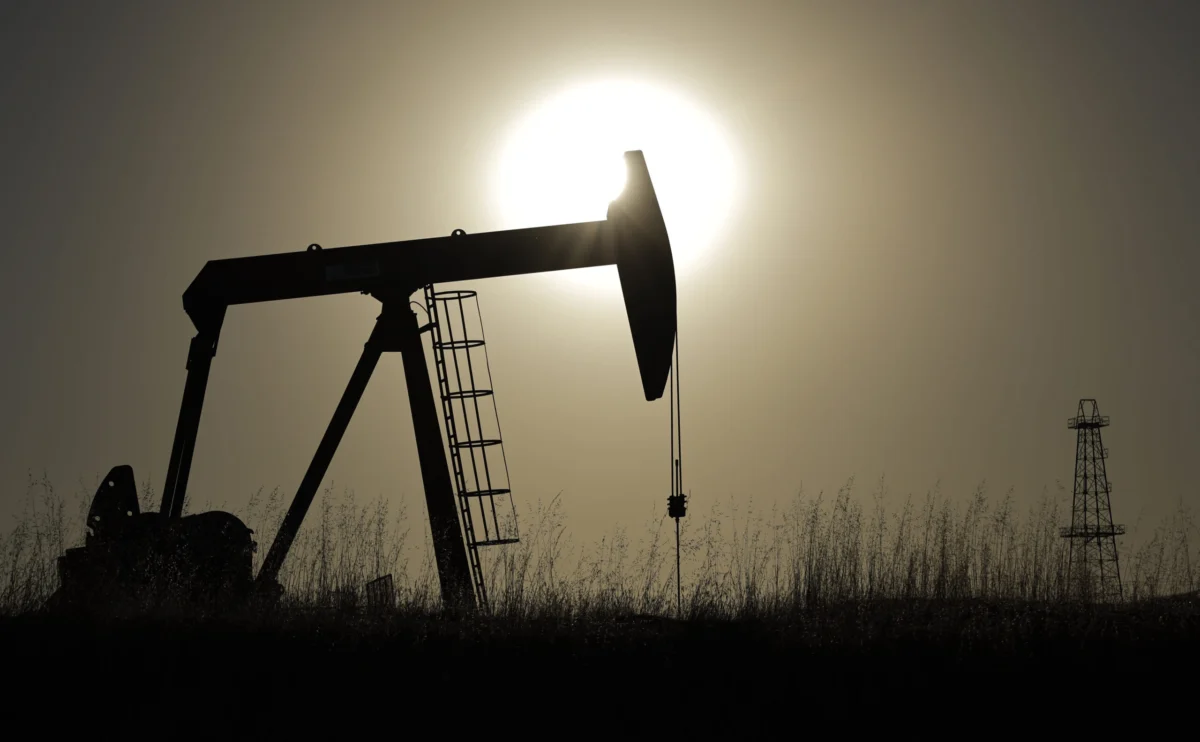
U.S. oil prices rose sharply on Thursday as comments from President Donald Trump stoked fresh market worries that a definitive end to the ongoing U.S.-Iran conflict was not in sight, reversing some of the steep downward momentum that had characterized the energy market earlier in the week.
Brent crude settled 3.3% higher at $95.82 per barrel, while West Texas Intermediate (WTI) futures advanced 2.6% to settle at $88.74 per barrel. The rebound broke a multi-day slide that had seen crude under intense selling pressure following post-midterm election commentary that had initially pacified market fears regarding potential military escalations in the Middle East.
The sudden shift in market sentiment was catalyzed by a direct message shared by President Trump on social media. Addressing the geopolitical stalemate and the strategic waterway vital to global energy flows, Trump took to Truth Social to express a hardline stance.
"We don’t need a deal with Iran. Those days have long since passed. We’ve got their money, Hundreds of Billions of Dollars, and we’ve got their Strait!" Trump wrote, abruptly altering the narrative surrounding diplomatic prospects and immediate supply security.
The President’s remarks directly contradicted earlier optimism that had driven November’s sharp commodity sell-off. Prior to Thursday’s session, WTI had plunged roughly 16% over the course of the month, while international benchmark Brent had shed close to 20% amid growing market expectations that diplomatic talks might yield a breakthrough and normalize maritime trade through the volatile region.
Market analysts and energy experts quickly weighed in on the renewed volatility, pointing to the delicate balance between physical supply availability and persistent logistical risks. Jeffrey Currie, founder of Real Macro and a widely followed forecaster on Wall Street, noted that while near-term crude prices are likely to remain relatively tame due to a substantial volume of oil currently making its way out of the Middle East, auxiliary costs are keeping longer-dated contracts firmly supported.
Specifically, Currie highlighted that sky-high insurance premiums and exorbitant tanker charter rates are sustaining elevated prices on longer-dated oil futures contracts, reflecting lingering caution among shippers and insurers operating in and around the Persian Gulf.
"While it caps the prompt barrel, it does nothing to cheapen the next one, which is why you can’t get bearish here nor can you get really bullish," Currie said during an appearance on CNBC’s "The Exchange." Looking at the broader investment landscape, Currie added that he still favors long-dated oil exposure as well as fundamentally sound drilling and producer stocks.
Thursday’s upward correction unfolded against a backdrop of severe downward pressure that had dominated the energy sector over preceding sessions. Earlier in the week, market participants had rushed to price in a de-escalation of hostilities following comments from the White House that eased fears of immediate, large-scale military strikes against Iranian infrastructure.
Just days prior, Trump had remarked that fresh military attacks were highly unlikely as diplomatic channels worked toward resolving the conflict, despite reports from both Washington and Tehran indicating that commercial shipping had sustained damage in or near the Strait of Hormuz. At the time, the administration had downplayed the necessity of further military interventions "at this point," successfully subduing market anxieties regarding prolonged supply disruptions from the critical oil-producing region.
However, industry veterans cautioned that the market may have prematurely discounted the geopolitical risk premium. John Kilduff, a partner at Again Capital, suggested that investors were perhaps too quick to assume a permanent cessation of hostilities was guaranteed.
"The market may have gotten ahead of itself on pricing in a cessation of hostilities," Kilduff told CNBC, warning that renewed skepticism surrounding the viability of a bilateral or multilateral agreement would inevitably drive the security premium embedded in crude prices back upward.
Kilduff further noted that Trump’s assertive claims regarding American control over the Strait of Hormuz could inadvertently provoke additional asymmetric actions by Iran against commercial shipping lanes, thereby heightening the underlying risk of sustained supply blockades and logistical bottlenecks.
The divergence in strategic objectives between Washington and Tehran continues to complicate the diplomatic outlook, leaving energy markets highly sensitive to rhetorical shifts from political leaders. Andy Lipow, president of Lipow Oil Associates, offered a sobering assessment of the competing agendas driving the standoff.
"The President may be thinking that given enough time, the economic blockade of Iran will force them to either negotiate with the USA or result in a regime change as the Iranian economy collapses. The Iranians might have different ideas and continue to attack Middle East infrastructure that results in higher prices and forces the President to the negotiating table," Lipow explained.
Outlining the entrenched diplomatic positions of both governments, Lipow emphasized that the core demands of each side remain deeply polarized and fundamentally unresolved.
"In any event, it does not seem to me that either side’s negotiating position has changed. Iran wants the blockade to end, sanctions to be lifted and a ceasefire including Lebanon to be declared. The USA wants Iran to get rid of its entire nuclear stockpile and allow free transit through the Strait of Hormuz," he added.

Comments (0)