


The architectural divide between operational databases and analytical data warehouses remains a foundational challenge for modern data engineering teams. Typically, PostgreSQL commands the operational transaction layer, managing mission-critical application states, user inputs, and immediate transactional integrity. Meanwhile, Snowflake serves as the heavy-duty analytical engine, optimized for large-scale aggregations, multi-source data joins, and enterprise reporting.

Moving data between these two pillars once is straightforward enough. However, maintaining continuous synchronization as PostgreSQL databases undergo constant mutations introduces significant architectural friction. Traditional methods, such as running full table copies, scale poorly; as data volumes swell into millions of rows, the associated compute costs and network overhead render periodic full reloads entirely inefficient.
Alternatively, incremental extraction strategies using timestamp queries—such as filtering rows based on an updated timestamp—reduce the volume of transferred data, but they bring their own complications. These methods demand rigorous application-level timestamp management and, crucially, fail to capture database deletions natively. Because a deleted row leaves no trace in an update-timestamp query, deletions require complex, error-prone reconciliation logic. Decreasing the polling interval to achieve lower latency only exacerbates the problem, increasing query frequency and inadvertently taxing the very operational database the replication layer is meant to monitor.
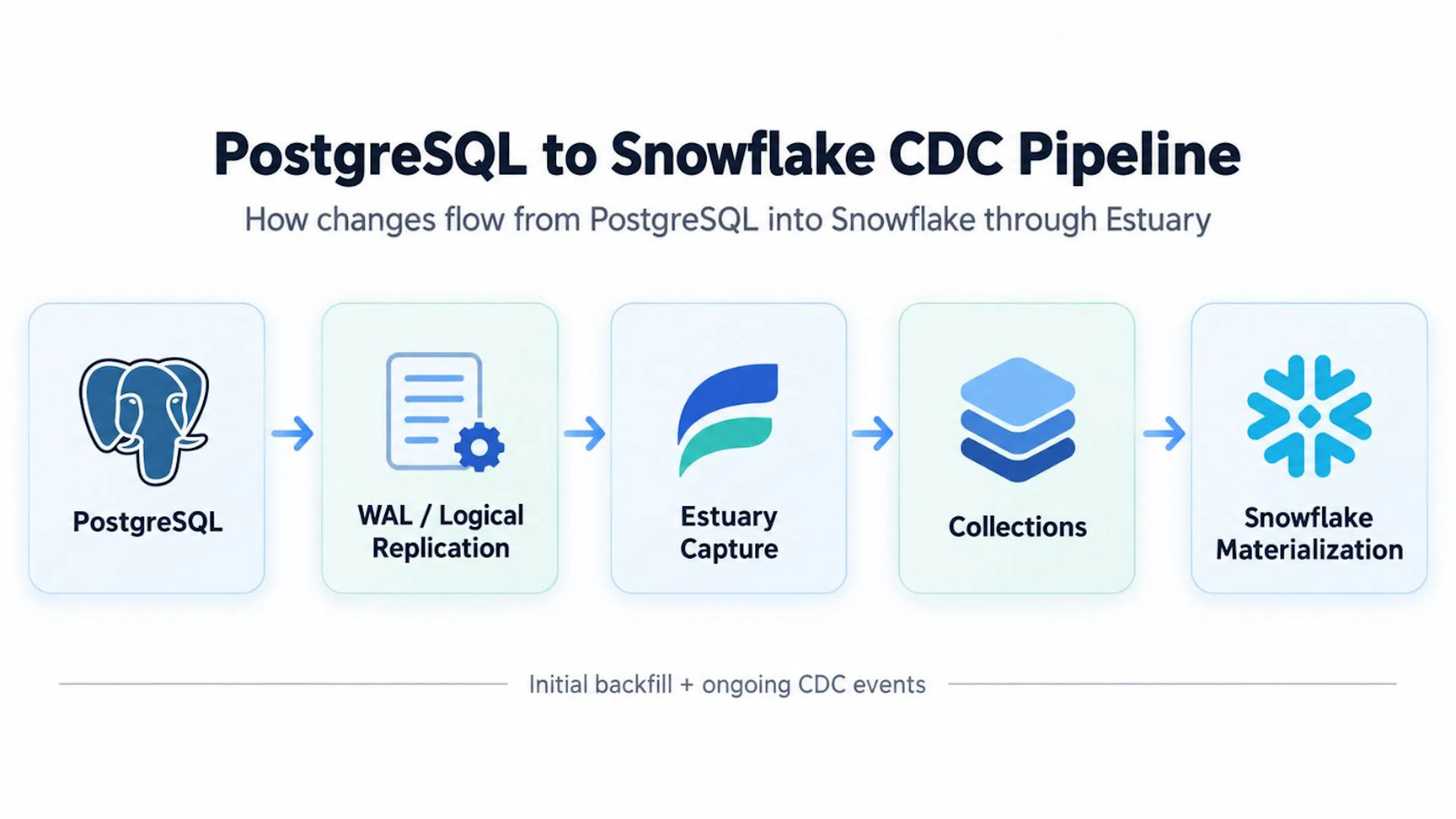
To bypass these limitations, engineering teams increasingly turn to Change Data Capture (CDC). Rather than constantly polling tables with resource-intensive queries, a CDC architecture listens directly to the database’s internal modification stream, capturing inserts, updates, and deletes at the source and forwarding them downstream in near real-time.
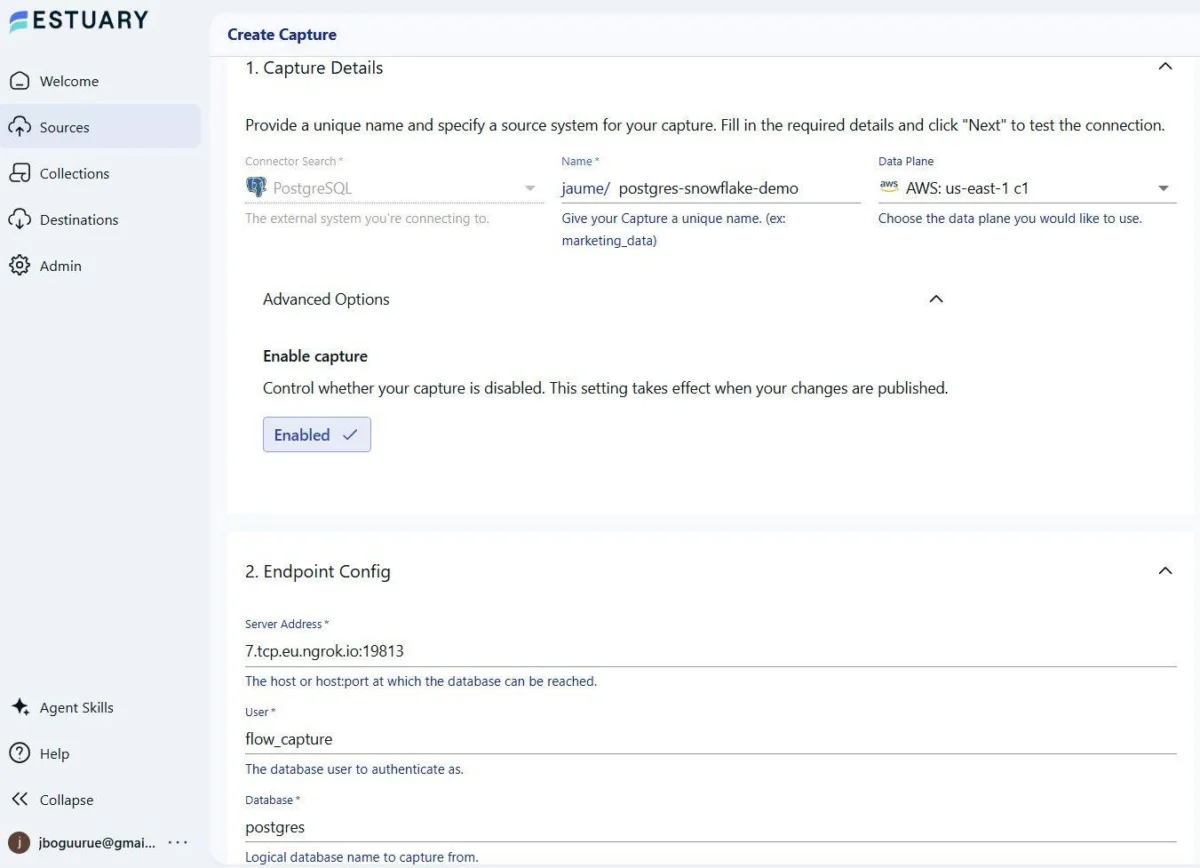
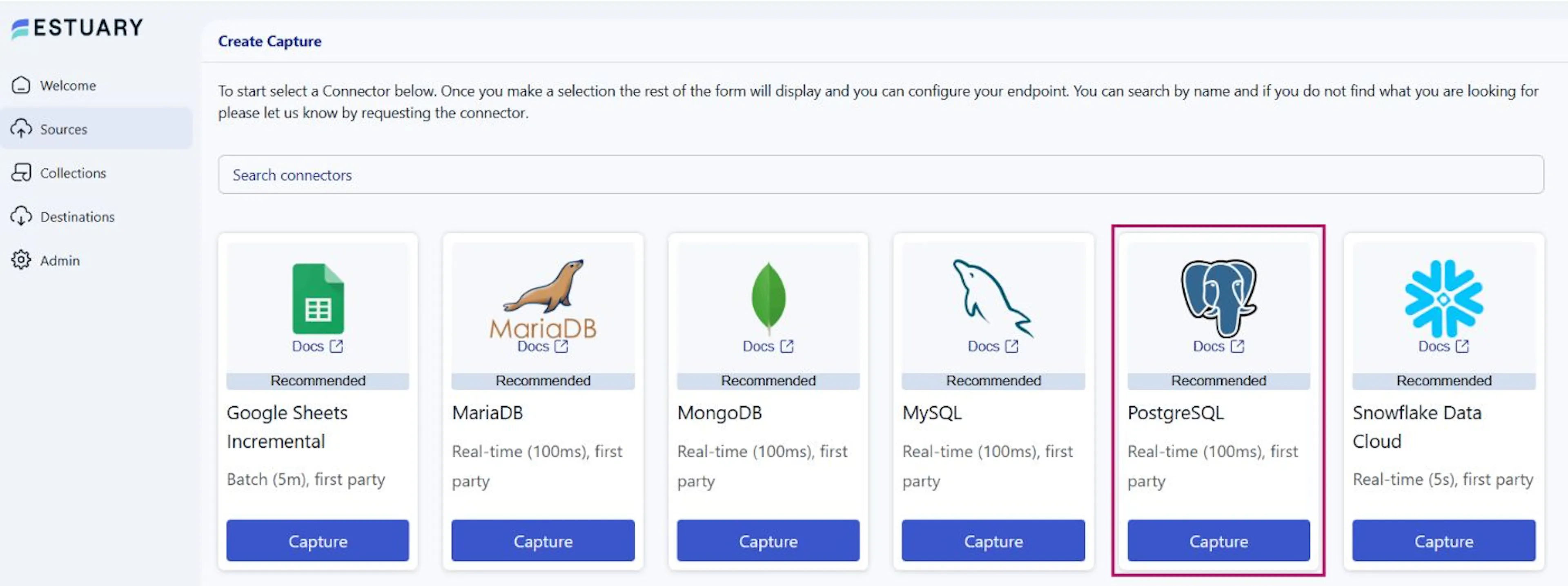
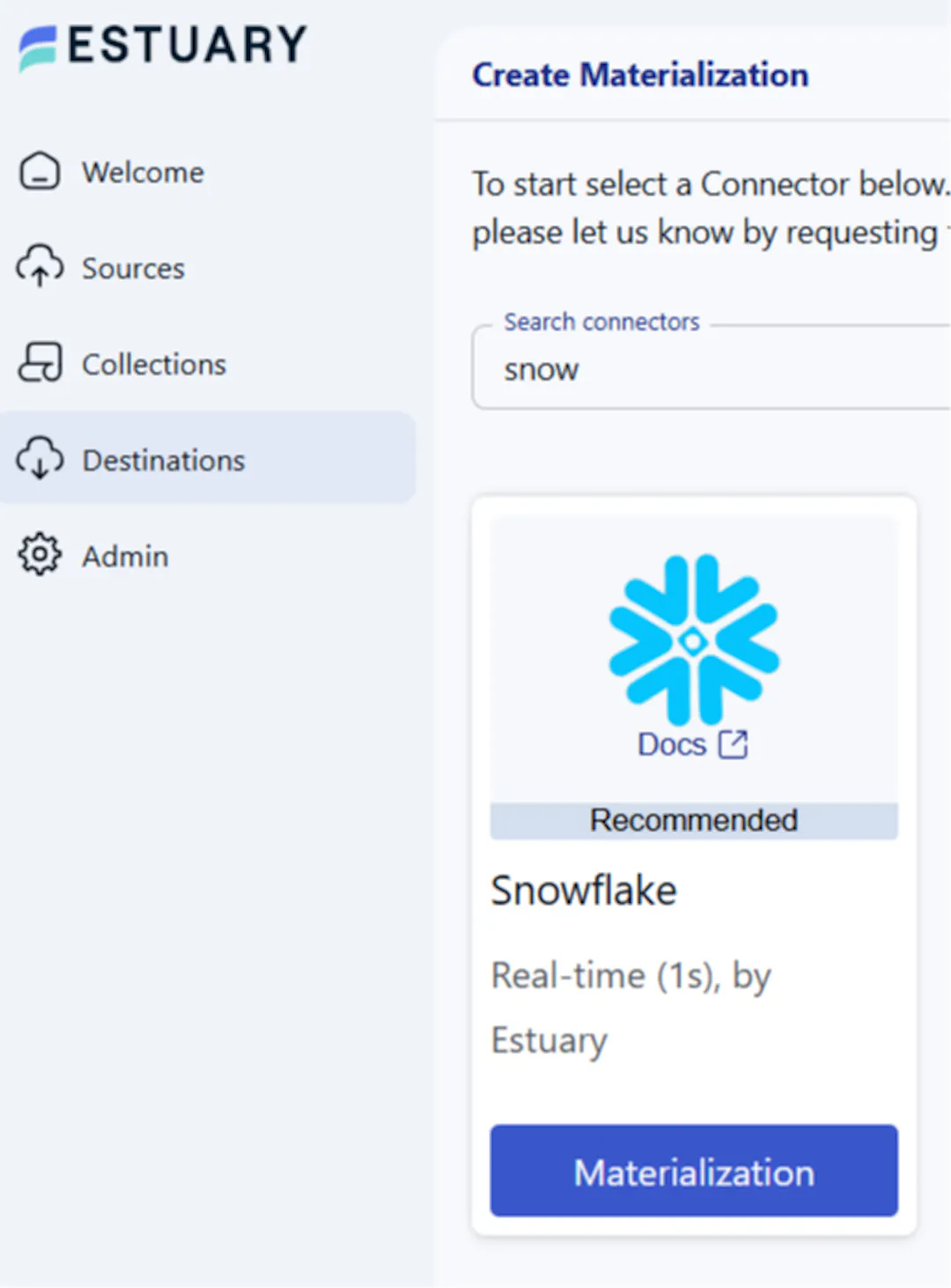
Recent integration frameworks aim to simplify this paradigm by abstracting the underlying complexity. For instance, data integration platforms like Estuary allow organizations to configure PostgreSQL for logical replication, collect live changes into reusable intermediate data collections, materialize those collections directly into Snowflake, and verify pipeline integrity without managing a fragmented stack of open-source components.
The Architectural Weight of Traditional Replication
Historically, building a robust CDC stack meant assembling a complex array of open-source tools: configuring Postgres logical replication, deploying Debezium as a capture connector, streaming events through Apache Kafka, and building a custom consumer to persist those events into Snowflake. While this approach successfully tracks reliable data changes, the operational price is steep. Teams must deploy, tune, monitor, scale, and recover multiple independent distributed components.
The core engineering challenge of moving data from Postgres to Snowflake is not a one-time migration problem. It is a continuous synchronization challenge that threatens to turn the replication layer itself into just another resource-heavy system that demands dedicated maintenance.
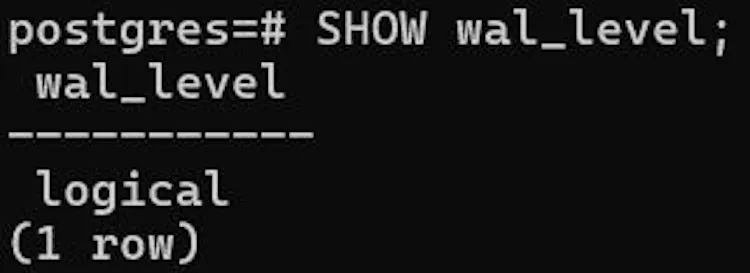
CDC simplifies this equation by tapping directly into PostgreSQL’s native durability mechanisms. PostgreSQL utilizes the Write-Ahead Log (WAL) to ensure data durability, writing all database modifications to the WAL before committing data pages to disk. When the database’s wal_level configuration is set to logical, PostgreSQL generates the supplementary data required for logical decoding. This enables logical replication streams to expose table-level and row-level change information rather than opaque physical blocks.
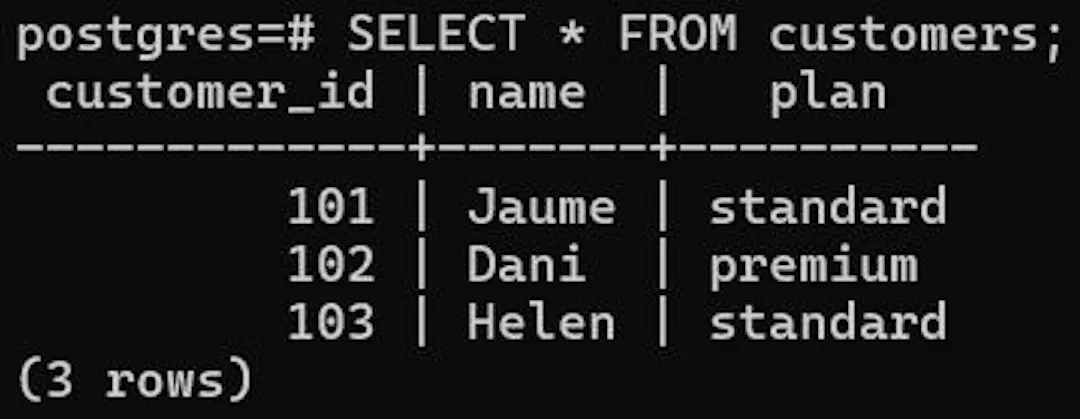
By consuming this log stream, a data pipeline transitions from repeatedly executing broad queries like selecting all customer records to processing discrete, targeted operations such as inserting a specific customer ID, updating an existing account, or deleting a record. This event-driven approach keeps operational databases and analytical data warehouses tightly synchronized without introducing excessive polling overhead.
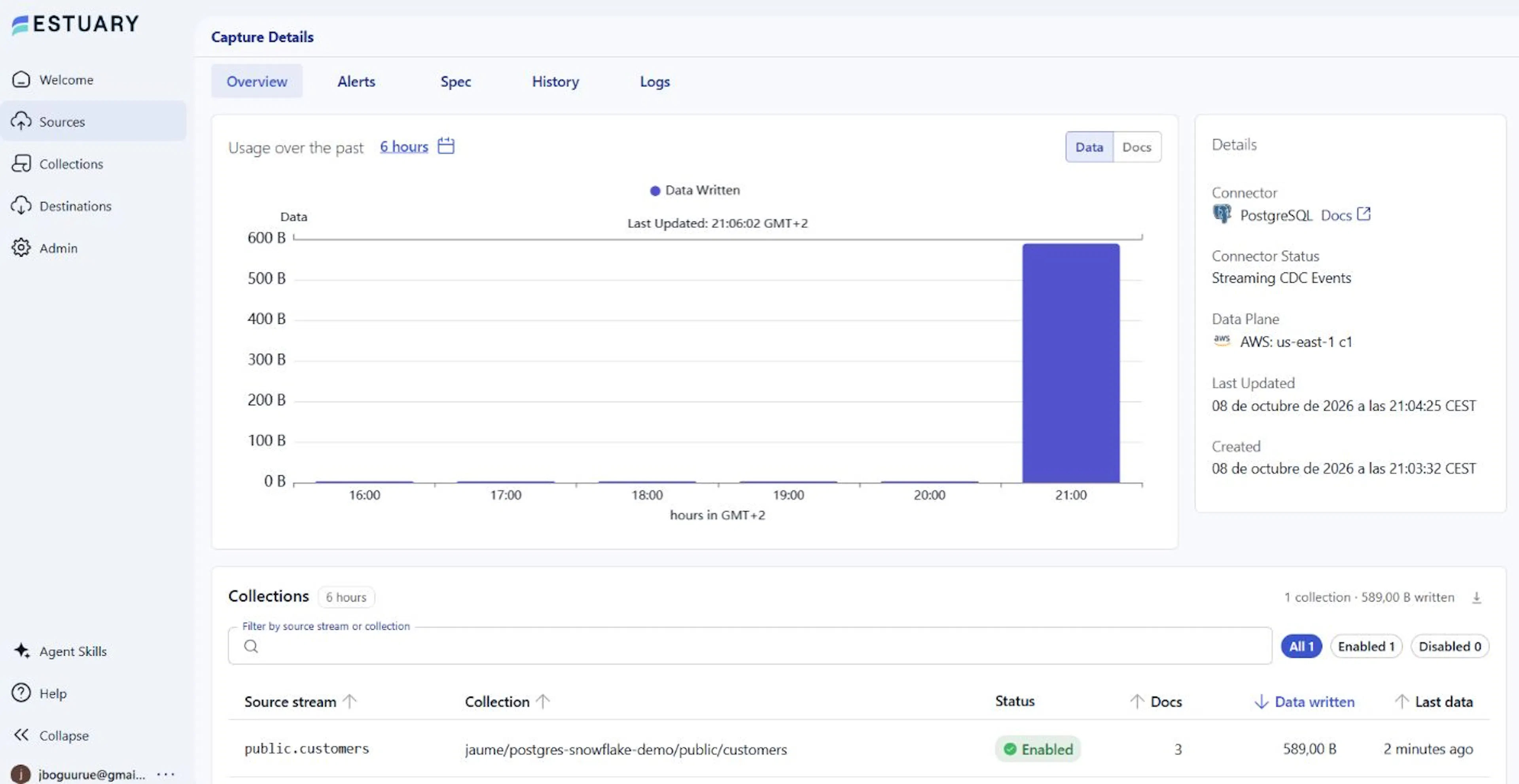
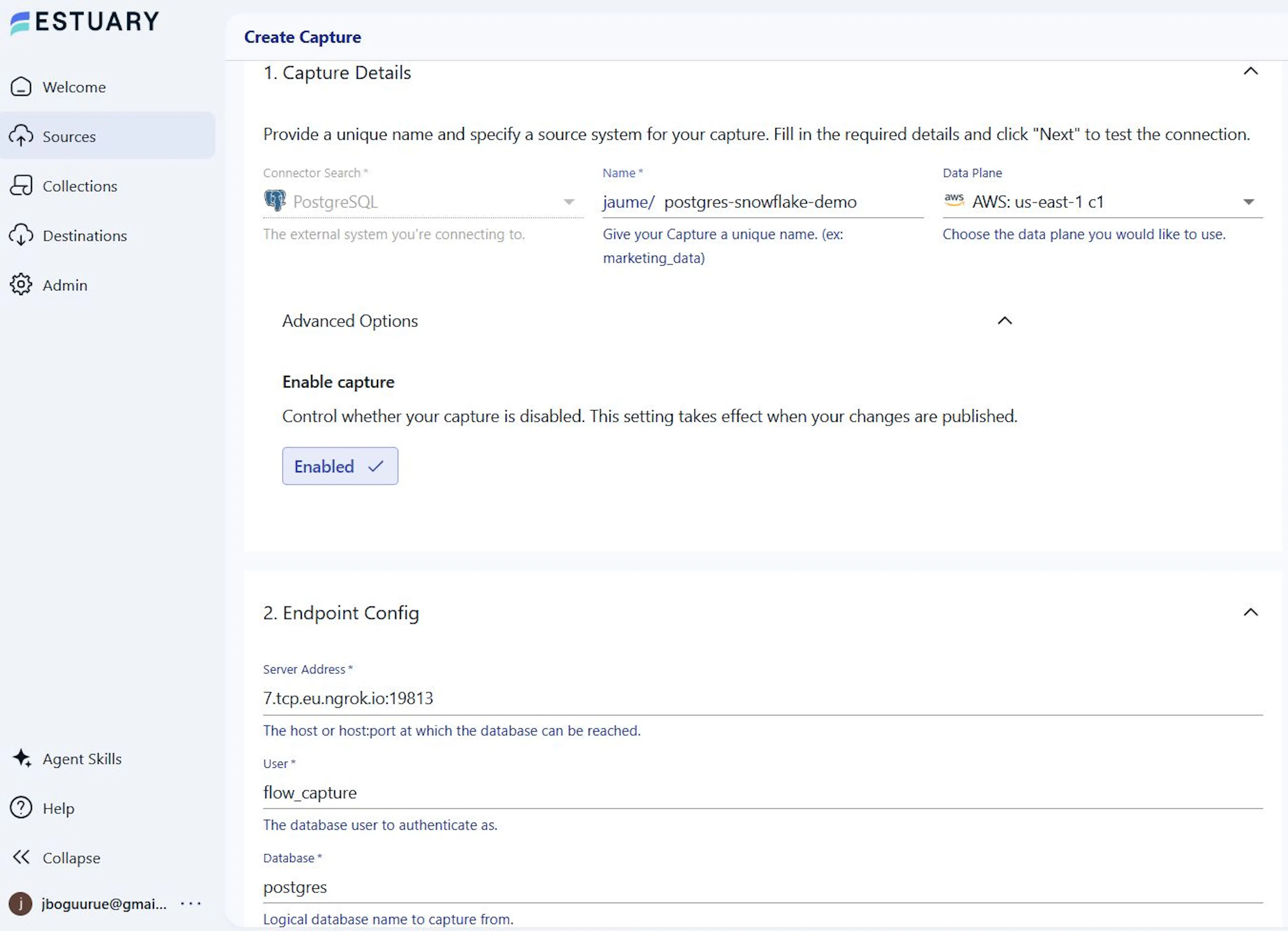
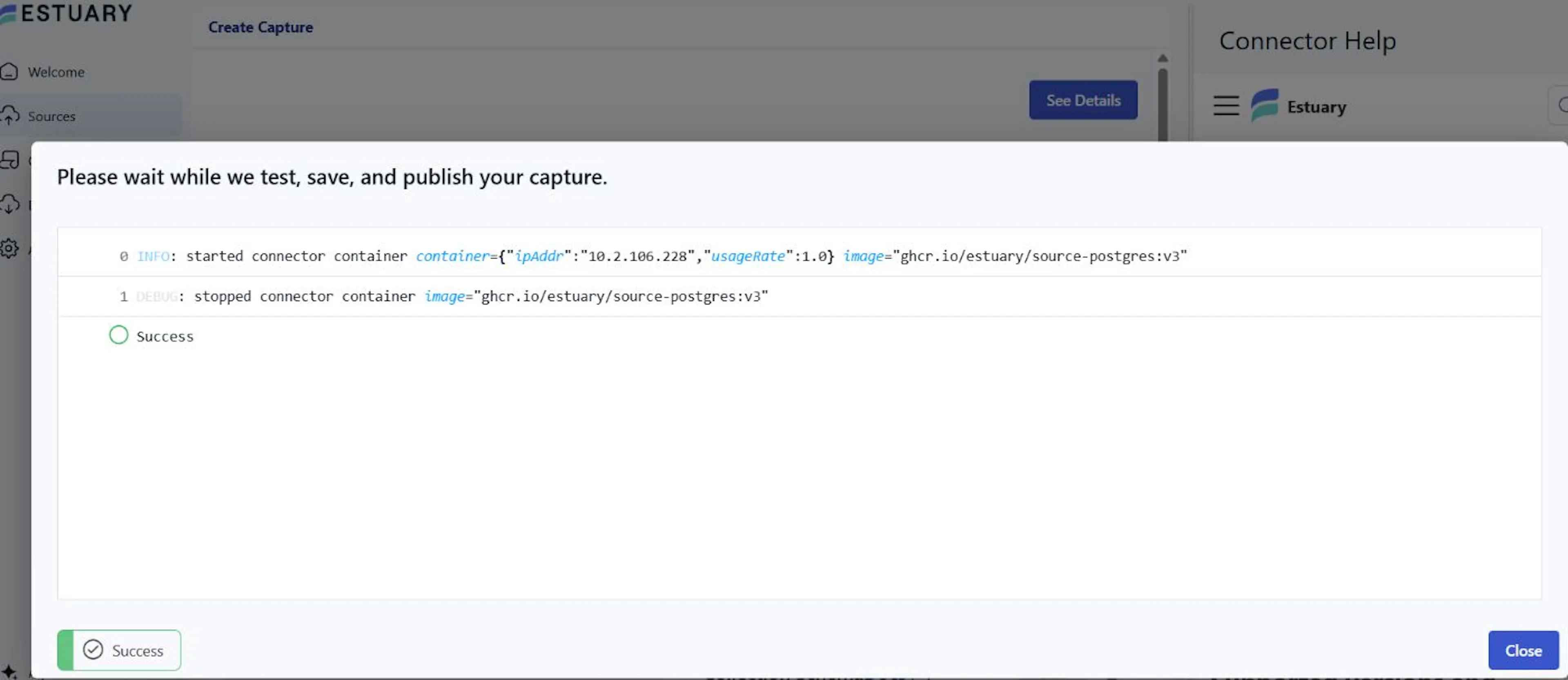
Modern integration pipelines streamline this flow by decoupling the capture process from the delivery mechanism. When a platform like Estuary ingests PostgreSQL events via its native connector, the captured changes are first materialized into reusable intermediate data collections. This separation of concerns means the source data is no longer rigidly bound to a single downstream load target in Snowflake. Instead, the captured change stream remains available for multiple downstream destinations and applications without requiring redundant extractions against the primary database.
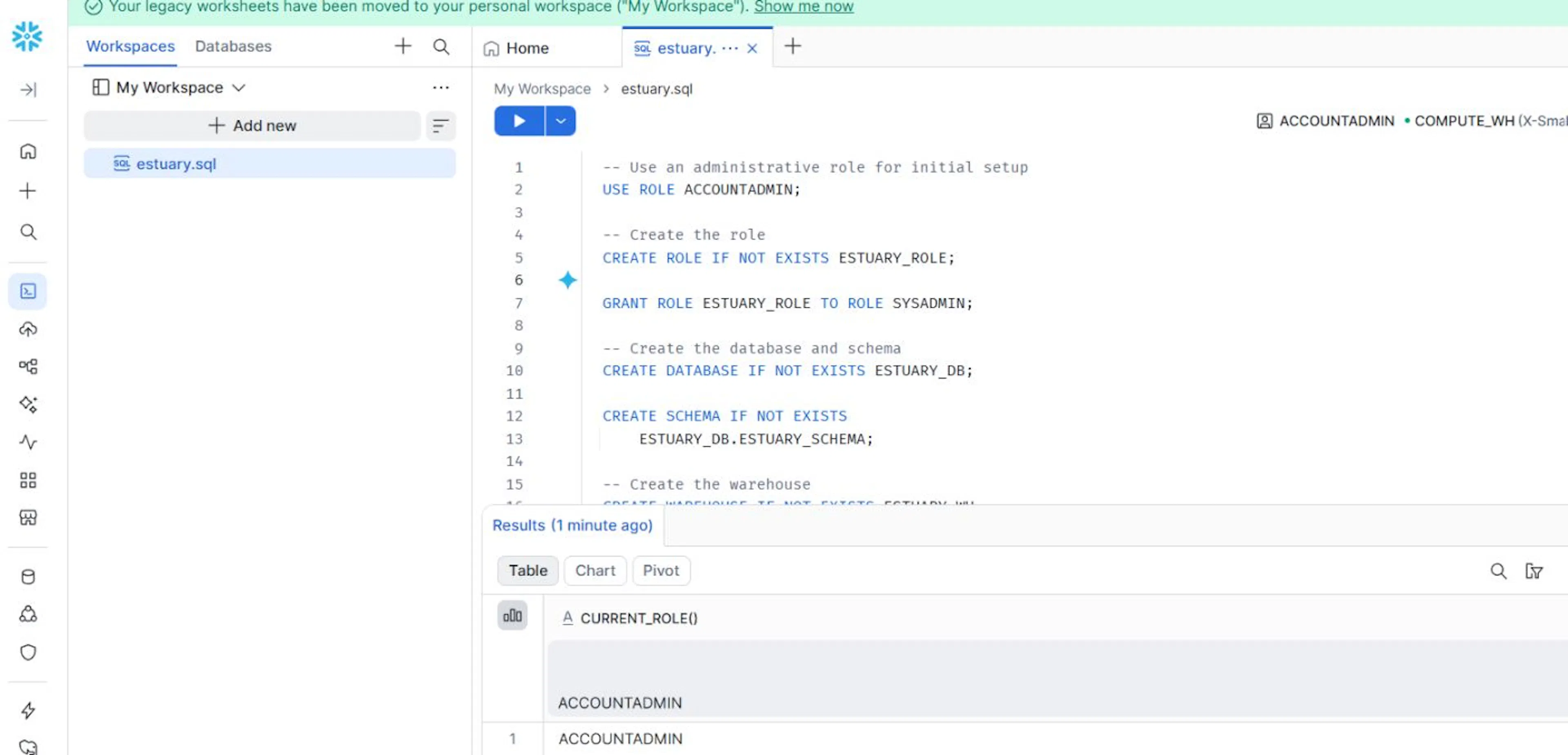
Preparing the Operational Source and Analytical Destination
Implementing a production-grade CDC pipeline requires careful preparation on both ends of the architecture. On the PostgreSQL side, database administrators must enable logical replication by adjusting the wal_level parameter and establishing a dedicated replication user with appropriate permissions. To maintain consistent capture positions during backfills, auxiliary tracking structures, such as a watermarks table, are often initialized alongside specific publication rules that dictate which tables expose logical events to the replication stream.
While self-managed PostgreSQL instances allow direct configuration via configuration files or container parameters, managed database services—such as Amazon RDS, Aurora, Google Cloud SQL, Azure Database for PostgreSQL, Neon, and Supabase—expose logical replication through provider-specific administrative consoles. Despite the administrative differences, the underlying requirements remain uniform: enabling logical replication, assigning granular read and replication privileges, configuring specific table publications, and establishing a persistent replication slot.
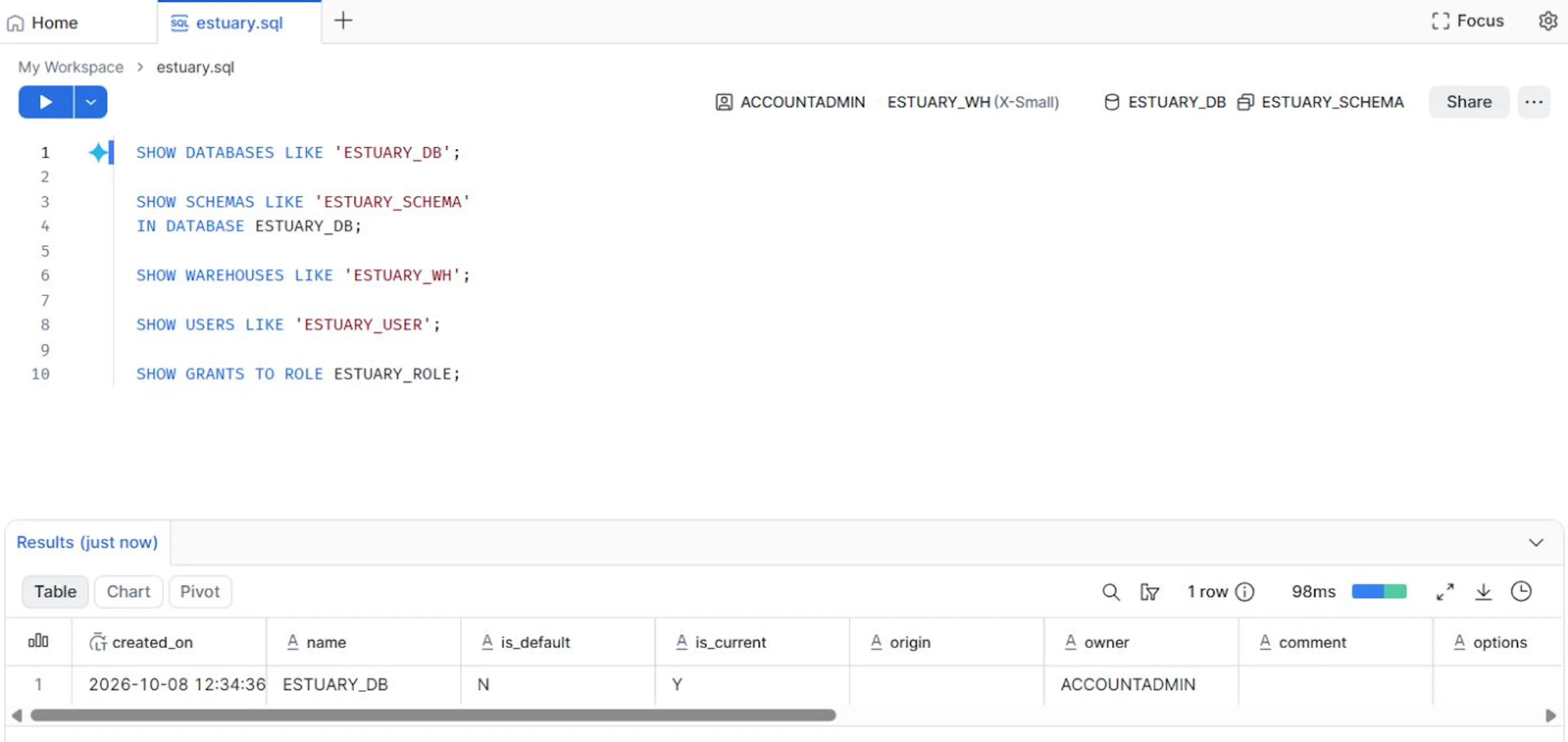
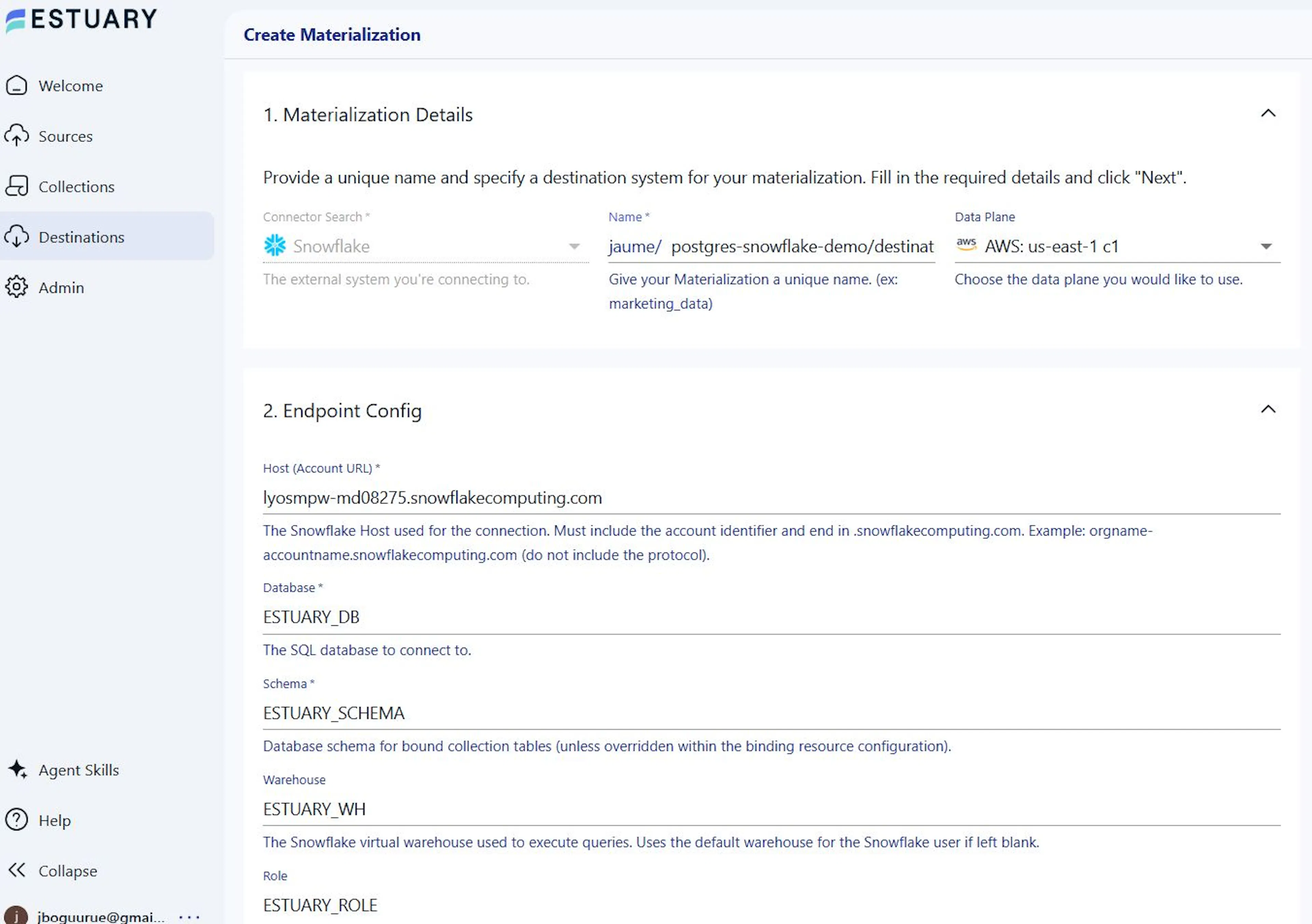
On the Snowflake side, setting up a secure and performant destination involves provisioning dedicated resources designed to balance data freshness with compute costs. Administrators typically create a localized database, schema, and an appropriately sized virtual warehouse configured with auto-suspend and auto-resume capabilities. For a standard incremental replication workload, an extra-small warehouse that suspends after a brief period of inactivity ensures that compute costs do not accumulate while waiting for new data batches.
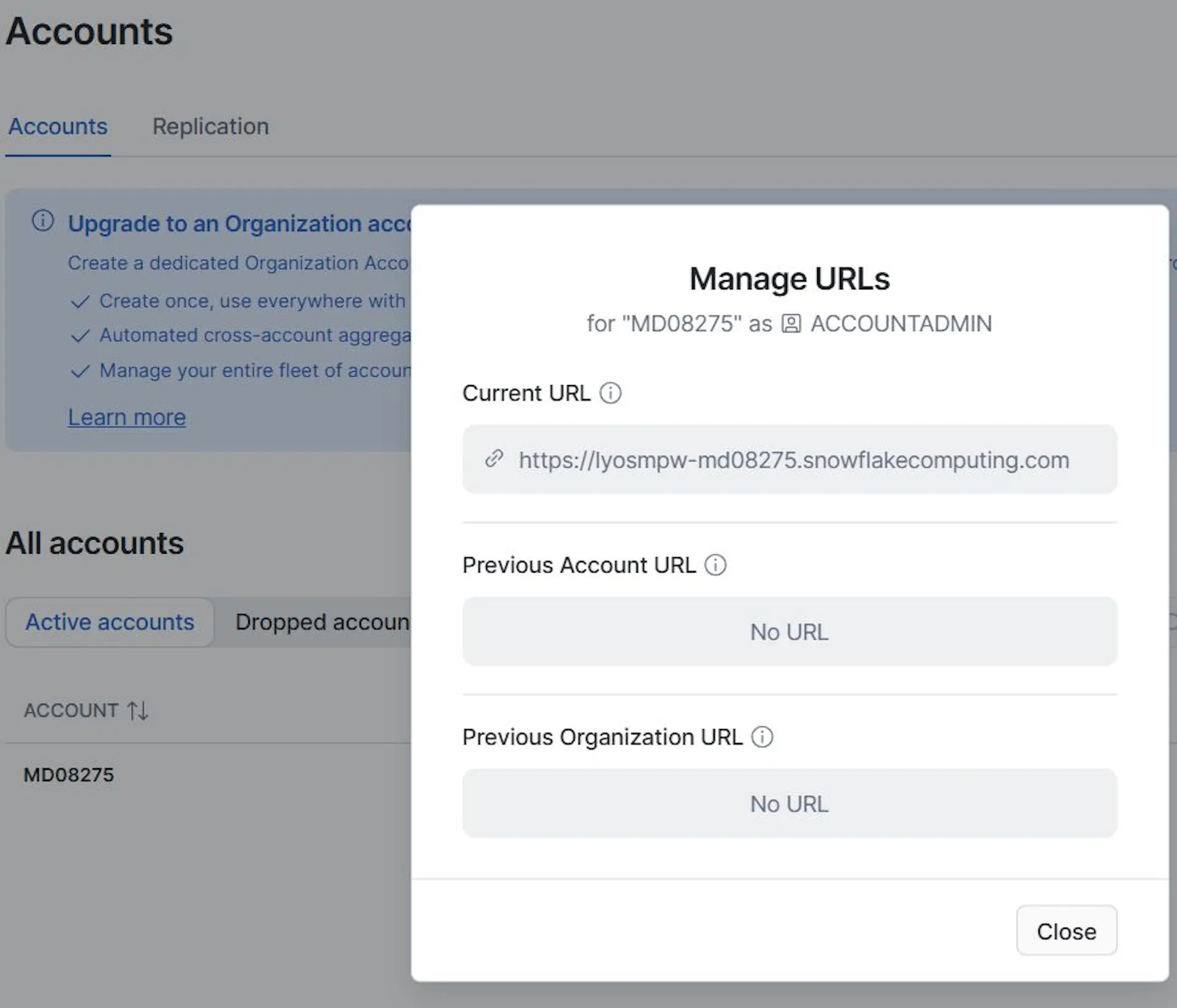
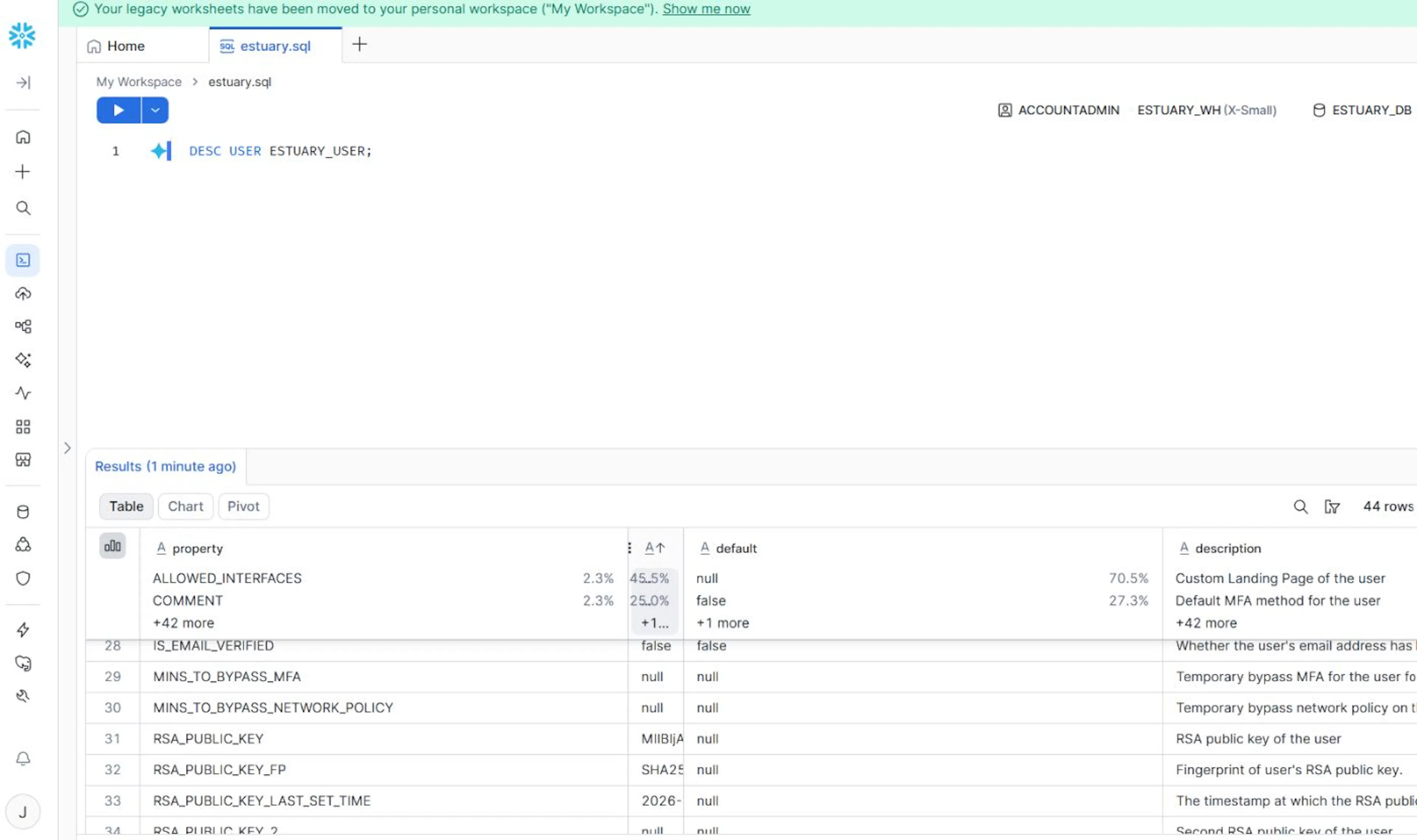
Furthermore, security best practices dictate the use of a dedicated service user with restricted administrative privileges, coupled with key-pair authentication via JSON Web Tokens. By generating and registering an RSA public-private key pair, integration platforms can securely authenticate against Snowflake without relying on traditional passwords, protecting sensitive credentials across the network boundary.
Managing Data Lifecycles and Schema Evolution
Once the capture and destination endpoints are established and linked, the pipeline manages continuous data synchronization through scheduled materializations. Rather than applying every minor transactional change to Snowflake instantaneously, platforms often leverage a scheduled synchronization model. This approach allows organizations to balance data freshness against warehouse compute expenses, tailoring the sync frequency to match specific reporting or analytical requirements.
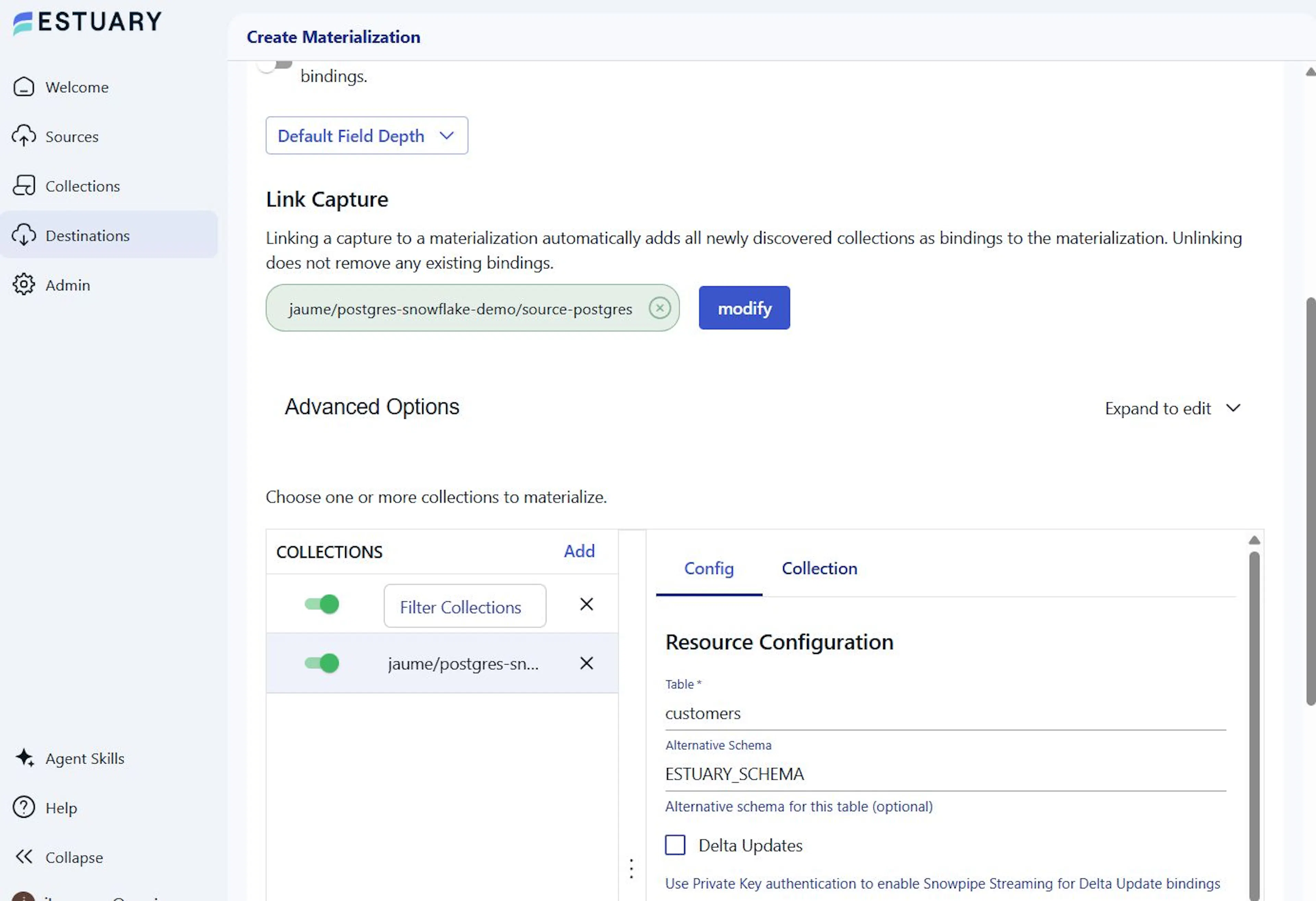
During the materialization phase, incoming modifications from the source collections are merged into the destination tables. Platforms typically offer flexible update strategies, including standard merge modes that maintain the current state of each record by updating existing rows, alongside delta-update modes that append raw change events without merging. When paired with hard-delete configurations, these pipelines ensure that records removed from the operational PostgreSQL database are also physically purged from the analytical Snowflake tables, maintaining structural parity between systems.
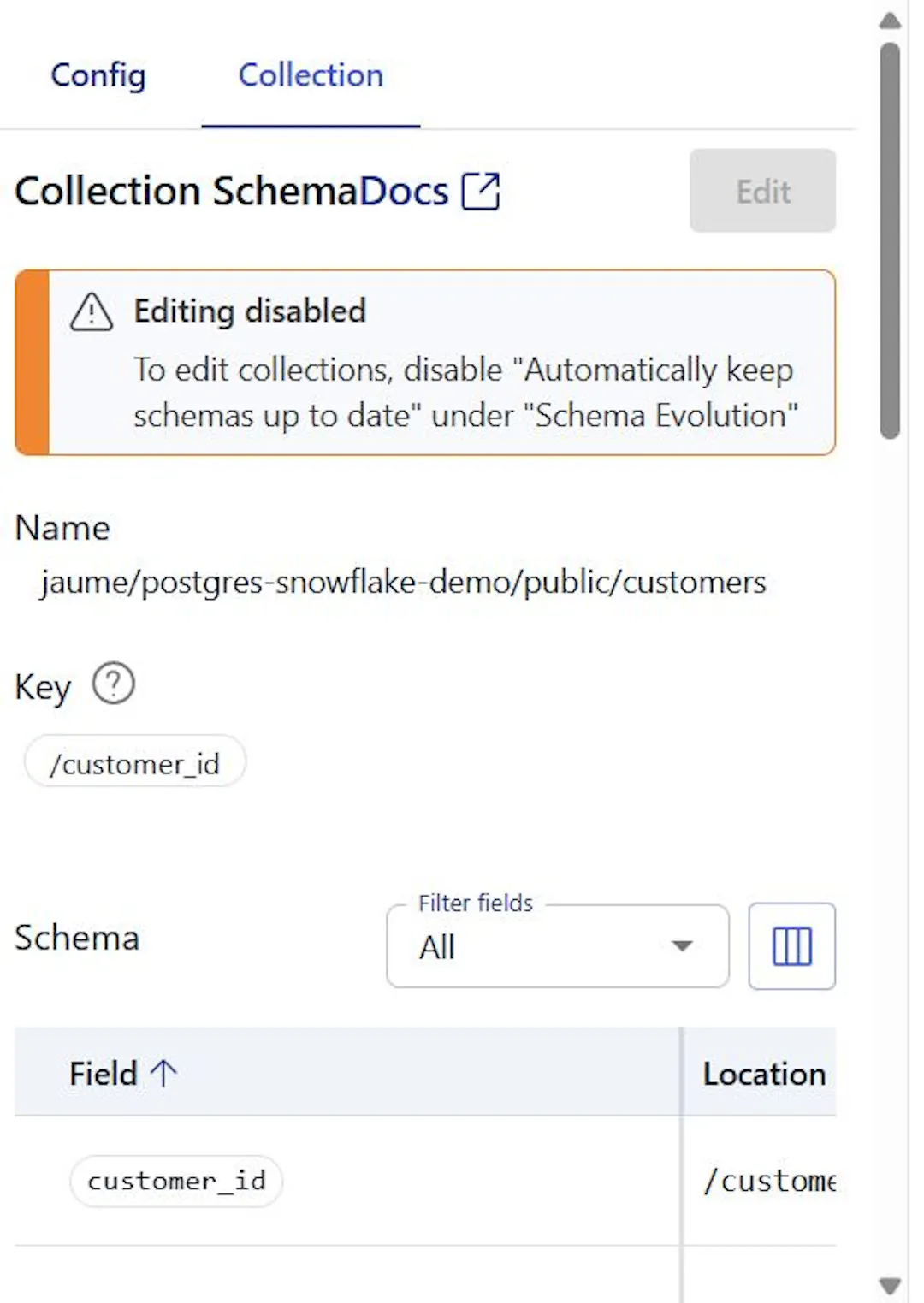
Moreover, schema evolution features automatically handle structural adjustments at the source. If a table schema changes in PostgreSQL—such as the addition of a new column—modern integration layers can dynamically adapt the intermediate collections and downstream table schemas, preventing pipeline failures and reducing manual intervention.
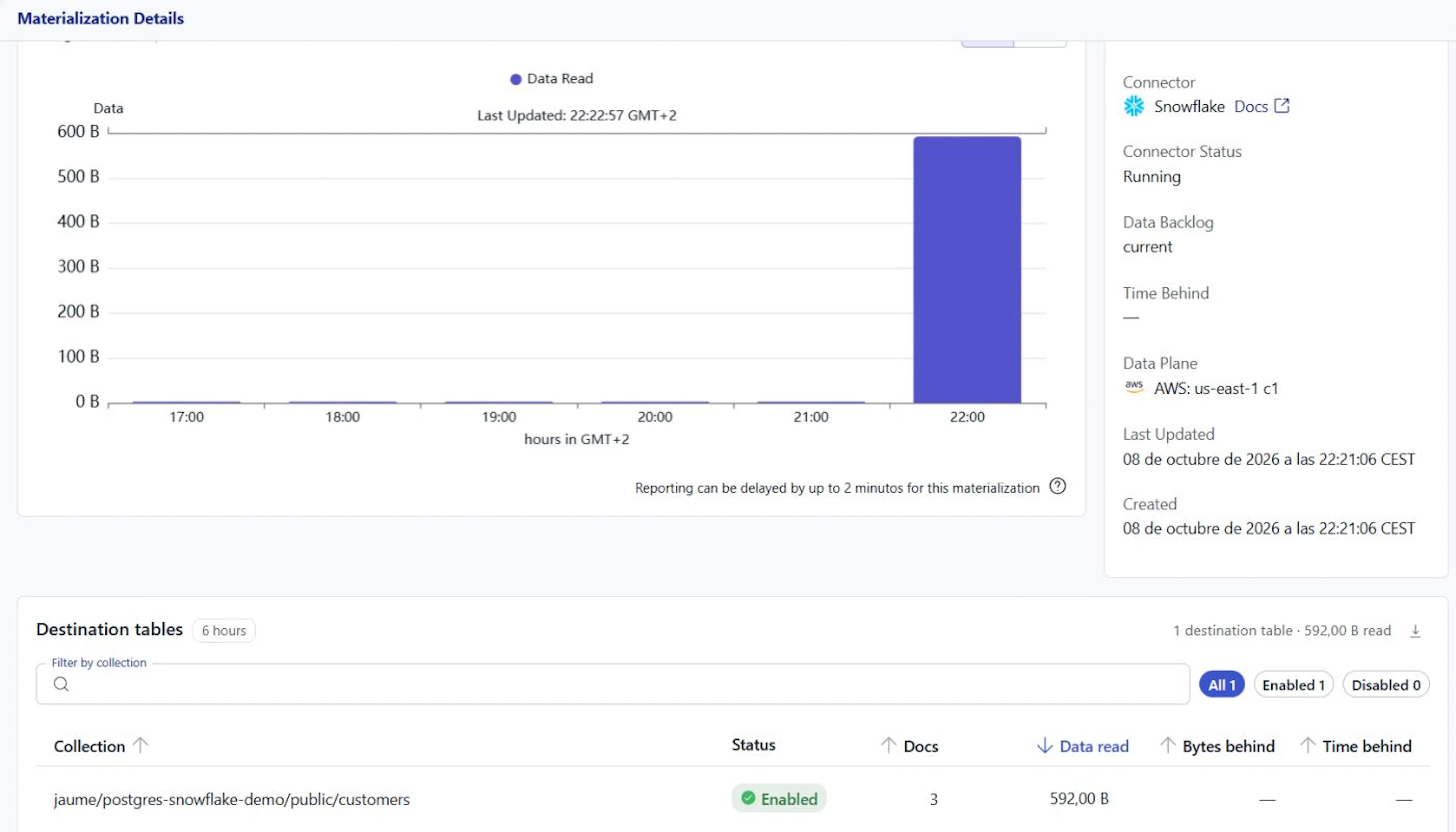
For environments where PostgreSQL logical replication is restricted or entirely unavailable due to strict compliance policies or managed service limitations, alternative integration patterns remain viable. Batch query connectors can execute scheduled extractions directly against the database, periodically querying tables and views to synchronize state. While batch extraction lacks the real-time continuous capture of true CDC and requires careful handling of deletes through reconciliation logic, it provides a dependable fallback for legacy systems or specialized reporting views where low-latency streaming is not strictly required.
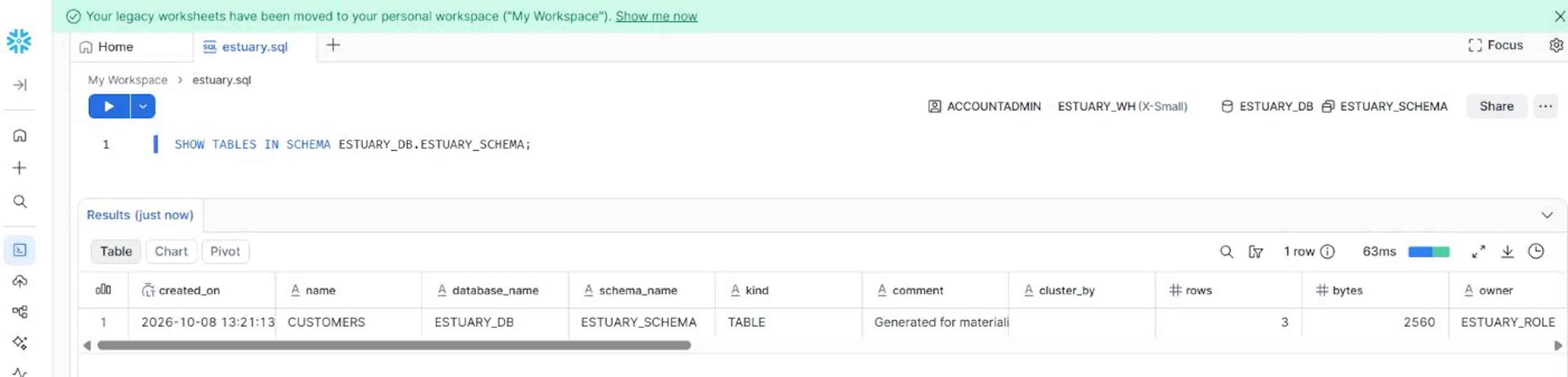
Ultimately, bridging the operational and analytical divide through automated change data capture eliminates the friction of legacy replication methods. By continuously streaming transaction logs into reusable data collections and materializing them into modern data warehouses, engineering teams can maintain synchronized, up-to-date analytical environments without the burden of maintaining custom, highly complex integration code.




Comments (0)