


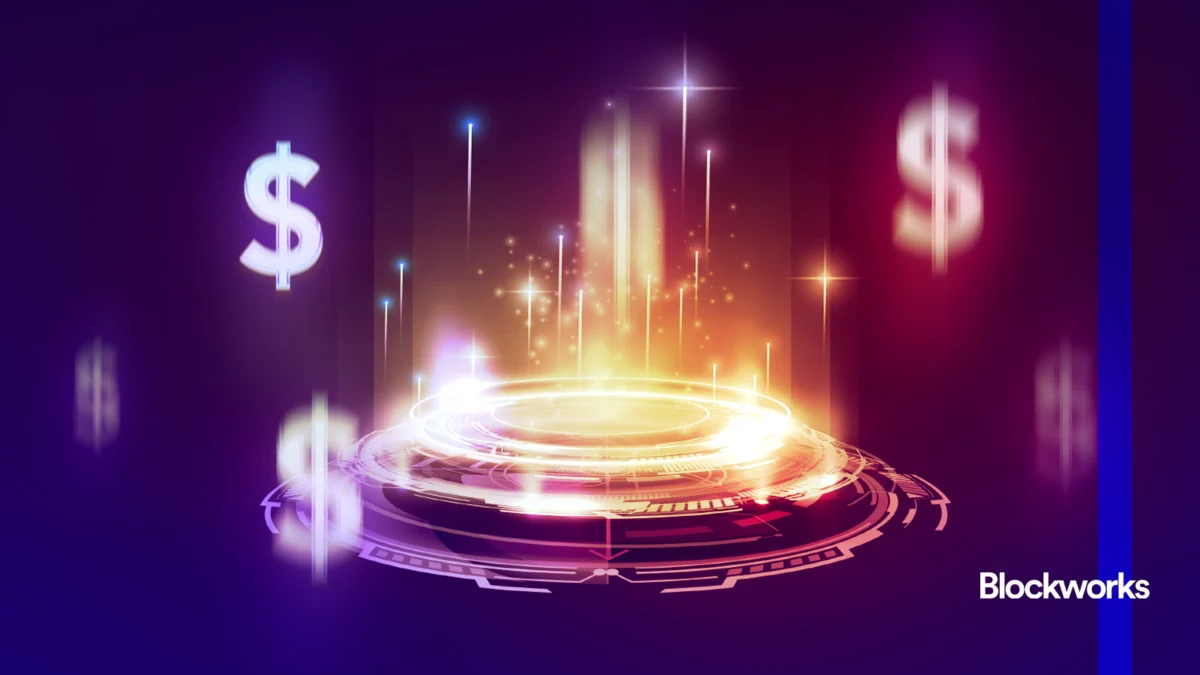
In Star Trek, it took mere seconds to travel from the bridge of the Starship Enterprise down to the surface of a nearby planet. Crewmembers would step onto the metallic pad of the Transporter, which would dematerialize them into a precise pattern of energy accurate down to the quantum level. This energy stream was then beamed to a target location where it would be converted back into matter, allowing the person to be fully reassembled.
For decades, fans and viewers have wondered: Is the person who beams back up the exact same individual who beamed down?
The official, in-universe answer provided by the show’s lore is that they are one and the same. The consciousness of transported crewmembers is said to remain continuous, preserved by the absolute precision of the Transporter’s quantum-level scan and reconstruction process. As proof within the narrative, characters routinely cite a lingering memory of being in transit.
However, modern advancements in theoretical physics have revealed how true quantum-level transportation actually works, and the reality is far more unsettling.
In real-world quantum teleportation—a phenomenon first discovered in 1993—the only thing being teleported across space is information. Teleporting a fragile construct such as a qubit requires that the original quantum state of that qubit be entirely destroyed. Under the fundamental laws of physics, collecting precise information on a quantum state inevitably collapses its superposition, thereby obliterating the original particle.
That collected information can then be transmitted as classical data, consisting of standard ones and zeros, over a satellite or fiber-optic cable. Thanks to the physics-defying mechanics of quantum entanglement, the state can then be reassembled using entirely different particles at the destination.
The grim truth derived from this science is that the Transporter on the Starship Enterprise could only ever function by effectively killing its passengers. The crewmember who steps onto the pad and beams down is not the identical entity that beams back up.
This startling realization carries profound implications not just for science fiction, but for the future of money and global finance.
In traditional banking, the way capital is transferred from Bank A to Bank B is remarkably mundane. Bank A subtracts a numerical figure from its internal ledger spreadsheet and transmits a digital message instructing Bank B to add that exact same number to its own ledger. Only the message itself travels across the network, never the actual money. This architectural reality is precisely why we rely on banks in the first place: to act trusted intermediaries that send and verify messages about our balances.
With quantum money, however, the paradigm shifts entirely. Instead of relying on a message about value, the money itself would carry and transmit its own state.
Quantum money is rooted in the theoretical concept that economic value could be represented directly by the quantum state of a fundamental particle and exchanged seamlessly via quantum teleportation.
"The most important thing to understand here is that quantum [money] behaves like a resource, not like data," explained researcher Fabrizio Genovese in an email correspondence.
Where a traditional bank deposit is merely information about money, and a cryptocurrency like Bitcoin is a distributed consensus record representing money, quantum money would quite literally be the money itself. It would take the form of an uncopyable atom, photon, or molecule that is money, rather than just data about money.
This model offers immense utility because it would allow financial value to be secured and transported according to the unbreakable laws of superposition, entanglement, and the no-cloning theorem. In essence, the laws of physics might someday replicate the functions currently performed by databases and distributed ledgers, but without the need for any database or ledger whatsoever.
Consequently, quantum money would possess the inherent self-custodial properties of physical cash. Individuals could store qubits of money inside a secure hardware device in the exact same manner one might keep paper currency tucked safely into a physical wallet.
That capability would render financial exchanges completely permissionless, eliminating the need for any third-party intermediary, while offering absolute privacy since no centralized ledger of transactions would exist.
At the same time, quantum money would retain the hyper-transportable properties of digital money. Destroying the quantum state on a user’s local device generates the exact sendable information required to recreate that exact monetary state on another device, no matter how vast the physical distance between them might be.
During this brief window of transmission, the quantum state exists only as classical data in transit—meaning it momentarily ceases to exist in its original form, further proving that the fictional Star Trek Transporter operates as a destructive machine.
Sending quantum money across the globe would function much like mailing physical cash, but with vastly superior efficiency, as the transfer would arrive instantaneously.
The historical need to send money over great distances gave rise to modern banking institutions, but solving that geographical problem introduced centralized intermediaries that now exert control over nearly all global capital flows.
Bitcoin emerged as a groundbreaking way to achieve peer-to-peer transactions over great distances without traditional institutional gatekeepers. Yet, quantum money represents an entirely different tier of unstoppable value transfer.
"Blockchain transactions are not quite peer-to-peer," notes researcher Stefano Gogioso in his writings, "because there’s always going to be part of the mechanism that can stop your transaction from going through. For economical, political, or technological reasons."
By contrast, a true quantum transaction would be impervious to stoppage, regardless of the motivations of any outside party.
Despite its revolutionary promise, quantum money faces significant practical limitations. Unlike the universe of Star Trek, where Captain Kirk could beam down to any newly discovered planet on a whim, quantum money can only be successfully transported to a specialized hardware device that has been properly prepared to receive it.
Because such receiver hardware does not yet exist, operational quantum money remains unfeasible for now. Gogioso estimates that we are still roughly three to four years away from seeing the earliest functional iterations of this technology.
When those systems eventually arrive, they will likely constitute the safest conceivable method for transferring value across networks.
Extracting security directly from fundamental quantum states, Genovese suggests, is comparable to harnessing energy from the Sun: it is simply an inherent resource provided by the universe.
As a result, Genovese anticipates that all advanced cybersecurity will eventually migrate toward quantum states, with digital currency naturally following suit.
Even so, humanity will still face the timeless challenge of instilling and maintaining trust in that money, a hurdle that may ultimately prove to be the most difficult trick of all. Constructing a quantum device capable of teleporting qubits is one fundamental challenge, but convincing a global populace to accept those qubits as legitimate payment is an entirely different battle.


Comments (0)