


As another year draws to a close, a curious paradox defines the modern human experience. By nearly every objective metric of health, wealth, and safety, the world is experiencing a remarkable era of progress. Yet, ask the average person how things are going, and you are likely to be met with a grim assessment of societal collapse, economic despair, and institutional failure.
Reflecting on the state of global affairs, commentators have pointed out that 2025 was, by historical standards, an exceptionally positive year, particularly for the United States. Analysts like Derek Thompson have highlighted sweeping, simultaneous declines in major causes of premature death. Across the board, traffic fatalities, drug overdoses, suicides, and homicide rates have plummeted, while dramatic advances in modern healthcare continue to extend and improve human lives. Observers note that this appears to be the first period on record where every major category of preventable mortality—including overdoses, auto accidents, homicides, and obesity-related complications—is falling at the same time.

Similarly, economist Noah Smith outlined a series of encouraging developments indicating that the United States is quietly putting itself back together. Among these positive indicators are rising life expectancy, a cooling off in social media usage among younger demographics, and a powerful surge in business dynamism and entrepreneurial creation. On a global scale, organizations dedicated to tracking human betterment have collated over a thousand distinct good-news stories from the past year alone. These range from the astonishing and rapid decline of poverty in India to ecological triumphs, such as the return of puffins to the Isle of Muck in the United Kingdom after an absence of at least twenty-five years.
If these stories sound unfamiliar, it is because good news rarely commands top billing in the modern media ecosystem. The old newsroom adage—“if it leads, it bleeds”—has governed journalism for generations, but the digital age has hyper-charged the phenomenon. In the fierce, relentless competition for scarce human attention, modern news outlets have increasingly doubled down on a strategy of driving engagement through fear, outrage, and anxiety.
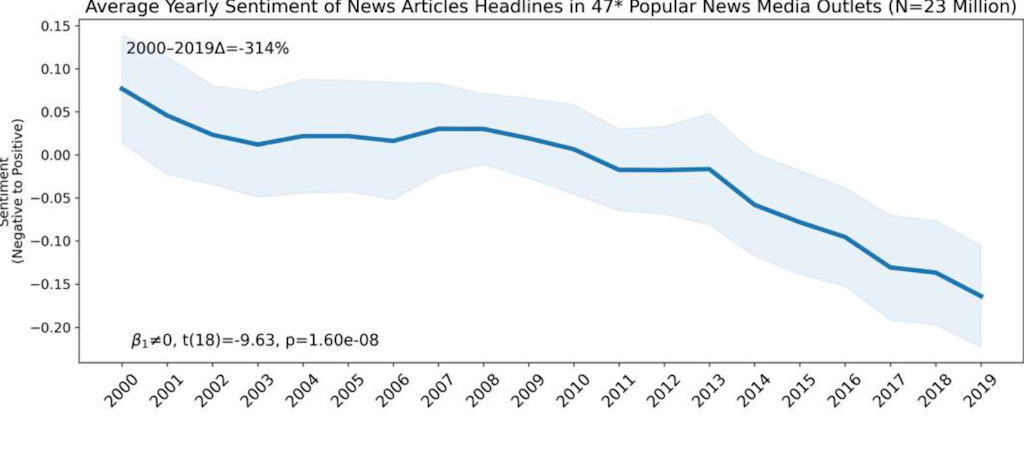
Academic research underscores this troubling shift. A comprehensive 2012 study examining sentiment trends in media headlines revealed a stark, long-term pattern of increasing negativity. The researchers found that headlines from 2019 were a staggering 314 percent more likely to reflect emotions like anger, disgust, fear, or sadness compared to those from the year 2000. In the years since that study was published, media observers argue that the situation has only deteriorated further.
Experts warn that society is currently enduring a veritable contagion of negativity. Driven by a hypercompetitive media environment, newspapers, television networks, radio broadcasts, and digital platforms routinely present a highly skewed, disproportionately dark picture of the state of the world. This is not to suggest that real, systemic problems do not exist. The year 2025 was far from a utopia; devastating wars continued to rage across multiple continents, global temperatures kept climbing, government budget deficits deepened, and displaced migrants faced severe persecution in various parts of the world.
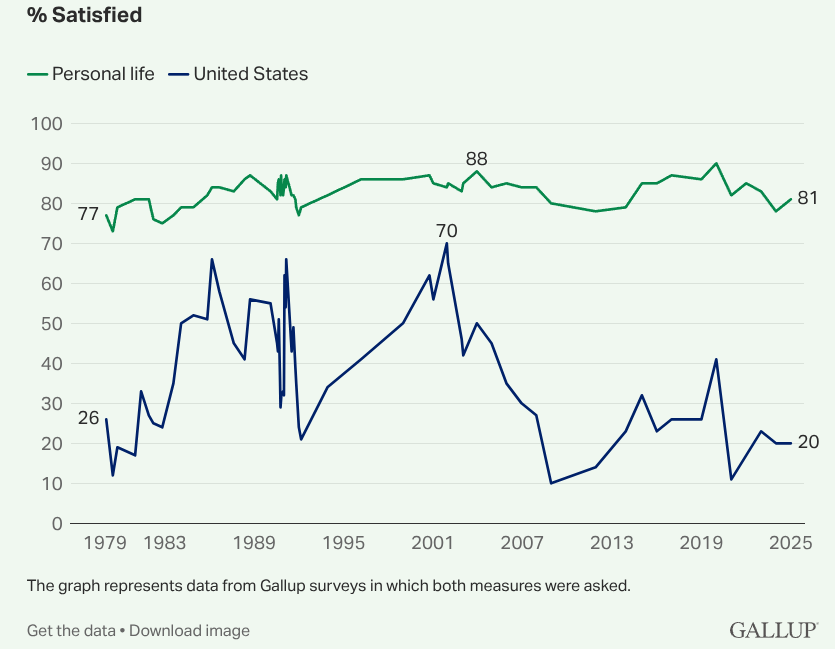
However, the empirical reality is that the world is almost certainly in a much better place than public perception gives it credit for. A profound illustration of this phenomenon can be found in recent polling data from Gallup. A striking survey revealed that 81 percent of Americans are personally satisfied with the way things are going in their own individual lives, yet only 20 percent are satisfied with the direction of the country as a whole. As commentators evaluating the data have observed, a country cannot truly be doing as poorly as public discourse suggests if an overwhelming supermajority of its citizens are personally enjoying their day-to-day existence.
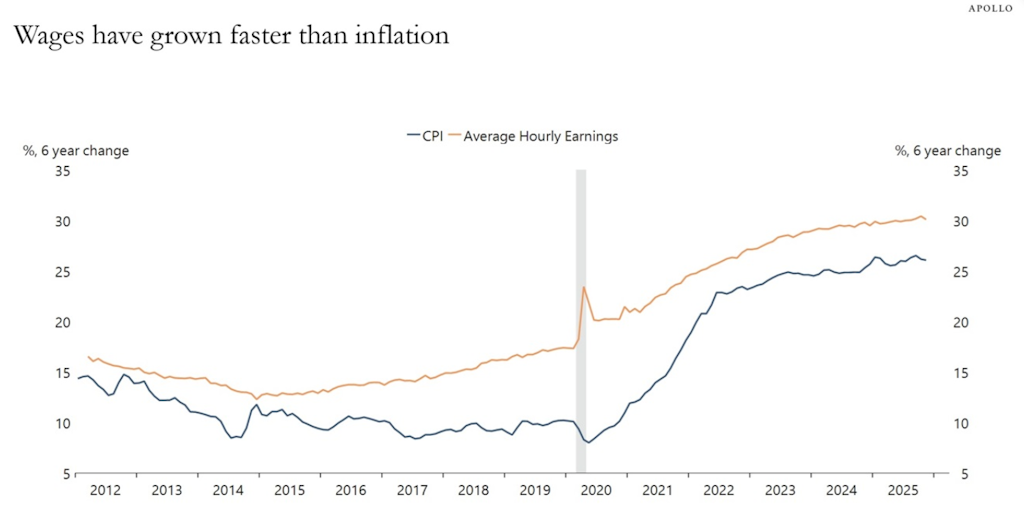
A similar disconnect applies to the much-discussed "affordability crisis" that has dominated economic headlines. While cost-of-living anxieties remain a central theme in political debates, thorough investigations by financial publications like The Economist have concluded that, when looking at long-term economic data, life has rarely been as affordable in America for so many people. Comprehensive economic analyses show that over the past decade, wage growth has consistently outpaced price increases, meaning that basic goods and services have actually become more affordable over time, even when accounting for the volatile housing market.
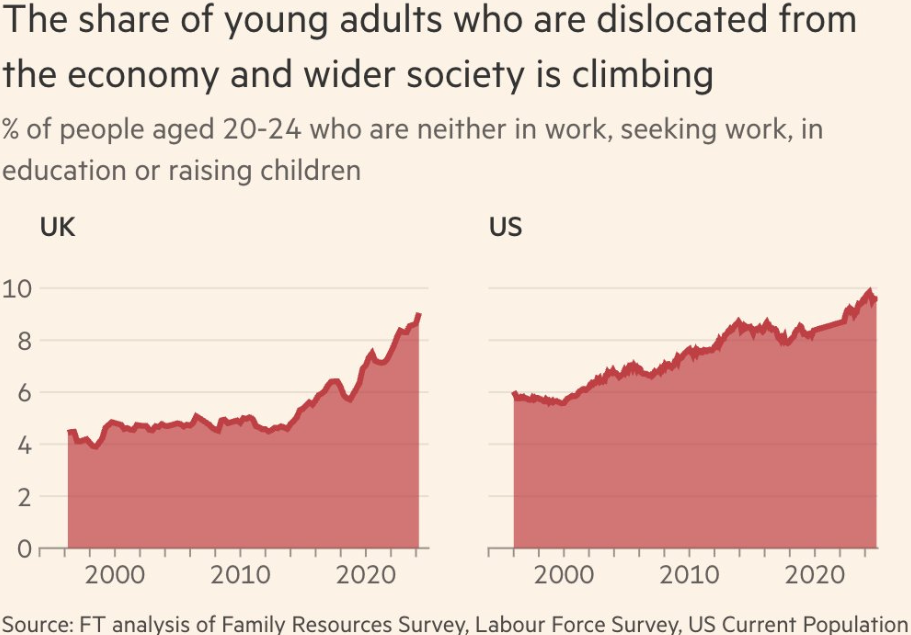
Despite such encouraging economic indicators, consumer sentiment has stubbornly failed to recover. Starting around the onset of the COVID-19 pandemic, consumer sentiment decoupled entirely from real disposable income and has remained detached ever since. Today, people are significantly more pessimistic than the underlying financial data suggests they ought to be. This persistent gloom extends beyond personal finances into broader cultural patterns. Financial institutions tracking post-pandemic normalization note that while sectors like restaurants and air travel fully rebounded, other aspects of public life, such as the film industry and mass transit usage, have lagged behind. Meanwhile, major financial publications report that young adults are becoming increasingly disengaged from traditional societal milestones like employment and parenthood, a trend experts suspect is fueled, at least in part, by the relentless drumbeat of pessimistic media narratives.
Yet, beneath the surface of cultural anxiety, subtle shifts in global sentiment may already be underway. Recent data compiled by international researchers indicates that the world has become surprisingly less grumpy, with global measures of worry, stress, and anger receding from their pandemic-era highs while expressions of humor and positivity begin to recover. At the same time, massive demographic transformations are reshaping the planet. Nigeria now records more births per year than the entirety of Europe, Ethiopia records more than the United States, and Afghanistan records more than Japan, pointing toward a future vastly different from the one commonly imagined in contemporary political debates.
As the media landscape continues to evolve alongside shifting global demographics, the challenge for consumers is to recognize the distortion inherent in modern headlines. Whether the coming year brings an increase in public optimism or another wave of sensationalized panic, the underlying data suggests that human progress marches forward, largely unseen by the news feeds that demand our daily attention.





Comments (0)