



Recent market turbulence has knocked semiconductor stocks and other artificial intelligence-momentum equities down by 30 to 40 percent from their all-time highs. This sharp correction has emboldened skeptics who are quick to declare a definitive top for the semiconductor, AI, and memory sectors, effectively writing off the trade and celebrating their own caution for staying on the sidelines. However, market observers who look deeper into the structural drivers of the sector suggest that these celebrations are premature, and that the underlying investment thesis relies on a single fundamental question about the future of digital processing.
The core of the debate centers on whether the global demand for compute is finite or infinite. Many market participants form their views by evaluating enterprise usage and adoption rates at a local scale, often extrapolating slower-than-expected corporate integration out to the broader global market. While enterprise adoption may indeed take time to mature within traditional corporate structures, this lag creates a powerful counter-incentive for smaller, AI-native firms. These agile competitors are leveraging advanced intelligence tools to outpace legacy corporations with significantly leaner workforces, proving that effective AI integration can be vastly cheaper and more efficient than traditional human scaling.

Zooming out past corporate adoption cycles reveals that the massive capital expenditure wave currently defining the AI buildout is fundamentally about bringing critical compute capacity online. This compute is utilized by sovereign governments, hyperscale cloud providers, frontier AI laboratories, and enterprises replacing traditional labor costs. Each of these distinct buyer groups operates with a different willingness to pay for compute resources. While certain commercial entities might tap out as processing prices fluctuate, sovereign entities and hyperscalers view compute access as a cutthroat, non-negotiable race for strategic advantage. For others, compute serves as a direct, highly cost-effective replacement for labor overhead, bypassing legal complexities and management hours.
To assert that the market has overbuilt or expanded past actual capacity is to assume that these various buyer groups have reached a static end-state of technological satisfaction. Believing in an AI bubble requires the assumption that governments, technology giants, and businesses will eventually decide they possess enough intelligence and automation capability. Conversely, if one assumes that human ambition and institutional competition are insatiable, the logical conclusion is that demand for compute is effectively limitless.
Despite this massive structural demand, institutional investors remain deeply concerned about the sustainability of the infrastructure buildout. Chief among these anxieties are questions regarding whether hyperscalers are overextending their free cash flows and risking their corporate futures on excessive capital expenditures. Compounding these worries is intense scrutiny over the revenues and operating margins of major AI labs, particularly as new open-source models emerge to challenge the extractable economic value of proprietary frontier models.

A closer examination of the hyperscale cloud providers reveals that concerns over miscalculated spending may be significantly overstated. Public cloud offerings have long commanded substantial profit margins, with major providers convincing generations of companies that internal scaling is nearly impossible without their infrastructure. Standard non-CPU compute is routinely marked up by astronomical margins, while ancillary fees for logs, data transfers, and auxiliary services add to the corporate revenue stream. This business model persists because customers are deeply entrenched within proprietary cloud ecosystems. Bandwidth within these internal networks remains relatively inexpensive, whereas data egress costs escalate dramatically when attempting migration.
For hyperscalers, running out of compute capacity is an existential threat. If a cloud provider cannot supply enough GPUs, enterprise customers are forced to migrate their data and workloads to competing platforms—a multi-year endeavor if possible at all. This dynamic allows cloud giants to wield enormous pricing power, compelling tenants to pay premium rates with limited alternatives.
Financial comparisons between enterprise cloud pricing and private hardware ownership further illustrate the immense profit margins captured by cloud providers. Industry analyses demonstrate that renting high-end computing clusters through commercial cloud platforms can incur monthly costs that far outpace the amortized cost of purchasing and operating equivalent localized hardware. Even when accounting for expenses such as land acquisition, ongoing electricity consumption, financing, and on-site technical staff, hyperscalers continue to price their compute offerings at massive premiums.
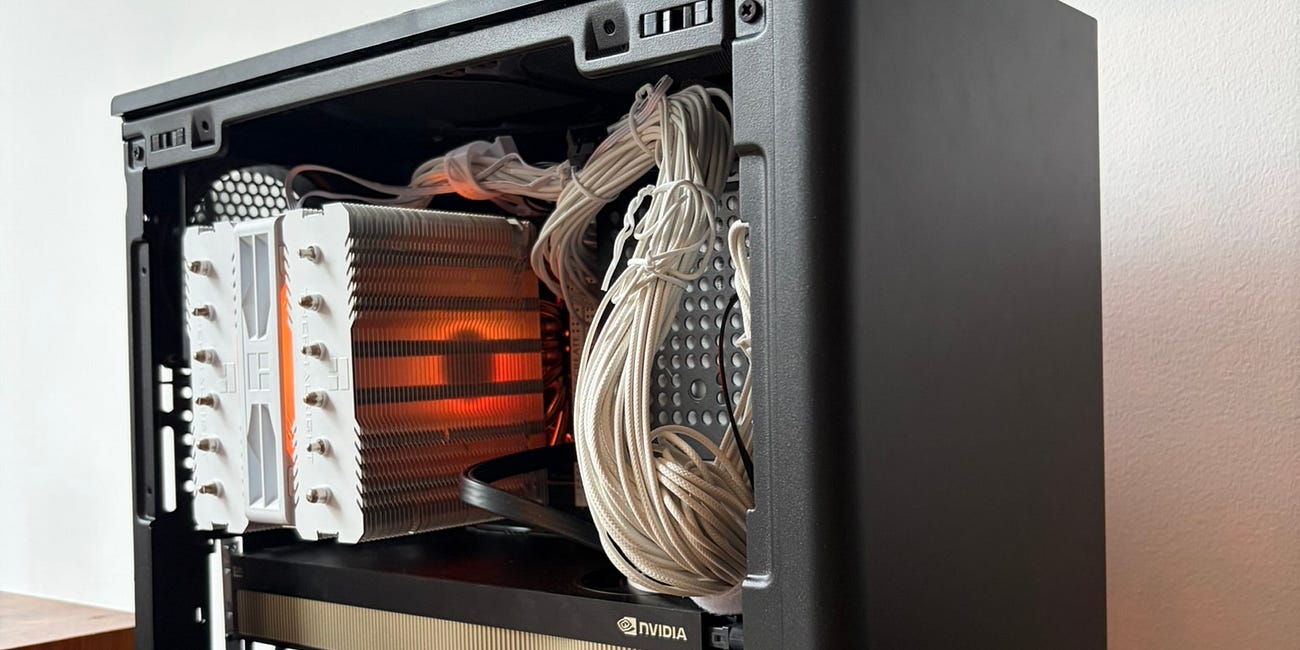
Furthermore, historical depreciation models for hardware are being upended. Rather than losing value rapidly, older-generation graphics processing units have retained their worth, with rental costs even increasing in certain segments. Hardware can be conceptualized as a dual-component asset class where raw compute processing may see efficiency-driven price deflation, but memory scarcity and increasing memory demands offset these declines over time. As a result, the return on investment for infrastructure capital expenditures appears considerably higher than traditional market models anticipate.
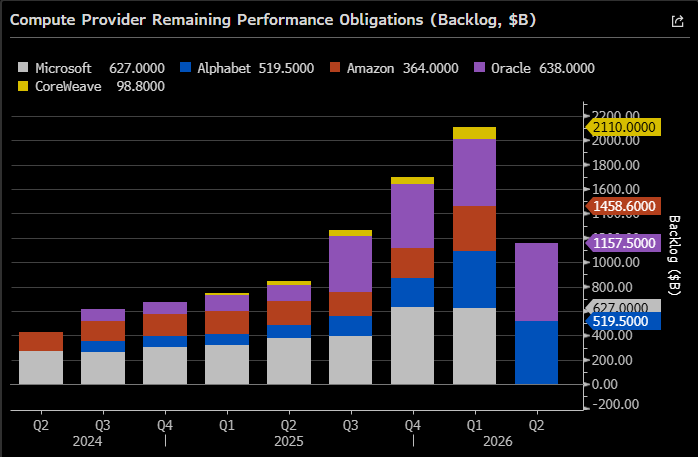
Addressing concerns regarding hyperscale credit risk, market analysts note that spot pricing for renting GPU compute remains materially above contracted rates. This discrepancy implies that hyperscalers may actually be underearning on their current capacity, while accelerating operating cash flows provide a robust, often underestimated source of funding for ongoing AI expansion. Furthermore, the growth of industry backlogs provides a tangible metric of sustained demand, scaling rapidly over recent years. While frontier research laboratories account for a notable share of this demand, independent market studies indicate that their requirements represent only a portion of global compute consumption, reinforcing the argument that broad-based commercial adoption is driving the trend.
Skeptics frequently draw historical parallels between the current AI infrastructure boom and past technological overextensions, such as the internet buildout, the railway expansion, or historical telecommunications bubbles. However, these analogies overlook a unique characteristic of artificial intelligence: recursive demand. Past infrastructure projects relied on linear human adoption and physical usage limits to achieve economic diffusion. In contrast, artificial intelligence compute is capable of spawning its own subsequent demand. Once an organization identifies a positive return on investment use case, additional capital can be reinvested directly into expanded compute resources to generate further economic output.

While general public interaction with AI often remains limited to basic prompt-and-response applications, advanced developers and enterprises are increasingly relying on agentic engineering and autonomous workflows. For these users, compute expenditure scales upward naturally as they discover new productivity enhancements and cost-saving efficiencies. Even if top-line revenue generation varies across different sectors, the immediate operational cost savings driven by automation provide an undeniable economic justification for continued investment.
The dynamics surrounding frontier AI laboratories present a slightly more nuanced picture, particularly when divided into the distinct categories of model training and inference. Developing state-of-the-art frontier models requires immense upfront capital investments, which must then generate lifetime value through inference services despite rapid technological depreciation. At the same time, open-source models continually diffuse through the market, offering cheaper alternatives for specific computational tasks.
However, running state-of-the-art models requires massive hardware footprints that far exceed the capabilities of standard consumer or local enterprise hardware. When major open-source releases open their infrastructure to the public, demand frequently outstrips available capacity, proving that serving these models remains a significant operational hurdle. While frontier labs will face mounting competitive pressures, specialized workloads requiring cutting-edge capabilities will likely continue to command a pricing premium. Moreover, inference operations have demonstrated healthy operating margins for serving providers, and as end-users increasingly deploy their own hardware, that underlying demand flows directly back to hardware manufacturers.

The current artificial intelligence trade occupies a unique and complex position within global financial markets. It is viewed simultaneously as a revolutionary economic transformation and as an overextended speculative bubble. Many institutional investors struggle to reconcile the intricate technical realities of high-performance computing with traditional balance sheet analysis, leading to sudden market reactions driven by isolated headlines. Despite significant stock appreciation over recent cycles, many sector equities continue to trade at modest forward multiples, reflecting lingering market skepticism that demand will drop off precipitously in the coming years.
From a traditional economic perspective, soaring demand should eventually be met by an equivalent rise in supply. However, because the primary inputs—power generation, specialized semiconductors, and real estate—are constrained by physical and logistical realities, and because the output of generalized intelligence has virtually limitless applications, standard equilibrium models may fail to apply. The world is experiencing a structural shift toward treating compute as a fundamental utility for economic growth.
Current macroeconomic forecasts frequently fail to account for the impending integration of physical robotics over the next decade. In the face of demographic shifts and declining global birth rates, traditional economic models reliant on a growing human workforce to drive productivity face severe limitations. Without artificial intelligence and advanced robotics, long-term economic expansion becomes increasingly difficult to sustain. Consequently, bringing massive quantities of compute online is viewed by industry proponents as a critical requirement for continued civilizational progress.
As North American power grids and data center hubs approach capacity constraints, development is expanding rapidly into neighboring regions, with the ultimate trajectory pointing toward global and eventually extraterrestrial infrastructure deployment. This creates a distinct market paradox where hardware supply is rigidly measured and transparently reported through semiconductor fabrication timelines, while demand scales dynamically and remains consistently understated by real-time metrics. Evaluating the long-term trajectory of the sector ultimately requires market participants to determine whether they view the future global demand for compute as finite or limitless.




Comments (0)