


Decentralized finance has long wrestled with one of its most persistent structural flaws: impermanent loss. For years, automated market makers have forced liquidity providers to trade off the convenience and depth of pooled liquidity against the risk of watching the value of their deposited assets diverge unfavorably compared to simply holding them in a wallet. Countless mechanisms have been proposed, tested, and ultimately abandoned in the quest to solve this economic puzzle. However, a novel decentralized finance protocol known as Yield Basis is gaining serious traction across the industry, presenting what many analysts view as the first viable, structurally sound mechanism designed to completely eliminate impermanent loss from automated market makers through the strategic use of leverage.
The protocol carries significant weight within the decentralized finance community, not least because its founder shares the same pedigree as Curve, the legendary exchange protocol that laid much of the foundational architecture for modern stablecoin and asset swapping. Given this shared lineage, deep operational and strategic synergies exist between Yield Basis and Curve, cementing its credibility among seasoned market participants. The intricate mathematical and economic mechanics powering the protocol are detailed in its foundational whitepaper, yet the real-world validation of its design is already playing out visibly on-chain.

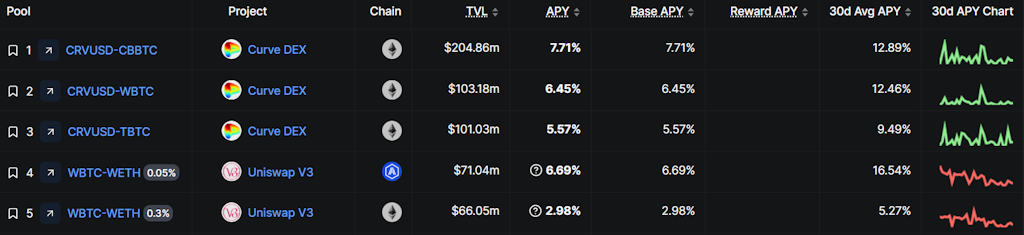
Rather than remaining a theoretical whitepaper exercise, Yield Basis has rapidly captured significant market share, establishing dominance in a remarkably short timeframe. In fact, the protocol already accounts for the three-largest bitcoin decentralized exchange pools across the entire decentralized finance landscape, commanding over $400 million in total value locked. This rapid adoption underscores a broader appetite for infrastructure that solves genuine friction points rather than relying purely on speculative token incentives to attract transient capital.
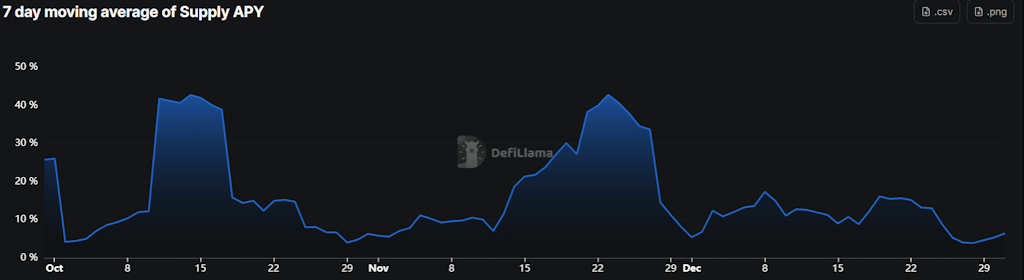
For years, holders of wrapped bitcoin tokens have faced a frustrating reality: while their assets could be deployed across various lending markets or collateralized debt positions, supplying liquidity to decentralized exchange pools meant exposing oneself to the asymmetric risks of impermanent loss. Yield Basis has fundamentally altered this calculus. By removing impermanent loss from the equation through its leveraged liquidity framework, the protocol allows wrapped bitcoin token holders to comfortably supply liquidity to high-volume pools while earning organic yield. Historically, the seven-day moving average for this supply yield has fluctuated between an impressive 4% and 40%, depending on market volatility and trading volume.
Because many crypto native investors typically avoid providing liquidity to automated market makers unless they are actively farming short-term incentive tokens, it is easy to overlook how rewards are traditionally structured. In standard liquidity pools, yields are earned directly in the pool tokens themselves. This means that participants utilizing Yield Basis are generating genuine, native bitcoin yields rather than being paid out in inflationary, volatile governance tokens that require constant monitoring and selling. This structural shift transforms bitcoin from a historically non-productive asset into an active, yield-bearing instrument without requiring holders to engage in complex, risky, and costly hedging strategies on centralized derivatives exchanges.
The economic design of the native token further distinguishes Yield Basis from the typical speculative governance tokens that dominated previous market cycles. Earlier this month, the protocol activated its fee switch, introducing a value accrual model rooted in traditional corporate finance principles. Liquidity providers utilizing Yield Basis are given two distinct pathways for generating returns from their provided liquidity. They can choose to hold the ybBTC liquidity provider token and receive direct, bitcoin-denominated trading fees, or they can opt to stake their ybBTC token. By choosing to stake, providers forgo the immediate bitcoin-denominated trading fees in exchange for participation in protocol emissions.
This dual-pathway approach aligns closely with sound corporate finance philosophy, which prioritizes direct earnings distribution over opaque token buyback mechanisms. The core sentiment underpinning this model rests on the idea that protocols should distribute actual earnings directly to stakeholders, leaving individuals with the full autonomy to decide whether and when they wish to purchase the native token themselves. Dividends and direct fee distributions offer essential financial optionality, particularly when participants retain the flexibility to choose the exact type of yield they wish to receive. To contextualize the scale of this distribution, approximately $450,000 was distributed to participants for the week ending December 25, a figure all the more notable given that it was achieved despite existing caps on the liquidity pools.
Yet, the long-term ambitions of Yield Basis extend far beyond serving as an impermanent loss-free automated market maker for major cryptocurrencies. The protocol is strategically positioned as comprehensive yield and liquidity infrastructure designed to transform otherwise non-productive assets into yield-bearing instruments while simultaneously establishing robust secondary markets. By focusing heavily on wrapped native assets and tokenized real-world assets, Yield Basis possesses the theoretical capacity to render any sufficiently liquid and volatile asset productive. This paradigm shift enables asset issuers to generate revenue directly from underlying liquidity rather than being forced to heavily subsidize market-making operations out of pocket. Furthermore, it empowers asset holders to access organic yield and unlock downstream decentralized finance use cases, such as utilizing their productive holdings as collateral for borrowing.
This sophisticated economic model is not restricted to crypto majors like bitcoin and ethereum. It holds profound implications for tokenized commodities and equities, including digital representations of gold, silver, and traditional high-growth equities like NVIDIA, whose broader on-chain adoption has historically been constrained by persistent impermanent loss, shallow secondary liquidity, and a complete absence of native yield generation or streamlined liquidation pathways. By offering a superior yield alternative characterized by an attractive risk-reward profile, deep liquidity, and powerful network effects, Yield Basis could successfully unlock these dormant markets, bridging traditional financial assets with decentralized liquidity architectures.
Despite its innovative engineering and rapid market validation, Yield Basis is not entirely without risk. As with any complex financial mechanism operating at the bleeding edge of decentralized finance, participants are encouraged to thoroughly examine the protocol’s underlying mechanics, read the foundational literature, or utilize analytical resources to fully comprehend both the potential financial upside and the inherent operational risks involved. Nevertheless, the protocol represents a significant evolutionary step for decentralized liquidity, offering a glimpse into a future where assets can be deployed productively without the traditional penalties of impermanent loss.





Comments (0)