


When technology writer Kevin Kelly met Google co-founder Larry Page at a social gathering back in 2002, he found himself struggling to grasp the foundational logic of the burgeoning internet economy. At a time when the dot-com bubble had only recently burst and companies were scrambling to find viable business models, Google was offering its flagship product—a comprehensive web search engine—entirely for free.
Perplexed by this strategy, Kelly posed a straightforward question to Page: Why would anyone invest massive amounts of capital into a company that offers its primary product at zero cost? He pressed Page on the competitive landscape, noting that there were already numerous search companies operating in the space, and asked where giving away free web search could possibly lead the company.
Page’s response, delivered years before the advent of modern social media giants and mobile computing revolutions, was both remarkably memorable and profoundly prophetic. "Oh, we’re really making an AI," Page told him.

To contextualize the timeline, that conversation took place two full years before the launch of Facebook, three years before the founding of YouTube, five years before Apple introduced the first iPhone, and a staggering two decades before OpenAI released ChatGPT to the public, igniting the current generative artificial intelligence boom. For Kelly, the exchange served as a profound intellectual awakening.
Writing years later in his 2016 book The Inevitable, Kelly reflected on Page’s long-term vision. Rather than utilizing artificial intelligence merely as a tool to incrementally improve the functionality of a search engine, Google was operating in reverse. The company was actively leveraging the search engine as a mechanism to improve its artificial intelligence systems. Every single time a user typed a query, clicked on a search-generated link, or created a new hyperlink anywhere on the broader web, they were unknowingly contributing to the training regimen of Google’s underlying AI models.
While Kelly was entirely correct in his assessment that training artificial intelligence would ultimately prove far more consequential to human history than merely serving targeted web advertisements, looking at the technological landscape from the vantage point of 2025 permits an even grander and more startling conclusion. In the view of many prominent economists and technologists, the true underlying purpose of the entire internet from its inception was not to connect humans, sell products, or host entertainment, but rather to serve as a massive, global training ground for artificial intelligence.
Economist Alex Tabarrok recently articulated this perspective in a discussion with economist Tyler Cowen, suggesting that future historians will look back and remember the internet primarily as an "agar culture for the growth of the AI"—essentially functioning as the nutrient-rich petri dish from which modern artificial intelligence sprang. Cowen echoed this sentiment, noting that society is only just beginning to realize the true evolutionary trajectory of the digital age. Tabarrok added that when people look back in the future to ask what the internet actually was, the answer will be that putting everything online was done for the benefit of the AI, not fundamentally for human convenience, even if few people realized it at the time.
Except, of course, for Larry Page. And perhaps his father, who was an esteemed pioneer in early artificial intelligence research. And alongside Page, his co-founder Sergey Brin, a deeply knowledgeable machine-learning expert whose fluency in the field runs so deep that he has actively contributed raw code to Google’s modern large language models, including Gemini.
Despite laying the foundational tracks for the most disruptive technological shift of the twenty-first century, none of these three figures appeared on the cover of Time Magazine as designated "architects of AI." Yet, historical evidence suggests they thoroughly deserve the recognition, given that Google’s search engine executed precisely what its creators set out to achieve from the very beginning.
As Page explained during an interview all the way back in 2000, the ultimate incarnation of a search engine would be a system that possessed complete comprehension of everything residing on the web. It would understand a user’s precise intent and deliver the exact correct response instantly. Page noted at the time that achieving this capability is inherently an exercise in artificial intelligence, requiring the system to answer virtually any conceivable question because almost all human knowledge and expression had been aggregated onto the web.
And who was responsible for populating the web with that vast ocean of data? The users themselves. As Kelly elaborated in 2016, when an ordinary internet user types a common phrase into an image search bar and clicks on the visual result that best matches their mental image, they are actively teaching the underlying AI what that concept looks like in the real world. Every single one of the billions of queries processed by search engines daily continuously tutors deep learning neural networks over and over again. With modern query volumes now reaching roughly 16 billion searches per day on Google alone, the scale of human tutoring has scaled exponentially.
This dynamic suggests a humorous counter-narrative regarding modern accolades: everyday internet users arguably deserve a spot on the cover of magazines for their decades of unpaid labor as tireless tutors of artificial intelligence. Every blog post, forum comment, uploaded photo, and video shared across the digital ecosystem has served as the foundational textbook from which modern machine learning models learned to reason, speak, and create.
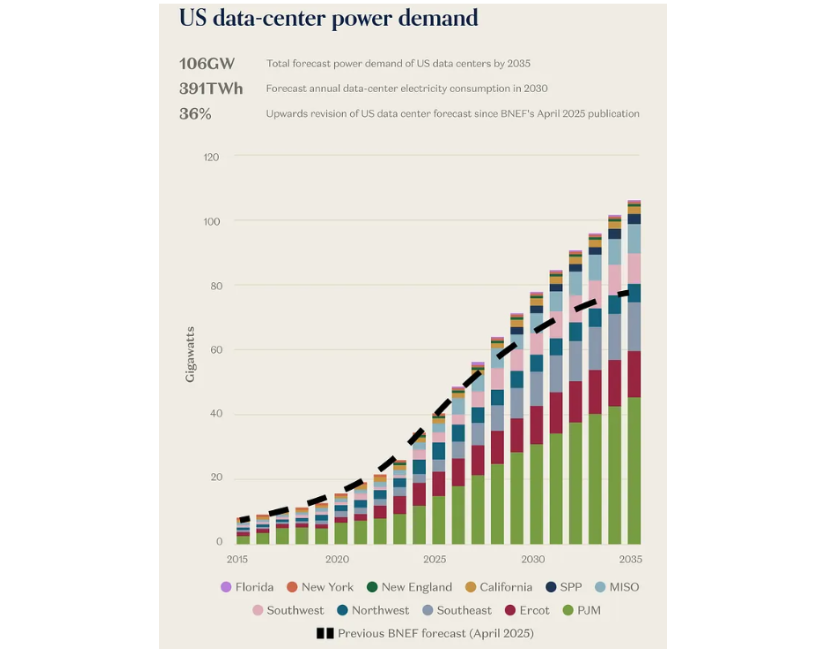
At the same time, the realization of this AI-driven future has placed unprecedented demands on global infrastructure, reshaping economic realities across multiple sectors. Recent industry data and forecasts highlight the staggering scale of this transformation. According to research from venture capital firm a16z, global forecasts for data center power consumption have surged by 36% in a matter of months. Technology stocks have frequently faced downward pressure in financial markets not due to a lack of demand for artificial intelligence services, but because the physical infrastructure simply cannot secure sufficient electrical power to run the immense fleet of data centers required to train and deploy these advanced models.
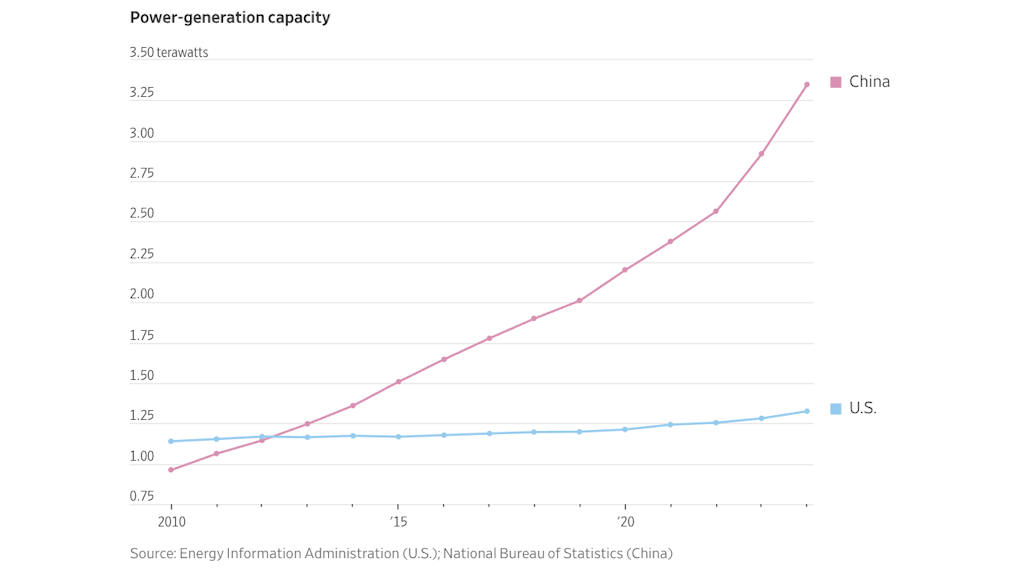
This infrastructure bottleneck has created fascinating geopolitical dynamics. China’s primary strategic advantage in the global race toward artificial general intelligence lies in its immense energy capacity, with projections indicating that the nation will soon be generating triple the amount of electrical power compared to the United States. This raw energy advantage is viewed by analysts as a critical factor in determining which nations can sustain the massive computational workloads demanded by future generations of AI systems.
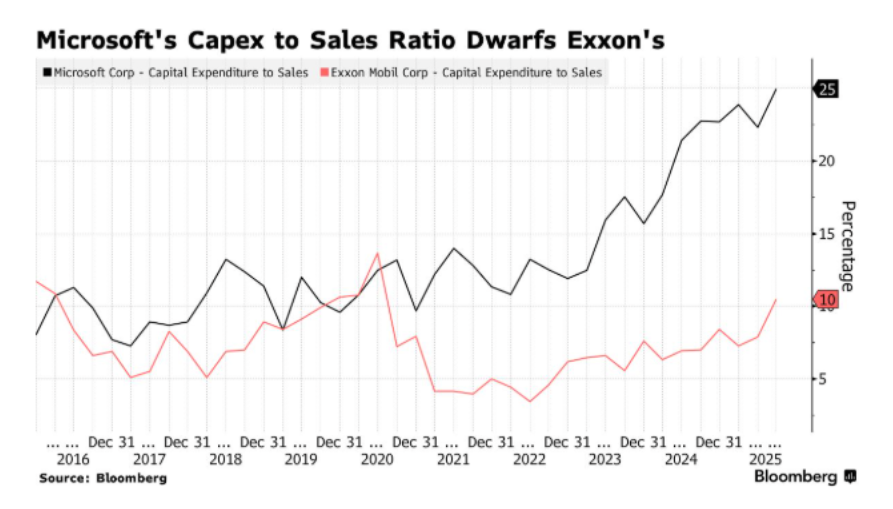
The financial markets are reflecting this capital-intensive reality through remarkable role reversals among traditional corporate titans. Market analysis from Paul Kedrosky highlights that technology companies historically known for running lean, asset-light business models are now spending unprecedented proportions of their sales on capital expenditures. For instance, Microsoft currently allocates more than double the percentage of its sales toward capital investments compared to ExxonMobil, a corporation traditionally defined by its heavy physical asset footprint in the energy sector.
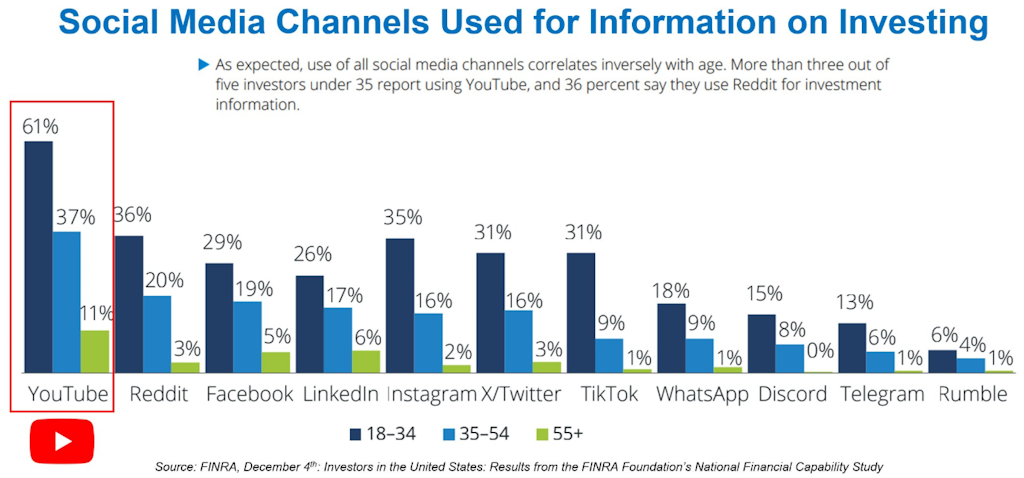
These sweeping technological and economic shifts are simultaneously altering consumer behavior and financial engagement, particularly among younger demographics. Recent survey data from the Financial Industry Regulatory Authority reveals that roughly 61% of investors under the age of 35 utilize social media platforms like YouTube as their primary source for financial and investing advice. This widespread reliance on decentralized digital content creation underscores how deeply informational ecosystems have shifted away from traditional institutional authorities.
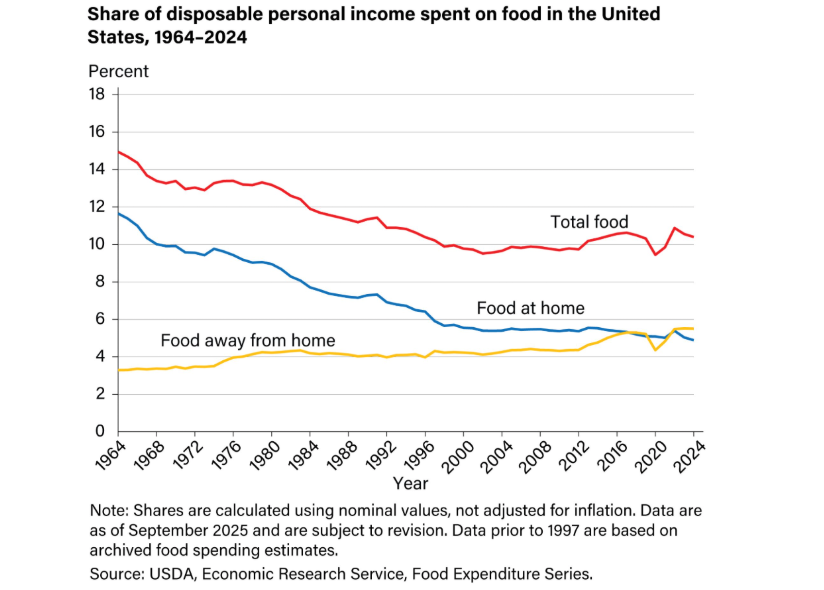
Meanwhile, broader economic anxieties continue to run through public discourse, though they frequently diverge from hard statistical reality. Despite widespread narratives on social media concerning an escalating crisis in grocery store pricing, economic data indicates a more nuanced picture. When measured as a percentage of overall disposable income, spending on food consumed at home has actually become more affordable over time. Total household food budgets have remained relatively stable, driven less by inflationary shocks and more by shifting consumer habits and lifestyle choices.
Despite the all-consuming dominance of the artificial intelligence narrative in financial media, other segments of the global economy continue to demonstrate resilience. The equal-weight S&P 500 index recently reached historic all-time highs, signaling that corporate health extends well beyond the handful of mega-cap technology monopolies dominating headline discussions.
Yet, long-term structural challenges loom on the horizon for many developed and developing nations, driven by profound demographic shifts. Analysts frequently point to severe population declines in regions like South Korea, where demographic projections indicate that every group of 100 current citizens will ultimately have only six great-grandchildren among them in total. Economists frequently observe that such unprecedented demographic contractions make the rapid advancement of autonomous labor and artificial intelligence not just an exciting commercial pursuit, but an absolute economic necessity to maintain societal functions as human workforces shrink.
Reflecting on these historical cycles, recognition often arrives in unexpected places. In 1982, Time Magazine notably bypassed human figures to name "The Computer" as its Machine of the Year, acknowledging the dawn of the digital era. Decades later, in 2006, the publication famously honored "You"—the individual content creators who populated the early web with blogs, forums, videos, and images.
From the perspective of how the modern technological landscape unfolded, digital users arguably merited a repeat honor alongside contemporary leaders, given that without the vast library of human culture uploaded to the internet over the past thirty years, the modern architects of artificial intelligence would have had virtually nothing to work with. The training session, spanning decades of human digital interaction, has successfully brought the world to the threshold of an entirely new era.





Comments (0)