


The roster of prominent corporate issuers objecting to the trading of their shares on a planned tokenized stock venue continues to expand rapidly. Six additional major companies have formally requested that their shares be excluded from the upcoming platform spearheaded by cryptocurrency exchange OKX and Intercontinental Exchange (ICE), the parent company of the New York Stock Exchange.
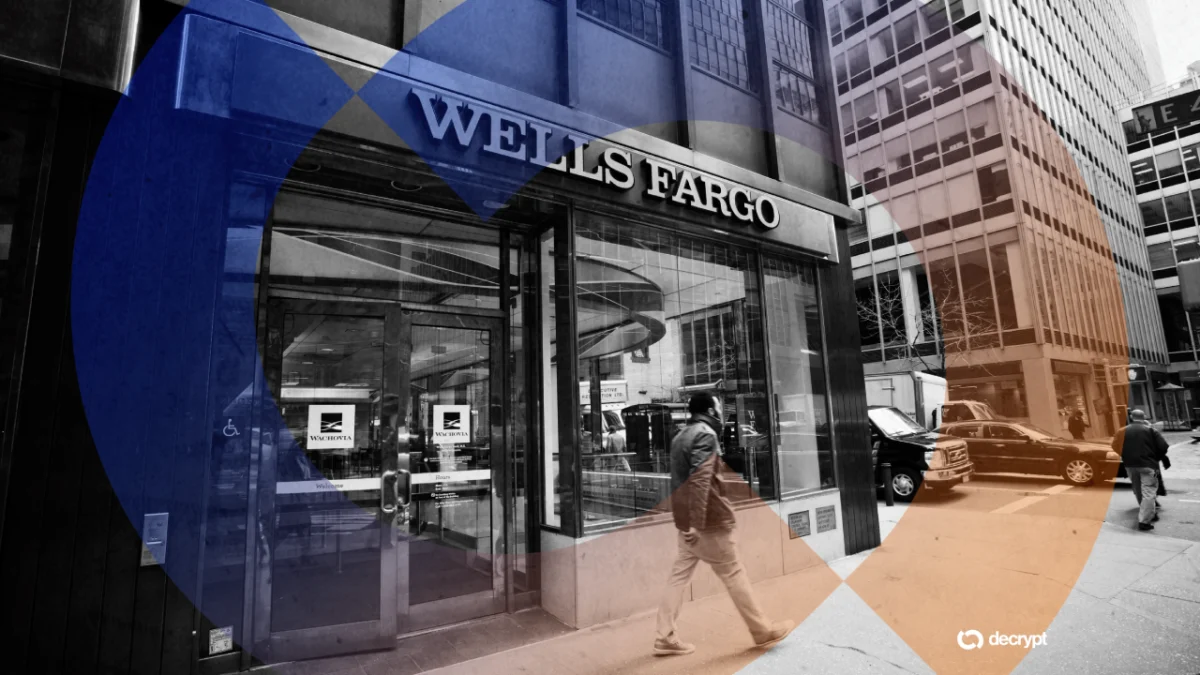
According to an updated public notice released by OKXICE TSV dated Friday, the latest additions to the exclusion list include financial institution Wells Fargo, technology giants Cisco Systems and Arm Holdings, chipmaker Marvell Technology, biotechnology firm Moderna, and software provider Intuit. This fresh wave of objections brings the total number of companies pushing back against the platform to 22. That figure marks a significant escalation from the 16 objecting companies recorded on October 19 and just nine issuers when the initial notices began circulating on October 15.
The expanding resistance highlights growing caution among traditional corporate giants toward the burgeoning market for blockchain-based securities. Earlier objectors to the venue include a powerhouse of American enterprise, featuring tech behemoths Microsoft and Alphabet, Wall Street titan Goldman Sachs, telecommunications leader Verizon, technology provider Broadcom, and healthcare giant UnitedHealth Group. Despite the mounting number of high-profile exclusions, none of the published notices released by the venue have detailed the specific reasons behind the companies’ objections, nor have they explicitly clarified the legal or operational effect an objection has on whether a stock can ultimately be traded on the platform.
The inclusion of Wells Fargo alongside Goldman Sachs makes it the second major U.S. banking institution to opt out of the venue. Meanwhile, the addition of Arm Holdings, Cisco Systems, and Marvell Technology introduces even more semiconductor, hardware, and networking heavyweights to a roster that was already densely populated by technology firms like Microsoft, Broadcom, and Qualcomm.
The underlying project, designated as OKXICE TSV, is structured as a 50-50 joint venture between ICE and OKX’s U.S. holding company. The ambitious platform aims to allow approved market participants to trade tokenized versions of U.S. equities on a 24-hour, seven-day-a-week basis. Under the proposed operational design, trades would execute through Uniswap v4 liquidity pools operating on OKX’s proprietary XLayer blockchain network, with positions paired against stablecoins such as USDC.

The platform is planned to operate under the Securities and Exchange Commission’s innovation exemption framework, an initiative the regulatory agency unveiled in September following the legislative stall of the Clarity Act in the United States Senate. Since publishing its initial notices, the venue has clarified that it possesses the capability to list shares that are tokenized directly by the corporate issuers themselves, as well as shares tokenized by qualified outside parties—a pathway that none of the objecting companies have opted to utilize thus far.
As the launch approaches, the latest public notices have also outlined the operational and structural risks associated with the venue in explicit detail. Beyond standard halts that mirror the trading suspensions of underlying equities on traditional exchanges, the tokenized venue will not incorporate traditional circuit breakers. Furthermore, the platform currently lacks explicit policies or mechanisms to address maximal extractable value—the profit that sophisticated traders can capture by strategically reordering, including, or excluding transactions within a blockchain block.
The documentation also warns that broker-dealers choosing to operate on the platform face unresolved questions concerning regulatory trade reporting obligations and best execution standards. These regulatory ambiguities could potentially limit institutional participation and contribute to thinner market liquidity. Additionally, platform administrators retain the technical ability to upgrade the underlying smart contracts without providing advance notice to users. Compounding these structural considerations, the specific smart contract governing access control and user authorization has thus far undergone only internal auditing.
OKX and ICE initially joined forces on tokenized securities initiatives earlier this year before officially unveiling the joint trading venue this month. The competitive landscape for blockchain-based equities remains dynamic, highlighted by the fact that Nasdaq—which previously secured SEC approval to operate its own tokenized securities pilot program—has similarly stated that it will opt its own corporate shares out of the innovation exemption framework.
Broader market context underscores both the potential and the friction surrounding these financial innovations. A recent analysis published by the International Monetary Fund found genuine, measurable demand for tokenized stocks, particularly during off-hours when traditional stock exchanges are closed. However, the IMF report simultaneously cautioned that the emerging market for tokenized equities remains prone to volatility and characterized by restricted liquidity.




Comments (0)