


There are certain companies that capture the imagination of venture capitalists and refuse to let go, representing the purest essence of high-stakes investing: a phenomenal team of entrepreneurs pursuing a world-changing idea that, if successful, can scale into a category-defining enterprise. For one prominent investor, that company was Form Energy. During a garden leave period prior to joining Sequoia Capital, and even during family vacations while enthusiastically explaining the concept to siblings, the vision of Form Energy remained a constant fixture of thought. It was the quintessential embodiment of what venture capital is meant to achieve.
The journey began in the spring of 2020 during the early months of the COVID-19 pandemic, marking the first in-person founder meeting conducted under mask-wearing protocols. At that time, Mateo Jaramillo, the chief executive officer of Form Energy, outlined a remarkably simple yet profound premise: solar and wind power were rapidly taking over the electrical grid, but the transition created an urgent, existential need for energy storage. While lithium-ion batteries had proven to be a fantastic chemistry for electric vehicles and could effectively store grid-scale energy for four to six hours, they were fundamentally constrained and could never economically store energy for multiple days.
Thinking from first principles, Jaramillo—who previously founded and ran Tesla’s energy business—assembled what can only be described as the "battery Avengers." This elite group included legendary battery scientist Yet-Ming Chiang of MIT as chief scientist and Billy Woodford as chief technology officer. The team set their sights on an ambitious and unconventional objective: building an iron-air battery. The choice of materials was elegant in its simplicity—iron, because it is remarkably cheap and abundant, and air, because it is free. The ultimate goal was to synthesize these inexpensive materials into a high-capacity battery system capable of competing directly with traditional natural gas peaker plants on cost, while reliably delivering a clean and dependable baseload energy resource to the modern power grid.
At the time, navigating the complex underlying chemistry required rigorous external validation. Reaching out to a network of academic experts to diligence whether the underlying science truly worked, the investor selected a distinguished Harvard professor and engaged him as a consultant. At the conclusion of the rigorous research project, the professor delivered a resounding thumbs-up. As a tangible sign of his absolute confidence and excitement, the academic expert even asked if he could roll his consulting fees directly into the company’s investment round.
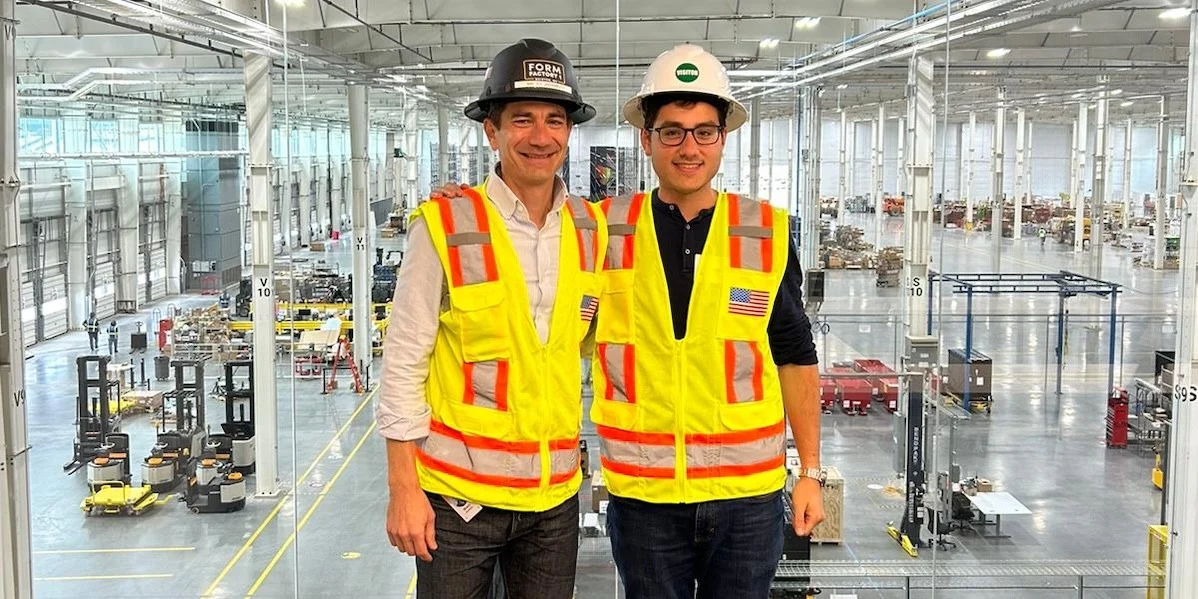
When the investor officially arrived at Sequoia in mid-2023, Mateo Jaramillo was one of the very first calls made. By that point, the company was breaking ground on its first high-volume battery manufacturing facility, strategically situated on the site of a shuttered steel mill in West Virginia. A factory visit in July 2024 alongside partner Isaiah Boone left the visiting executives thoroughly astounded. In an era when numerous companies approach venture firms discussing the grand theme of reindustrializing America, Form Energy was actively and successfully executing it, creating more than 400 new manufacturing jobs along the way. Given that China currently serves as the undisputed epicenter of global battery manufacturing, the prospect of building a United States national battery champion—starting with a fundamentally new technology in an area where American innovation traditionally excels—provided an immense surge of energy and conviction.
The following year, however, the enterprise faced the grueling trial by fire colloquially known in industrial circles as "production hell." This exact gauntlet had previously been run by industrial pioneers like Tesla and SpaceX before them. The reality of reindustrializing the nation dictates that such monumental achievements do not happen overnight and are remarkably far from easy. Yet, companies that survive and conquer this crucible invariably emerge far sturdier and stronger. To the immense credit of Jaramillo and his entire team, they chose to double down on their vision. By that time, Jaramillo had relocated his entire family from San Francisco to Western Pennsylvania, establishing a residence only a short drive from the manufacturing plant. Having previously experienced the harrowing scaling process firsthand at Tesla, the CEO understood precisely what was required: to live it, sleep it, and breathe it until the company successfully pulled through.
And pull through they did. The definitive turning point arrived when the company secured the monumental commercial order that industry observers always knew would eventually materialize: a massive hyperscale project with a major technology player. Nine years into its corporate lifecycle, Form Energy had accomplished the exact mission it set out to achieve by engineering battery systems capable of directly competing with fossil-fuel-powered gas generation. Along the way, external macroeconomics and technological shifts provided an unexpected tailwind. The explosive rise of artificial intelligence created an enormous catalyst across global power markets, suddenly transforming the rebuilding of the electrical grid from a helpful "nice to have" into an absolute "need to have." For a firm that had spent years cultivating deep, trusting relationships with utility providers and regulatory bodies, Form Energy found itself positioned perfectly to serve the unprecedented, emergent power demands driven by the artificial intelligence boom.
Capitalizing on this momentum, Isaiah Boone and his colleague flew back to West Virginia exactly two years after their initial visit, carrying a clear and focused agenda: to convince Mateo Jaramillo to formally partner with Sequoia. Even though the company had already successfully closed its Series G funding round, the investors skillfully persuaded leadership to allow Sequoia to come on board. The initial proposal centered on a $50 million investment. However, when Jaramillo delivered his presentation before the broader Sequoia partnership, the executives were so overwhelmingly impressed by his absolute clarity of vision and his substantive, execution-oriented mindset that they enthusiastically upsized the commitment to $100 million.
Reflecting the sentiment expressed in the investor’s very first internal note to Sequoia in 2023 regarding Form Energy, this enterprise mirrors legendary innovators like SpaceX or Nvidia—ventures where it can notoriously take a decade just to get off the ground, but once operational, unlock a staggering market opportunity. Form Energy is currently addressing a massive terawatt-scale market. The historic opportunity to scale up from a handful of initial pilot projects toward completely transforming the United States electrical grid is now immense. Furthermore, this transformation is no longer optional; it is an urgent imperative that the nation must fulfill if artificial intelligence and modern technological infrastructure are to achieve their long-term potential.


Comments (0)