


Conventional measures of economic growth frequently omit some of the largest gains in living standards, leading analysts to systematically underestimate long-term economic progress. That insight, famously championed by Nobel laureate William Nordhaus, serves as a crucial lens through which to view a recent viral debate dominating economic commentary.
In 1906, Upton Sinclair went undercover in Chicago’s meatpacking plants to expose the brutal realities of poverty depicted in his classic novel The Jungle. His reporting detailed families living in overcrowded squalor, children working in hazardous factories, and injured workers discarded by industrial capitalism with no safety net.

More than a century later, a modern digital equivalent has emerged. Asset manager Michael W. Green recently published a thesis claiming that American families making less than $140,000 are living in poverty. The study quickly went viral, prompting widespread incredulity across financial and economic circles. Under Green’s logic, roughly two-thirds of all American households would qualify for food stamps.
Unlike Sinclair, however, Green did not spend time embedded with the families he purports to champion. Had he done so, observers suggest, he might have recognized that his spreadsheets were steering him away from reality.
Economists who specialize in interpreting long-term data have been virtually unanimous in their rejection of Green’s viral thesis. Scott Winship characterized the study as the worst poverty analysis he had ever encountered. Tyler Cowen concluded that the research is fundamentally flawed, noting that its underlying concepts, details, and use of evidence are all misguided. Jeremy Horpedahl echoed those sentiments, calling the idea of using a $140,000 threshold as a poverty measure completely ridiculous, while Noah Smith argued that Green completely mismanaged his numbers and arrived at conclusions that are fundamentally unserious.
While Green has attempted to defend portions of his work, observers note that one hardly needs advanced credentials in economics to recognize the absurdity of the claim. After all, it defies common sense to suggest that a household earning $139,000 a year is experiencing true economic deprivation or food insecurity.
To be fair, Green’s argumentation is more nuanced than a simple headline figure. He frequently cites metrics like MIT’s "cost of thriving" index, which attempts to estimate how long a median male earner must work to support a household compared to previous decades. According to such models, it supposedly took fewer weeks of earnings to secure a comfortable life in 1985 than it does today.
Yet long-term observers of American consumer life point out a glaring flaw in that comparison. Virtually everything a consumer buys today—from automobiles and household appliances to power tools, electronics, and entertainment—is vastly superior in quality compared to what was available decades ago. In nearly all cases, these goods are also cheaper when adjusted for quality improvements.
Even housing and healthcare have undergone profound structural evolutions that simple inflation metrics fail to capture. As Cowen observed, while nominal housing costs have risen, Americans today enjoy more living space on average than at any point in history, alongside smaller household sizes.
The trend in healthcare is even more striking. Rather than experiencing pure inflation, the overall trajectory of modern medicine has been deflationary when measured by outcomes. In economic terms, the cost of buying an extra expected year of life has steadily declined. Modern healthcare provides life-saving interventions that were entirely unavailable in past decades, making a direct cost comparison misleading. Consumers today would universally prefer modern medical care at current prices over historical care at historical prices.
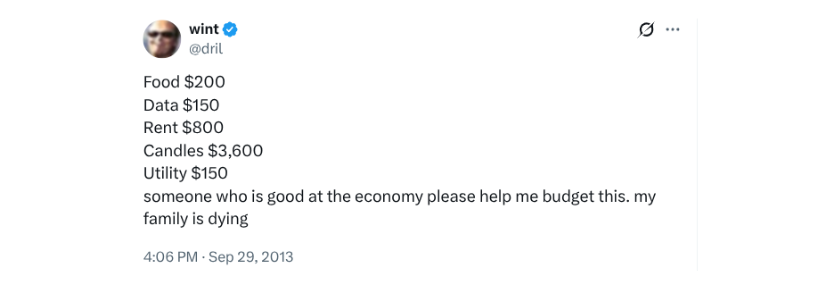
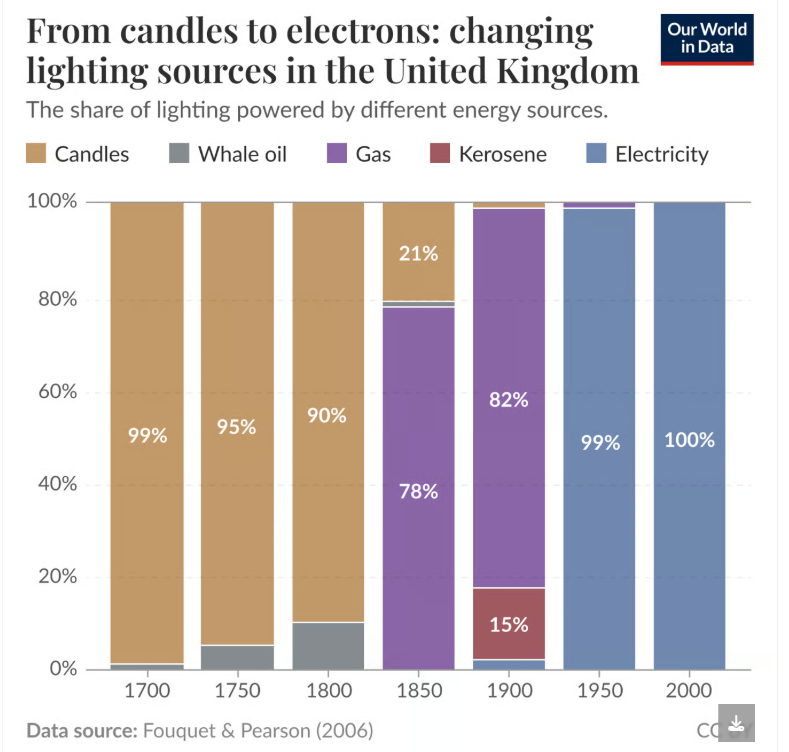
This disconnect highlights a persistent blind spot in official economic statistics: they frequently fail to capture massive improvements in what a single dollar actually purchases. William Nordhaus demonstrated this phenomenon systematically by analyzing the historical cost of lighting. By tracking the cost of lumen-hours across technological transitions from candles and kerosene to electric incandescent and LED bulbs, Nordhaus revealed how ignoring quality changes drastically distorts historical assessments of economic progress.
In 1800, providing three hours of room lighting required roughly three hours of manual labor. Today, that same illumination requires only a fraction of a second of work—representing a roughly 43,000-fold improvement in efficiency that standard economic indicators routinely miss. Because rapid technological advancements are never fully reflected in gross domestic product statistics, society chronically underappreciates how dramatically living standards have risen.
Failing to account for these quality adjustments leads to absurd conclusions about the cost of living. A household forced to rely entirely on 19th-century lighting technology at historical costs would indeed find itself impoverished, with no financial resources remaining for modern housing, healthcare, or digital communication.
Critics argue that Green commits a similar statistical error by evaluating modern spending habits without accounting for the exponential leap in value consumers receive in return. As Cowen concluded, high prices in many sectors are primarily a reflection of high demand, which can only occur because a vastly larger share of the population can actually afford to participate in the market.
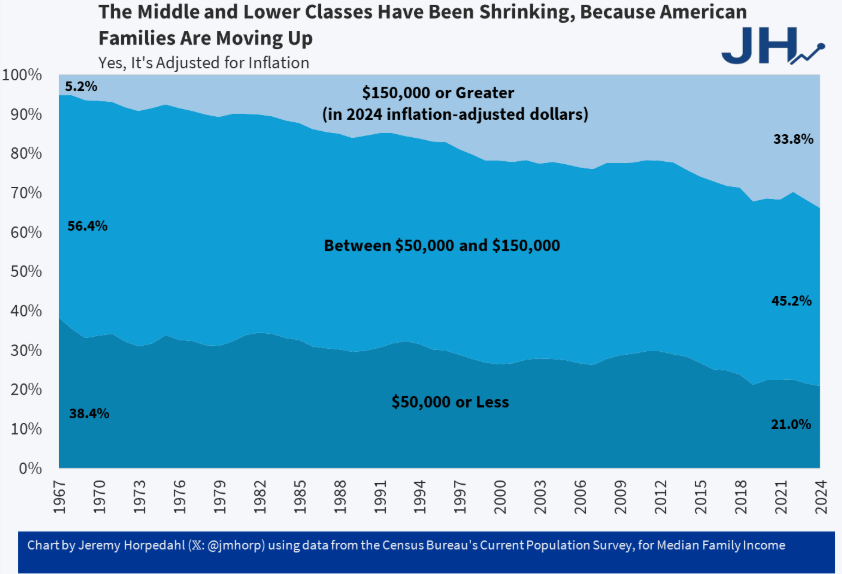
Broader macroeconomic charts reinforce the reality of rising American prosperity. Data tracking the distribution of wealth and income shows that the American middle class has indeed evolved, but largely because the upper class has expanded significantly. In 1967, just over 5% of American families earned more than $150,000 in inflation-adjusted terms. Today, nearly 34% of families cross that threshold.
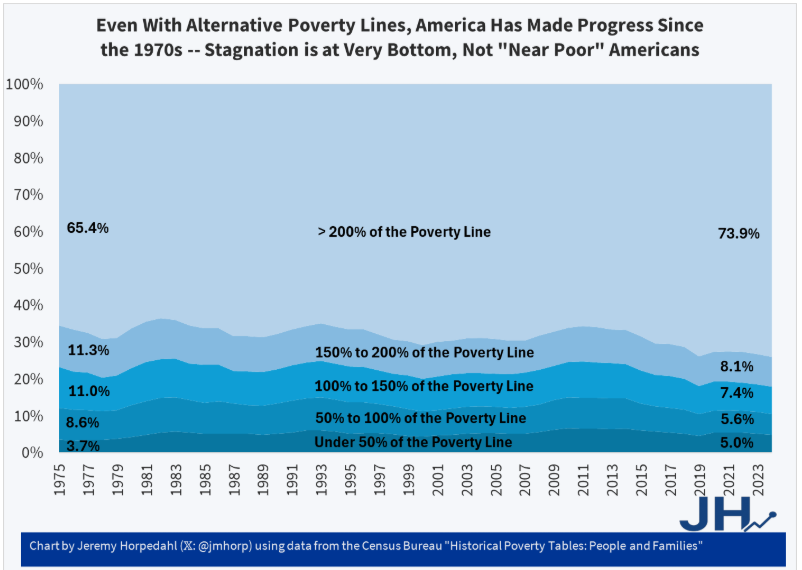
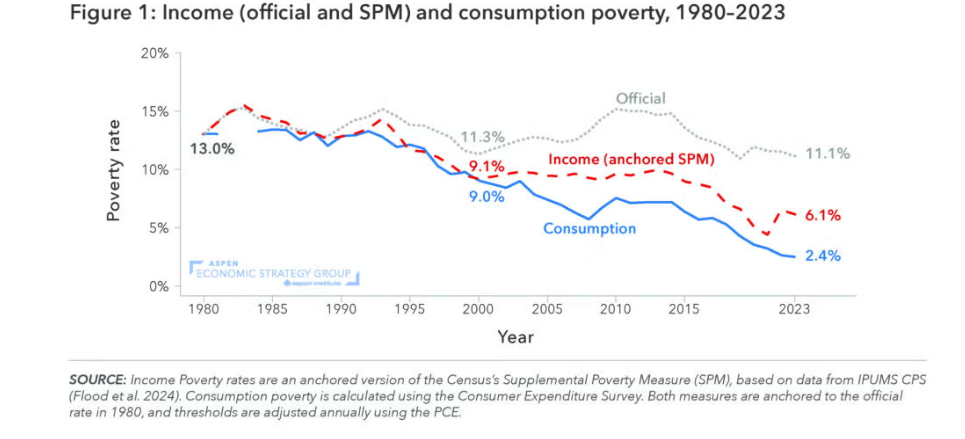
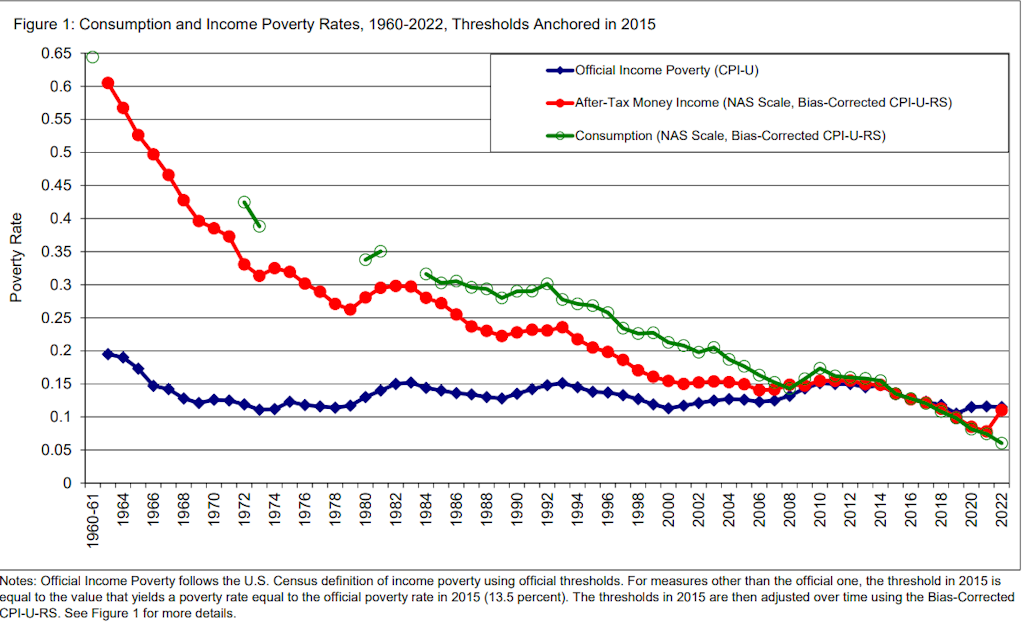
Upward mobility remains clearly visible across multiple metrics. The percentage of Americans living in households with incomes exceeding 200 percent of the federal poverty line has risen notably over the past several decades. Furthermore, independent research from organizations like the Economic Strategy Group demonstrates that poverty rates have fallen by roughly half using traditional income-based measures, and by more than 80 percent when evaluated through consumption-based tracking.
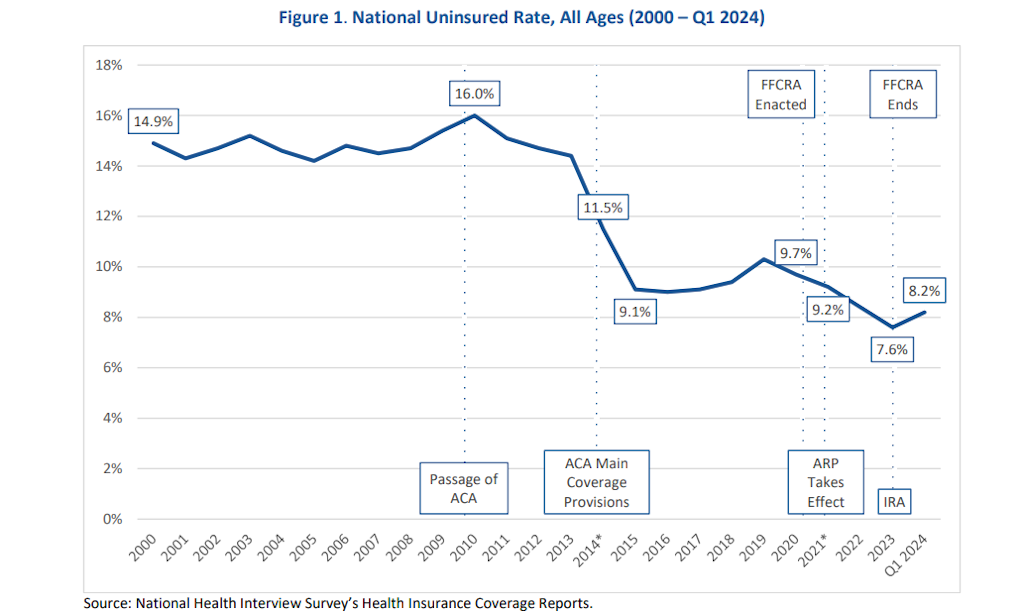
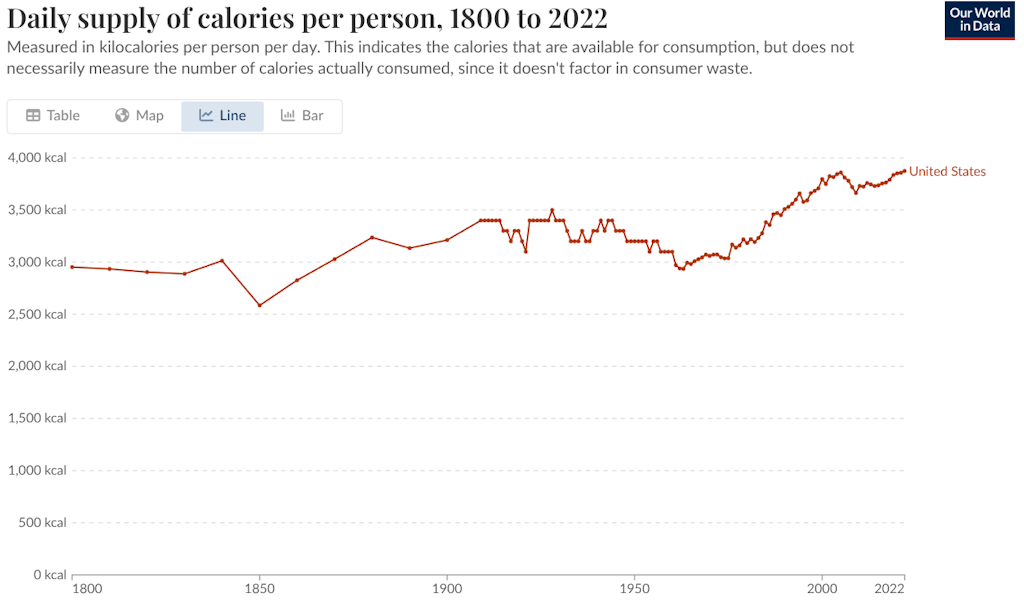
Studies examining consumption poverty and after-tax resources reveal that official consumer price index metrics consistently fail to capture decades of material progress. Daily caloric consumption among Americans has risen, reflecting an abundant food supply, while the percentage of uninsured individuals has dropped substantially compared to prior decades.
Historical comparisons further illustrate the point. Candles were once such an expensive luxury that individuals routinely risked their lives on treacherous whaling voyages to secure fuel for illumination. In the fourteenth century, the equivalent of thousands of dollars was required to purchase the amount of light emitted by a single household light bulb running continuously for two months. Today, the time-price of light has collapsed from hours of grueling manual labor to a fraction of a second.
Ultimately, while debates over cost-of-living indices will undoubtedly continue, comprehensive economic data indicates that modern living standards have reached unprecedented heights, rendering claims of widespread, six-figure poverty statistically detached from reality.





Comments (0)