



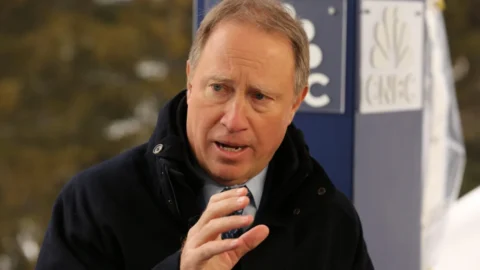
Speaking on CNBC’s "ETF Edge," Beer pointed to the lackluster performance of fixed income over an extended period to underscore his thesis. Bonds have effectively been stagnant or declining for an entire decade, failing to deliver the reliable ballast investors historically expect from the asset class. Because of this dynamic, Beer gravitated toward managed futures, a tactical strategy designed to remain nimble when traditional portfolios are weighed down by rigid asset allocation models.
Beer contends that the managed futures strategy—which was historically restricted to exclusive hedge fund clients—can serve as a far more effective counterweight to equities during periods of heightened market volatility. Volatility has steadily climbed recently, driven by growing anxieties surrounding national debt burdens and the massive capital flows and sentiment shifts tied to the artificial intelligence trade.
The primary advantage of managed futures, according to Beer, lies in their structural flexibility. Unlike traditional long-only assets, managed futures exchange-traded funds possess the unique ability to go both long and short across global markets. This dynamic positioning allows the strategy to anticipate and position early against turbulent market events, shielding portfolios from sudden downturns. Investors seeking genuine protection want an asset class that exhibits a low correlation to both stocks and bonds while demonstrating an ability to thrive during broader economic crises. Finding a hedge fund strategy better suited to accomplish that specific mandate is exceptionally difficult, Beer noted.
Beer helps manage the iMGP DBi Managed Futures Strategy ETF, known by the ticker DBMF. The fund is structured to replicate the performance of leading managed futures hedge funds, packaging those complex, historically opaque strategies inside a low-cost, liquid exchange-traded fund format accessible to everyday market participants. As of Thursday’s market close, DBMF was up nearly 19% for the year, according to data from FactSet, highlighting the strategy’s ability to capitalize on prevailing market trends.

The surge in alternative strategies comes as long-standing portfolio models face profound structural questions. There is an existential crisis right now in strategic asset allocation and the model portfolio world, Beer remarked, challenging the foundational premise of the traditional 60/40 approach. While expressing a general affinity for fixed income instruments, Beer emphasized that he is unwilling to commit a rigid 40% allocation to an asset class that is failing to pull its weight and meaningfully contribute to the broader performance of the portfolio.
Despite the compelling performance of managed futures and the criticisms leveled against traditional fixed income, other market participants urge caution against completely abandoning bonds. Nate Geraci, president of NovaDius Wealth Management, argued during the same interview that fixed income still retains an essential role to play in modern portfolio diversification, even if navigating the asset class has become extraordinarily difficult.
Geraci described fixed income as arguably the most challenging area in investing right now, but he views alternative strategies like managed futures as a complementary sleeve within a well-diversified portfolio that must still incorporate both stocks and bonds. He cautioned against simply giving up on the bond side of the equation, emphasizing that investors need to thoroughly understand how alternative investment strategies interact with every other component of their overall holdings.
While these specialized funds have a proven capacity to outperform during periods of acute market stress and macroeconomic uncertainty, they are not immune to cyclical drawdowns. Like any sophisticated investment strategy, managed futures ETFs can experience extended periods of underperformance when market trends fail to establish clear directions or when sharp reversals catch trend-following models off guard.
Navigating these strategies successfully requires patience and a long-term perspective. Investors must allow the strategy to work out over the long term, according to Geraci, who is also a co-founder of the ETF Institute. From his perspective, successful portfolio management always comes down to achieving the right balance through thoughtful and deliberate diversification.




Comments (0)