


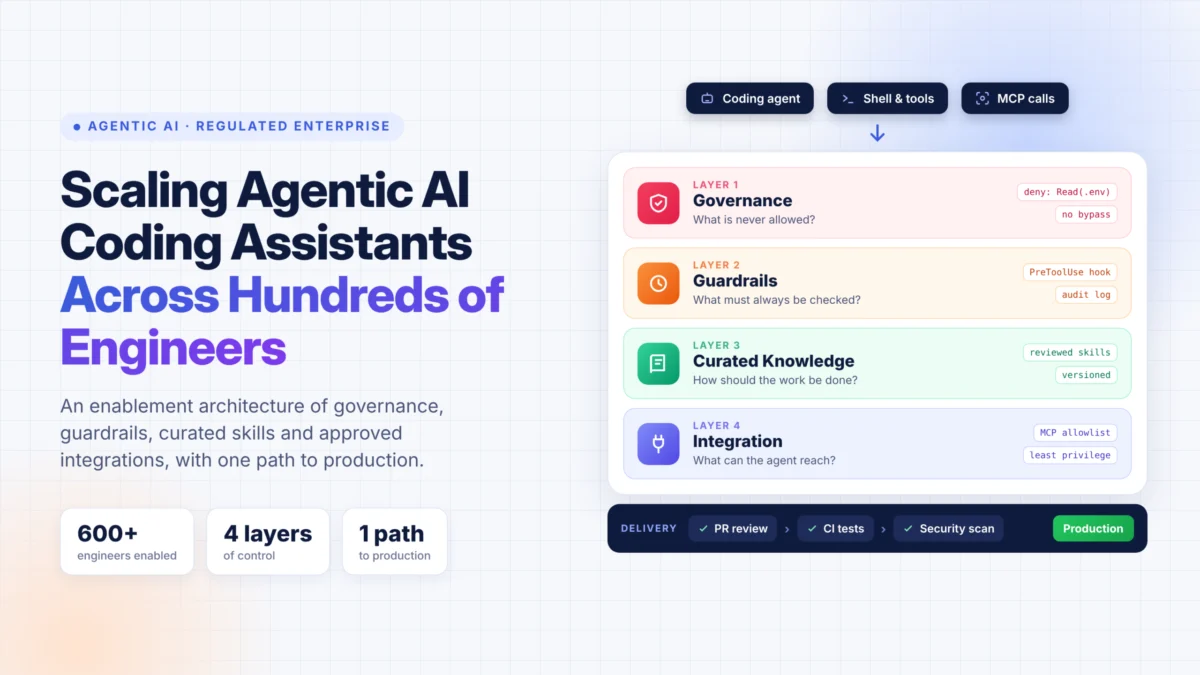
The rapid integration of artificial intelligence into software development has shifted from a novel experiment to an industry norm. However, while simple autocomplete tools are now ubiquitous, organizations operating in highly regulated sectors face a complex dilemma when deploying advanced agentic coding assistants. Unlike passive suggestion tools, modern coding agents can independently modify files, execute shell commands, and interact with external systems. For regulated financial-services organizations, this expanded capability transforms the risk profile, presenting profound challenges for security, auditing, and compliance teams.
Drawing from extensive leadership experience managing agentic AI automation programs and supporting more than 600 engineers at a major financial institution, technology leaders are rethinking how these tools are deployed. Rather than allowing individual teams to implement fragmented workflows or attempting to impose restrictive bans after adoption stalls, enterprises are increasingly treating agentic AI as a managed internal platform governed by a robust, multi-layered architecture.
The Gap Between Assistants and Autonomous Agents
Industry surveys underscore the widening gap between passive AI adoption and active agent utilization. Recent data from the DevOps Research and Assessment (DORA) program indicates that approximately 90% of surveyed technology professionals use AI, yet about 30% maintain little or no trust in the code it produces. Similarly, developer surveys reveal that while an overwhelming majority of developers use or plan to use AI tools, only a small fraction rely on AI agents daily.
This hesitation stems directly from the shift in autonomy. An AI suggestion remains inert until a human developer explicitly reviews and accepts it. An agent, by contrast, can autonomously execute a database migration script, push a code branch to a remote repository, or call an internal application programming interface. In heavily regulated industries such as banking, this operational difference triggers rigorous scrutiny from security and model-risk departments. When engineers are left to utilize default settings without coordinated oversight, local prompt variations multiply, and governance teams often resort to late-stage restrictions that inadvertently erode developer trust.
Defining the Control Environment
To establish a secure operational baseline, organizations must understand the underlying technical nature of agentic coding systems. Drawing on architectural guidance from AI safety frameworks, an agent is defined as a system where the underlying model directs its own processes and tool utilization, operating independently rather than adhering to a rigid, predetermined code path. These coding agents frequently connect to external environments through the Model Context Protocol, an open standard utilizing JSON-RPC where designated servers expose tools, resources, and contextual prompts.
Because the protocol explicitly notes that exposed tools represent arbitrary code execution—and that host applications must obtain explicit user consent before invoking them—enterprises require a structured framework to manage these interactions. Effective control mechanisms generally rely on four distinct categories: central policies, deterministic checks, packaged know-how, and tool reach boundaries. Central policies dictate organization-wide prohibitions through managed settings, while deterministic checks utilize pre- and post-action hooks to verify required conditions. Packaged know-how standardizes routine tasks via reviewed instruction files or skills, and tool reach restrictions govern the specific systems and integrations an agent is permitted to touch.
Analyzing Regulatory and Operational Hurdles
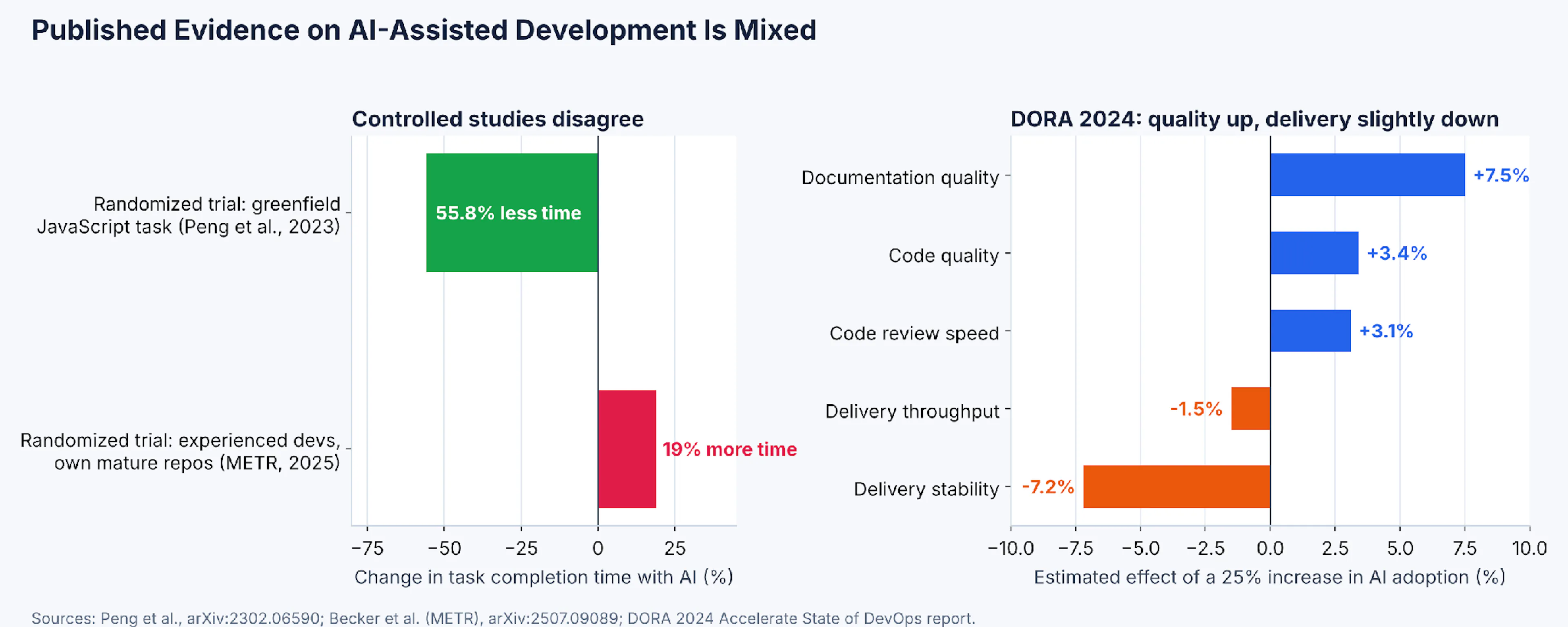
Deploying agentic coding assistants within a highly regulated enterprise introduces four primary obstacles. First, the tension between developer velocity and security compliance often creates friction, as security teams demand tight oversight while engineers seek unhindered experimentation. Second, published evidence regarding AI-assisted development remains mixed. While some randomized trials point toward efficiency gains in specific task completion times, broader industry metrics, including annual DORA findings, suggest that accelerated adoption does not automatically translate to improved delivery stability or throughput without proper controls.
Third, agents introduce significant security vulnerabilities if left unmonitored. Software supply chain risks, insecure generated code, and the ever-present threat of indirect prompt injection require rigorous mitigation strategies. Finally, maintaining organizational alignment across hundreds of engineers demands scalable enablement models that move beyond abstract tool demonstrations and focus on automating concrete, recurring manual workflows.
A Layered Enablement Architecture
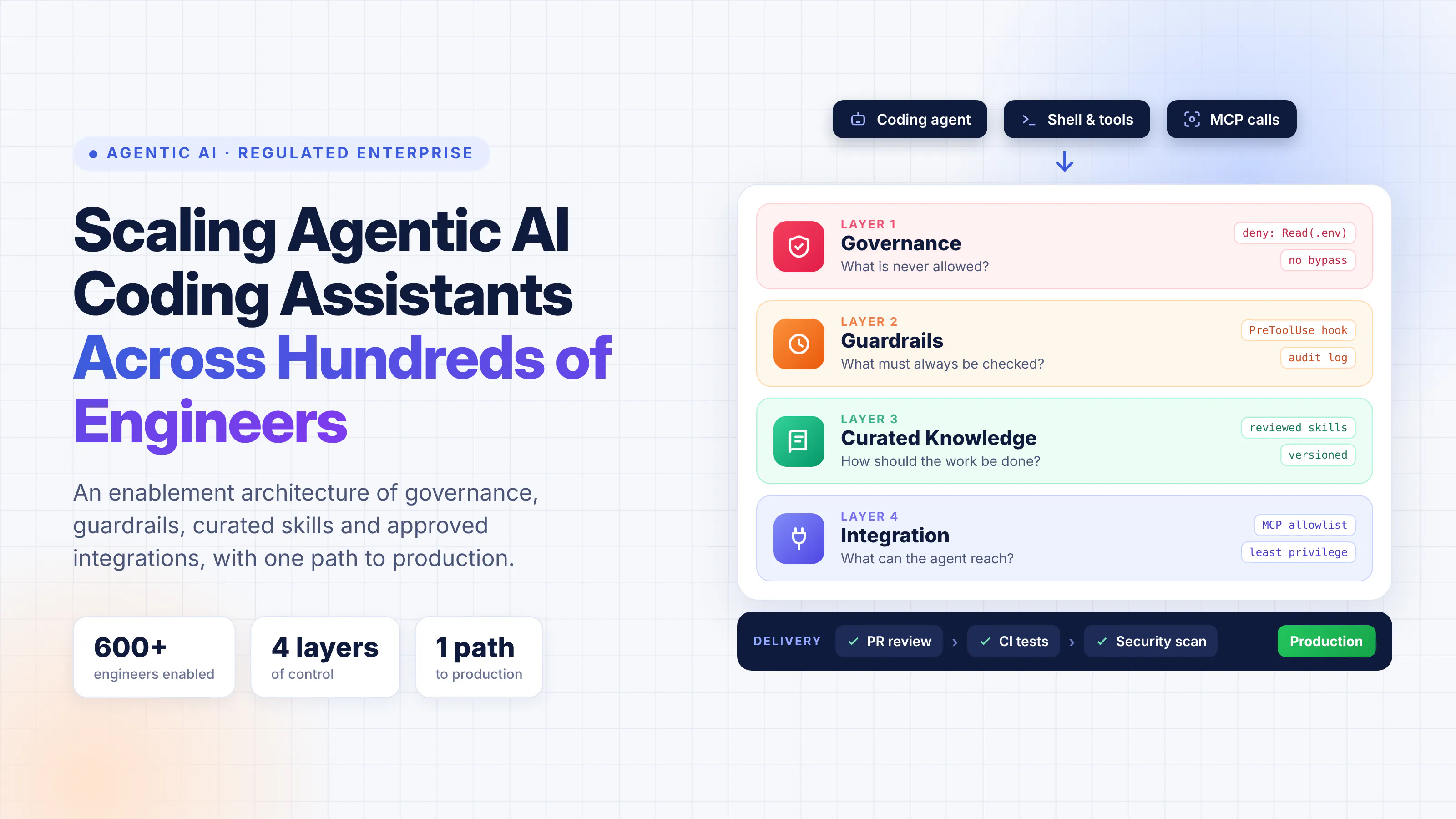
To address these challenges safely, organizations can implement a comprehensive four-layer enablement architecture where different internal groups own specific aspects of the control spectrum.
The first layer focuses on central governance, defining actions that are strictly prohibited. Organization-managed settings take precedence over individual user or repository configurations, operating on a deny-first principle where competing rules default to restriction. Non-negotiable restrictions typically include forbidding read access to sensitive credential files, disabling permission bypass modes, and requiring explicit human approval for code pushes.
The second layer implements deterministic guardrails designed to verify critical conditions continuously. Rather than relying solely on static prompts, engineering teams deploy hooks that execute deterministically during specific lifecycle events, such as immediately prior to a tool call. These guardrails handle automated secret detection, block unauthorized command patterns, and maintain comprehensive audit logs of every agent action.
The third layer encapsulates curated knowledge to guide how work is properly executed within the enterprise. Institutional knowledge is packaged into repeatable skills—such as standard migration procedures, test-scaffolding templates, or release checklists—stored as reviewed instruction files that load dynamically only when contextually relevant.
The fourth layer governs integration reach by controlling which external systems and internal APIs the agent can access. By enforcing strict allowlists for approved Model Context Protocol servers, organizations maintain the minimum necessary privileges recommended by security standards. Underlying all four layers is the traditional software delivery pipeline—encompassing pull-request reviews, automated continuous integration tests, and security scanning. Agents are never granted a privileged, separate path to production.
Implementing Controls in Production
Operationalizing this architecture requires translating high-level policy into concrete technical configurations. The governance layer can be enforced through managed settings files distributed centrally across engineering environments. For example, permission blocks can explicitly deny read access to environment and secret directories, restrict outbound network utilities like curl from the shell, and mandate interactive confirmation for git push commands. Disabling permission bypass modes ensures that users cannot inadvertently or intentionally circumvent security prompts.
Guardrails operate as testable scripts registered to lifecycle hooks. When an agent attempts to execute a shell command, a pre-tool-use hook intercepts the payload as JavaScript Object Notation, inspecting the pending instruction against established security patterns. If a restricted pattern—such as production database identifiers or destructive query structures—is detected, the script terminates with an exit code that blocks the call and returns a descriptive policy rejection to the agent. Because these hooks function as standard, version-controlled software components, internal audit teams can easily review, test, and verify their operational integrity.
Similarly, curated skills transform recurring manual tasks into standardized, reviewed procedures. Stored in shared repositories and versioned like standard code, these skills provide precise instructions for tasks such as generating consumer contract tests for REST endpoints, ensuring that agents adhere strictly to organizational naming conventions and template structures without modifying production code haphazardly.
Progression, Measurement, and Scalability
Deploying advanced AI assistants across an enterprise requires a structured progression rather than passive distribution. Scalable adoption typically moves through three distinct phases. First, engineers familiarize themselves with the operational boundaries, capabilities, and security controls of the agentic tools. Second, teams apply curated skills to real-world tasks within their local domains. Finally, engineers contribute new skills back to the shared repository, transitioning the enablement program into a self-sustaining initiative driven by practitioners closest to the actual workflows.
Measuring the success of these deployments requires rigorous cohort comparisons rather than reliance on subjective, self-reported developer surveys. Effective measurement tracks adopting teams against non-adopting cohorts over identical timeframes, evaluating lead times, change-failure rates, pull-request review rework, team sentiment, and guardrail block rates. Because speed gains that coincide with rising change-failure rates do not represent true productivity improvements, organizations must evaluate outcomes through multi-dimensional frameworks that balance throughput with stability.
Security considerations remain paramount throughout the lifecycle. Enterprises must treat autonomous coding agents as distinct operational principals possessing the developer’s underlying privileges. Enforcing the principle of least privilege, keeping production access entirely separate from developer sessions, and treating content retrieved from external issue trackers or web pages as potential prompt injection vectors are vital defensive measures. Mapping these controls to established frameworks, such as the National Institute of Standards and Technology Secure Software Development Framework and its generative AI profiles, ensures that AI-assisted development remains aligned with broader institutional risk management practices.
Operational Excellence and Production Lessons
Maintaining operational excellence involves logging every agent tool call into a centralized store to ensure complete transparency and traceability. Regular analysis of guardrail block rates helps platform teams refine their policies, identifying rules that trigger frequently due to confusing workflows or missing curated skills.
Practical experience from supporting hundreds of enterprise engineers yields several core lessons. Successful AI enablement must begin with well-defined workflows rather than the software tool itself. Demonstrating abstract capabilities builds initial curiosity, but automating a team’s recurring manual tasks provides the practical justification needed for behavioral change. Furthermore, rules governing safety must be embedded directly into code and managed settings rather than relying on prompt-based instructions, and the software delivery pipeline must remain the single, unchanging gateway to production.
As agentic AI capabilities continue to evolve from single-repository edits toward complex, multi-system workflows, the importance of robust integration governance will only increase. By implementing a tiered architecture that balances central governance, deterministic guardrails, curated knowledge, and strict integration controls, large enterprises can successfully harness the productivity benefits of agentic automation while satisfying the stringent demands of internal risk partners and external regulators.





Comments (0)