



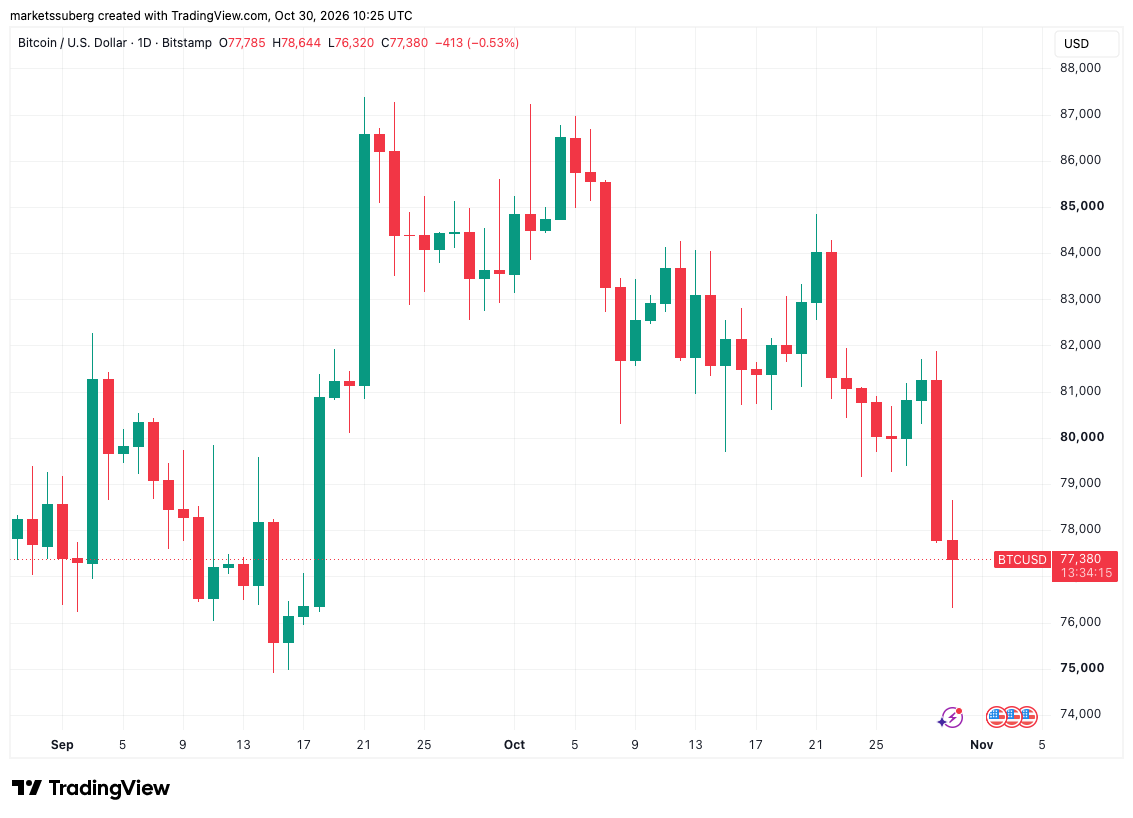
Bitcoin managed to trade back above the $77,000 threshold on Friday, showing signs of resilience after a turbulent week that saw total cryptocurrency market liquidations surpass $1.5 billion over a rolling 24-hour window. The dramatic price swings were triggered by a combination of macroeconomic pressures, a brutal tech-stock sell-off on Wall Street, and the fallout from a massive security breach at Binance, the world’s largest cryptocurrency exchange.
Data compiled by TradingView captured the severity of the market shock, showing the BTC/USD trading pair plummeting to a low of $76,320. The steep downward spiral was heavily exacerbated by news regarding a staggering $6.3 billion exploit targeting Binance. Security analysts and reports have increasingly linked the sophisticated breach to "TraderTraitor," a notorious cybercriminal collective associated with North Korea.

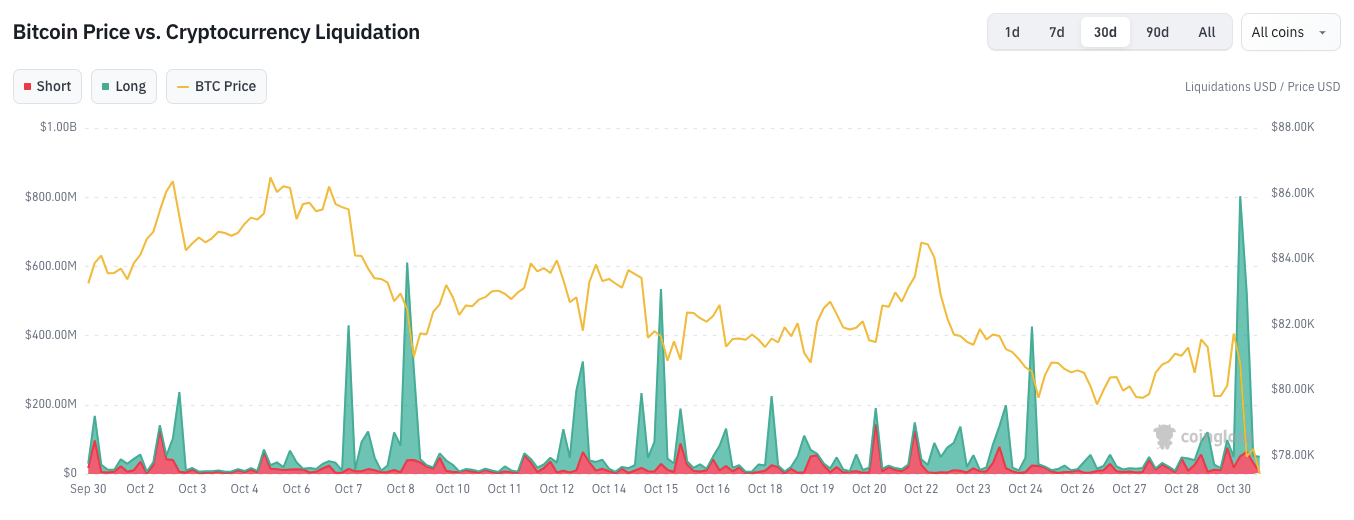
The sudden and violent market downturn caught leveraged traders off guard, unleashing a massive wave of liquidations across the broader digital asset ecosystem. According to metrics provided by CoinGlass, rolling 24-hour liquidations across the industry skyrocketed to an astonishing $1.56 billion. The vast majority of these liquidations comprised long positions, which accounted for $1.31 billion of the total wiped-out capital, illustrating just how heavily bullish traders were positioned prior to the dual shocks of the exchange hack and the macroeconomic equity pullback.
In the wake of the security incident, Binance took to social media platform X to update the public, characterizing the cyberattack as exceptionally "complex." The exchange noted that the perpetrators utilized more than a single security vector during the episode, catching systems off guard. "We are still gathering the facts, and will share more directly as we have them," the company stated in its official communication.
However, downside momentum in the crypto markets notably cooled after leadership at Binance stepped forward to reassure users and investors. The exchange confirmed that all user losses resulting from the hack would be fully covered using its dedicated Secure Asset Fund for Users (SAFU) and other internal company resources. This swift reassurance helped stem the tide of panic, allowing Bitcoin to stabilize and claw its way back above the $77,000 mark by the end of the week.
US Tech-Stock Sell-Off Adds to Crypto Jitters After Binance Hack
The massive cryptocurrency liquidations did not occur in a vacuum; rather, they were compounded significantly by severe macro-financial pressure originating from traditional stock markets. US equity markets tumbled sharply on Thursday following a wave of corporate earnings reports from major technology giants that fell well short of Wall Street expectations, dampening investor risk appetite across all asset classes.
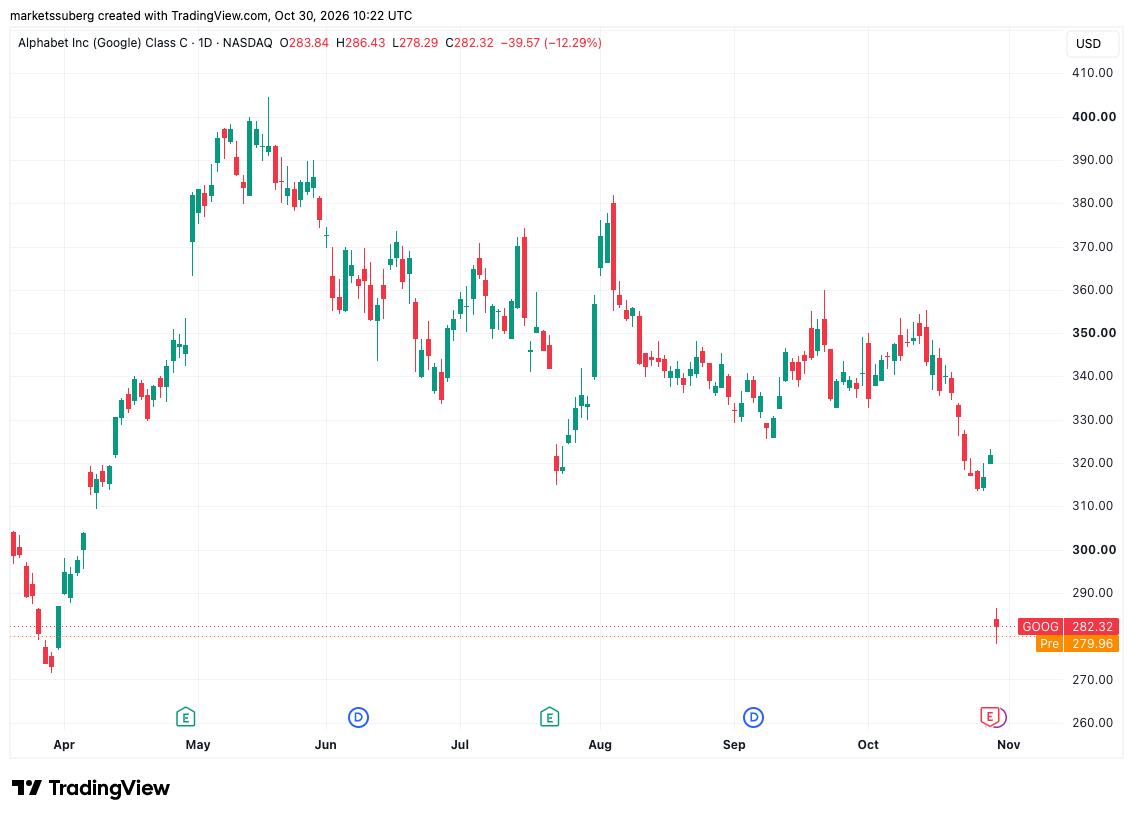
The tech sector turbulence began in earnest when Alphabet, the parent company of Google, missed its quarterly earnings and revenue targets on Wednesday. The disappointing financial disclosures immediately triggered a sharp sell-off in the tech giant’s shares. In the aftermath, GOOGL stock plunged by 13% to settle at $282, marking its lowest valuation level since April. Because cryptocurrencies have increasingly traded in tandem with high-growth technology equities during periods of macro stress, the bleeding in big tech quickly spilled over into digital assets.
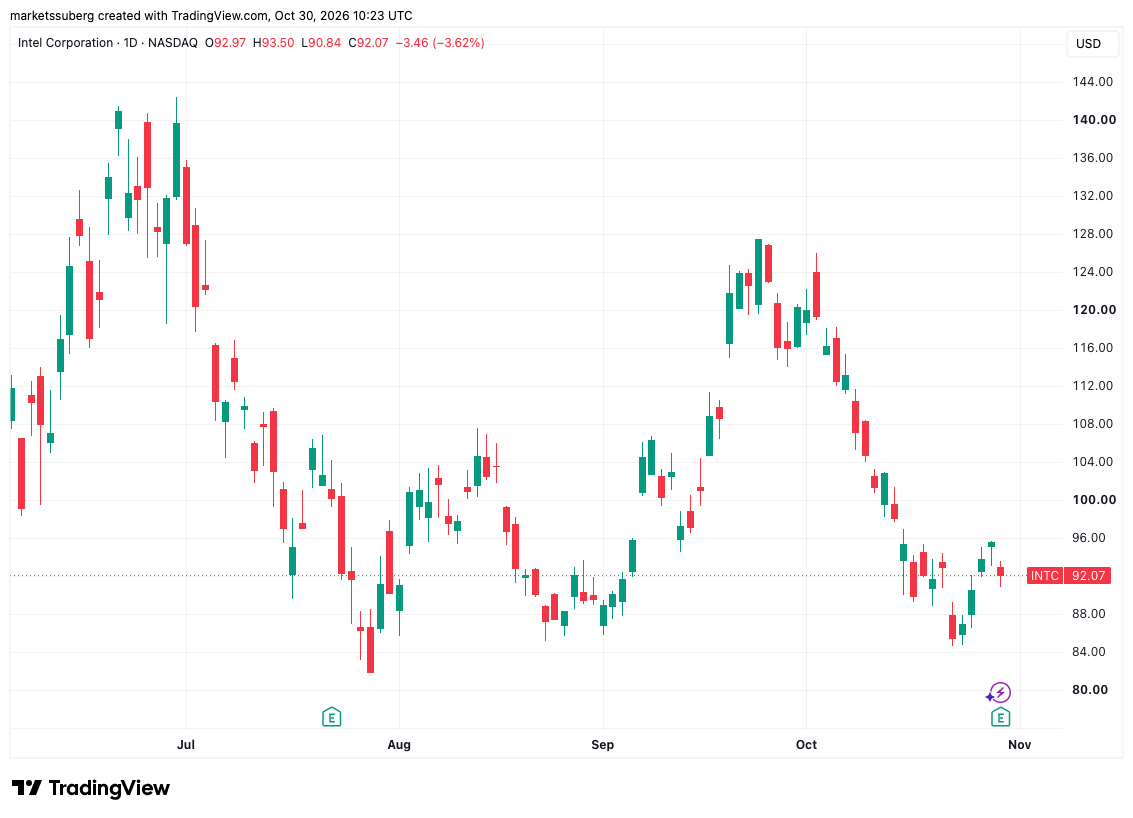
The pressure on the technology sector intensified further heading into the end of the week. Intel shares experienced a devastating 26% plunge in premarket trading on Friday after the semiconductor manufacturing giant issued a significantly weaker-than-expected financial outlook. This sharp decline occurred despite Intel actually beating consensus analyst estimates for its third-quarter revenue and earnings.
However, forward-looking guidance spooked investors, with Intel projecting fourth-quarter sales to land between $15 billion and $16 billion, falling well short of the $17 billion to $18 billion range that analysts had previously projected. The double-whammy of Alphabet’s earnings miss and Intel’s grim guidance created an atmosphere of macroeconomic risk aversion, leaving digital asset markets vulnerable to the cascading effects of the Binance security breach.
BTC Price Bullish Divergence Emerges at Local Lows
Despite the heavy damage inflicted on leveraged positions and the broader market sentiment, technical indicators on lower timeframes suggest that Bitcoin may be establishing a durable local bottom. Market metrics for BTC/USD have retreated to levels not witnessed since late June, when the premier cryptocurrency plunged to multiyear lows near the $57,000 region.
On Thursday, daily price action closed decisively below the lower band of the Bollinger Bands volatility indicator. Market analysts note that this specific technical phenomenon was last observed on June 25. A close below the lower Bollinger Band indicates that the price is trading more than two standard deviations below its 20-day simple moving average (SMA). While Bollinger Bands are tools for measuring volatility rather than direct buy or sell signals, a breach of the lower band frequently implies that a mean reversion—or a corrective bounce back toward the average—is overdue. The 20-day SMA currently hovers around $81,324, providing a medium-term target should the recovery gain traction.
Meanwhile, momentum indicators are also pointing toward a potential exhaustion of selling pressure. The relative strength index (RSI), a widely followed leading indicator designed to gauge price momentum on a 100-point scale, slipped to 34.7 on Friday. This reading represents the lowest level for the indicator since June 30, placing Bitcoin dangerously close to the traditional "oversold" territory defined by a reading below 30.
Zooming into the four-hour timeframe, technical analysts have identified a promising bullish divergence forming between the RSI and the Bitcoin price. Specifically, the RSI printed a higher swing low while the underlying BTC/USD price action registered a lower low. In technical analysis, such bullish divergences are frequently interpreted as a classic warning sign that seller control is beginning to wane, paving the way for a potential trend reversal or a meaningful relief rally on local timeframes as the market absorbs the week’s shocks.





Comments (0)