


The cryptocurrency markets opened the final week of the year experiencing a softer tone, with digital assets pulling back alongside broader global markets. Yet, beneath the surface of cautious macroeconomic sentiment, the decentralized finance sector remains fixated on a high-stakes turf war within the perpetual futures (perps) market. The most prominent catalyst drawing attention across the industry is the long-awaited token generation event (TGE) for Lighter’s LIT token, a milestone that underscores how aggressively platforms are vying for liquidity, volume, and long-term dominance in onchain derivatives trading.

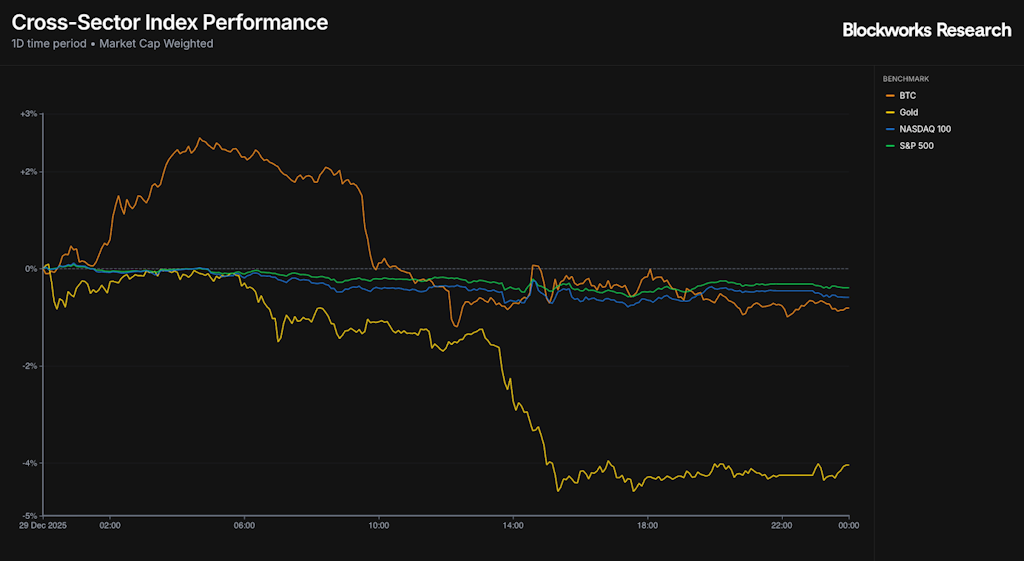
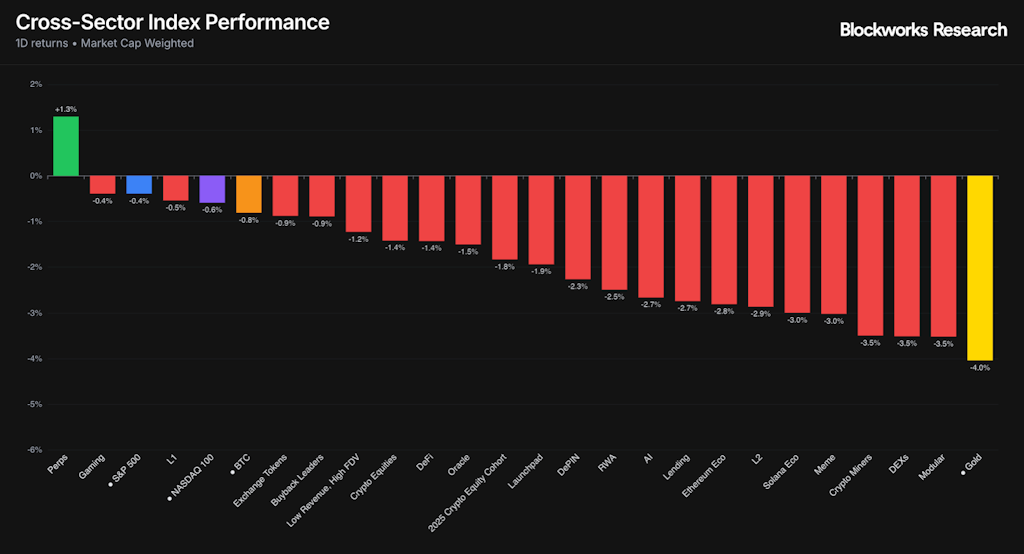
As broader equity and commodity benchmarks experienced modest pullbacks following previous highs—with Bitcoin slipping slightly behind traditional US equity indexes and precious metals seeing a sharp profit-taking selloff—the decentralized perpetuals sector continued to command attention. Perps emerged as one of the few bright spots on the crypto indices, fueled heavily by the anticipation and execution of Lighter’s TGE and strong momentum from competing protocols like Hyperliquid.
The battleground for perpetual futures market share has accelerated dramatically over recent months. Lighter has managed to demonstrate that a business model built on verifiable execution and zero retail fees can successfully capture massive market attention. Over the 30 days leading up to its token launch, Lighter led the perps sector with just over $200 billion in trading volume. Close behind were Aster with $172 billion and Hyperliquid with $161 billion in volume over the same period. Despite this fierce competition for raw volume, industry dynamics reveal a nuanced financial picture. Hyperliquid remains a notable outlier among the top-tier protocols, maintaining its position as the clear revenue leader while operating entirely without active incentive programs. Over the past month, Hyperliquid generated approximately $47 million in revenue.
The central question facing Lighter now that its token is live is whether it can successfully retain its volume lead once the initial wave of points farming and airdrop distribution stabilizes. In a detailed announcement thread released by the team, the project outlined its token structure and airdrop mechanics, emphasizing that the economic value generated by all Lighter products and services will fully accrue to LIT holders, while the underlying labs entity operates strictly at cost. The token distribution plan splits supply evenly, allocating 50% to the broader ecosystem and the remaining 50% to the core team and early investors. Notably, 25% of the total supply was designated for airdrops to active points holders from Seasons 1 and 2.
At the time of its market debut, LIT began trading with a circulating market capitalization of $695 million and a fully diluted valuation (FDV) of $2.8 billion. According to data tracked by DeFiLlama, the protocol generated approximately $8.76 million in revenue over the prior 30 days, translating to an annualized revenue run rate of roughly $105 million. These figures place LIT at a price-to-sales multiple of approximately 7x and an FDV-to-sales multiple of around 27x, setting a high baseline for market expectations as public trading commences.
Market Update and the Rise of Onchain Interest Rate Swaps
While market observers remain intensely focused on the direct competition between leading perpetual exchanges like Hyperliquid and Lighter, some analysts argue that the most compelling indirect beneficiary of this structural growth is quietly developing elsewhere in the DeFi ecosystem. Pendle, through the protocol’s expansion into interest rate derivatives via Boros, stands to capture significant upside from the maturation and broader adoption of perpetual futures, regardless of whether liquidity ultimately consolidates on centralized or decentralized rails.
Pendle introduced Boros to the decentralized finance landscape, bringing a novel onchain financial primitive to the market: interest rate swaps. Functionally, Boros operates similarly to a perpetual exchange, but with two fundamental distinctions. Instead of speculating on the direct price movements of underlying assets, participants trade and speculate on fluctuations in yield. Furthermore, while traditional perpetual futures maintain no expiration date, Boros markets operate around specific maturity dates.
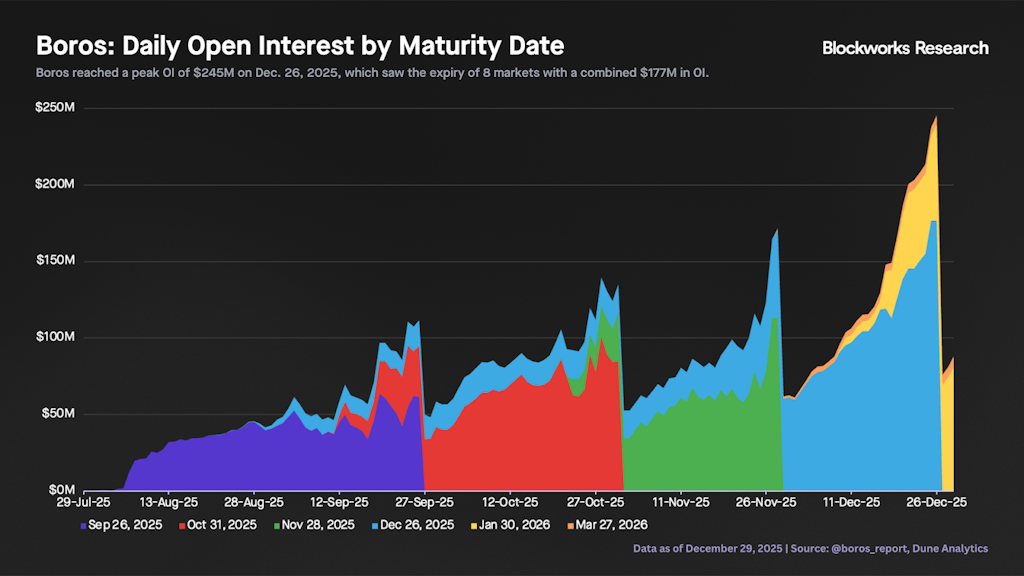
Although Boros has experienced a gradual, phased rollout, early market adoption has demonstrated robust traction. Daily open interest by maturity has shown significant cyclicality, mirroring the structural behavior of Pendle v2 markets where activity naturally ebbs and flows around the maturities and redemptions inherent to yield-bearing products. The underlying mechanics of Boros revolve around the creation of a Yield Unit, a concept familiar to users of Pendle v2’s Yield Tokens. The Yield Unit represents the future yield generated by an underlying asset up until its designated maturity, allowing traders to take directional long or short positions on that yield.
Rates on Boros settle periodically, aligning precisely with the funding rate settlement schedules of the respective underlying exchanges. For instance, funding rates for Binance pools settle every eight hours, and Boros mirrors this exact schedule. Similarly, funding rates for Hyperliquid pools settle on an hourly basis, and Boros replicates that hourly frequency for its corresponding pools. At maturity, or when a position is closed out early, a long position realizes a profit if the average underlying annual percentage rate exceeds the average implied annual percentage rate recorded at the time of entry, with the inverse holding true for short positions.
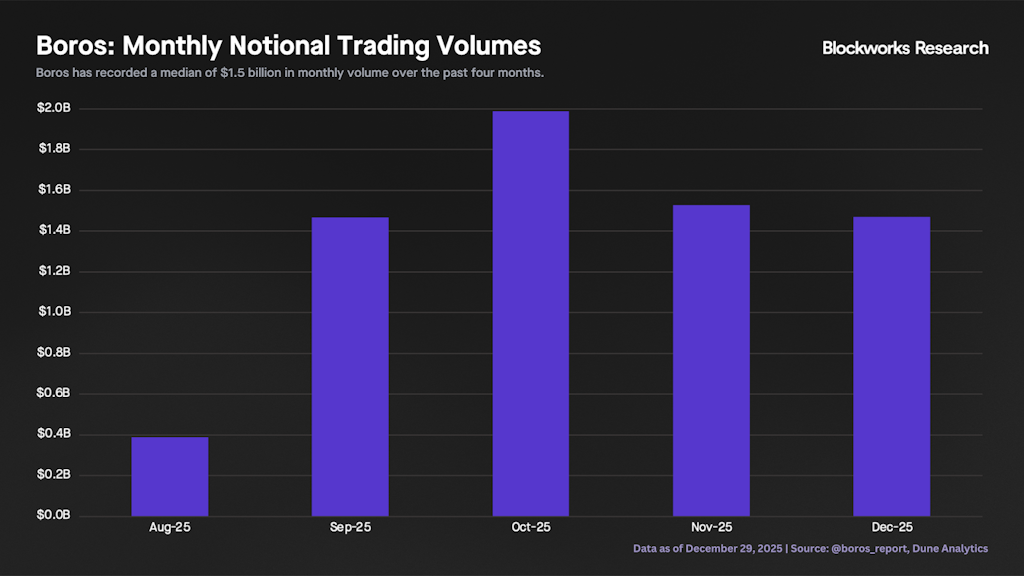
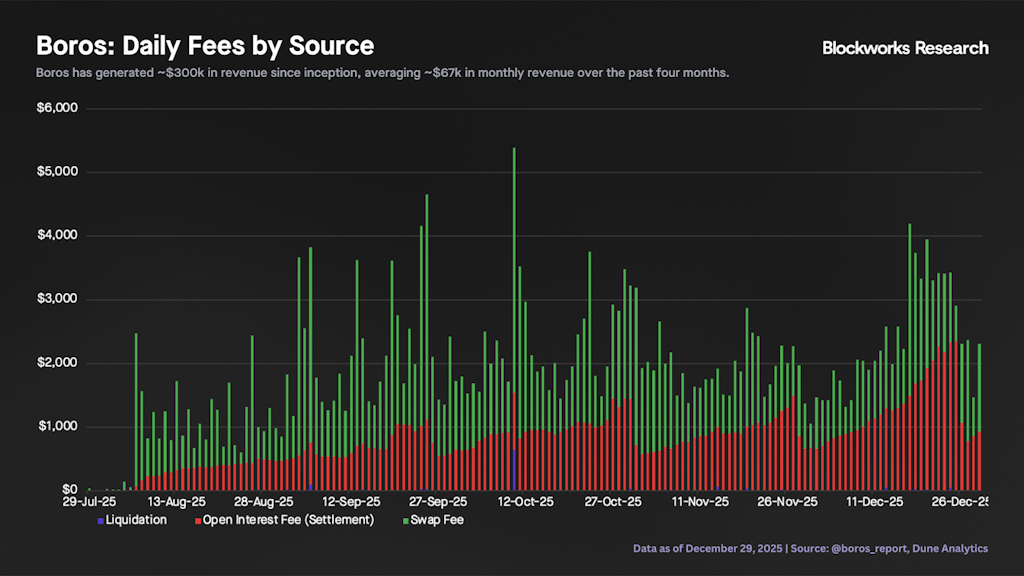
Alongside open interest, cumulative notional trading volume serves as a critical indicator of Boros’s growth trajectory, having processed billions in volume since its inception. The platform relies primarily on two core fee mechanisms to generate protocol revenue: a flat fee added to the implied annual percentage rate for every swap, which varies by market, and a flat fee calculated as a percentage of the fixed annual percentage rate side of every Yield Unit during settlement. Swap fees correlate directly with trading activity, while settlement fees track the cyclical fluctuations of the platform’s open interest.
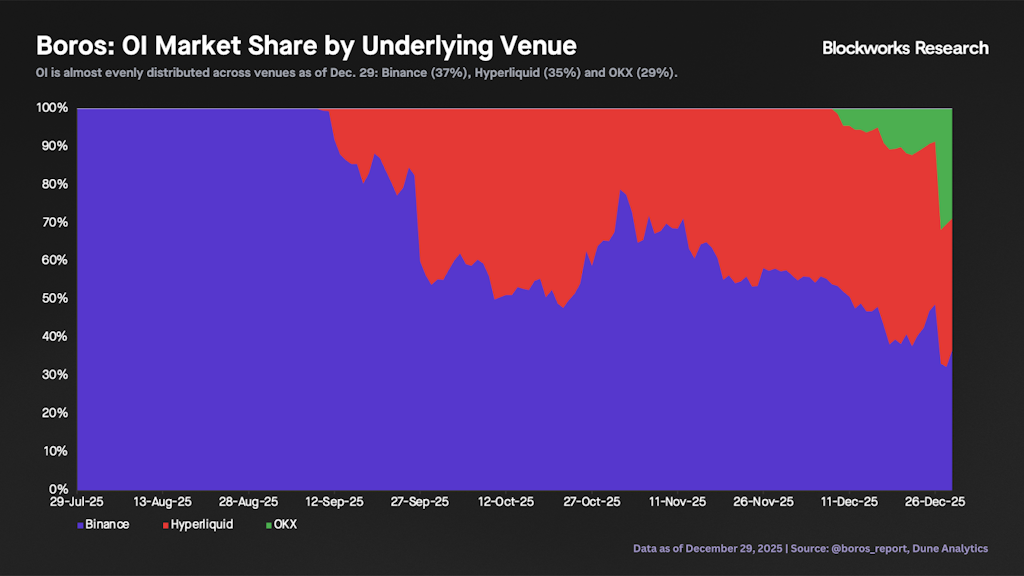
While the long-term vision for Boros is to establish itself as the default interest rate derivatives venue across decentralized finance—extending far beyond funding rates to encompass stablecoin yields, money market rates, and liquid staking token yields—its most immediate growth opportunity lies squarely within the perpetuals vertical. Initially launched with only basic Bitcoin and Ethereum perpetual markets tied to a single exchange, Boros has progressively expanded its reach to additional major trading venues and alternative assets.
This multi-venue, multi-asset architecture provides Boros with a distinct structural advantage. Rather than being tied to the fortunes or operational health of any single exchange, the platform benefits organically from the overall maturation of the perpetual futures market. As more sophisticated market participants enter the perps space, their operational strategies increasingly demand advanced hedging tools. These participants require specialized mechanisms to hedge funding payments on long positions, offset funding receivables on short positions, or execute complex cash-and-carry strategies.
Looking ahead, as perpetual futures continue to gain regulatory acceptance and institutional players increasingly trade real-world asset perpetuals spanning equities and commodities, demand is expected to grow for interest rate derivatives tied to a wide array of underlying instruments. While Boros currently accounts for a modest share of total Pendle protocol revenue, its structural positioning leaves it well-equipped to serve as a primary growth engine for the ecosystem as the broader derivatives landscape continues to evolve.



Comments (0)