


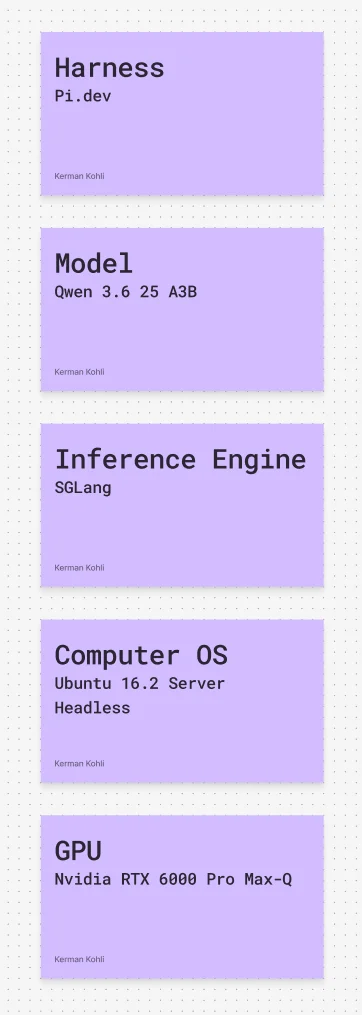
Building a custom artificial intelligence inference machine from scratch is only the first hurdle in a much larger engineering journey. While assembling the physical hardware requires careful consideration of components, power delivery, and cooling, the real challenge begins when the machine is powered on and operators must extract genuine value from their investment. In the world of local artificial intelligence and large language models, hardware and software are inextricably linked. Every architectural choice made at the physical level directly impacts the software stack, creating a tightly coupled ecosystem where decisions must be coherent from the silicon up to the user interface.
To understand this dynamic, developers must evaluate the core layers of the AI stack, starting with the base hardware choice. This decision dictates every subsequent layer of the setup, narrowing software options significantly and demanding careful strategic planning. When weighing options for local deployment, builders generally evaluate several distinct hardware paths, ranging from consumer-grade configurations to specialized enterprise setups. The primary objective for high-performance local inference is speed. Users who require multiple parallel sessions and concurrent workloads cannot tolerate sluggish generation speeds of ten to fifteen tokens per second. Consequently, memory bandwidth and memory capacity emerge as the top priorities for any serious local artificial intelligence setup.
Apple architectures, including Studio and Ultra configurations, offer high memory capacity through a unified memory architecture that performs reasonably well on machine learning optimized models. However, choosing Apple locks users into a narrow ecosystem and presents significant hurdles regarding server deployment. Apple hardware does not lend itself well to traditional server environments, and attempting to run a remote server on macOS often introduces friction, particularly with remote management and recovery protocols. For a robust, reliable production environment, administrators typically rely on Linux distributions to ensure system stability and seamless remote operations.
This reality often steers builders toward NVIDIA graphics processing units, which dominate the landscape of high-performance inference. When selecting an NVIDIA card, builders face choices between older generation hardware, such as the widely discussed RTX 3090, and cutting-edge flagship hardware. The RTX 3090 offers the advantage of twenty-four gigabytes of video random access memory at a lower cost, and features NV-Link capabilities that allow two cards to be linked together for increased memory pools. However, because AI inference is fundamentally memory-bound, hardware limitations can quickly become a bottleneck when attempting to run the largest and most advanced models. Furthermore, power consumption is a critical factor in dense local setups. Running dual older-generation cards draws significantly more power than modern high-end single-card configurations, making the power-to-performance trade-off a vital consideration for long-term operational costs.
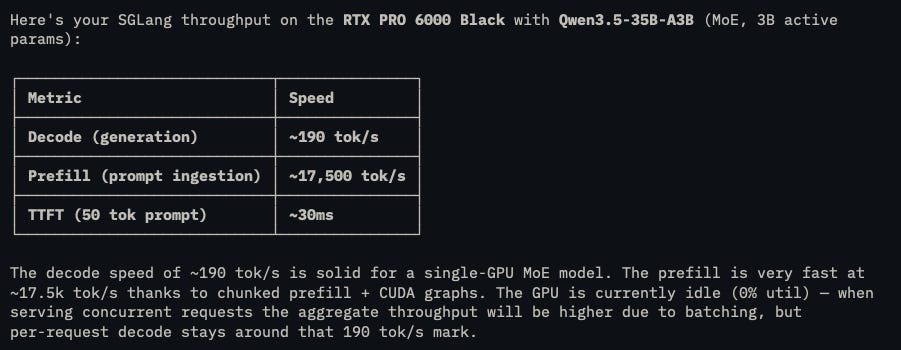
Beyond raw performance, modern hardware series incorporate specialized optimizations, such as advanced quantization formats, which older generations lack. Investing in top-tier consumer hardware also offers a degree of financial resilience, as high-end components often retain their market value remarkably well over time. Regardless of the specific hardware chosen, running a local artificial intelligence machine requires a stable, headless operating system. Windows is generally avoided for these setups, leaving Linux-based kernels as the definitive standard. The ideal local artificial intelligence box is designed to be powered on and left untouched, managed entirely through remote access without requiring physical intervention.
This requirement underscores why consumer operating systems like macOS can prove difficult to manage remotely, as SSH connections can drop unexpectedly and reboot recovery mechanisms lack the resilience found in enterprise-grade Linux distributions. A local intelligence machine functions as a core component of a sovereign digital infrastructure, demanding the reliability of Ubuntu configured without a graphical user interface. Running headless ensures that precious video memory is not wasted on rendering a desktop environment, allowing the entire capacity of the GPU to be dedicated to model inference. Management of these headless systems is typically handled securely over encrypted remote access tunnels, allowing administrators to execute workloads from secondary devices without friction.
Once the operating system and hardware are aligned, selecting the appropriate inference engine introduces another critical layer of complexity. The open-source community offers several popular inference engines, each with distinct performance profiles and hardware dependencies. While some engines serve as common entry points for beginners, they may lack the efficiency required for heavy concurrent workloads. Advanced hardware architectures often demand specialized inference software capable of leveraging native hardware capabilities, proper concurrency handling, and advanced memory optimization techniques.
One powerful optimization found in modern inference engines is paged attention, a memory management technique that caches past prompts and processed codebases. By caching historical context, the system drastically reduces the memory footprint of incremental prompts, resulting in blazing-fast response times and significantly higher concurrency for multiple users executing similar tasks. However, navigating the ecosystem requires balancing three interdependent variables: the underlying hardware capabilities, the chosen inference engine, and the specific large language model parameters. Builders must carefully consider parameter counts, mixture-of-experts architectures, context cache sizes, and quantization levels to ensure optimal performance. Certain inference engines may not fully support specific model architectures, reinforcing the principle that every component in the local AI stack must be meticulously planned to work in unison.

Selecting a model involves weighing speed, accuracy, and resource consumption. Advanced configurations running unquantized models on optimized inference engines can deliver performance that far surpasses consumer-grade alternatives, provided the reasoning parsers are configured correctly to enable the harness to utilize the model’s capabilities. The path to digital sovereignty is one of continuous self-education, where the software harness must adapt seamlessly to the underlying hardware stack rather than forcing the user into a proprietary ecosystem.
Exploring various open-source development harnesses reveals tools designed for modularity and incremental expansion. Many modern harnesses strip away unnecessary features in favor of a lean, extensible architecture that allows developers to easily cycle between different models and orchestrate complex workflows locally. While a custom local setup may not match the raw capability of elite frontier cloud models, it offers distinct and compelling advantages. A local inference machine operates at the marginal cost of electricity, remains entirely immune to external rate limits, and ensures that intellectual property and private ideas remain strictly confidential.
For routine tasks and sovereign operations, local models provide complete autonomy. When access to frontier intelligence is temporarily required, users can selectively utilize commercial services before returning to their secure, self-hosted environments. As the cost of cloud compute and specialized data center rentals continues to rise globally, the economics of local compute are shifting rapidly. Building and orchestrating sovereign intelligence infrastructure allows individuals and organizations to future-proof their operations against escalating cloud inflation, ensuring that ownership of digital capability remains in the hands of the builder.




Comments (0)