


It has been roughly a month since tech writer and RouteMesh executive Kerman Kohli last published an update on his Substack, a silence he attributes to an unprecedented rate of personal learning and hands-on experimentation in the artificial intelligence hardware space. In a detailed market and technical update, Kohli has outlined a series of emerging mental models that challenge conventional wisdom regarding AI infrastructure, hardware depreciation, token economics, and the ongoing dynamic between local open-weights execution and centralized frontier labs.
Kohli’s latest insights are grounded not just in theoretical market observation, but in intensive, hands-on capital expenditure. Earlier this year, he made waves by detailing the assembly of a $15,000 local inference machine. He has since expanded that rig into a $35,000 workstation by adding another graphics processing unit. However, the economics of this upgrade defied traditional technological depreciation: the specific GPU model that cost $10,000 earlier in the year rose to $14,000, while accompanying RAM components appreciated by an additional $1,000. As a result, his expanded $35,000 machine carries a net cost basis of $30,000—an inverted depreciation curve that runs completely counter to the historical trajectory of computer hardware.
His capital deployment did not stop at the single workstation level. Kohli expanded his physical infrastructure further by investing $35,000 into six DGX Spark nodes interconnected via a 16-port 100Gb switch requiring high-speed fiber-optic cabling. According to Kohli, purchasing the physical metal and wrestling with networking infrastructure has provided a deeper education in GPU dynamics than any online resource could offer. This personal capex push is rippling outward into his work at RouteMesh, where the team is actively scaling toward larger GPU clusters.
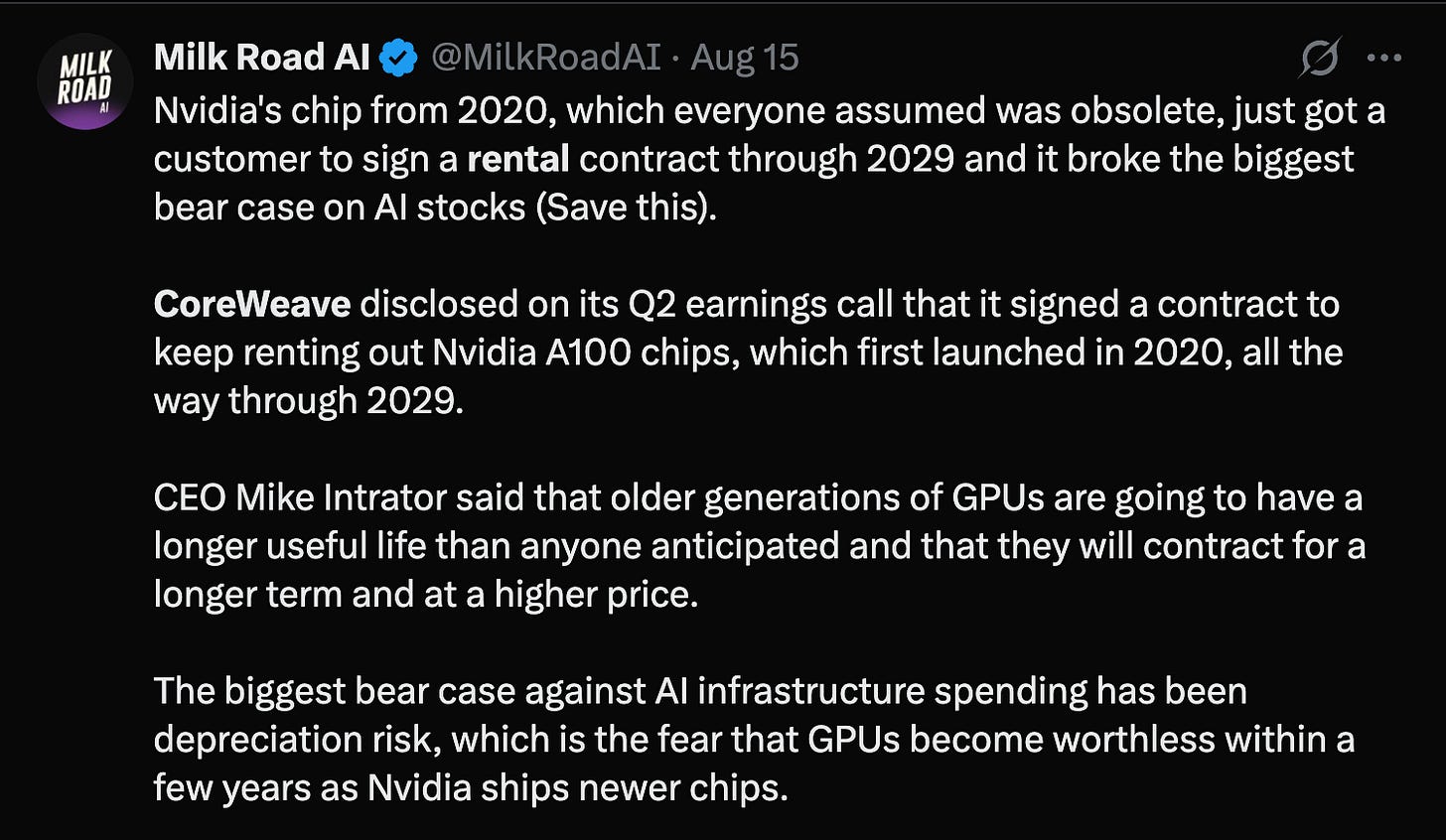
This lived experience leads directly to Kohli’s first major contrarian thesis: most market observers are fundamentally wrong about hardware dynamics. To understand why a machine less than a year old can appreciate in value, or why used 2020-era hardware like the RTX 3090 continues to command stable pricing years down the line, one must look past superficial bubble narratives and examine the dual components of hardware: compute and memory.
While raw compute—represented by the CPU, GPU, or custom accelerators—reliably becomes more powerful with each successive silicon generation, compute is not always the primary limiting factor. In the realm of AI model inference, memory is the true bottleneck. Because the industry faces a structural shortage of high-performance memory that Kohli now projects will last for at least another decade—up from his previous five-year estimate—any technological depreciation experienced by older compute units is fully offset by the scarcity and high value of the accompanying memory.
Compounding this memory dynamic is the crucial factor of backwards compatibility, particularly within Nvidia’s dominant ecosystem. Older silicon remains economically viable because it can seamlessly execute established software stacks and run profitable inference workloads without requiring enterprises to constantly re-engineer their entire software pipeline. Workloads are increasingly becoming tightly coupled to specific hardware generations—a phenomenon the tech sector has not witnessed in decades. This reality is reinforced by Kohli’s personal experience with an RTX 6000 Pro Max-Q workstation card originally purchased for $10,000, which now commands market valuations between $16,000 and $18,000. Far from being a short-term supply chain hiccup, this represents a fundamental structural shift in how hardware holds its utility.
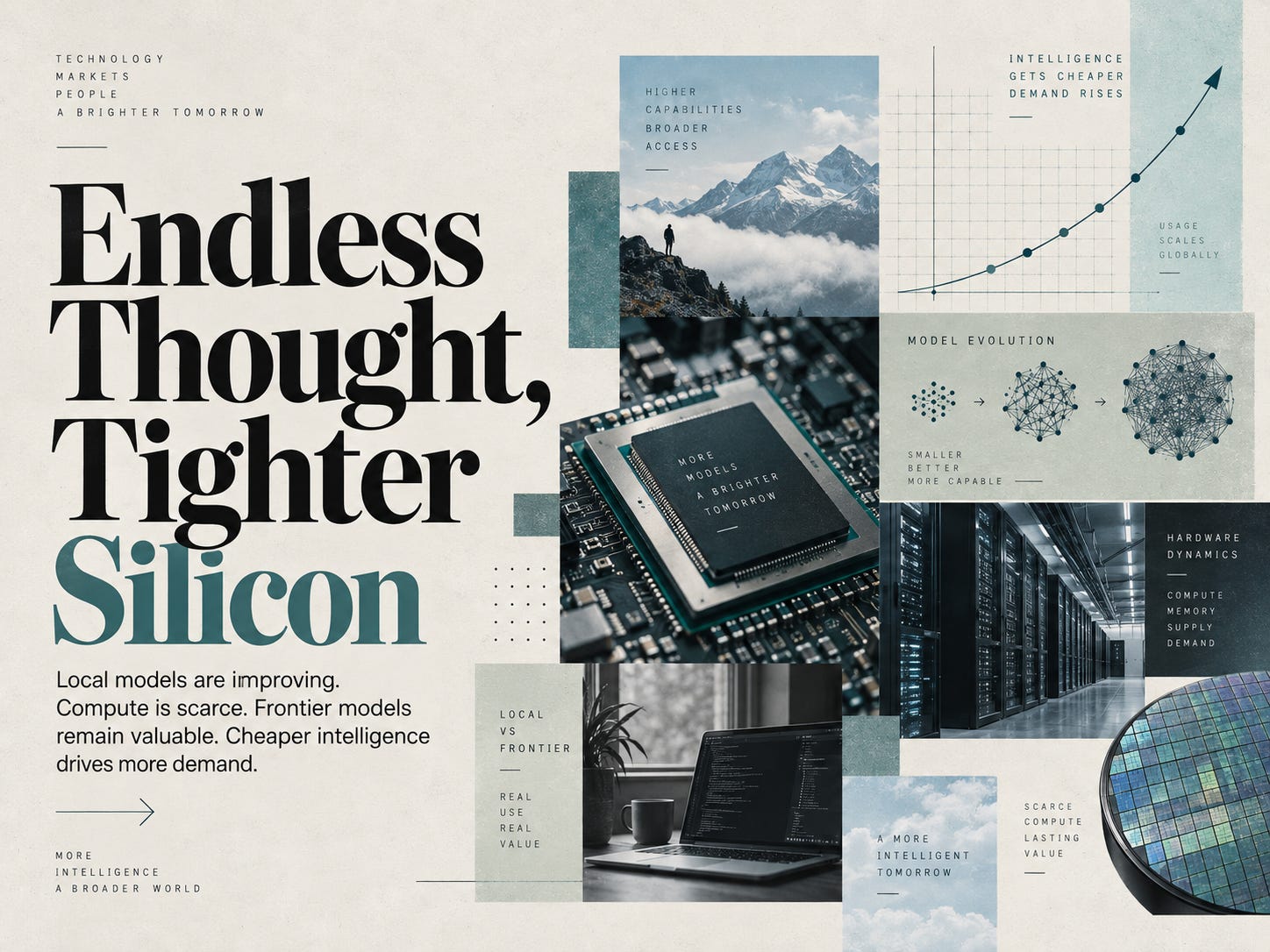
A persistent counterargument in financial circles is that falling token prices—demonstrated by recent data from Silicon Data showing steady declines in per-token costs—signal an impending market crash or a slowing of AI demand. Kohli argues that this view suffers from a blind spot by ignoring the exponential growth on the demand side of the equation. Standard economic assumptions dictate that falling prices reflect cooling demand, but the market for digital intelligence behaves differently.
When tracked against Nvidia’s soaring data center revenue, the data paints an entirely different picture: revenue growth continues to march decisively upward, constrained strictly by physical manufacturing supply limits rather than a lack of customer appetite. Kohli posits that the demand for intelligence is effectively infinite, driven by unbounded use-cases that ensure supply will struggle to catch up for the foreseeable future.
This infinite demand curve means that declining token prices do not destroy the market; rather, they enable developers and organizations to bake deeper layers of intelligence into everyday workflows. Kohli notes that his own personal software stack now relies on recursive, agentic automation where model advancements allow for more complex multi-step orchestration, driving even higher internal demand for compute resources.
Consequently, owning physical compute is rapidly transforming from a standard corporate expense into a vital strategic asset. Those who fail to secure their own compute infrastructure risk vulnerability, a dynamic highlighted by recent high-profile academic and industrial breakthroughs where unowned or shared computational ideas were rapidly captured or out-paced.
At the same time, the landscape of local intelligence has experienced staggering leaps forward. Recent releases such as Qwen 3.8 DFlash2 and GLM 5.3 Flash Next DFlash2 represent step-changes in how much intelligence and processing speed users can orchestrate directly on localized hardware. Kohli reports that his dual-GPU workstation and six-node spark cluster allow him to achieve near complete compute self-sufficiency for daily operations. While he maintains a high-end subscription to frontier lab offerings—paying a premium for specialized tasks like iOS integration, computer use, and exceptionally complex computational problems—the bulk of his day-to-day workload is handled locally.
However, Kohli stresses that the rise of powerful local models does not spell the end for centralized frontier labs like OpenAI and Anthropic. Frontier models will continue to command enterprise premiums thanks to two decisive advantages: massive proprietary clusters of owned compute that individual developers cannot replicate, and their status as premier American-branded institutional platforms trusted by risk-averse corporate compliance departments.
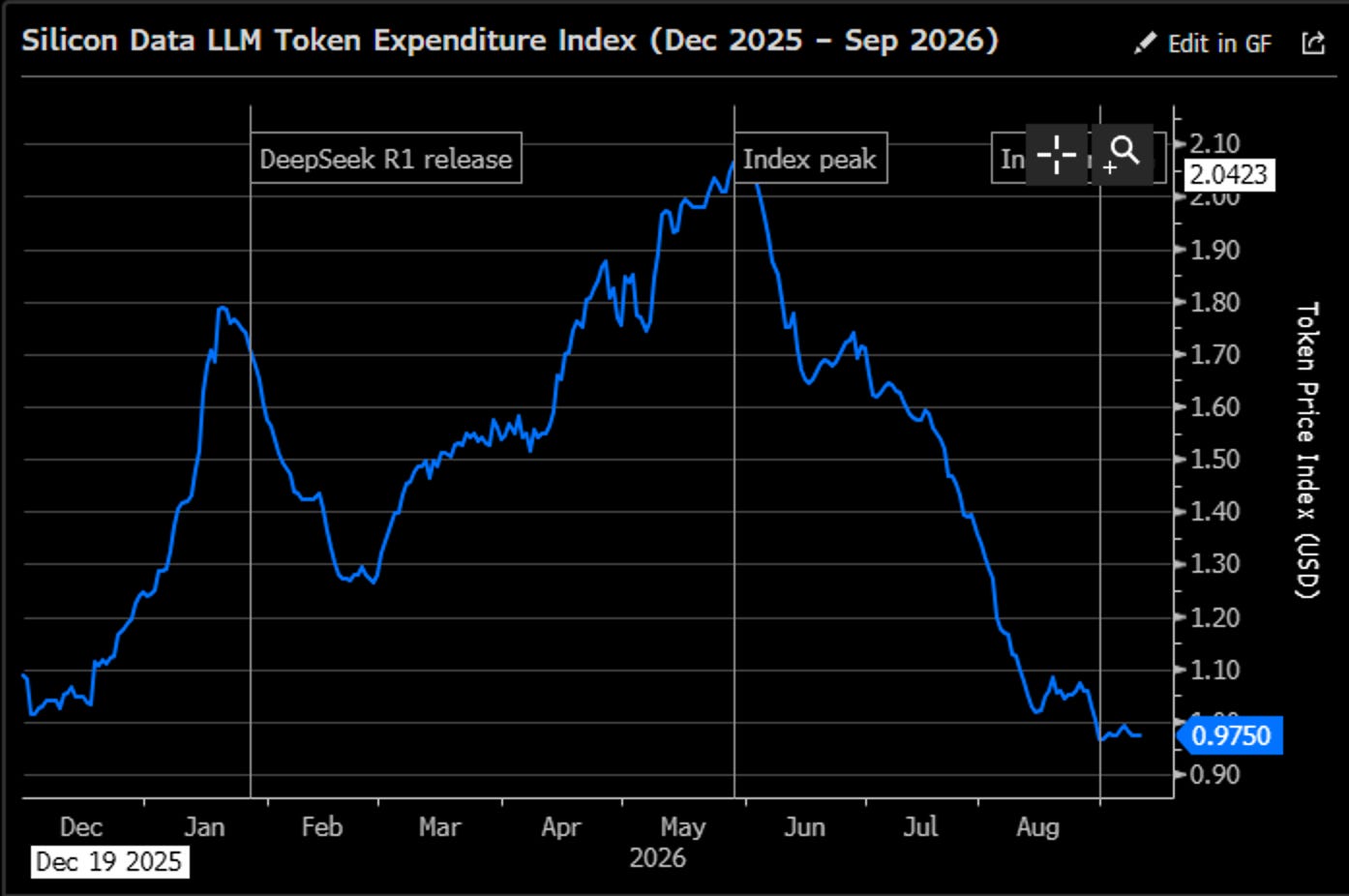
As hardware scarcity intensifies and acquisition costs climb, everyday users and smaller enterprises face a difficult economic calculus. Relying entirely on monthly cloud subscriptions, such as OpenAI’s paused $200 developer tiers, exposes organizations to pricing volatility and service caps, while purchasing physical hardware becomes increasingly expensive and logistically difficult.
Ultimately, Kohli’s updated mental models rest upon two unyielding pillars: that the demand for intelligence is infinite, and that compute is the ultimate strategic currency of the modern technological era. Accepting the concept of infinite demand shatters traditional assumptions about market competition, economic equilibrium, and how human organizations will structure themselves in the years ahead. For professionals, investors, and technologists alike, the takeaway is clear—whether through career positioning, portfolio allocation, or physical hardware ownership, the imperative moving forward is to remain resolutely long compute.



Comments (0)