


As the technological landscape hurtles toward a future defined by advanced artificial intelligence, a fundamental shift is occurring in how society conceptualizes power and influence. While debates frequently center on software algorithms, large language models, and data privacy, industry observers argue that the defining skill of the upcoming decade will be something far more foundational: the ability to harness compute.
In the modern technological ecosystem, compute has effectively replaced traditional forms of capital as the primary currency of power. Those who control and utilize compute possess the undeniable capacity to fuel artificial intelligence systems, drive massive large language models, and seamlessly coordinate outputs through complex agentic sandboxes, distributed databases, and specialized web services.
However, a prevailing misconception often leads individuals and organizations down an inefficient path. The most obvious conclusion drawn by enthusiastic adopters is that they must immediately rush out to acquire expensive hardware, treating raw processing power as a blunt instrument. According to experts, this approach represents only half of the truth. Compute is not merely equivalent to physical force or brute-force energy; it is an intellectual resource. Consequently, how efficiently and effectively an individual leverages their compute capabilities is just as critical as the raw hardware specifications they possess.
To illustrate this disparity, consider the common phenomenon of consumers purchasing high-end desktop hardware, such as expensive Mac Minis, simply to run lightweight applications like OpenClaw. Observers note that such practices often reveal a broader trend of compute illiteracy. Users frequently fail to understand their actual processing constraints, leading them to invest heavily in hardware that does not meaningfully enhance their operational capabilities.
OpenClaw, for instance, is not a particularly compute-intensive workload. It can easily operate on affordable, rented virtual private servers costing a fraction of a typical desktop investment. Spending over a thousand dollars on a brand-new machine solely for such a lightweight task is frequently viewed as an unnecessary expenditure. Yet, the dynamic changes when an advanced user pushes the absolute limits of their current local setup. Once a developer maxes out their existing machine, transitioning to a Mac Mini can unlock genuine performance gains.

The progression does not stop at hardware acquisition. A truly proficient operator might then deploy specialized autonomous agents designed to handle targeted, resource-heavy background tasks on that local machine. Taking the architecture a step further, sophisticated users often construct tiered intelligence systems. These architectures intelligently delegate specific language model tasks to a local model running via tools like Ollama on the same machine, while routing heavier or more generalized demands to cloud-based powerhouses such as OpenAI or Anthropic.
Despite these advanced possibilities, the average user running basic automation scripts remains largely compute illiterate, incapable of optimizing or effectively harnessing the full potential of the hardware at their disposal.
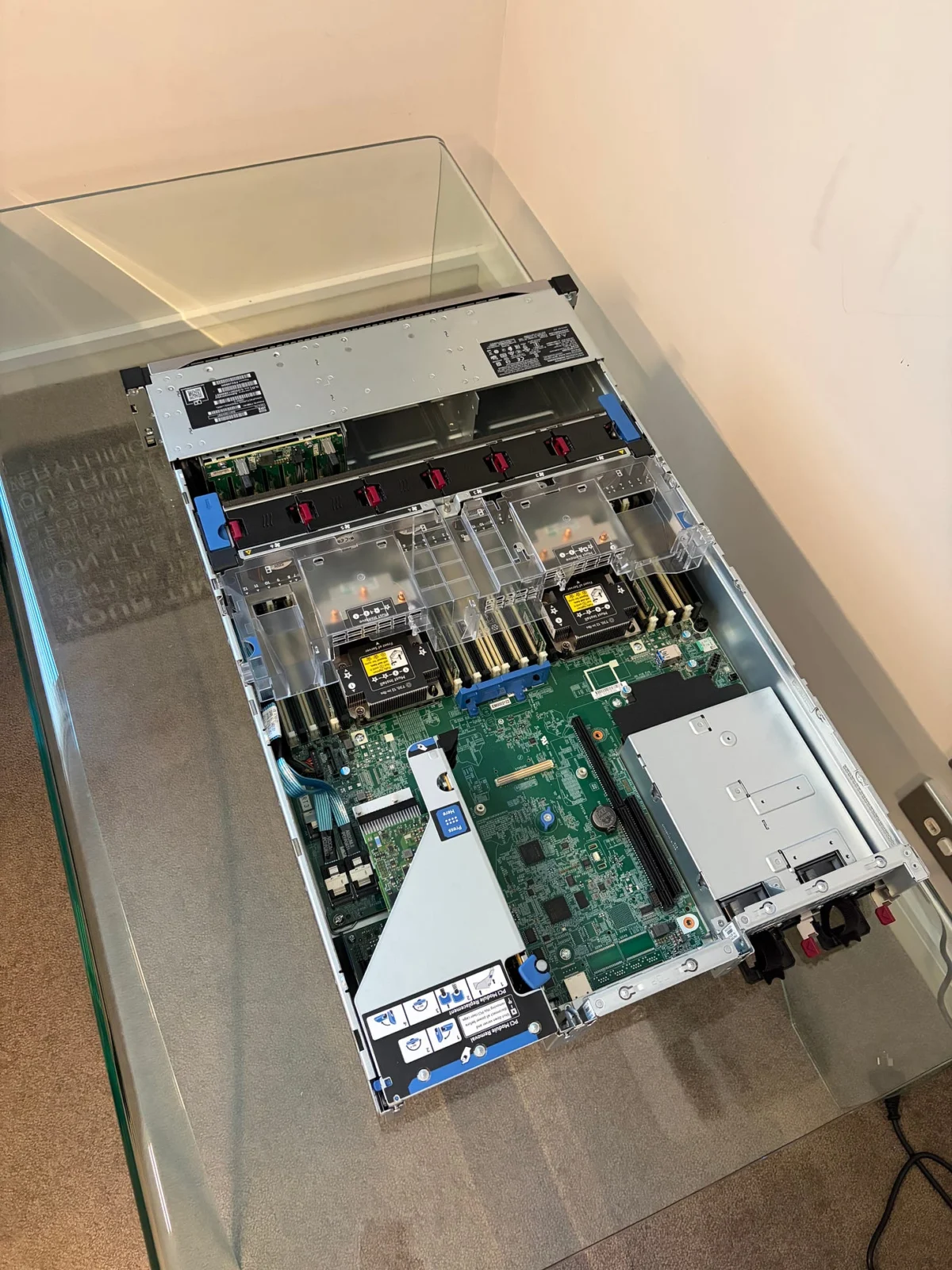
Conversely, a parallel challenge exists at the organizational level. Modern startup engineers frequently build impeccably architected, highly scalable systems, yet remain entirely dependent on major cloud providers. This reliance often stems from the prevailing industry sentiment that running proprietary hardware is simply too difficult. While this group excels at utilizing compute resources efficiently, they remain fundamentally compute poor. Because they do not own any means of production—relying entirely on rented cloud infrastructure—they are perpetually subjected to the operational costs and constraints dictated by corporate cloud giants, creating a dynamic that mirrors the exact opposite of the consumer-level mismatch.
Ultimately, mastering the art of compute requires a delicate balance of both capital and labor. Possessing only financial capital to buy hardware without the labor-intensive understanding of optimization misses the full spectrum of capability. Similarly, having the technical labor skills without the ownership of production leaves engineers tethered to external providers.
As these dynamics continue to reshape the digital economy, industry analysts suggest that society is witnessing the emergence of a new elite class. Driven by the convergence of hardware ownership and optimization expertise, the techno-compute class is poised to define the power structures of the decades ahead, fundamentally altering the relationship between technology, infrastructure, and human capability.


Comments (0)